1/ A thread about my research! Many know my undergrad & grad degrees are in biology, & I've worked as a corporate scientist in drug discovery, etc. In my Ph.D., I switched gears & did a novel study of how representations of scientists in media impact adult STEM interest.

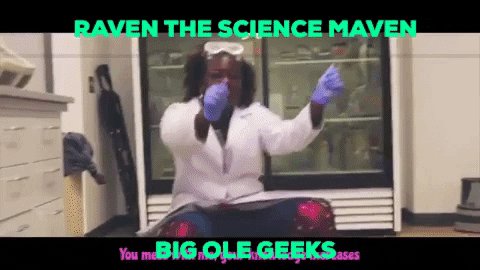
2/ My research stems (no pun intended) from a music video I put out last year that is my creative expression of my liberation as a Black woman in STEM. That video is called "Big Ole Geeks". It went viral. I'm linking it in the thread but you can also Google it!
3/ I made the video because I was TIRED of people telling me that I was a "token Black" and I "didn't look like a scientist" after years of conforming to all of the eurocentric standards & customs that most Black women have to force themselves in to get by. So I liberated myself.
4/ I describe these experiences in the TEDx talk that I gave earlier this year. I highly recommend that you watch it. Here is the link https://t.co/Z5YSNp7uof
5/ When I put the video out, it honestly was scary but I knew people were going to mistreat me regardless of how I lived, so I was going to live my life unapologetically & stop trying to please people who oppress me. What happened after caused me to focus my research on the video
6/ There was an outpouring of responses from a huge diversity of people across gender, race, age, etc. The overall response to the video was incredibly intriguing. I wanted to know more; and I focused a study on Black women's responses to later expand to a general audience
7/ I interviewed 18 people about their perceptions of what they believe is the most represented image of a scientist in America, if they identify with that, and how they experienced my novel representation of scientists. Also, if they can be themselves at work. What did I find?
8/ The findings revealed shared experiences consistent between 18 Black women as a general population, across STEM and non-STEM professionals. These women collectively had a shared narrative that reinforced the following main themes listed below. Not all are listed fyi👇🏿👇🏿
9A/ Overrepresentation of **👨🏻‍🔬** scientists in the media; non-identification with images of **👨🏻‍🔬** scientists in the media; unprecedented images of Black women scientists; experiences of code-switching and identity negotiation in the workplace; AND...
9B/ twerking to celebrate Black womanhood and release trauma; non-STEM professionals’ identities with science; and, science-based hip-hop as a classroom tool for learning. There was SO MUCH that was learned in the study that will fill a HUGE gap.
10/ The study I will present this week presents the co-constructed narrative of 19 women (18+me) and their incredibly powerful responses to my "Big Ole Geeks" science-based music video.
11/ My research results have implications for ensuring that students experience relatable images of Black women scientists early in their K-16 experience and that being a Black scientist should not require sacrificing your cultural identity.
12/ My study is among the first to focus on the perceptions of both Black STEM & non-STEM Black women in the general population in a study on STEM identity, the first to examine the impact of science-based music videos on adults and.....
13/ The first study investigating the impact of Black women scientists' alternative media representation.
14/ Here is the music video that is at the centerpiece of the study https://t.co/2bzICYIgES
/15 Doing this work has been rewarding, fulfilling, and the best decision I could have made. I’m glad that I’m a strong enough woman to do it, whether the world was ready for it or not. Training my brain to think as a social scientist has been the greatest exercise of my life.

You May Also Like

I’m torn on how to approach the idea of luck. I’m the first to admit that I am one of the luckiest people on the planet. To be born into a prosperous American family in 1960 with smart parents is to start life on third base. The odds against my very existence are astronomical.


I’ve always felt that the luckiest people I know had a talent for recognizing circumstances, not of their own making, that were conducive to a favorable outcome and their ability to quickly take advantage of them.

In other words, dumb luck was just that, it required no awareness on the person’s part, whereas “smart” luck involved awareness followed by action before the circumstances changed.

So, was I “lucky” to be born when I was—nothing I had any control over—and that I came of age just as huge databases and computers were advancing to the point where I could use those tools to write “What Works on Wall Street?” Absolutely.

Was I lucky to start my stock market investments near the peak of interest rates which allowed me to spend the majority of my adult life in a falling rate environment? Yup.