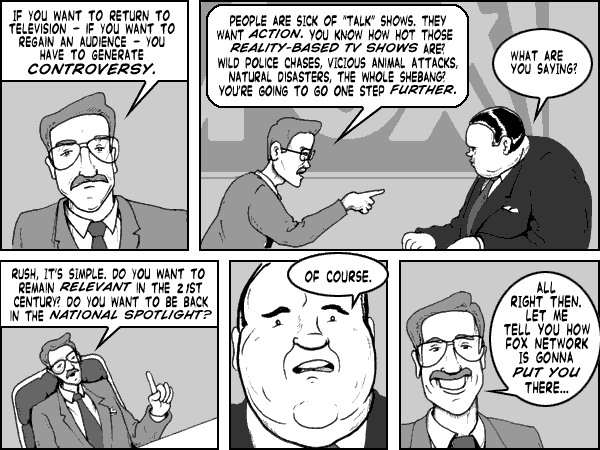
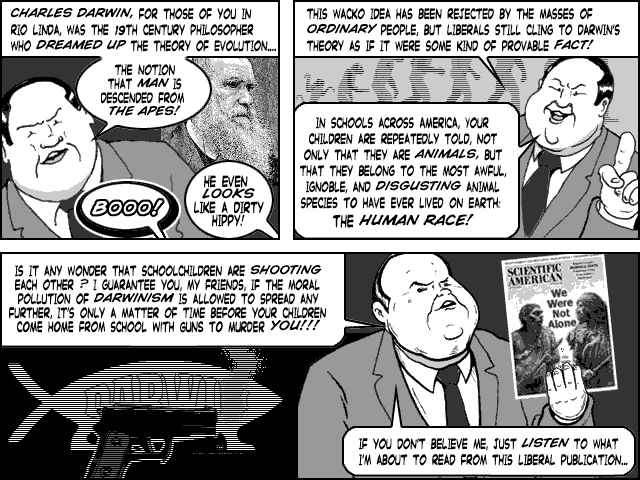
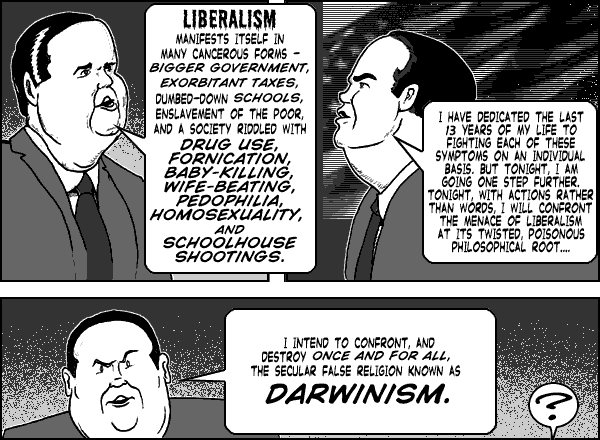
#RIPRush There will probably never be another political media figure as massive as Rush Limbaugh. Just absolutely huge. He touched so many lives. Even liberals recognized his vastness, his tremendous capacity: here's Patrick Farley's "Rush Eats Everything" from the late 90's

#RIPRush Rush Limbaugh will forever be remembered for his talents and his unique worldview, which he spread to so many others in this country and around the world. Here's a somewhat fictionalized story by Patrick Farley from the 1990's when Rush was in his heyday
#RIPRush #RIPRushLimbaugh he will forever be remembered not only for what he did, but what he said, and how many Americans found their truth there
#ripRUSH #RIPRushLimbaugh a giant, truly. Remember him as Patrick Farley did in his seminal "Rush Eats Everything"
#ripRush #rushlimbaugh This is how I will always remember him, from "E-Sheep" circa 1998
#ripRUSH #RIPRushLimbaugh "Rush Eats Everything" continued

You May Also Like

12 TRADING SETUPS which experts are using.

These setups I found from the following 4 accounts:

1. @Pathik_Trader
2. @sourabhsiso19
3. @ITRADE191
4. @DillikiBiili

Share for the benefit of everyone.

Here are the setups from @Pathik_Trader Sir first.

1. Open Drive (Intraday Setup explained)


Bactesting results of Open Drive


2. Two Price Action setups to get good long side trade for intraday.

1. PDC Acts as Support
2. PDH Acts as


Example of PDC/PDH Setup given
I just finished Eric Adler's The Battle of the Classics, and wanted to say something about Joel Christiansen's review linked below. I am not sure what motivates the review (I speculate a bit below), but it gives a very misleading impression of the book. 1/x


The meat of the criticism is that the history Adler gives is insufficiently critical. Adler describes a few figures who had a great influence on how the modern US university was formed. It's certainly critical: it focuses on the social Darwinism of these figures. 2/x

Other insinuations and suggestions in the review seem wildly off the mark, distorted, or inappropriate-- for example, that the book is clickbaity (it is scholarly) or conservative (hardly) or connected to the events at the Capitol (give me a break). 3/x

The core question: in what sense is classics inherently racist? Classics is old. On Adler's account, it begins in ancient Rome and is revived in the Renaissance. Slavery (Christiansen's primary concern) is also very old. Let's say classics is an education for slaveowners. 4/x

It's worth remembering that literacy itself is elite throughout most of this history. Literacy is, then, also the education of slaveowners. We can honor oral and musical traditions without denying that literacy is, generally, good. 5/x
1/“What would need to be true for you to….X”

Why is this the most powerful question you can ask when attempting to reach an agreement with another human being or organization?

A thread, co-written by @deanmbrody:


2/ First, “X” could be lots of things. Examples: What would need to be true for you to

- “Feel it's in our best interest for me to be CMO"
- “Feel that we’re in a good place as a company”
- “Feel that we’re on the same page”
- “Feel that we both got what we wanted from this deal

3/ Normally, we aren’t that direct. Example from startup/VC land:

Founders leave VC meetings thinking that every VC will invest, but they rarely do.

Worse over, the founders don’t know what they need to do in order to be fundable.

4/ So why should you ask the magic Q?

To get clarity.

You want to know where you stand, and what it takes to get what you want in a way that also gets them what they want.

It also holds them (mentally) accountable once the thing they need becomes true.

5/ Staying in the context of soliciting investors, the question is “what would need to be true for you to want to invest (or partner with us on this journey, etc)?”

Multiple responses to this question are likely to deliver a positive result.