

Great to hear that Hindus have no right to comment upon Sikhism. Fine. But then, why have Sikhs the right to chant verses of their Gurus (which are NOT Hindu as Sikhs have categorically declared they've nothing to do with Hinduism) that outrightly insult Hindu beliefs? Read on.


More from Religion


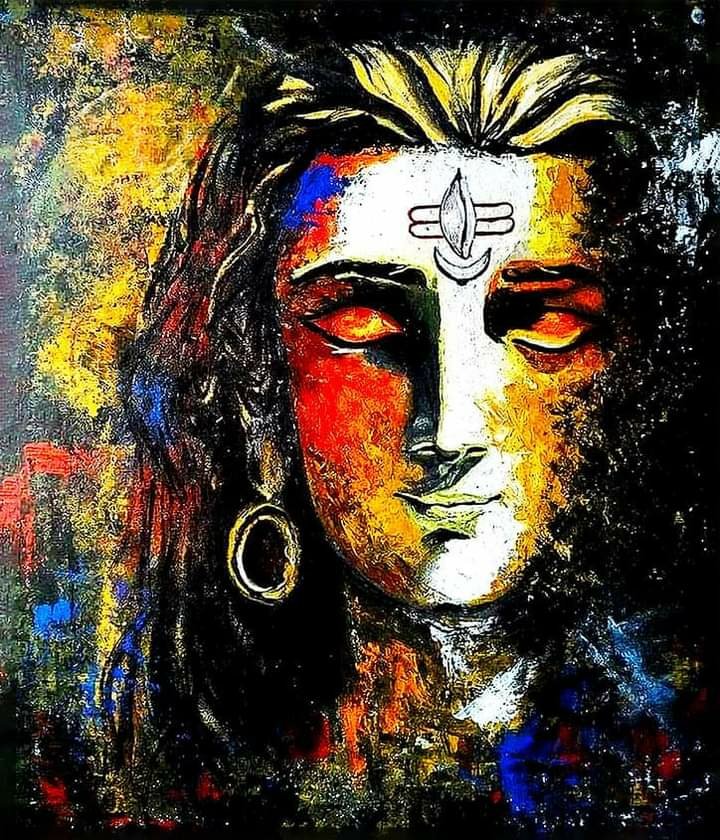
Tripundra Dhaaran - Paapa Vimukti
Our generations are fascinated about Tripundram being just a religious symbol. There are in depth meanings of such a Tilak on a Seeker's Forehead
The very first mistake is the way it is applied.
Tripund isn't applied with dry Bhasm, it should be made wet and then applied in a prescribed manner with proper use of fingers and direction of application. Bhasm is collected from various sources
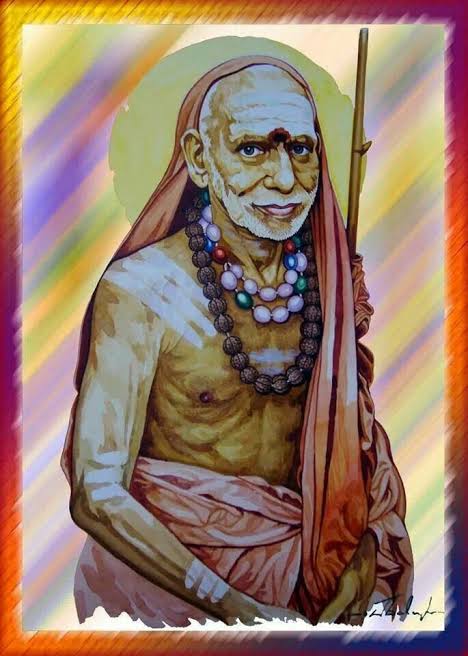
The most important ones mentioned in upanishats are 1. Yagnya Kund Bhasm 2. Bhasm made from Cow's Dung alone. A special agnihotram was perform to save the Bhasma after that for Dhaarana. A major mantra while applying bhasm is Mrutyunjaya Mantra
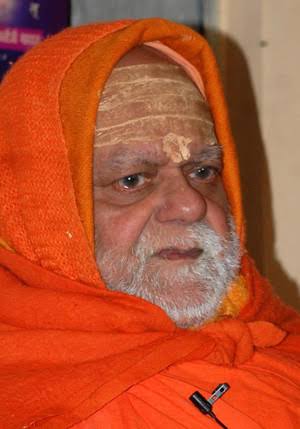
Dwijas have a very long process of applying the Tripundram along with their Sandhyavandanam. For commoners there are some basic rules people have to follow while applying Bhasm
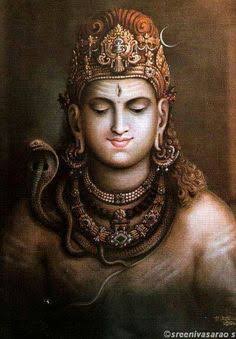
Bhasm Applied in Morning - Should be mixed with water and applied
Bhasm Applied during Afternoon - Should be mixed with Chandan and Applied
Bhasm Applied during and after Pradosh - Should be applied Dry as such
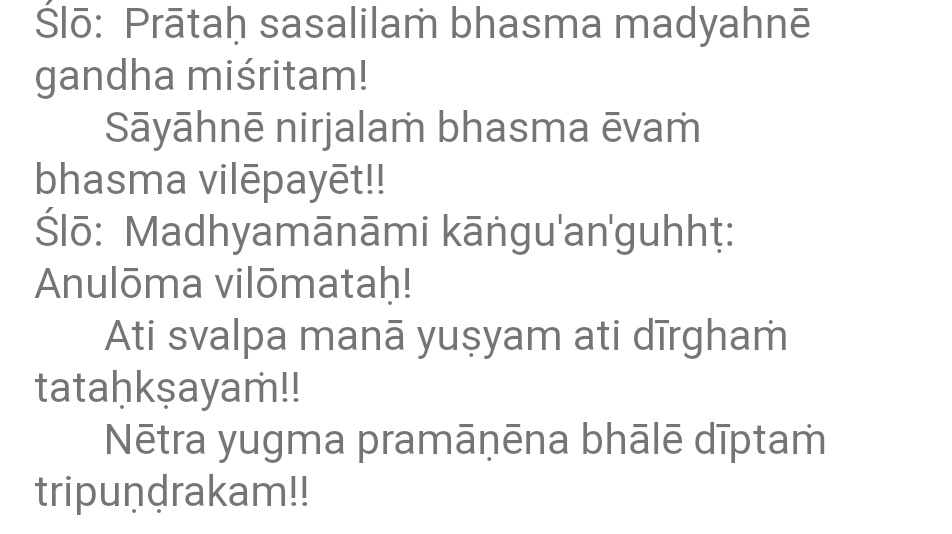
Our generations are fascinated about Tripundram being just a religious symbol. There are in depth meanings of such a Tilak on a Seeker's Forehead
" No Tilak symbolizes Shree Viheen"
— Hindu Media Wiki (@HinduMediaWiki) December 21, 2020
Tilak Dharan on forehead is having deep science than one can ever imagine. It is not just a symbol of Sanatan but also builds a lot of confidence of human actually. It is related to Tejas & Varchasv of a human. pic.twitter.com/vM46BqU3f7
The very first mistake is the way it is applied.
Tripund isn't applied with dry Bhasm, it should be made wet and then applied in a prescribed manner with proper use of fingers and direction of application. Bhasm is collected from various sources
The most important ones mentioned in upanishats are 1. Yagnya Kund Bhasm 2. Bhasm made from Cow's Dung alone. A special agnihotram was perform to save the Bhasma after that for Dhaarana. A major mantra while applying bhasm is Mrutyunjaya Mantra
Dwijas have a very long process of applying the Tripundram along with their Sandhyavandanam. For commoners there are some basic rules people have to follow while applying Bhasm
Bhasm Applied in Morning - Should be mixed with water and applied
Bhasm Applied during Afternoon - Should be mixed with Chandan and Applied
Bhasm Applied during and after Pradosh - Should be applied Dry as such


1. A)Yes , monotheism does mean there is one God & all other gods are false.
But your statement that it also mean " that God is my God " is misleading . It depends on the doctrine of that monotheistic religion .
From Islamic monotheism , Allah never said that he is Creator of Arabs . He is Creator if all in creation . So from a doctrinal pov your statement doens't hold up .
B ) how did u write Advaita = hindu philosophy ? Do u want me to mention difference between Advaita and dvaita ?
" There is no concept of shirk in Hinduism " . This is a red hearing , No One claimed Hinduism also has concept of shirk .
2. Tribal God ? In Islamic doctrine . No where it says Allah is Only God of Quraish tribe .
It was always " ilahi n Naas " , not to mention islamic was always about one's belief & not race/ethnicity , So it was never tribalistic in its Nature
& If someone's doctrine is to be Questioned for being tribalistic , It's Hinduism . It's a ethnico religion . Originated on the banks of Indus river , With special mentions to " Aryans " in 4 vedas.
Even after 4000 yrs , 95% of it's followers live in India .
But your statement that it also mean " that God is my God " is misleading . It depends on the doctrine of that monotheistic religion .
\u201cMonotheism\u201d does not mean \u201cGod is one.\u201d It means \u201cthere is one God, that god is MY god, all others are FALSE gods.\u201d
— Sankrant Sanu \u0938\u093e\u0928\u0941 \u0938\u0902\u0915\u094d\u0930\u093e\u0928\u094d\u0924 \u0a38\u0a70\u0a15\u0a4d\u0a30\u0a3e\u0a02\u0a24 \u0a38\u0a3e\u0a28\u0a41 (@sankrant) January 27, 2021
There is no concept of \u201cfalse gods\u201d in Advaita or Hindu philosophy, no concept of \u201cshirk.\u201d
Monotheism is an imperialist ideology of intolerance and erasure. https://t.co/WsDX6pzK5R
From Islamic monotheism , Allah never said that he is Creator of Arabs . He is Creator if all in creation . So from a doctrinal pov your statement doens't hold up .
B ) how did u write Advaita = hindu philosophy ? Do u want me to mention difference between Advaita and dvaita ?
" There is no concept of shirk in Hinduism " . This is a red hearing , No One claimed Hinduism also has concept of shirk .
2. Tribal God ? In Islamic doctrine . No where it says Allah is Only God of Quraish tribe .
It was always " ilahi n Naas " , not to mention islamic was always about one's belief & not race/ethnicity , So it was never tribalistic in its Nature
Most Hindus don\u2019t understand this (Sikhs do even less).
— Sankrant Sanu \u0938\u093e\u0928\u0941 \u0938\u0902\u0915\u094d\u0930\u093e\u0928\u094d\u0924 \u0a38\u0a70\u0a15\u0a4d\u0a30\u0a3e\u0a02\u0a24 \u0a38\u0a3e\u0a28\u0a41 (@sankrant) January 27, 2021
Neither Sanatan nor Sikhi is \u201cmonotheistic.\u201d Monotheism is an ideology of supremacy, the elevation of a petty tribal god to the pretense of the Universal. It is ignorant tribalism universalized.https://t.co/yZkdxr7emP https://t.co/JDhOHnmGIT
& If someone's doctrine is to be Questioned for being tribalistic , It's Hinduism . It's a ethnico religion . Originated on the banks of Indus river , With special mentions to " Aryans " in 4 vedas.
Even after 4000 yrs , 95% of it's followers live in India .

You May Also Like

1/“What would need to be true for you to….X”
Why is this the most powerful question you can ask when attempting to reach an agreement with another human being or organization?
A thread, co-written by @deanmbrody:
2/ First, “X” could be lots of things. Examples: What would need to be true for you to
- “Feel it's in our best interest for me to be CMO"
- “Feel that we’re in a good place as a company”
- “Feel that we’re on the same page”
- “Feel that we both got what we wanted from this deal
3/ Normally, we aren’t that direct. Example from startup/VC land:
Founders leave VC meetings thinking that every VC will invest, but they rarely do.
Worse over, the founders don’t know what they need to do in order to be fundable.
4/ So why should you ask the magic Q?
To get clarity.
You want to know where you stand, and what it takes to get what you want in a way that also gets them what they want.
It also holds them (mentally) accountable once the thing they need becomes true.
5/ Staying in the context of soliciting investors, the question is “what would need to be true for you to want to invest (or partner with us on this journey, etc)?”
Multiple responses to this question are likely to deliver a positive result.
Why is this the most powerful question you can ask when attempting to reach an agreement with another human being or organization?
A thread, co-written by @deanmbrody:
Next level tactic when closing a sale, candidate, or investment:
— Erik Torenberg (@eriktorenberg) February 27, 2018
Ask: \u201cWhat needs to be true for you to be all in?\u201d
You'll usually get an explicit answer that you might not get otherwise. It also holds them accountable once the thing they need becomes true.
2/ First, “X” could be lots of things. Examples: What would need to be true for you to
- “Feel it's in our best interest for me to be CMO"
- “Feel that we’re in a good place as a company”
- “Feel that we’re on the same page”
- “Feel that we both got what we wanted from this deal
3/ Normally, we aren’t that direct. Example from startup/VC land:
Founders leave VC meetings thinking that every VC will invest, but they rarely do.
Worse over, the founders don’t know what they need to do in order to be fundable.
4/ So why should you ask the magic Q?
To get clarity.
You want to know where you stand, and what it takes to get what you want in a way that also gets them what they want.
It also holds them (mentally) accountable once the thing they need becomes true.
5/ Staying in the context of soliciting investors, the question is “what would need to be true for you to want to invest (or partner with us on this journey, etc)?”
Multiple responses to this question are likely to deliver a positive result.


![Peter McCormack [Jan/3\u279e\u20bf \U0001f511\u220e]](https://pbs.twimg.com/profile_images/1524287442307723265/_59ITDbJ_normal.jpg)

