Good thread and it's well worth reading the paper (it's linked in the last post).

Some of my own comments in this thread

First, it's really good to see that the paper has either adopted the policies of or has come to the same conclusion as @Common_Weal's paper on rail nationalisation.

If we don't own all parts of the network, we can't strategically plan for it.

https://t.co/EOF30mfq7i
Excellent to see the plan include measures of how we get to the stations too. That has been too often omitted from previous attempts to do this kind of thing.
Also good to see some thought on intra-city travel as well as inter-city (again, something too often omitted) though I'll come back to that point.
And any plan that moves us away from cars being the default mode of travel is an improvement.
I do have a few critiques or areas identified for further work.
First, when it comes to commuting, we're yet to see the long term impact of Covid. Perhaps the default method of travel there should be to not travel. If home working (or local remote office hubs) becomes the permanent norm for many, demand on transit could stay low.
We shouldn't forget the busses too. Whilst CW hasn't yet gotten round to it, our plan for the rail paper was to follow it up with an integrated transport plan across all public transport methods.
Start with a universal payment card that gives access whatever the method (I believe this is already Green policy?) and then nationalise the bus networks and integrate them into transport ministry. Then the taxis too (especially if the alternative means robot-Uber).
I'm less enthused about TramTrains linking the rail network to the intra-city road network. Yes, it avoids overhead lines, but they are less disruptive to install than ground level tracks.
I'd probably prefer hybrid trolleybuses. Running on panto for most of the day but able to leave it and run on battery for low demand routes or to re-route around blockages.
And an electric or hydrogen bus can, of course, go wherever the roads already are so should be kept in mind for their place in this plan too.
This is why I like an integrated transport strategy. Different routes will suit different methods and, yes, while it's fine to weigh along a pyramid of priorities, as a passenger I ultimately only want to get from A to B in time. I'm a little more neutral on method.
I'm glad that the paper does mention those points on integrated transport and through-ticketing, but it could use a little more emphasis.
On those tracks, be mindful of the whole-of-life carbon footprint of the plan. Conventional steel is costly in that respect. Hydrogen-coked steel now exists but we need to invest and develop Scotland's sector. We'll need it anyway for the rest of the GND.

https://t.co/nU3M7NNMwd
And be wary of putting more passenger trains on freight lines. As passenger trains run faster than freight and commuters complain when they stop, the freight needs to stop to let passengers pass. Too many passenger trains and the freight train can't reach the next passing place.
Overall though, excellent work here. Certainly a lot better than previous transport strategies which have boiled down to "Let's build more traffic jams". Go and read the paper.

More from Politics

Here we go. Tag 4 des Impeachments. Trumps Verteidigung.


Es wird argumentiert, dass Trump nur habe sicherstellen wollen, dass die Wahl fair abgelaufen sei. Die Verteidigung zeigt Clips einzelner Demokraten, die der Zertifizierung von Trumps Stimmen 2016 widersprechen. (Dass es 2016 keinen von Obama gesandten Mob aufs Kapitol gab?Egal!)

Die intellektuelle Unehrlichkeit ist so unfassbar, ich weiß kaum, wo ich hier überhaupt anfangen soll; so viele fucking Strohmänner auf einmal.

Die Verteidigung spielt random Clips, in denen Demokraten “fight” sagen, fast zehn Minuten lang. Weil Trump 20mal am 6. Januar “fight” gesagt hat. Dies ist kein Witz. Komisch, dass sonst die Folge nie war, dass ein Mob das Kapitol gestürmt hat und Pence hängen wollte


“Dieser Fall geht um politischen Hass” Ich mein, ja. “Die House Managers hassen Donald Trump.”

So close.

You May Also Like

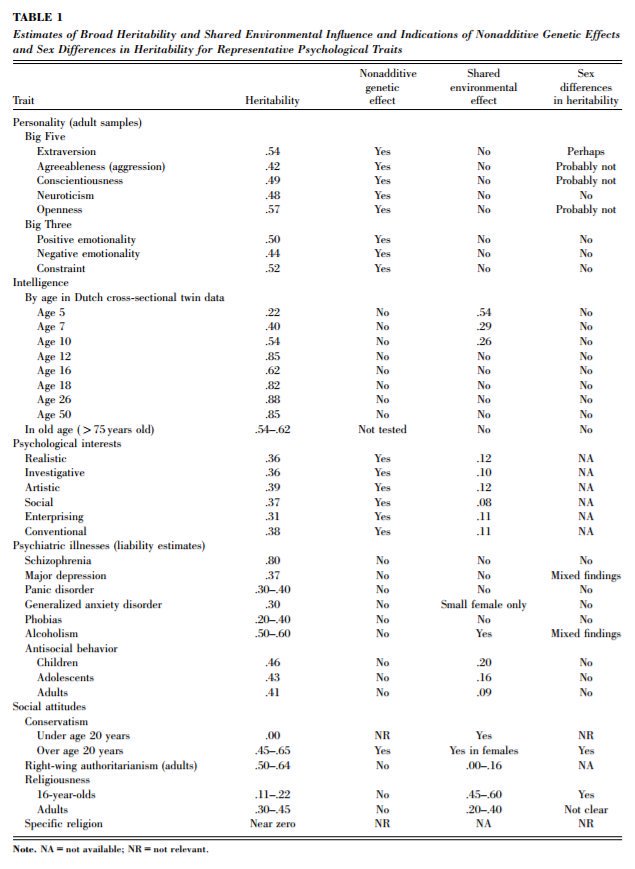
THREAD: 12 Things Everyone Should Know About IQ

1. IQ is one of the most heritable psychological traits – that is, individual differences in IQ are strongly associated with individual differences in genes (at least in fairly typical modern environments). https://t.co/3XxzW9bxLE


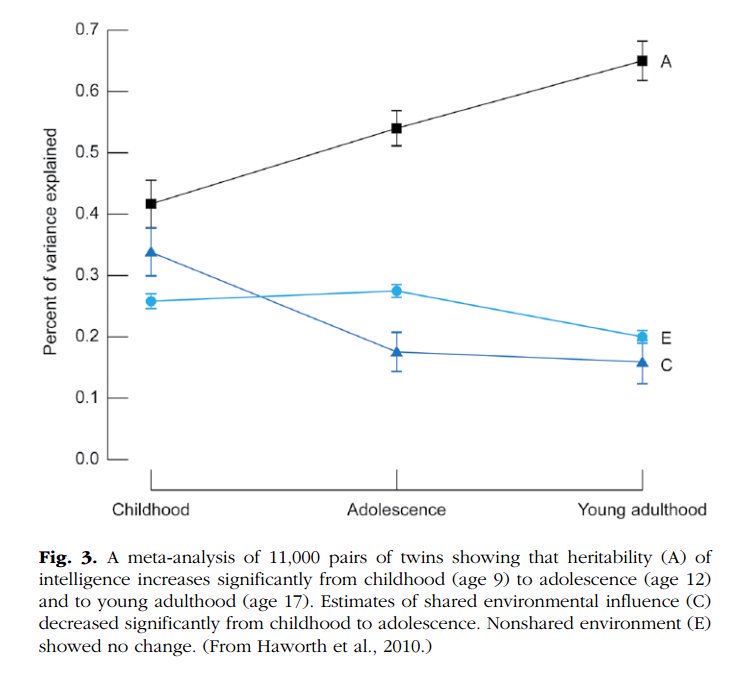
2. The heritability of IQ *increases* from childhood to adulthood. Meanwhile, the effect of the shared environment largely fades away. In other words, when it comes to IQ, nature becomes more important as we get older, nurture less.
https://t.co/UqtS1lpw3n


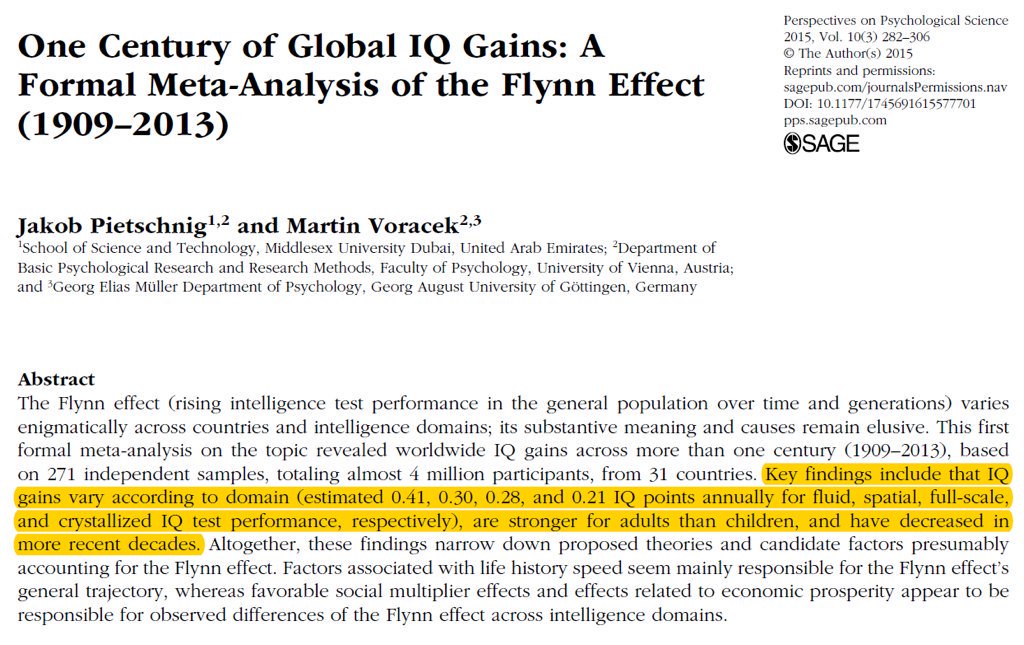
3. IQ scores have been increasing for the last century or so, a phenomenon known as the Flynn effect. https://t.co/sCZvCst3hw (N ≈ 4 million)

(Note that the Flynn effect shows that IQ isn't 100% genetic; it doesn't show that it's 100% environmental.)


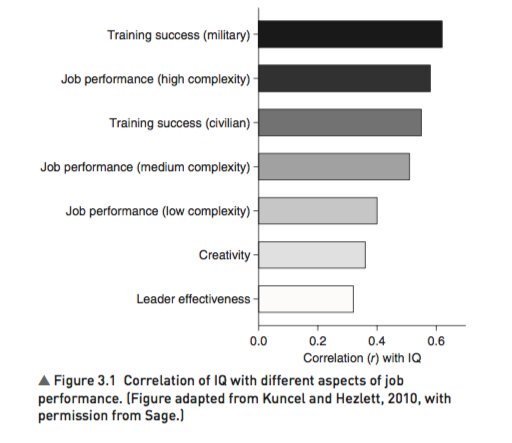
4. IQ predicts many important real world outcomes.

For example, though far from perfect, IQ is the single-best predictor of job performance we have – much better than Emotional Intelligence, the Big Five, Grit, etc. https://t.co/rKUgKDAAVx https://t.co/DWbVI8QSU3


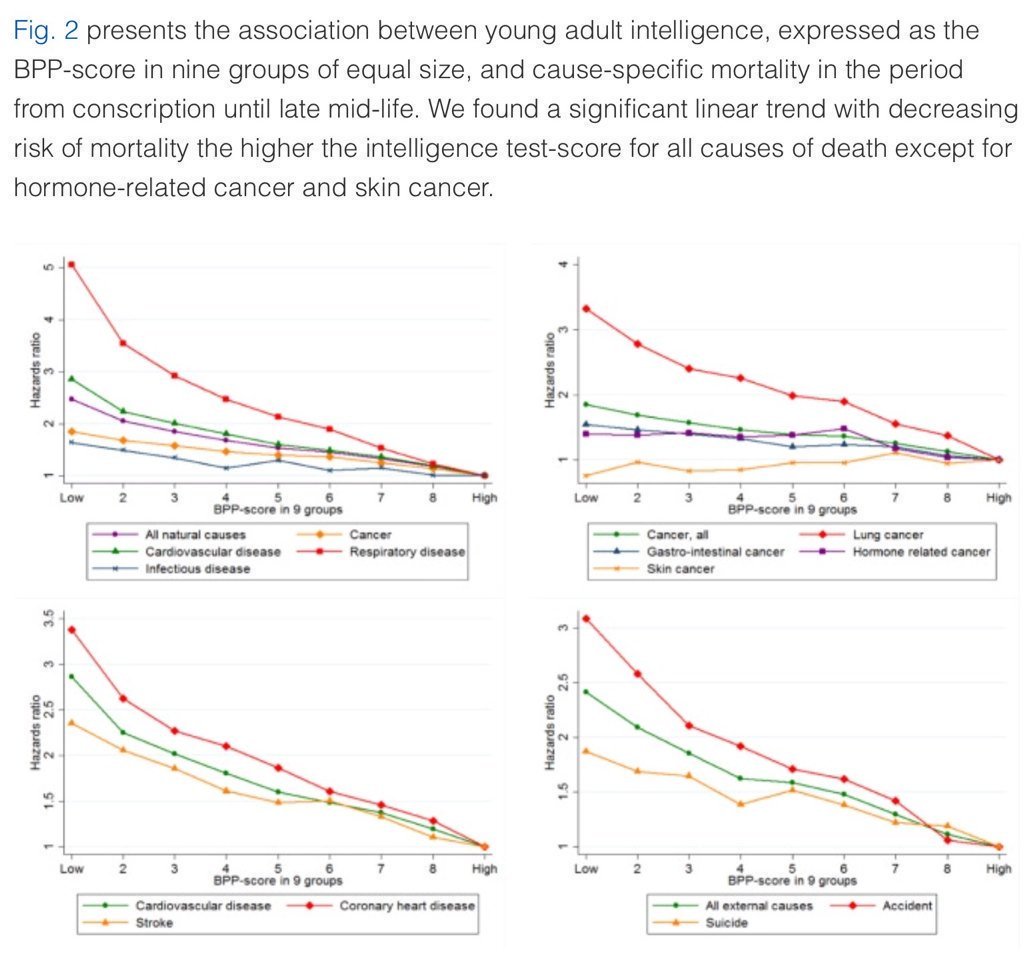
5. Higher IQ is associated with a lower risk of death from most causes, including cardiovascular disease, respiratory disease, most forms of cancer, homicide, suicide, and accident. https://t.co/PJjGNyeQRA (N = 728,160)