1. This is not correct by @BBCRosAtkins
New video on why the EU\u2019s approach to these Brexit trade talks should not come as a surprise. Whether you approve or not. Featuring @BBCChrisMorris @anandMenon1 & with thanks to colleagues Andrew Walker and Kevin Connolly. pic.twitter.com/ILeJAoSlRo
— Ros Atkins (@BBCRosAtkins) December 10, 2020
The EU demanded more alignment from Ukraine for 99% tariff reduction than it is asking from the UK for 100% tariff reduction.
The EU has never used dynamic alignment purely for LPF and outside the context of the DCFTA, and as @DavidHenigUK points out, it appears to need ironing out.
https://t.co/mc5BtSSpiZ
But note, there was no EU text precedent. Hence the first EU level playing field proposal contained non regression and a ratchet, but fudged enforcement, by suggesting implausibly, the establishment of new domestic bodies. 12/ pic.twitter.com/6irbr906rG
— David Henig (@DavidHenigUK) December 11, 2020
Here is Peter Mandelson at the time explaining that.
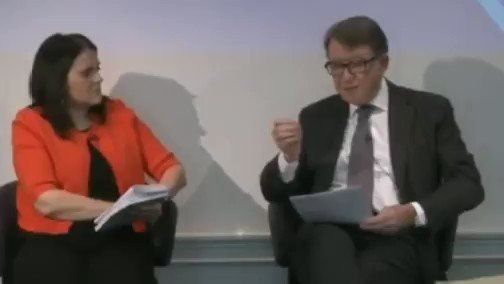
There was lots of unprecedented things in that deal.
We can probably not expect much in terms of our future trade deals outside the EU.
More from Politics


What does "patriots in control" mean?
What would that "look like" in reality?

So a massive adult film star in all his glory is included in an official FBI government filing
Hunter Biden's book is categorized as "Chinese
TIME admits to "conspiracy" to "not rig, rather
A "pillow guy" has military-grade intercepts detailing the IP addresses and device MAC IDs of EVERY incursion into every county in the
What would that "look like" in reality?
So a massive adult film star in all his glory is included in an official FBI government filing
Perhaps the explanation is that Patriots are in control.
— David Burney (@jdburney1) February 6, 2021
\U0001f923\U0001f923\U0001f923\U0001f923 https://t.co/W3S8TgeY74
Hunter Biden's book is categorized as "Chinese
Patriots in control?
— David Burney (@jdburney1) February 6, 2021
\U0001f923\U0001f923\U0001f923\U0001f923 https://t.co/p0rEyfd2DW
TIME admits to "conspiracy" to "not rig, rather
TIME admits stolen election, with spin!
— David Burney (@jdburney1) February 6, 2021
"They weren't rigging the election, they were fortifying it."
Recognize the Ministry of Truth? How many things in the last few years have been redefined to be the opposite of reality?
Google the definition of "bigot" if you doubt me. https://t.co/CNU888fxr4 pic.twitter.com/UEhRBOtUB6
A "pillow guy" has military-grade intercepts detailing the IP addresses and device MAC IDs of EVERY incursion into every county in the
God bless the pillow manufacturer.
— David Burney (@jdburney1) February 6, 2021
The last 30 minutes details where every single incursion is recorded including IP and MAC addresses. 100% proof. pic.twitter.com/P5MVb1xGNC

THREAD
1)
@SidneyPowell1 reflects on #Iran’s meddling in the U.S. in a recent tweet to U.S. President Donald Trump.
This thread focuses on Iran’s dangerous influence in the U.S., especially through its DC-based lobby group
2)
Why is this important?
@DNI_Ratcliffe "told CBS News that there was foreign election interference by China, #Iran & Russia in November of this year [2020]."
All Americans should be informed about how Iran & its lobby group NIAC are meddling in the
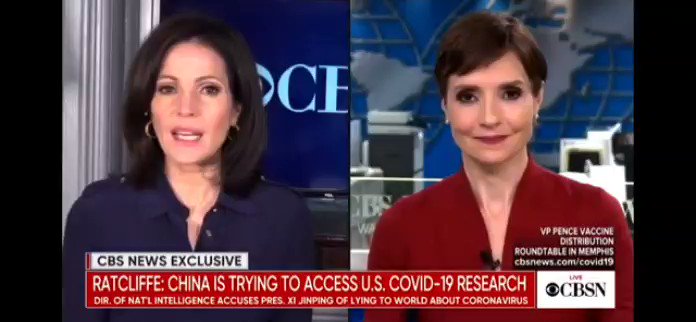
3)
#Iran has been increasingly aiming to interfere in U.S. elections specifically through NIAC.
DNI John Ratcliffe had previously shed light on this vital
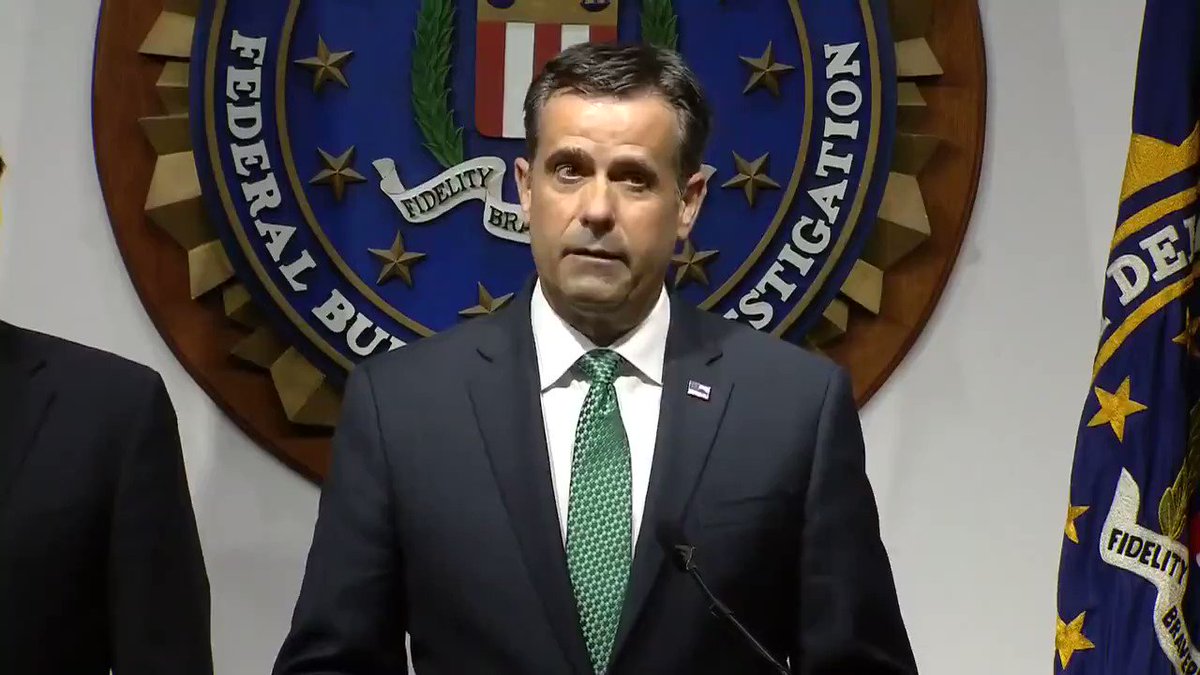
4)
NIAC is a lobby group in the U.S. pushing Iran’s talking points.
Listen to this Iranian regime insider explain that NIAC was established by @JZarif, the foreign minister of

5)
@tparsi is the official founder of NIAC in the U.S.
Listen to how Trita Parsi parrots Zarif’s talking
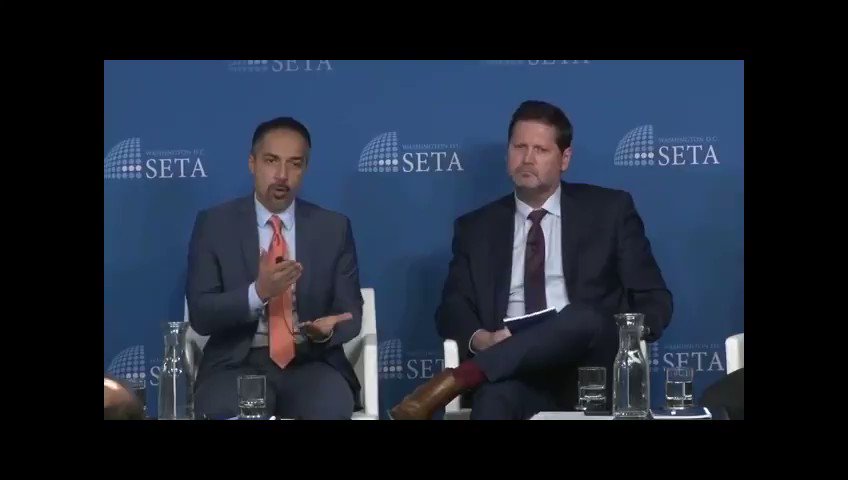
1)
@SidneyPowell1 reflects on #Iran’s meddling in the U.S. in a recent tweet to U.S. President Donald Trump.
This thread focuses on Iran’s dangerous influence in the U.S., especially through its DC-based lobby group
Dear @realDonaldTrump
— Sidney Powell \U0001f1fa\U0001f1f8\u2b50\u2b50\u2b50 (@SidneyPowell1) December 23, 2020
#China and #Iran stole this election from the #American people
who voted for you in a world-record landslide!
We must expose all the corruption and restore the Republic now
There will never be a free and fair election if we don\u2019t end the rigging now \U0001f1fa\U0001f1f8 pic.twitter.com/2t707xN0ar
2)
Why is this important?
@DNI_Ratcliffe "told CBS News that there was foreign election interference by China, #Iran & Russia in November of this year [2020]."
All Americans should be informed about how Iran & its lobby group NIAC are meddling in the
3)
#Iran has been increasingly aiming to interfere in U.S. elections specifically through NIAC.
DNI John Ratcliffe had previously shed light on this vital
4)
NIAC is a lobby group in the U.S. pushing Iran’s talking points.
Listen to this Iranian regime insider explain that NIAC was established by @JZarif, the foreign minister of
5)
@tparsi is the official founder of NIAC in the U.S.
Listen to how Trita Parsi parrots Zarif’s talking


You May Also Like

@EricTopol @NBA @StephenKissler @yhgrad B.1.1.7 reveals clearly that SARS-CoV-2 is reverting to its original pre-outbreak condition, i.e. adapted to transgenic hACE2 mice (either Baric's BALB/c ones or others used at WIV labs during chimeric bat coronavirus experiments aimed at developing a pan betacoronavirus vaccine)
@NBA @StephenKissler @yhgrad 1. From Day 1, SARS-COV-2 was very well adapted to humans .....and transgenic hACE2 Mice
@NBA @StephenKissler @yhgrad 2. High Probability of serial passaging in Transgenic Mice expressing hACE2 in genesis of SARS-COV-2
@NBA @StephenKissler @yhgrad B.1.1.7 has an unusually large number of genetic changes, ... found to date in mouse-adapted SARS-CoV2 and is also seen in ferret infections.
https://t.co/9Z4oJmkcKj

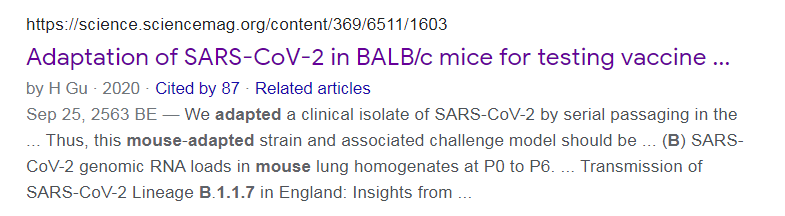
@NBA @StephenKissler @yhgrad We adapted a clinical isolate of SARS-CoV-2 by serial passaging in the ... Thus, this mouse-adapted strain and associated challenge model should be ... (B) SARS-CoV-2 genomic RNA loads in mouse lung homogenates at P0 to P6.
https://t.co/I90OOCJg7o
@NBA @StephenKissler @yhgrad 1. From Day 1, SARS-COV-2 was very well adapted to humans .....and transgenic hACE2 Mice
1. From Day 1, SARS-COV-2 was very well adapted to humans .....and transgenic hACE2 Mice
— Billy Bostickson \U0001f3f4\U0001f441&\U0001f441 \U0001f193 (@BillyBostickson) January 30, 2021
"we generated a mouse model expressing hACE2 by using CRISPR/Cas9 knockin technology. In comparison with wild-type C57BL/6 mice, both young & aged hACE2 mice sustained high viral loads... pic.twitter.com/j94XtSkscj
@NBA @StephenKissler @yhgrad 2. High Probability of serial passaging in Transgenic Mice expressing hACE2 in genesis of SARS-COV-2
1. High Probability of serial passaging in Transgenic Mice expressing hACE2 in genesis of SARS-COV-2!
— Billy Bostickson \U0001f3f4\U0001f441&\U0001f441 \U0001f193 (@BillyBostickson) January 2, 2021
2 papers:
Human\u2013viral molecular mimicryhttps://t.co/irfH0Zgrve
Molecular Mimicryhttps://t.co/yLQoUtfS6s https://t.co/lsCv2iMEQz
@NBA @StephenKissler @yhgrad B.1.1.7 has an unusually large number of genetic changes, ... found to date in mouse-adapted SARS-CoV2 and is also seen in ferret infections.
https://t.co/9Z4oJmkcKj
@NBA @StephenKissler @yhgrad We adapted a clinical isolate of SARS-CoV-2 by serial passaging in the ... Thus, this mouse-adapted strain and associated challenge model should be ... (B) SARS-CoV-2 genomic RNA loads in mouse lung homogenates at P0 to P6.
https://t.co/I90OOCJg7o