What to do?
Results of elections over the last five years signal to Progressives that we cannot simply continue thinking in traditional ways, proposing the usual, conventional solutions & hoping the pendulum could shift in their favour.
We need to wake the fuck
What to do?


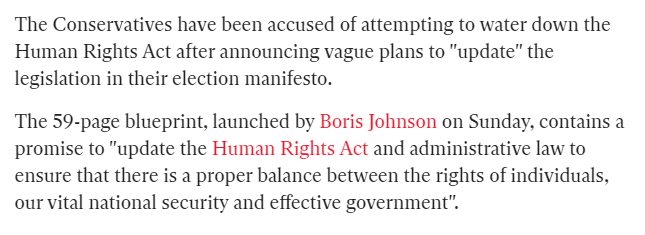
We need to find, articulate, amplify & put into practice political answers to populism in a practical, solution-oriented & positive ways.

Nostalgia for the 1980s & 1990s
Surging sense of national identity
Desire for economic justice
Desire for greater security & stability
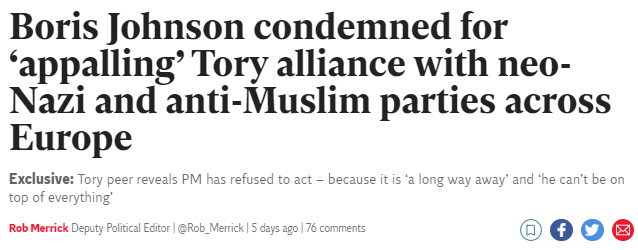
The 80s & 90s are associated with economic growth & job security. An idealised past that voters crave: they consider it the age of stable security, when their countries were still “independent & authentic”. They no longer feel at home in their own countries.
Populist voters feel that their roots, their history, their traditional values & often even their religion are threatened by a changing world.


uniformly designed shops, restaurants & cafés - although they welcome some benefits of globalisation, eg selection of food & goods, & cheap & simple travel.


They feel that the fruits of globalisation are distributed unequally in the world.



few decades: how far should the left stick by its core position & how far should it adapt to the changing environment?
So what strategies could we adopt?
European integration
Community
Patriotism
Socio-economic protection
Migration
Cooperation

a concept of the nation that point beyond an exclusive sense of nationalism. Some call it inclusive nationalism, others refer to it as liberal or positive nationalism, but many prefer to re-accent/redefine the word 'patriotism'.

social equality, tolerance & the willingness of the community’s members to mutually support one another: forging a national community in which everyone feels at home.

this issue from a left-wing perspective. However...

The rhetoric which says “migration has always existed & will always exist, there's nothing to be done about it”, or which asks citizens to just accept it, is doomed to fail.
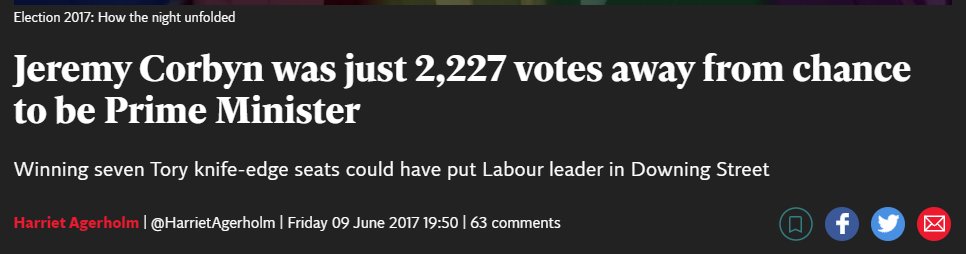
In Britain we came very close in 2017, but fell short. Sadly, I think it optimistic that @UKLabour wins a majority in 2024.
More from Politics





How the CIA gets the media to lie to you
https://t.co/vsTrS43Fft

https://t.co/rUTYg42PYH
https://t.co/1r0MbPv8wG
War on democracy - installing US-puppet dictators in Latin America in order to control their economies
#Guatemala #Arbenz #RedScare
Propaganda, "harmless bombing" and a CIA terror campaign

CIA war on Nicaragua
https://t.co/vsTrS43Fft
#OTD 73 years ago, CIA was born after President Truman signed the National Security Act of 1947.
— CIA (@CIA) September 18, 2020
\xa0
Separated into five directorates, the Agency collects, analyze and disseminates intelligence to top U.S. officials.
\xa0
Learn more about today's #CIA: https://t.co/diMVOoC3jT pic.twitter.com/ljoTxBYbAc
https://t.co/rUTYg42PYH
War is being pushed upon us by 'news'
— Maria \u23f3 (@ml_1maria) April 21, 2018
Journalists are bribed to write pro-American and anti-Russian
Bribed to lie, betray, manipulate & push for war #CIA #propaganda
Dr Udo Ulfkottehttps://t.co/MsPh5vOwTW pic.twitter.com/Z5GVEzSKBd
https://t.co/1r0MbPv8wG
Former CIA agent and whistleblower Phillip Agee explains that the USA wages economic war against socialists nations because it is threatened by a successful example of an alternative economic system. 1/ pic.twitter.com/NUpdpxnYgw
— \U0001d482\U0001d48d\U0001d48a\U0001d484\U0001d48a\U0001d482 (@alicia_dl_1) July 23, 2020
War on democracy - installing US-puppet dictators in Latin America in order to control their economies
#Guatemala #Arbenz #RedScare
Propaganda, "harmless bombing" and a CIA terror campaign
CIA war on Nicaragua
CIA operation in Nicaragua
— Maria \u23f3 (@ml_1maria) July 19, 2020
Destabilisation program: rip apart the social and economic fabric - make the people suffer as much as you can, until the country plunges into chaos, until at some point you can step in and impose your choice of government on that country. pic.twitter.com/dlxoMZX6xw