The Esper firing sums up well the extremely frustrating and toxic dynamic between Trump's political maneuvers and governing strategy and his fanbase.

Step 1: There is a decisive moment, crisis, or major opportunity

Step 2: Trump talks big, takes photo-ops, and generates extreme reactions from his opponents.

Step 3: Trum fails to take action, sends mixed signals, and generally bungles the opportunity.
Step 4: Trump lashes out at the people who gave him bad advice ... and then talks big again.

Step 5: Trump's fans announce that we're about to "see the real Trump," "the gloves are off," "he'll go full bore now," etc.

Rinse, repeat.
I can think of countless examples that fit this patter: John Bolton and Iran, Esper and the BLM riots, reforming legal immigration, building The Wall, removing troops from Afghanistan, Covid stimulus checks...

Seemingly, every consequential issue fits this pattern.
So we're left w/ this situation in which Trump, at least rhetorically, still stands as the candidate of immigration restriction, nationalism, ending wars, law and order, traditional values, etc. Yet he had clear opportunities to act decisively on all of these matters and didn't.
Many say that I expect too much of Trump. And that's fair up to a point... But I never expected him to go undefeated and run up the score on his opponents. I always recognized how difficult and delicate all this was. And yes, Trump has had internal enemies galore.
What I ultimately recognize is the toxic nature of Trump's presidency. When you see a repeated pattern of failure, you have to move off it—and stop giving credit to the person simply because he's associated with these hot-button issues in a highly polarized political environment.
Yes, it's difficult to get anything done in Washington, not to mention change paradigms. But, over and over again, Trump has had runners on second and third, and he continues to strike out—or worse, he denies that there was an opportunity to score.
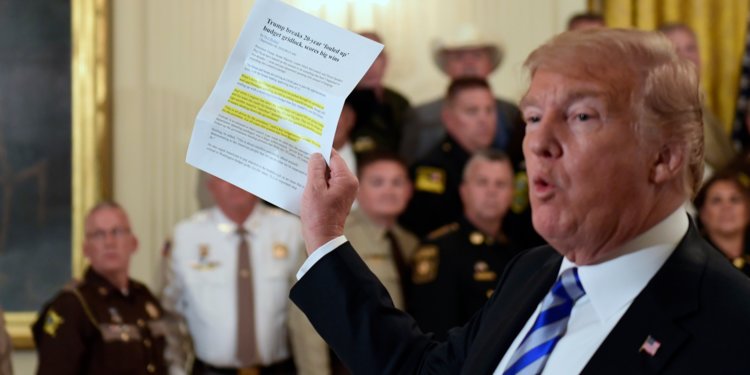
Remember this stunt?

More from Politics

You May Also Like

So the cryptocurrency industry has basically two products, one which is relatively benign and doesn't have product market fit, and one which is malignant and does. The industry has a weird superposition of understanding this fact and (strategically?) not understanding it.


The benign product is sovereign programmable money, which is historically a niche interest of folks with a relatively clustered set of beliefs about the state, the literary merit of Snow Crash, and the utility of gold to the modern economy.

This product has narrow appeal and, accordingly, is worth about as much as everything else on a 486 sitting in someone's basement is worth.

The other product is investment scams, which have approximately the best product market fit of anything produced by humans. In no age, in no country, in no city, at no level of sophistication do people consistently say "Actually I would prefer not to get money for nothing."

This product needs the exchanges like they need oxygen, because the value of it is directly tied to having payment rails to move real currency into the ecosystem and some jurisdictional and regulatory legerdemain to stay one step ahead of the banhammer.