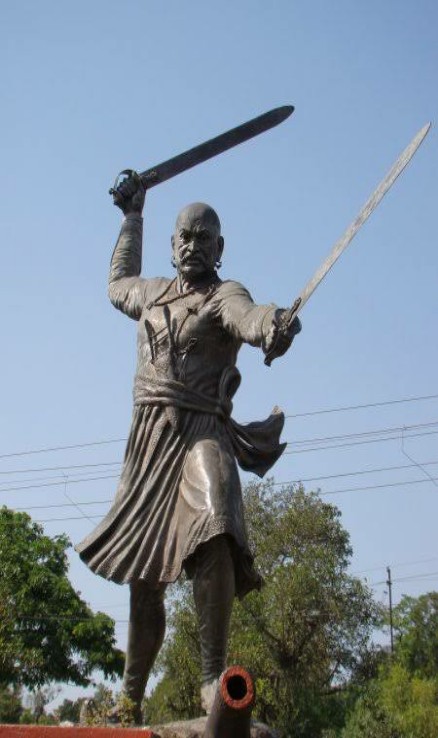
There will be many contenders for posts, maybe even for President’s if given a chance.
Why not leaders volunteer to propagate views, counter the Modi regime on the field?
/2
Bad ballot design led to a lot of undervotes for Bill Nelson in Broward Co., possibly even enough to cost him his Senate seat. They do appear to be real undervotes, though, instead of tabulation errors. He doesn't really seem to have a path to victory. https://t.co/utUhY2KTaR
— Nate Silver (@NateSilver538) November 16, 2018
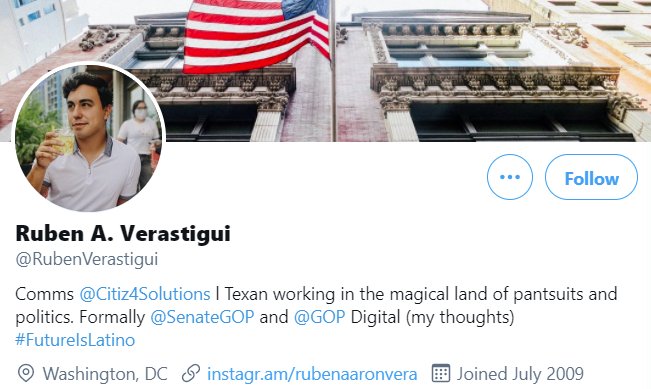
NEW: D.C. Police arrested Ruben Verastigui -- a former "senior digital strategist" for the Senate Republican Conference -- on charges of distribution of child pornography resulting from a time span that allegedly included his time at the SRC. How I confirmed ID in thread (1/?) pic.twitter.com/AcZ7c2sBKb
— Jared Holt (@jaredlholt) February 6, 2021

#OTD 73 years ago, CIA was born after President Truman signed the National Security Act of 1947.
— CIA (@CIA) September 18, 2020
\xa0
Separated into five directorates, the Agency collects, analyze and disseminates intelligence to top U.S. officials.
\xa0
Learn more about today's #CIA: https://t.co/diMVOoC3jT pic.twitter.com/ljoTxBYbAc
War is being pushed upon us by 'news'
— Maria \u23f3 (@ml_1maria) April 21, 2018
Journalists are bribed to write pro-American and anti-Russian
Bribed to lie, betray, manipulate & push for war #CIA #propaganda
Dr Udo Ulfkottehttps://t.co/MsPh5vOwTW pic.twitter.com/Z5GVEzSKBd
Former CIA agent and whistleblower Phillip Agee explains that the USA wages economic war against socialists nations because it is threatened by a successful example of an alternative economic system. 1/ pic.twitter.com/NUpdpxnYgw
— \U0001d482\U0001d48d\U0001d48a\U0001d484\U0001d48a\U0001d482 (@alicia_dl_1) July 23, 2020

CIA operation in Nicaragua
— Maria \u23f3 (@ml_1maria) July 19, 2020
Destabilisation program: rip apart the social and economic fabric - make the people suffer as much as you can, until the country plunges into chaos, until at some point you can step in and impose your choice of government on that country. pic.twitter.com/dlxoMZX6xw