#Nifty outlook!
1. Price/Time Symmetry.
2. Probable Double Top Inplay.

More from ₹ohan $hah


More from Nifty




#Nifty
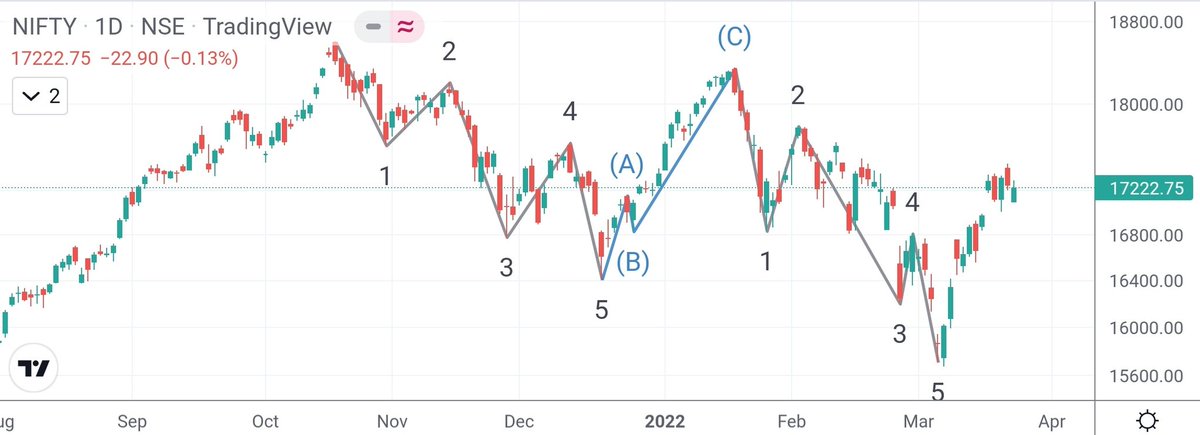
So now that Nifty has undergone ABC correction in the expected manner, what to expect next?
I think we have started larger degree wave 3, once 16800 was crossed.
16800 is the reference level now. We will get more sense by end of next week/ month. https://t.co/KsziuUpZxU
#NIFTY
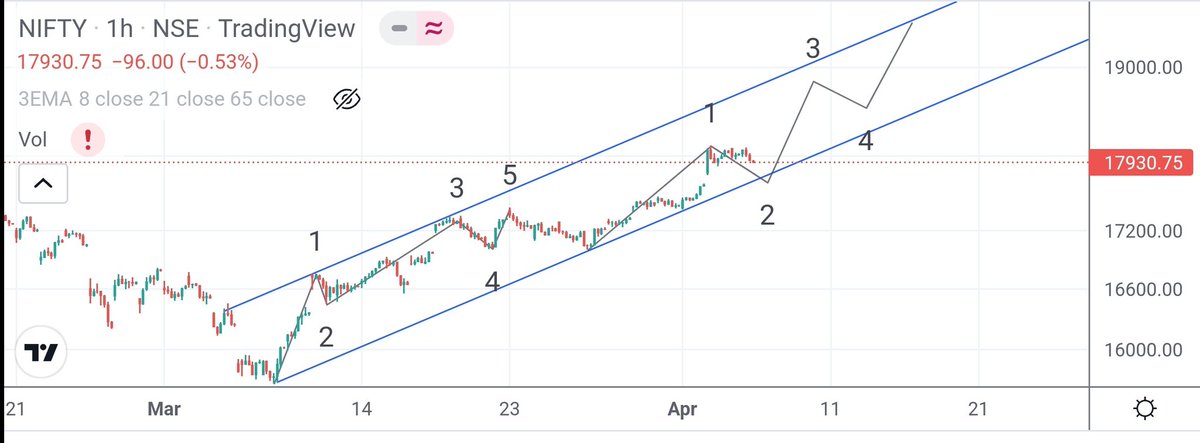
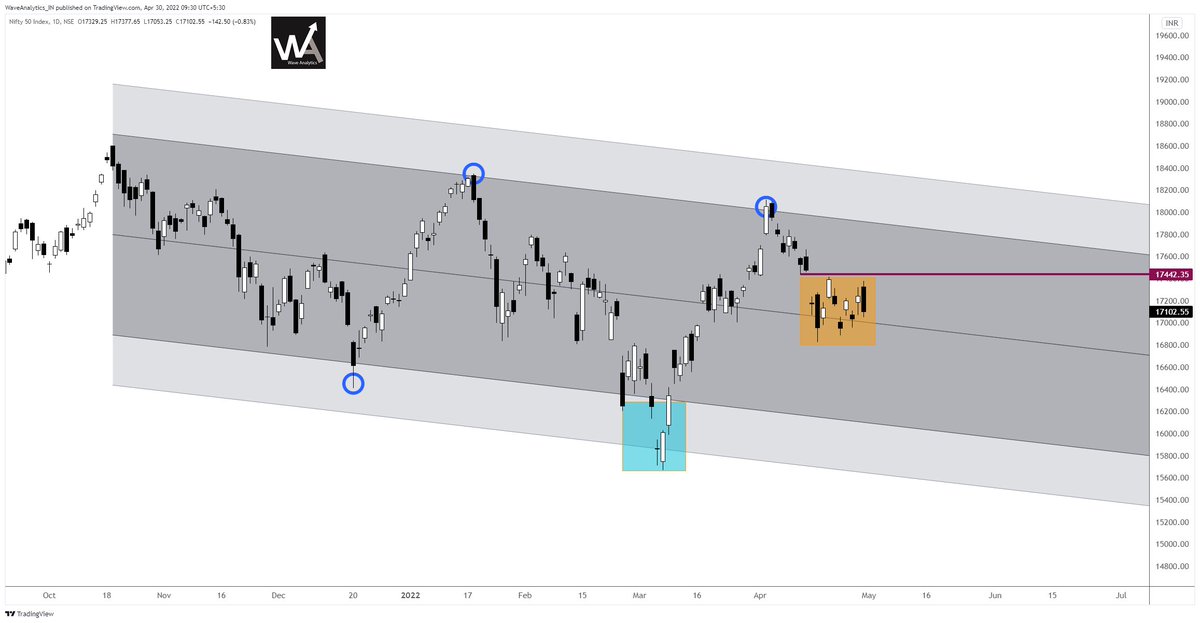
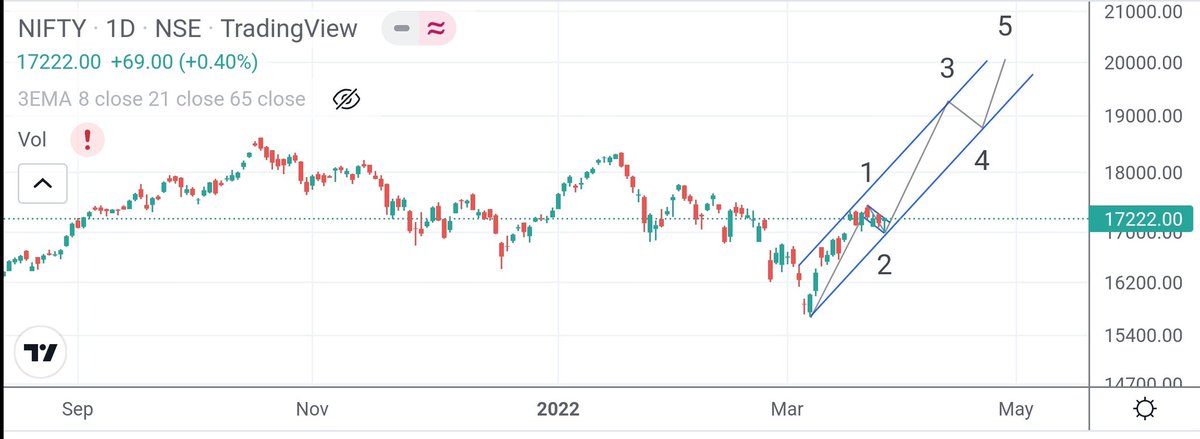
If 17445 is taken out, then may be we are heading to fresh new all time on Nifty.
Things may pan out way faster than expected.
#NIFTY
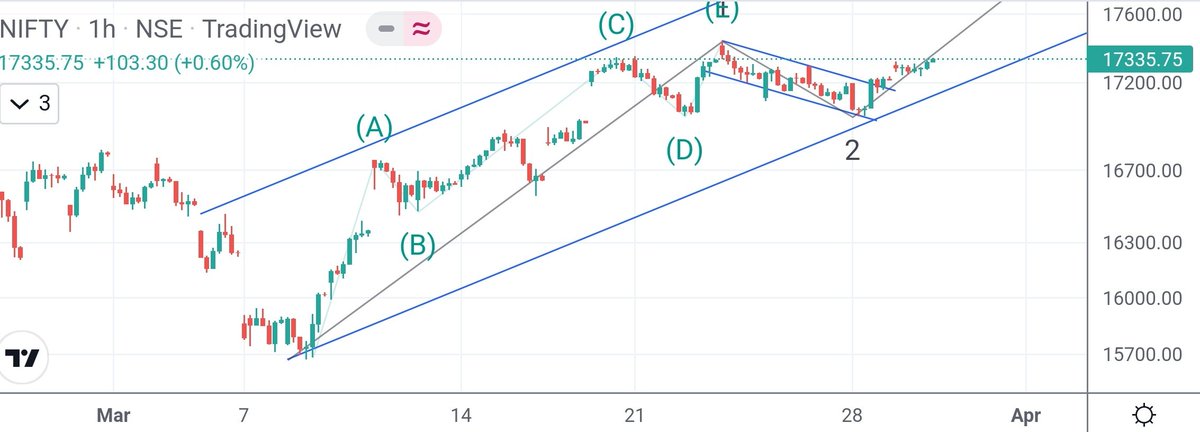
Zoomed in cross-section of the chart above.
Wave 3 of 1 should have started today, which can take Nifty to fresh all time highs.
#NIFTY
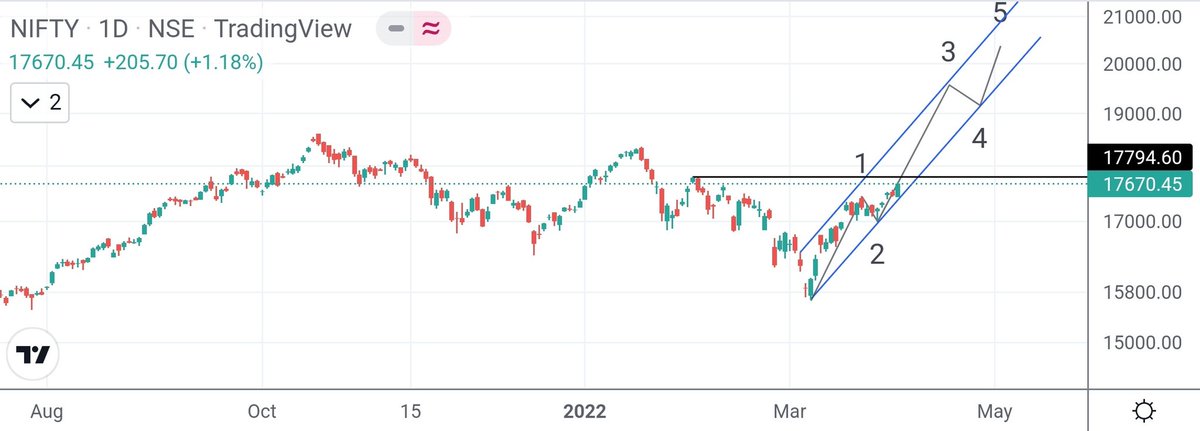
So now Nifty is moving more clearly on the expected path, what's next?
Nifty has started longer term wave 3 advancement, pending final confirmation of HH by crossing 17800.
In Wave 1 of 3, can expect a move to 20k+.
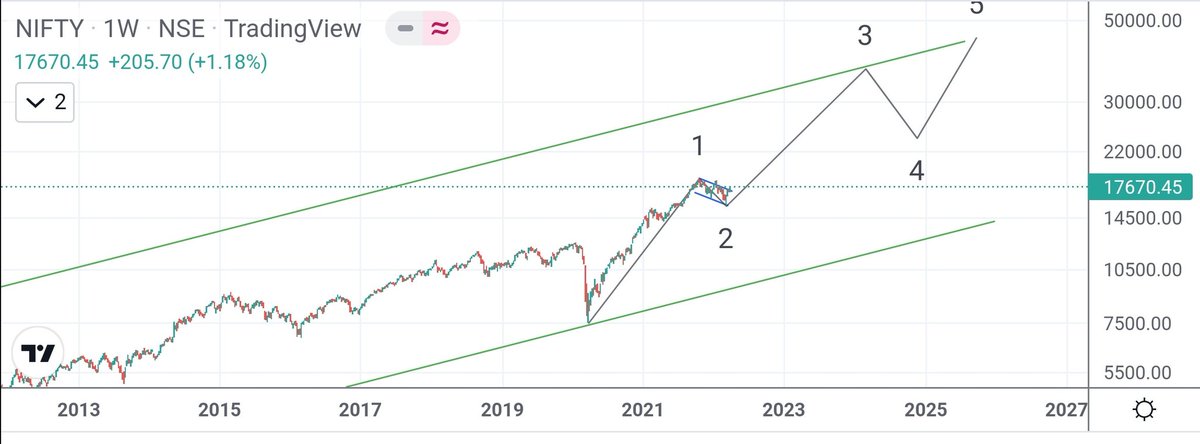
In terms of longer term wave structure:
Wave 1: 7500 to 18600
Wave 3: 15700 to 35000+
And this can pan out over next 2 years or so.
Since wave 2 was a shallow correction, wave 4 can potentially be a deeper correction.
So now that Nifty has undergone ABC correction in the expected manner, what to expect next?
I think we have started larger degree wave 3, once 16800 was crossed.
16800 is the reference level now. We will get more sense by end of next week/ month. https://t.co/KsziuUpZxU
I am no expert in Wave Theory, but can this be a possible path over next few weeks/months?
— Mayank Narula (@Mayank_Narula1) December 6, 2021
Views requested. @idineshptl @indiacharts @nishkumar1977 pic.twitter.com/u3DjEeqoqB
#NIFTY
If 17445 is taken out, then may be we are heading to fresh new all time on Nifty.
Things may pan out way faster than expected.
#NIFTY
Zoomed in cross-section of the chart above.
Wave 3 of 1 should have started today, which can take Nifty to fresh all time highs.
#NIFTY
So now Nifty is moving more clearly on the expected path, what's next?
Nifty has started longer term wave 3 advancement, pending final confirmation of HH by crossing 17800.
In Wave 1 of 3, can expect a move to 20k+.
In terms of longer term wave structure:
Wave 1: 7500 to 18600
Wave 3: 15700 to 35000+
And this can pan out over next 2 years or so.
Since wave 2 was a shallow correction, wave 4 can potentially be a deeper correction.