
Here are a few of my thoughts…
What are some things you should *NOT* do as an indie hacker?
Here are a few of my thoughts…
E.g. advice that works for a high-growth VC-funded startup might be disastrous to your indie business.
You'll end up overvaluing and over-protecting your pet ideas. Or worse, you'll never come up with an idea at all, because you'll assume that it needs to be something completely new.
Talk to customers about what you're doing from day #1. Figure out where they hang online and learn from their conversations. Try to get a strong sense of what they'll think about your product before you waste months building it.
Going from 1M to 2M users requires a bulletproof strategy, considerable knowledge, and a healthy dose of luck. Going from 1 to 2 users requires… a conversation.
Many of the strategies that work at scale are often deadly to early-stage companies.
More from Makers

Don't look at deadlines negatively! They are a useful tool to measure your performance + stimulate you to do more. You can learn a lot from a single deadline. Did you work too little or too much? Was the goal too ambitious or easy? Apply lessons to the future work. 😉 #MyMindset

I wish I had this... — don't excuse yourself. Forget about what you can't and focus on what you can.
Stop comparing yourself to others, come from the point of what you have, know and have: "I can... so I will do..!" #MyMindset

BTW this was an update of one of the previous tweets. And I'm continuing this thread today!
Do something for the long-term. Everything else is a distraction. 🛑 Nowadays I always check if the thing I'm doing aligns with my long-term plans. If not — that is probably not the best thing to do at the moment. #MyMindset
The only way to get more done is to have less to do. Eliminate your obligations, say "no" to things that are not important, stay minimal in what you do, focus. Being busy is not equal to getting things done. #MyMindset

I wish I had this... — don't excuse yourself. Forget about what you can't and focus on what you can.
Stop comparing yourself to others, come from the point of what you have, know and have: "I can... so I will do..!" #MyMindset
BTW this was an update of one of the previous tweets. And I'm continuing this thread today!
Focus only on positive things! These include what *you* have, know and can do. If you don't have, know or cannot do something either get it or ignore it. Don't think about it and don't use it as an excuse.
— Gleb Sabirzyanov (@zyumbik) October 17, 2018
I've been struggling to follow this principle for a long time. #MyMindset pic.twitter.com/SK5vtwHs3G
Do something for the long-term. Everything else is a distraction. 🛑 Nowadays I always check if the thing I'm doing aligns with my long-term plans. If not — that is probably not the best thing to do at the moment. #MyMindset
The only way to get more done is to have less to do. Eliminate your obligations, say "no" to things that are not important, stay minimal in what you do, focus. Being busy is not equal to getting things done. #MyMindset


First update to https://t.co/lDdqjtKTZL since the challenge ended – Medium links!! Go add your Medium profile now 👀📝 (thanks @diannamallen for the suggestion 😁)

Just added Telegram links to https://t.co/lDdqjtKTZL too! Now you can provide a nice easy way for people to message you :)

Less than 1 hour since I started adding stuff to https://t.co/lDdqjtKTZL again, and profile pages are now responsive!!! 🥳 Check it out -> https://t.co/fVkEL4fu0L
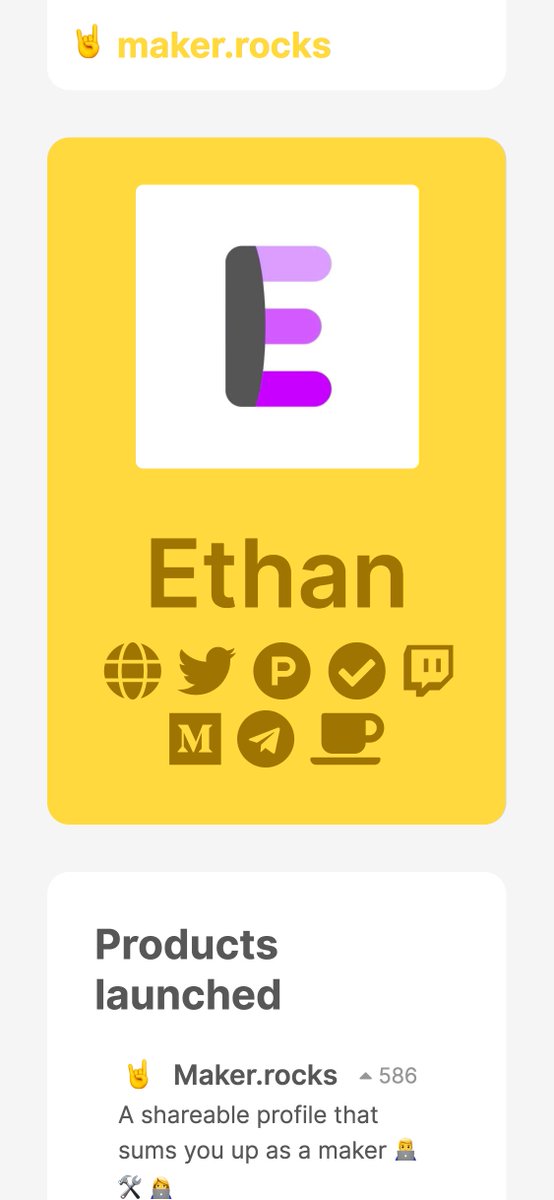
Accounts page is now also responsive!! 📱✨
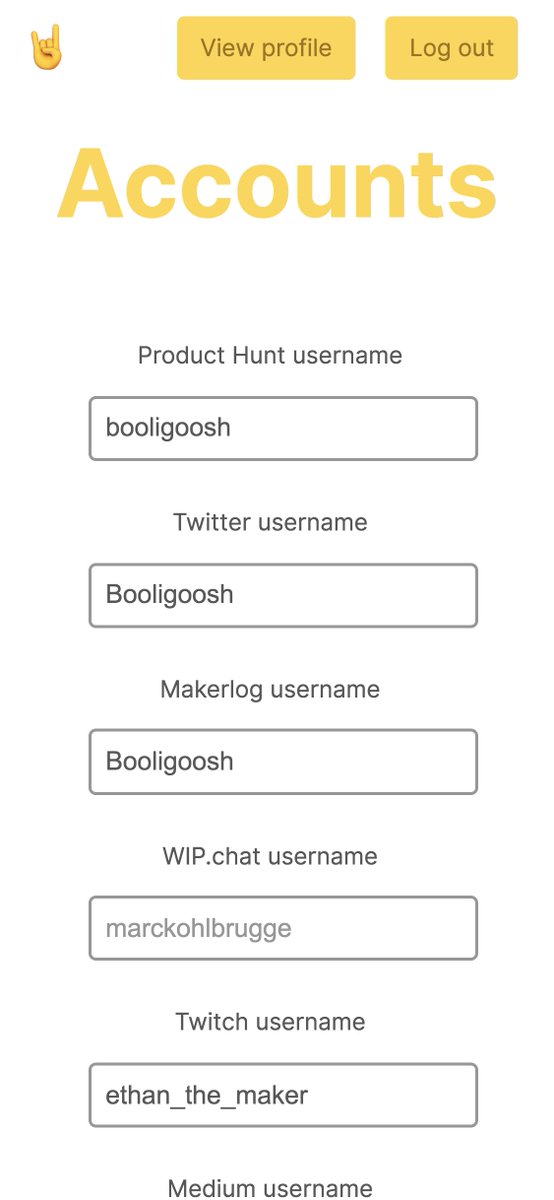
💪 I managed to make the whole site responsive in about an hour. On my roadmap I had it down as 4-5 hours!!! 🤘🤠🤘
Just added Telegram links to https://t.co/lDdqjtKTZL too! Now you can provide a nice easy way for people to message you :)
Less than 1 hour since I started adding stuff to https://t.co/lDdqjtKTZL again, and profile pages are now responsive!!! 🥳 Check it out -> https://t.co/fVkEL4fu0L
Accounts page is now also responsive!! 📱✨
💪 I managed to make the whole site responsive in about an hour. On my roadmap I had it down as 4-5 hours!!! 🤘🤠🤘


You May Also Like







**Thread on Bravery of Sikhs**
(I am forced to do this due to continuous hounding of Sikh Extremists since yesterday)
Rani Jindan Kaur, wife of Maharaja Ranjit Singh had illegitimate relations with Lal Singh (PM of Ranjit Singh). Along with Lal Singh, she attacked Jammu, burnt - https://t.co/EfjAq59AyI

Hindu villages of Jasrota, caused rebellion in Jammu, attacked Kishtwar.
Ancestors of Raja Ranjit Singh, The Sansi Tribe used to give daughters as concubines to Jahangir.

The Ludhiana Political Agency (Later NW Fronties Prov) was formed by less than 4000 British soldiers who advanced from Delhi and reached Ludhiana, receiving submissions of all sikh chiefs along the way. The submission of the troops of Raja of Lahore (Ranjit Singh) at Ambala.
Dabistan a contemporary book on Sikh History tells us that Guru Hargobind broke Naina devi Idol Same source describes Guru Hargobind serving a eunuch
YarKhan. (ref was proudly shared by a sikh on twitter)
Gobind Singh followed Bahadur Shah to Deccan to fight for him.

In Zafarnama, Guru Gobind Singh states that the reason he was in conflict with the Hill Rajas was that while they were worshiping idols, while he was an idol-breaker.
And idiot Hindus place him along Maharana, Prithviraj and Shivaji as saviours of Dharma.

(I am forced to do this due to continuous hounding of Sikh Extremists since yesterday)
Rani Jindan Kaur, wife of Maharaja Ranjit Singh had illegitimate relations with Lal Singh (PM of Ranjit Singh). Along with Lal Singh, she attacked Jammu, burnt - https://t.co/EfjAq59AyI
Tomorrow again same thing happens bcoz fudus like you are creating a narrative oh Khalistan. when farmers are asking MSP. (RSS ki tatti khane wale Kerni sena ke kutte).
— Ancient Economist (@_stock_tips) December 5, 2020
U kill sikhs in 1984 just politics. To BC low IQ fudu Saale entire history was politics.
Hindu villages of Jasrota, caused rebellion in Jammu, attacked Kishtwar.
Ancestors of Raja Ranjit Singh, The Sansi Tribe used to give daughters as concubines to Jahangir.
The Ludhiana Political Agency (Later NW Fronties Prov) was formed by less than 4000 British soldiers who advanced from Delhi and reached Ludhiana, receiving submissions of all sikh chiefs along the way. The submission of the troops of Raja of Lahore (Ranjit Singh) at Ambala.
Dabistan a contemporary book on Sikh History tells us that Guru Hargobind broke Naina devi Idol Same source describes Guru Hargobind serving a eunuch
YarKhan. (ref was proudly shared by a sikh on twitter)
Gobind Singh followed Bahadur Shah to Deccan to fight for him.
In Zafarnama, Guru Gobind Singh states that the reason he was in conflict with the Hill Rajas was that while they were worshiping idols, while he was an idol-breaker.
And idiot Hindus place him along Maharana, Prithviraj and Shivaji as saviours of Dharma.