At least in part, they did this to stop our pirates from being such a monumental pain in their arse...
Just because.
Here's an interesting story about a man you've almost certainly heard of, think you know stuff about, but probably weren't taught any of the good, funny, ludicrous stuff that makes it really interesting.
It's long. You might hate it. I'll take that chance...
At least in part, they did this to stop our pirates from being such a monumental pain in their arse...
The Armada scattered, and the weather took care of the rest, driving them towards the Dutch coast...
But somebody had to come out of it a hero, and that somebody was Sir Francis Drake...
Aged about 12, Drake became apprentice to a neighbour who owned ship that traded with France.
By his early-20s, he was ready for his first foray into piracy and slave-trading, and without wishing to undermine a national legend, he was an absolute bloody shambles...
But somehow, he managed to fail to sell the slaves, even at a knock-down price...
God knows, I don’t want to elicit sympathy for the slavers, but ...
Anyway, the next year Drake was back, determined to make a better fist of things. If anything, it got worse...
Drake was attacked in port, 2/3 of his ships sunk, and he only escaped by swimming out to sea.
Still, he felt aggrieved that his "honest" job still got him attacked...
In 1572 he formed an alliance with escaped African slaves in Panama, and between them they planned a surprise attack on a Spanish mule-train of silver and gold being exported from the Spanish empire in Peru...
**exactly the same thing again**
This time, if anything things went a bit TOO well...
They separated out the more valuable gold, and buried the silver...
Drake's party, weighed down with literally tons of gold, then began the laborious trek back through 20 miles of pathless, mountainous jungle, to the shore where their raiding boats awaited...
Drake quickly cobbled-together a flimsy driftwood raft and, dignity intact, half-sailed, half-sploshed his way out to his flagship to get aid...
But in his absence, the English had signed a truce with the Spanish, which made it impossible for Drake to be officially acknowledged.
The Crown still took its half the money though. Obvs...
Still, he put it down as a “win”.
Magellan was the first circumnavigation, but Magellan himself lacked the foresight to stay alive to the end of the journey, so Drake gets the plaudits...
But back in London, lawyers used this hat-based rumour to justify taking over the whole of America. So Drake got knighted...
(He wasn't a fan of original ideas, Francis)
And off he went to finish off the last few bits of the Spanish navy...
The Spanish fleet was reduced to one galleon and 1,500 men.
In a stunning return to form, Drake failed dismally, losing 20 of his own vessels and 12,000 lives...
So, seemingly just to cheer himself up, he decided to attack the defenceless coastal town of Vigo, which he pounded with cannon for four days before landing and setting the remains on fire...
Back home, his disgrace was such that he was barely allowed near so much as a gravy boat for six years, and when he did return to the sea few could call it a success...
And then, perhaps feeling European war wasn’t his true metier, he led another a campaign against the Spanish in Central America.
You’ll be astonished to hear it didn’t go swimmingly...
And then, finally giving up on the sea, he decided to assault Panama by land, which worked out about as well as any of his previous ventures...
More from Life


![Peter McCormack [Jan/3\u279e\u20bf \U0001f511\u220e]](https://pbs.twimg.com/profile_images/1524287442307723265/_59ITDbJ_normal.jpg)


You May Also Like


THREAD: 12 Things Everyone Should Know About IQ
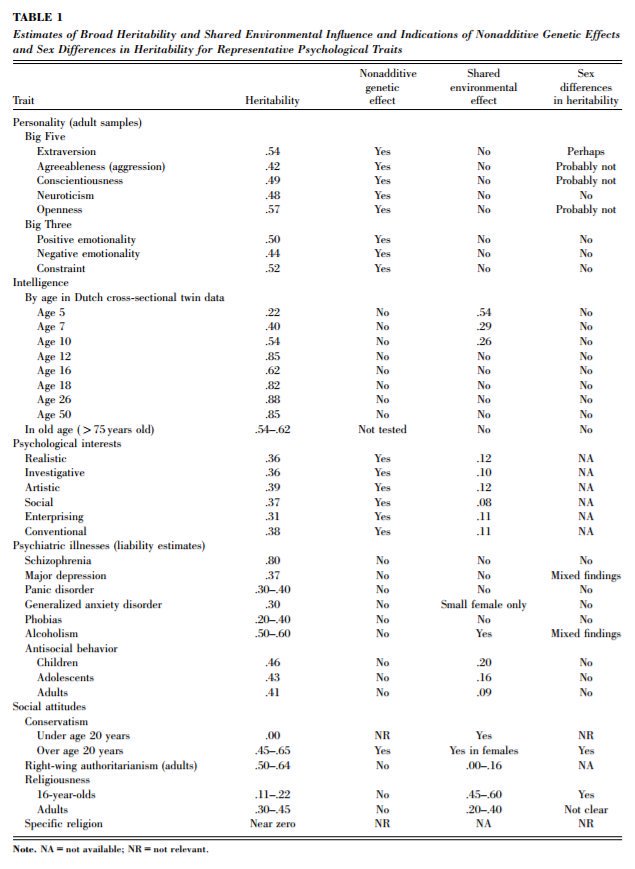
1. IQ is one of the most heritable psychological traits – that is, individual differences in IQ are strongly associated with individual differences in genes (at least in fairly typical modern environments). https://t.co/3XxzW9bxLE
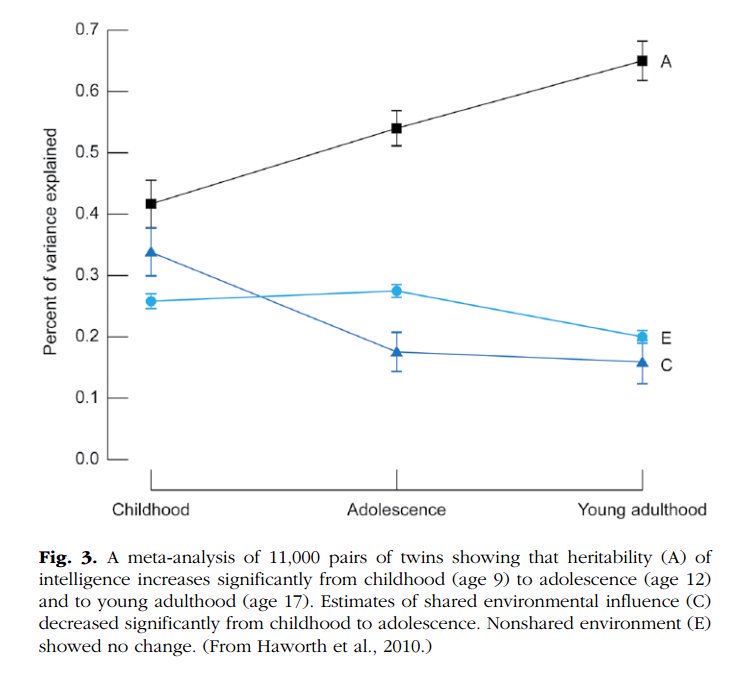
2. The heritability of IQ *increases* from childhood to adulthood. Meanwhile, the effect of the shared environment largely fades away. In other words, when it comes to IQ, nature becomes more important as we get older, nurture less. https://t.co/UqtS1lpw3n
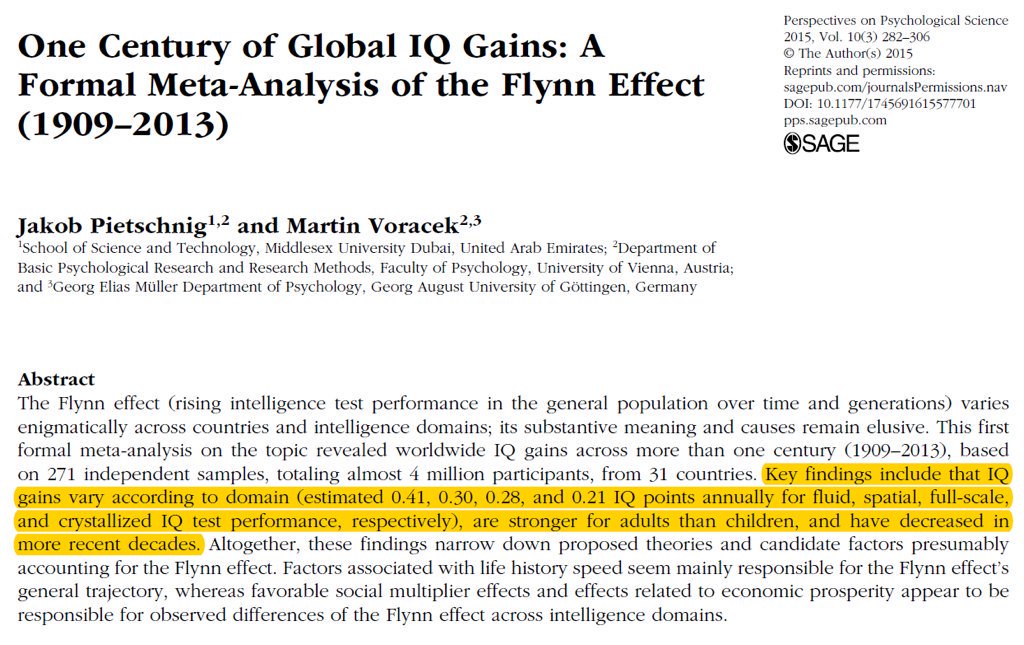
3. IQ scores have been increasing for the last century or so, a phenomenon known as the Flynn effect. https://t.co/sCZvCst3hw (N ≈ 4 million)
(Note that the Flynn effect shows that IQ isn't 100% genetic; it doesn't show that it's 100% environmental.)
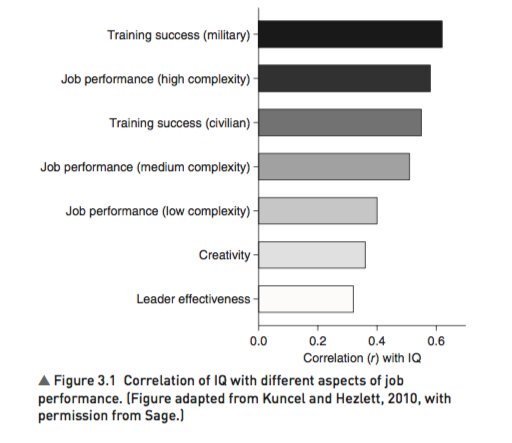
4. IQ predicts many important real world outcomes.
For example, though far from perfect, IQ is the single-best predictor of job performance we have – much better than Emotional Intelligence, the Big Five, Grit, etc. https://t.co/rKUgKDAAVx https://t.co/DWbVI8QSU3
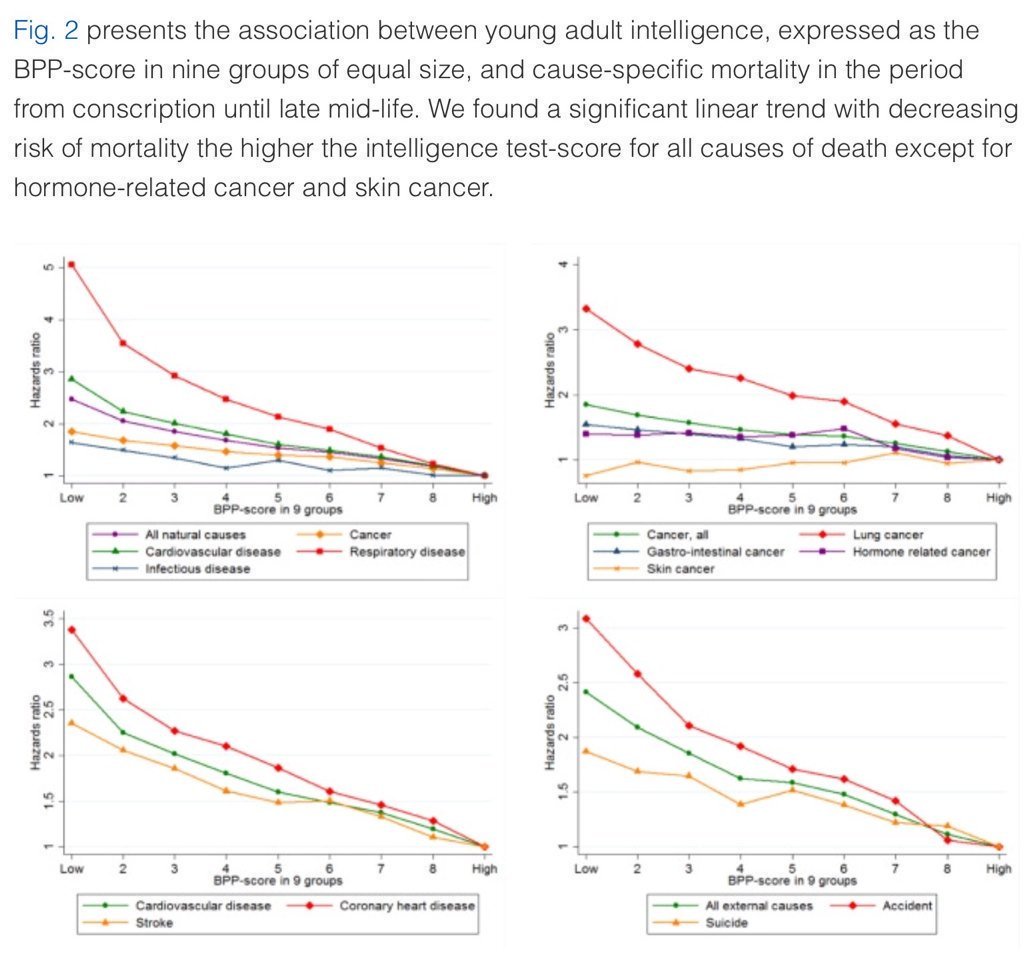
5. Higher IQ is associated with a lower risk of death from most causes, including cardiovascular disease, respiratory disease, most forms of cancer, homicide, suicide, and accident. https://t.co/PJjGNyeQRA (N = 728,160)
1. IQ is one of the most heritable psychological traits – that is, individual differences in IQ are strongly associated with individual differences in genes (at least in fairly typical modern environments). https://t.co/3XxzW9bxLE
2. The heritability of IQ *increases* from childhood to adulthood. Meanwhile, the effect of the shared environment largely fades away. In other words, when it comes to IQ, nature becomes more important as we get older, nurture less. https://t.co/UqtS1lpw3n
3. IQ scores have been increasing for the last century or so, a phenomenon known as the Flynn effect. https://t.co/sCZvCst3hw (N ≈ 4 million)
(Note that the Flynn effect shows that IQ isn't 100% genetic; it doesn't show that it's 100% environmental.)
4. IQ predicts many important real world outcomes.
For example, though far from perfect, IQ is the single-best predictor of job performance we have – much better than Emotional Intelligence, the Big Five, Grit, etc. https://t.co/rKUgKDAAVx https://t.co/DWbVI8QSU3
5. Higher IQ is associated with a lower risk of death from most causes, including cardiovascular disease, respiratory disease, most forms of cancer, homicide, suicide, and accident. https://t.co/PJjGNyeQRA (N = 728,160)


1/ Some initial thoughts on personal moats:
Like company moats, your personal moat should be a competitive advantage that is not only durable—it should also compound over time.
Characteristics of a personal moat below:
2/ Like a company moat, you want to build career capital while you sleep.
As Andrew Chen noted:
3/ You don’t want to build a competitive advantage that is fleeting or that will get commoditized
Things that might get commoditized over time (some longer than
4/ Before the arrival of recorded music, what used to be scarce was the actual music itself — required an in-person artist.
After recorded music, the music itself became abundant and what became scarce was curation, distribution, and self space.
5/ Similarly, in careers, what used to be (more) scarce were things like ideas, money, and exclusive relationships.
In the internet economy, what has become scarce are things like specific knowledge, rare & valuable skills, and great reputations.
Like company moats, your personal moat should be a competitive advantage that is not only durable—it should also compound over time.
Characteristics of a personal moat below:
I'm increasingly interested in the idea of "personal moats" in the context of careers.
— Erik Torenberg (@eriktorenberg) November 22, 2018
Moats should be:
- Hard to learn and hard to do (but perhaps easier for you)
- Skills that are rare and valuable
- Legible
- Compounding over time
- Unique to your own talents & interests https://t.co/bB3k1YcH5b
2/ Like a company moat, you want to build career capital while you sleep.
As Andrew Chen noted:
People talk about \u201cpassive income\u201d a lot but not about \u201cpassive social capital\u201d or \u201cpassive networking\u201d or \u201cpassive knowledge gaining\u201d but that\u2019s what you can architect if you have a thing and it grows over time without intensive constant effort to sustain it
— Andrew Chen (@andrewchen) November 22, 2018
3/ You don’t want to build a competitive advantage that is fleeting or that will get commoditized
Things that might get commoditized over time (some longer than
Things that look like moats but likely aren\u2019t or may fade:
— Erik Torenberg (@eriktorenberg) November 22, 2018
- Proprietary networks
- Being something other than one of the best at any tournament style-game
- Many "awards"
- Twitter followers or general reach without "respect"
- Anything that depends on information asymmetry https://t.co/abjxesVIh9
4/ Before the arrival of recorded music, what used to be scarce was the actual music itself — required an in-person artist.
After recorded music, the music itself became abundant and what became scarce was curation, distribution, and self space.
5/ Similarly, in careers, what used to be (more) scarce were things like ideas, money, and exclusive relationships.
In the internet economy, what has become scarce are things like specific knowledge, rare & valuable skills, and great reputations.