But I didn’t see photographs of white people so full of hatred and violence.
I keep thinking that these are the latest in a long line of violehnt white supremacists. And how Whiteness erases its traces to seem seamless.
I only saw these photos of segregationists from the Civil Rights Movement era as an adult. https://t.co/j2YdXSBpXv
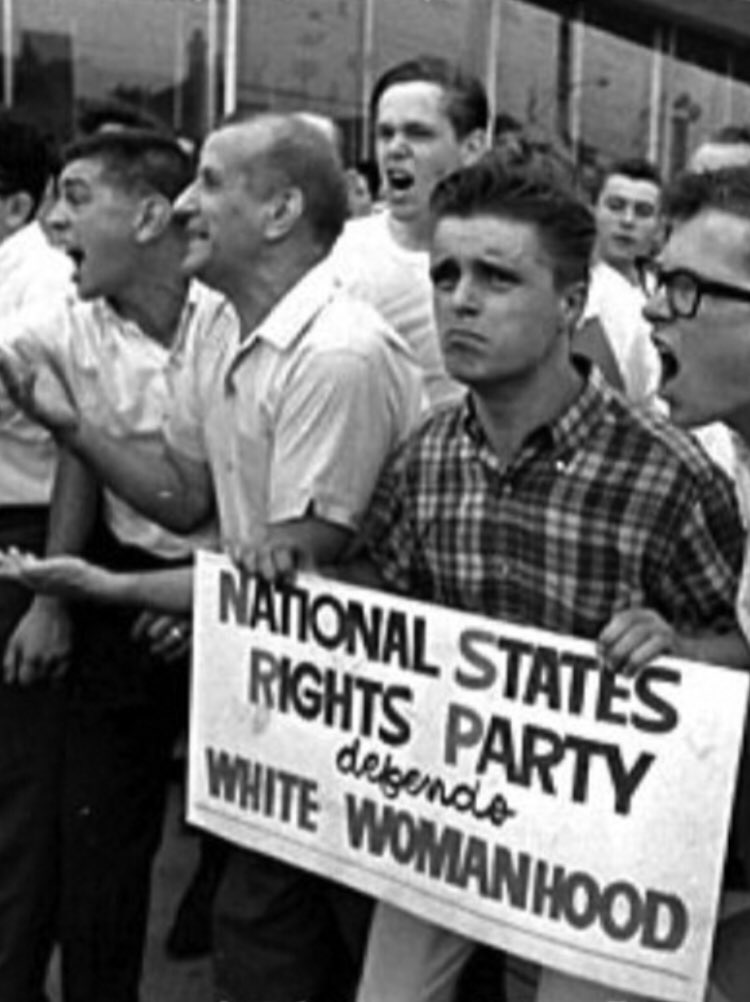
Who are they? Start ID\u2019ing them pic.twitter.com/c4RPj4l0zU
— chris evans (@notcapnamerica) January 6, 2021
But I didn’t see photographs of white people so full of hatred and violence.
Instead media relentlessly peddled images of Black and brown men engaged in violence
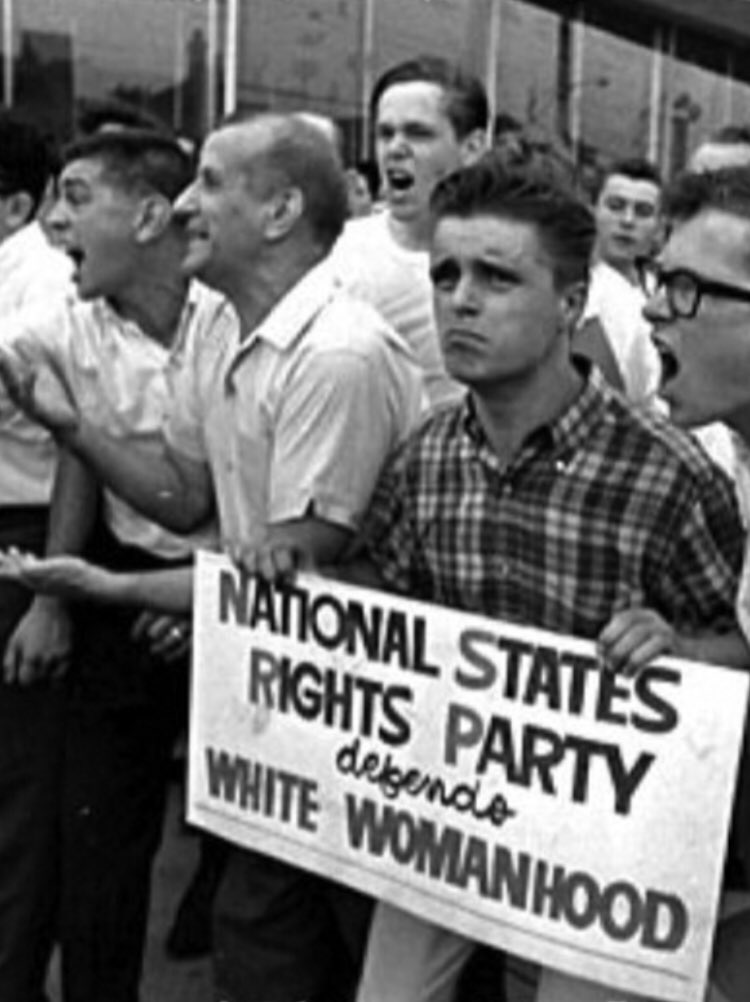
Despite all the evidence, White cops killing Black and brown civilians are seen as anomalies, White terrorists as lone wolves/mentally ill
And the most important part for me is not the press photos. These invariably focus on the most eye-catching, attention grabbing visuals.
More from Legal

BREAKING: at least six men that provided security for Roger Stone entered the #Capitol during the siege, per a @nytimes visual investigation.
All six are associated with the far-right #OathKeepers militia.
THREAD 1/
Story: https://t.co/abZlcVyaR6
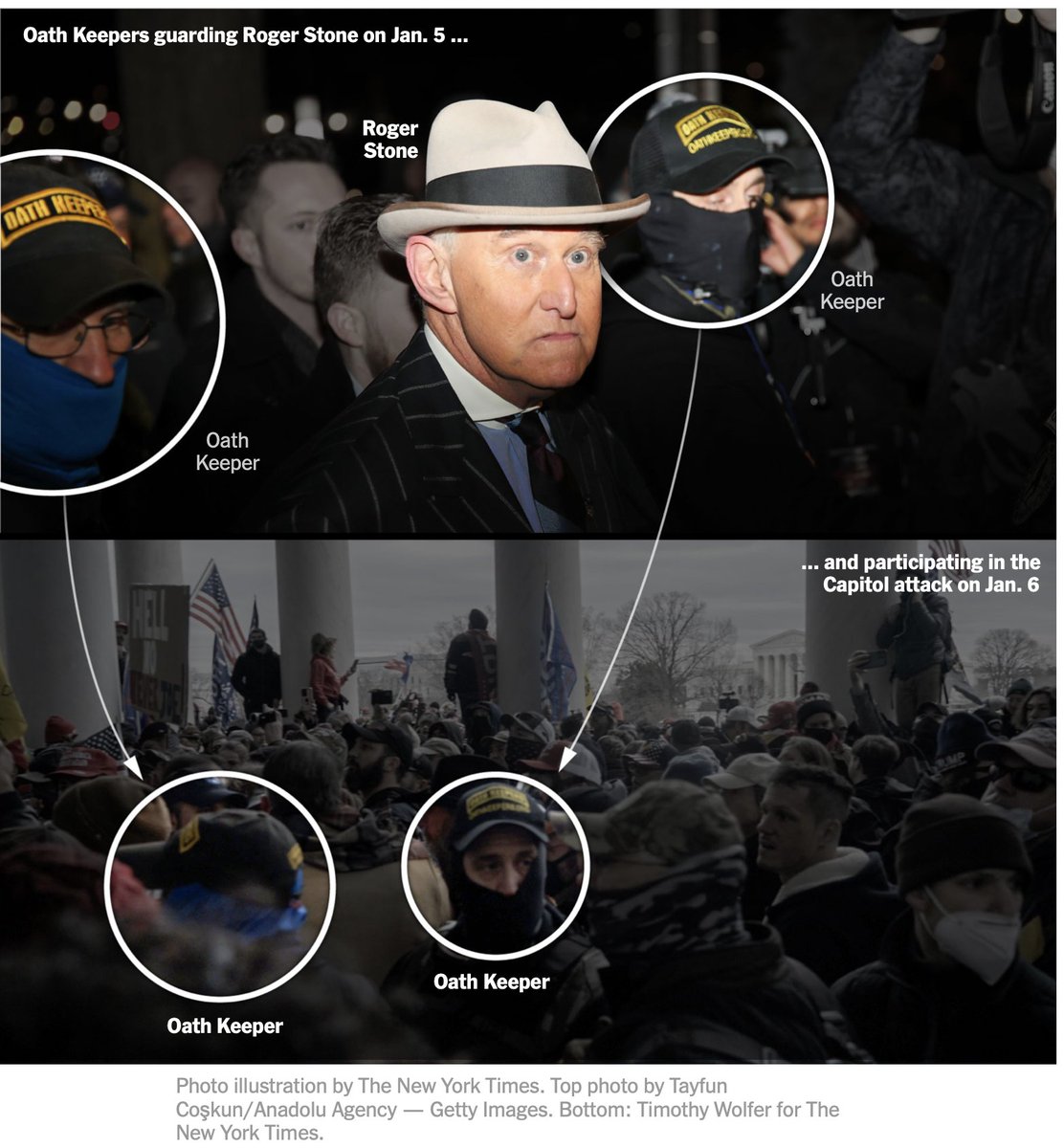
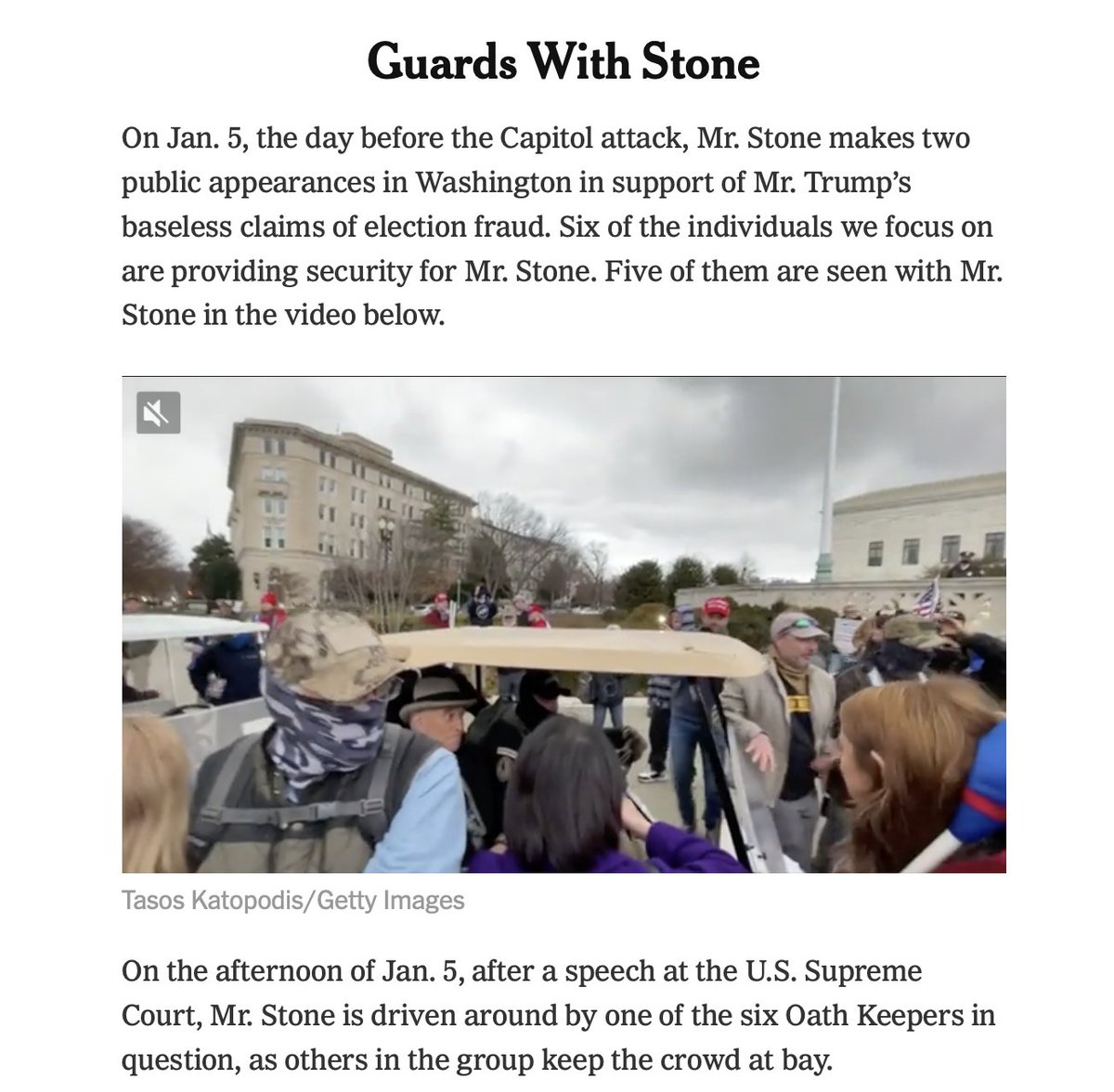
2/ On January 5th, Stone appeared at the Supreme Court, glad-handing and being driven in a go-kart. Later he attended a rally near the White House.
As the @nytimes team shows, his security entourage featured a host of #OathKeepers...
3/ In the morning of the 6th, Stone stood outside the Willard InterContinental hotel, again flanked by men associated with the #OathKeepers.
Some of them, like Rob Minuta, have been named in prior

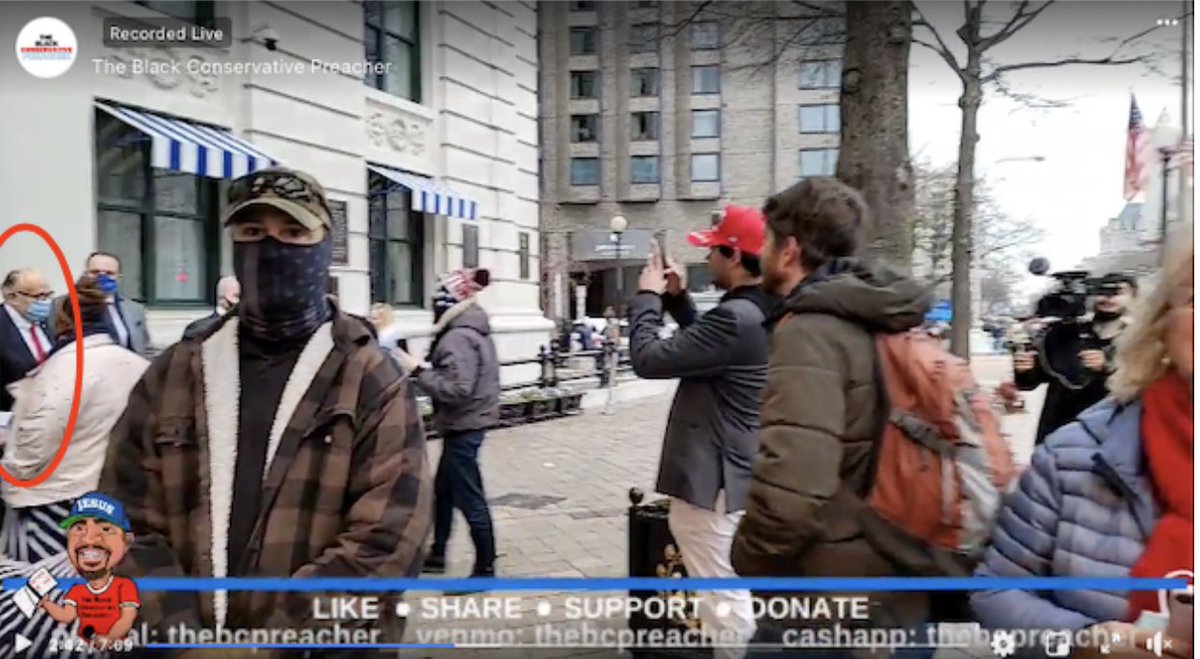
4/ Interesting detail: while scrutinizing the video of Roger Stone I spotted Rudy Giuliani exiting the same hotel.
Giuliani is accompanied by a man wearing the same outfit as Trump supporter John Eastman & other not-yet ID'd people.
Video source: https://t.co/Rure8TiQTp
5/ Now to the #Capitol: We see a several of Roger Stone's #OathKeeper guards amidst a larger group yelling at police. Video surfaced by the @CTExposers team.👇👇
https://t.co/NWsONDz0OA

All six are associated with the far-right #OathKeepers militia.
THREAD 1/
Story: https://t.co/abZlcVyaR6
2/ On January 5th, Stone appeared at the Supreme Court, glad-handing and being driven in a go-kart. Later he attended a rally near the White House.
As the @nytimes team shows, his security entourage featured a host of #OathKeepers...
3/ In the morning of the 6th, Stone stood outside the Willard InterContinental hotel, again flanked by men associated with the #OathKeepers.
Some of them, like Rob Minuta, have been named in prior
NEW: Rob Minuta guarded Roger Stone Jan 6th...& was later seen at #Capitol siege..
— John Scott-Railton (@jsrailton) February 7, 2021
Now we know he has a history of escorting Trump allies like Flynn & Alex Jones. Also seen in December w/indicted Proud Boy #Spazzo.
THREAD
By @arawnsley
Link: https://t.co/8t38iOmgYP pic.twitter.com/dnRYZGuBCO
4/ Interesting detail: while scrutinizing the video of Roger Stone I spotted Rudy Giuliani exiting the same hotel.
Giuliani is accompanied by a man wearing the same outfit as Trump supporter John Eastman & other not-yet ID'd people.
Video source: https://t.co/Rure8TiQTp
5/ Now to the #Capitol: We see a several of Roger Stone's #OathKeeper guards amidst a larger group yelling at police. Video surfaced by the @CTExposers team.👇👇
https://t.co/NWsONDz0OA
Here's the footage of Roberto Minuta throwing a tantrum at the police, 1/6 at the east side of the Capitol (5:16 in the Youtube video link).
— Capitol Terrorists Exposers (@CTExposers) February 10, 2021
\u27a1\ufe0fhttps://t.co/rulMuaftCm pic.twitter.com/wz6A4zQLYT


At the root of my work is safeguarding human life. I support a massive buildout of public transit because it makes life fundamentally better, reduces greenhouse emissions, and saves lives. 1/
In the United States, car accidents are one of the leading causes of death and injury for children under the age of 18. https://t.co/RrYVtaoFRd 2/
A few years ago my family and I were driving from visiting relatives in Texas when we were stuck in traffic on the I-10. We were at a complete dead stop when a woman (texting) in a Suburban hit us at 70 mph. She crushed the back of our car like a soda can. 3/
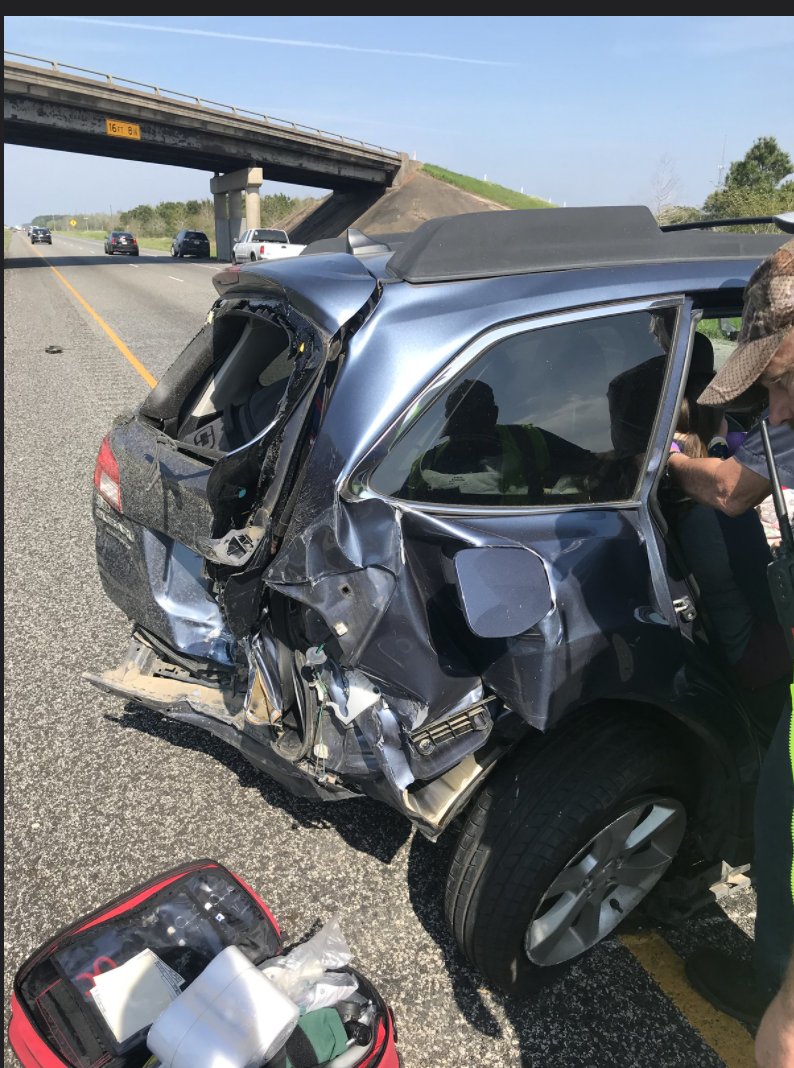
Thankfully, our two-year-old was in a good carseat and I absorbed the brunt of the injuries with a few shards of glass in my scalp. I won't show those pictures! While a high speed rail network along the Gulf Coast may have not prevented that accident, it could prevent most. 4/
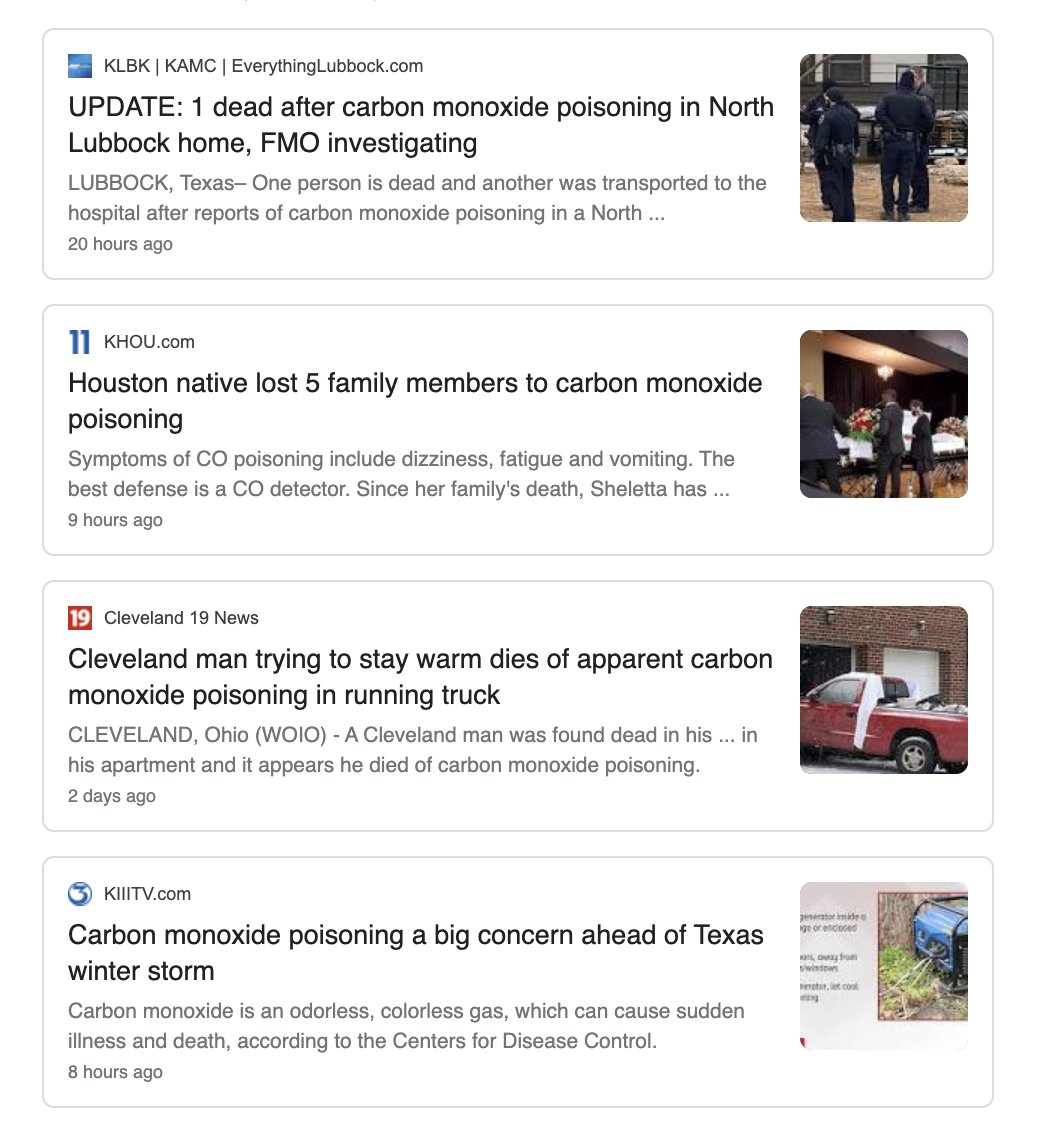
Electrifying household appliances will reduce our 'dependence' on natural gas and transmission methane leaks, but the switch will also cut the number of carbon monoxide poisonings and natural gas related explosions that kill Americans everyday. 5/
In the United States, car accidents are one of the leading causes of death and injury for children under the age of 18. https://t.co/RrYVtaoFRd 2/
A few years ago my family and I were driving from visiting relatives in Texas when we were stuck in traffic on the I-10. We were at a complete dead stop when a woman (texting) in a Suburban hit us at 70 mph. She crushed the back of our car like a soda can. 3/
Thankfully, our two-year-old was in a good carseat and I absorbed the brunt of the injuries with a few shards of glass in my scalp. I won't show those pictures! While a high speed rail network along the Gulf Coast may have not prevented that accident, it could prevent most. 4/
Electrifying household appliances will reduce our 'dependence' on natural gas and transmission methane leaks, but the switch will also cut the number of carbon monoxide poisonings and natural gas related explosions that kill Americans everyday. 5/


You May Also Like


This is a pretty valiant attempt to defend the "Feminist Glaciology" article, which says conventional wisdom is wrong, and this is a solid piece of scholarship. I'll beg to differ, because I think Jeffery, here, is confusing scholarship with "saying things that seem right".
The article is, at heart, deeply weird, even essentialist. Here, for example, is the claim that proposing climate engineering is a "man" thing. Also a "man" thing: attempting to get distance from a topic, approaching it in a disinterested fashion.

Also a "man" thing—physical courage. (I guess, not quite: physical courage "co-constitutes" masculinist glaciology along with nationalism and colonialism.)

There's criticism of a New York Times article that talks about glaciology adventures, which makes a similar point.

At the heart of this chunk is the claim that glaciology excludes women because of a narrative of scientific objectivity and physical adventure. This is a strong claim! It's not enough to say, hey, sure, sounds good. Is it true?
Imagine for a moment the most obscurantist, jargon-filled, po-mo article the politically correct academy might produce. Pure SJW nonsense. Got it? Chances are you're imagining something like the infamous "Feminist Glaciology" article from a few years back.https://t.co/NRaWNREBvR pic.twitter.com/qtSFBYY80S
— Jeffrey Sachs (@JeffreyASachs) October 13, 2018
The article is, at heart, deeply weird, even essentialist. Here, for example, is the claim that proposing climate engineering is a "man" thing. Also a "man" thing: attempting to get distance from a topic, approaching it in a disinterested fashion.
Also a "man" thing—physical courage. (I guess, not quite: physical courage "co-constitutes" masculinist glaciology along with nationalism and colonialism.)
There's criticism of a New York Times article that talks about glaciology adventures, which makes a similar point.
At the heart of this chunk is the claim that glaciology excludes women because of a narrative of scientific objectivity and physical adventure. This is a strong claim! It's not enough to say, hey, sure, sounds good. Is it true?