Hot take: Courts might be able to review the legality of this impeachment, even under current political-question doctrine. Here’s why and how the issue might arise:
Honest Q: Some people argue in good faith that an impeachment trial after POTUS leaves office is unconstitutional. I think they\u2019re wrong. But let\u2019s say they\u2019re right, yet senate does it anyway. Does anyone seriously think SCOTUS reverses verdict (or even can)?
— Jonah Goldberg (@JonahDispatch) January 17, 2021
More from Law


This issue was repeatedly highlighted bu Judge Totenberg:
Dominion’s system “does not produce a voter-verifiable paper ballot or a paper ballot marked with the voter’s choices in a format readable by the voter because the votes are tabulated solely from the unreadable QR code.”
Judge also found that Dominion's QR codes are NOT encrypted:
“Evidence plainly contradicts any contention that the QR codes or digital signatures are encrypted,”
This was “ultimately conceded by Mr. Cobb and expressly acknowledged later by Dr. Coomer during his testimony.”
Judge Totenberg said there was “demonstrable evidence” that the implementation of Dominion’s systems by Georgia placed voters at an “imminent risk of deprivation of their fundamental right to cast an effective vote,” which she defined as a “vote that is accurately counted.”
Judge Totenberg found that Dominion Systems inherently could not be audited.
She noted that auditors are severely limited and “can only determine whether the BMD printout was tabulated accurately, not whether the election outcome is correct.“
Totenberg stated in her ruling that a BMD printout “is not trustworthy” and the application of an Risk-Limiting audit (RLA) to an election that used BMD printouts “does not yield a true risk-limiting audit.”
Georgia used RLAs to claim no fraud...
Dominion’s system “does not produce a voter-verifiable paper ballot or a paper ballot marked with the voter’s choices in a format readable by the voter because the votes are tabulated solely from the unreadable QR code.”
Witness explaining that on electronic ballots (QR code ballots), it's impossible to determine voter intent. The machine decides the intent, whereas, with paper ballots, a human can double-check the ballot. https://t.co/kkhamio2Je
— The Election Wizard (@Wizard_Predicts) December 30, 2020
Judge also found that Dominion's QR codes are NOT encrypted:
“Evidence plainly contradicts any contention that the QR codes or digital signatures are encrypted,”
This was “ultimately conceded by Mr. Cobb and expressly acknowledged later by Dr. Coomer during his testimony.”
Judge Totenberg said there was “demonstrable evidence” that the implementation of Dominion’s systems by Georgia placed voters at an “imminent risk of deprivation of their fundamental right to cast an effective vote,” which she defined as a “vote that is accurately counted.”
Judge Totenberg found that Dominion Systems inherently could not be audited.
She noted that auditors are severely limited and “can only determine whether the BMD printout was tabulated accurately, not whether the election outcome is correct.“
Totenberg stated in her ruling that a BMD printout “is not trustworthy” and the application of an Risk-Limiting audit (RLA) to an election that used BMD printouts “does not yield a true risk-limiting audit.”
Georgia used RLAs to claim no fraud...

A Call for Help!
1. we have a petition/open letter for the WHO
https://t.co/Bie8pUy7WJ
2. 372 people signed it but we want to boost it
3. I post link ascomment on related YT videos
Tks @KevinMcH3 for the tip
4. You can help by liking the comments
5. That will increase visibility!
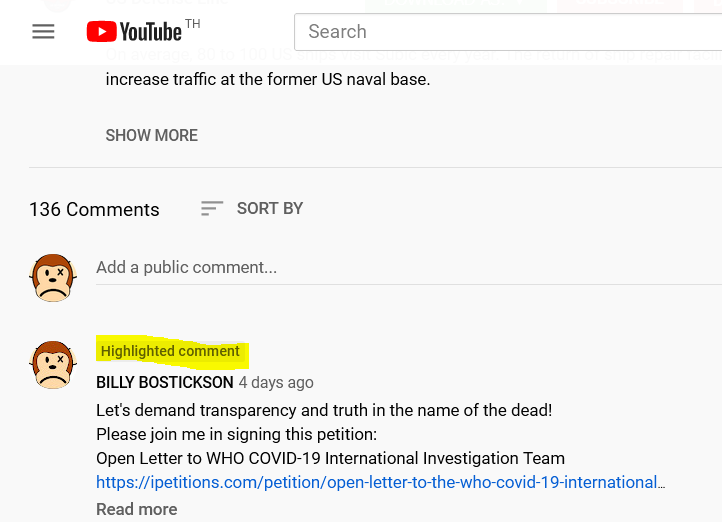
6. Links for YT videos with comments are here
1. China curtails hunt for virus origins
https://t.co/NhcYdtsd2Y
2. China: nearly 500,000 may have been infected in Wuhan
https://t.co/KRUQ5hFrii
3. WHO becomes US-China battleground | DW Documentary
https://t.co/8ah8M8bpiB
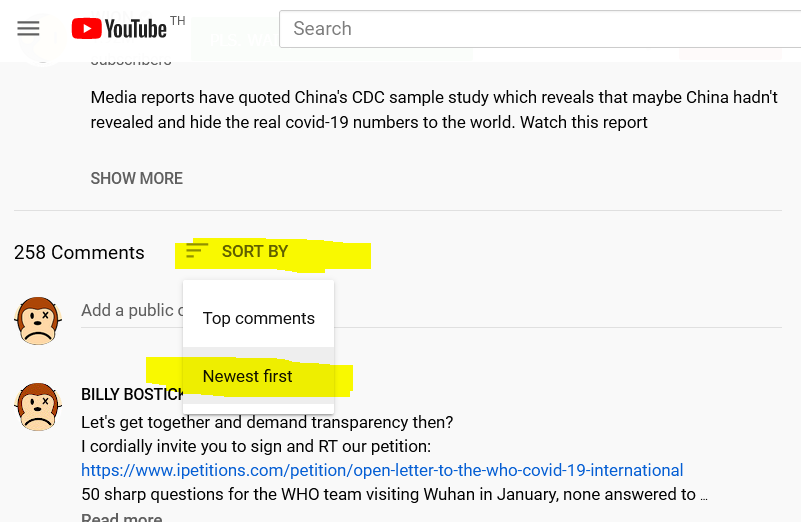
4. Gravitas: The 'hidden hunt' for COVID-19 origins
https://t.co/hHhhUqgPYt
5. Seeking the invisible: hunt for origins of deadly Covid-19 coronavirus will take scientists to Wuhan
https://t.co/tCPQqjUZF3
6. WHO team to probe COVID-19 origins in
7. How forensic researchers track down origins of SARS-CoV2
https://t.co/r7A1lkr5li
8. Bats, roadblocks & the origins of coronavirus - BBC
https://t.co/Kh9jacC54t
9. New coronavirus strain is far more infectious and spreading among young - BBC
10. https://t.co/OcpAZ9nrl3
11. https://t.co/OcpAZ9nrl3
12. https://t.co/OcpAZ9nrl3
13. https://t.co/PhmoSfvbD8
14. https://t.co/TsvB7SYN2c
15. https://t.co/0o5YbmiUbJ
16. https://t.co/ir7QiwmlWt
17. https://t.co/PTT3KZDi8F
18.
1. we have a petition/open letter for the WHO
https://t.co/Bie8pUy7WJ
2. 372 people signed it but we want to boost it
3. I post link ascomment on related YT videos
Tks @KevinMcH3 for the tip
4. You can help by liking the comments
5. That will increase visibility!
6. Links for YT videos with comments are here
1. China curtails hunt for virus origins
https://t.co/NhcYdtsd2Y
2. China: nearly 500,000 may have been infected in Wuhan
https://t.co/KRUQ5hFrii
3. WHO becomes US-China battleground | DW Documentary
https://t.co/8ah8M8bpiB
4. Gravitas: The 'hidden hunt' for COVID-19 origins
https://t.co/hHhhUqgPYt
5. Seeking the invisible: hunt for origins of deadly Covid-19 coronavirus will take scientists to Wuhan
https://t.co/tCPQqjUZF3
6. WHO team to probe COVID-19 origins in
7. How forensic researchers track down origins of SARS-CoV2
https://t.co/r7A1lkr5li
8. Bats, roadblocks & the origins of coronavirus - BBC
https://t.co/Kh9jacC54t
9. New coronavirus strain is far more infectious and spreading among young - BBC
10. https://t.co/OcpAZ9nrl3
11. https://t.co/OcpAZ9nrl3
12. https://t.co/OcpAZ9nrl3
13. https://t.co/PhmoSfvbD8
14. https://t.co/TsvB7SYN2c
15. https://t.co/0o5YbmiUbJ
16. https://t.co/ir7QiwmlWt
17. https://t.co/PTT3KZDi8F
18.


We are live tweeting from the preliminary hearing of the Employment Tribunal case in which #AllisonBailey is suing Stonewall and Garden Court chambers.
The judge has ruled that for this hearing only, the names should remain redacted.
It is a Rule 50 Order. These particular individuals are members of Stonewall’s Trans Advisory Group and their names may well be known elsewhere. What is relevant is the messages from the group to Garden Court.
The judge states she would not make the same decision at the full hearing. This is only for the preliminary hearing.
Having dealt with the anonymity issue we now move to the main submissions in the case.
The entire first part of the hearing related to messages sent by certain individuals from the Stonewall Trans Advisory Group seeking cooperation with trans allies at Garden Court. So far all the discussion has been about whether their names must remain redacted.
— LGB Alliance (@ALLIANCELGB) February 11, 2021
The judge has ruled that for this hearing only, the names should remain redacted.
It is a Rule 50 Order. These particular individuals are members of Stonewall’s Trans Advisory Group and their names may well be known elsewhere. What is relevant is the messages from the group to Garden Court.
The judge states she would not make the same decision at the full hearing. This is only for the preliminary hearing.
Having dealt with the anonymity issue we now move to the main submissions in the case.