A #WomanQuestion thread about Brill's prestigious & long-running Studies Islamic Law & Society series. I'm looking at stats as I attempt to understad how gendered (& racialized) hierarchies of prestige operate to construct subfields w/in Islamic Studies
More from Law



Pretty much every professional field EXCEPT police have clear, rigorous, transparent consequences for unethical behavior, negligence and malpractice.
The idea that we can "disbar" lawyers but not police is absolute foolishness.
All the factors that make disbarment a necessary tool for lawyers apply to cops... except that cops don't need to be qualified in the first place.
It is a rank absurdity of the criminal justice system that one needs to be educated and certified with a degree in order to argue on behalf of someone's life in court, but to have no qualifications necessary to detain, assault, or prematurely end that same life.
There are countless circumstances in which a lawyer's unethical behavior will result in them not only losing their job but never being able to practice it again.
But corrupt and murderous cops can be rehired indefinitely.
A lawyer's entire career can be ended forever if they were found to have knowingly put someone on a stand to lie.
Police officers however are allowed to lie in court on the stand under oath.
So much that lawyers aren't penalized for putting cops on the stand to lie.
And as a former EMT let me tell you, you will find dropout cops in training classes that just want power over people - difference is our system has CONSEQUENCES for negligence and malpractice. We get the same chuds every now and then but they still have to help or else.
— Love Potion No. Nines (@NineJackals) January 29, 2021
The idea that we can "disbar" lawyers but not police is absolute foolishness.
All the factors that make disbarment a necessary tool for lawyers apply to cops... except that cops don't need to be qualified in the first place.
It is a rank absurdity of the criminal justice system that one needs to be educated and certified with a degree in order to argue on behalf of someone's life in court, but to have no qualifications necessary to detain, assault, or prematurely end that same life.
There are countless circumstances in which a lawyer's unethical behavior will result in them not only losing their job but never being able to practice it again.
But corrupt and murderous cops can be rehired indefinitely.
A lawyer's entire career can be ended forever if they were found to have knowingly put someone on a stand to lie.
Police officers however are allowed to lie in court on the stand under oath.
So much that lawyers aren't penalized for putting cops on the stand to lie.

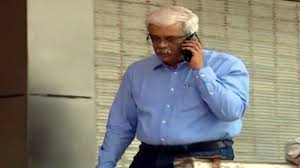






Today the superior court will hear oral arguments in Midtown Citizens Coalition v. Municipality of Anchorage. "MCC" is an unofficial group that opposes the recall of Assembly member Felix Rivera. The question is whether the Muni properly certified the recall petition. #aklaw
Before posting the MCC v. MOA briefs, it's worth noting that the legal arguments made by Rivera's supporters parallel those made by Dunleavy in Recall Dunleavy v. State. Both Rivera and Dunleavy argued that their recall petitions should have been denied by election officials.
So let's play a game called "Who Argued It." Guess which politician, Rivera or Dunleavy, made the following arguments in court:
1. "The grounds for recall stated in the petition are insufficient as a matter of law, and therefore the petition should have been rejected."
2. "Even under Alaska’s liberal recall standards, courts have not hesitated to find petitions legally insufficient when those petitions did not contain sufficient factual allegations of unlawful activity to state sufficient grounds for recall.”
3. "The allegations must be sufficiently particular to allow the official a meaningful opportunity to respond . . . . [and] ensure that voters have the information they need to vote."
Oral argument in scheduled for January 21 at 3 pm in this case & will be telephonic. To listen, call 1-800-768-2983, code: 2640561#. Alternate phone numbers if the toll-free number gives you trouble: 1-907-206-2349 or 1-913-904-9867 or 1-212-231-3884.
— Alaska Court System (@AlaskaCourt) January 20, 2021
Before posting the MCC v. MOA briefs, it's worth noting that the legal arguments made by Rivera's supporters parallel those made by Dunleavy in Recall Dunleavy v. State. Both Rivera and Dunleavy argued that their recall petitions should have been denied by election officials.
So let's play a game called "Who Argued It." Guess which politician, Rivera or Dunleavy, made the following arguments in court:
1. "The grounds for recall stated in the petition are insufficient as a matter of law, and therefore the petition should have been rejected."
2. "Even under Alaska’s liberal recall standards, courts have not hesitated to find petitions legally insufficient when those petitions did not contain sufficient factual allegations of unlawful activity to state sufficient grounds for recall.”
3. "The allegations must be sufficiently particular to allow the official a meaningful opportunity to respond . . . . [and] ensure that voters have the information they need to vote."
You May Also Like


@EricTopol @NBA @StephenKissler @yhgrad B.1.1.7 reveals clearly that SARS-CoV-2 is reverting to its original pre-outbreak condition, i.e. adapted to transgenic hACE2 mice (either Baric's BALB/c ones or others used at WIV labs during chimeric bat coronavirus experiments aimed at developing a pan betacoronavirus vaccine)
@NBA @StephenKissler @yhgrad 1. From Day 1, SARS-COV-2 was very well adapted to humans .....and transgenic hACE2 Mice
@NBA @StephenKissler @yhgrad 2. High Probability of serial passaging in Transgenic Mice expressing hACE2 in genesis of SARS-COV-2
@NBA @StephenKissler @yhgrad B.1.1.7 has an unusually large number of genetic changes, ... found to date in mouse-adapted SARS-CoV2 and is also seen in ferret infections.
https://t.co/9Z4oJmkcKj

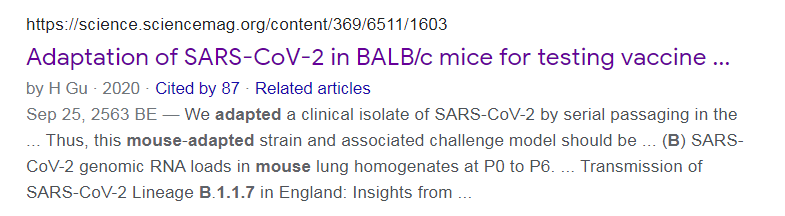
@NBA @StephenKissler @yhgrad We adapted a clinical isolate of SARS-CoV-2 by serial passaging in the ... Thus, this mouse-adapted strain and associated challenge model should be ... (B) SARS-CoV-2 genomic RNA loads in mouse lung homogenates at P0 to P6.
https://t.co/I90OOCJg7o
@NBA @StephenKissler @yhgrad 1. From Day 1, SARS-COV-2 was very well adapted to humans .....and transgenic hACE2 Mice
1. From Day 1, SARS-COV-2 was very well adapted to humans .....and transgenic hACE2 Mice
— Billy Bostickson \U0001f3f4\U0001f441&\U0001f441 \U0001f193 (@BillyBostickson) January 30, 2021
"we generated a mouse model expressing hACE2 by using CRISPR/Cas9 knockin technology. In comparison with wild-type C57BL/6 mice, both young & aged hACE2 mice sustained high viral loads... pic.twitter.com/j94XtSkscj
@NBA @StephenKissler @yhgrad 2. High Probability of serial passaging in Transgenic Mice expressing hACE2 in genesis of SARS-COV-2
1. High Probability of serial passaging in Transgenic Mice expressing hACE2 in genesis of SARS-COV-2!
— Billy Bostickson \U0001f3f4\U0001f441&\U0001f441 \U0001f193 (@BillyBostickson) January 2, 2021
2 papers:
Human\u2013viral molecular mimicryhttps://t.co/irfH0Zgrve
Molecular Mimicryhttps://t.co/yLQoUtfS6s https://t.co/lsCv2iMEQz
@NBA @StephenKissler @yhgrad B.1.1.7 has an unusually large number of genetic changes, ... found to date in mouse-adapted SARS-CoV2 and is also seen in ferret infections.
https://t.co/9Z4oJmkcKj
@NBA @StephenKissler @yhgrad We adapted a clinical isolate of SARS-CoV-2 by serial passaging in the ... Thus, this mouse-adapted strain and associated challenge model should be ... (B) SARS-CoV-2 genomic RNA loads in mouse lung homogenates at P0 to P6.
https://t.co/I90OOCJg7o