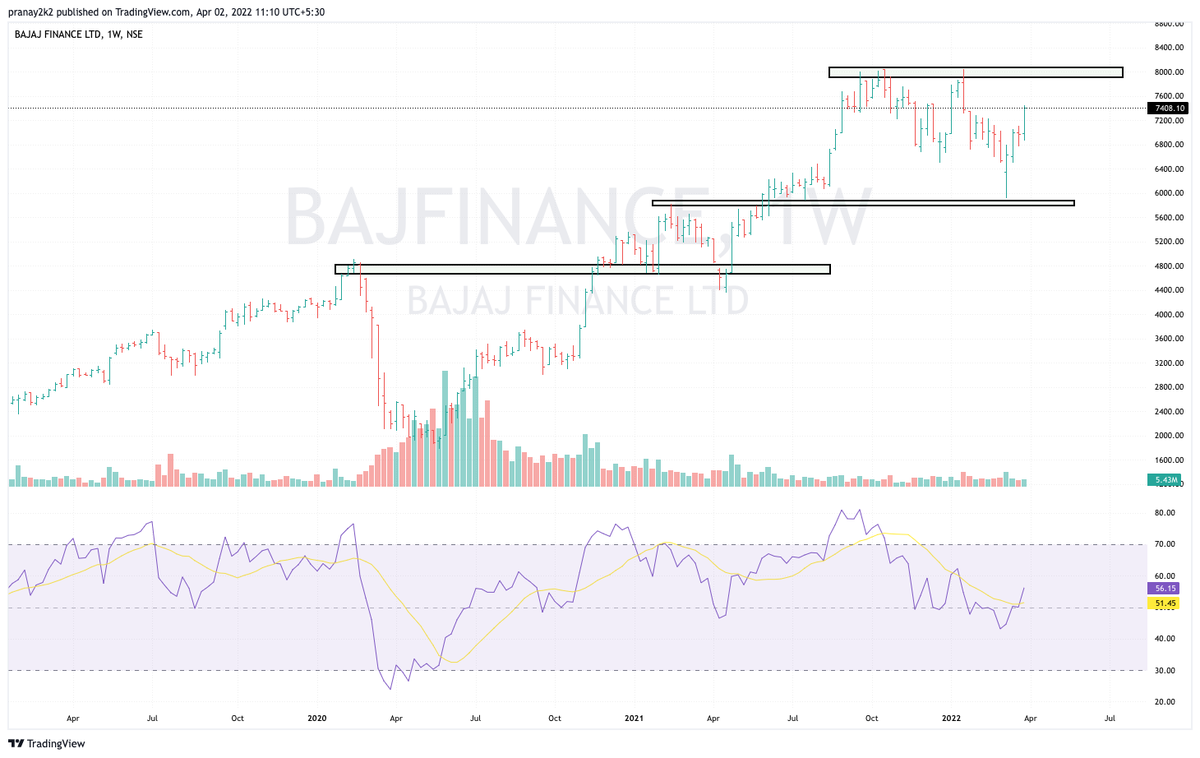
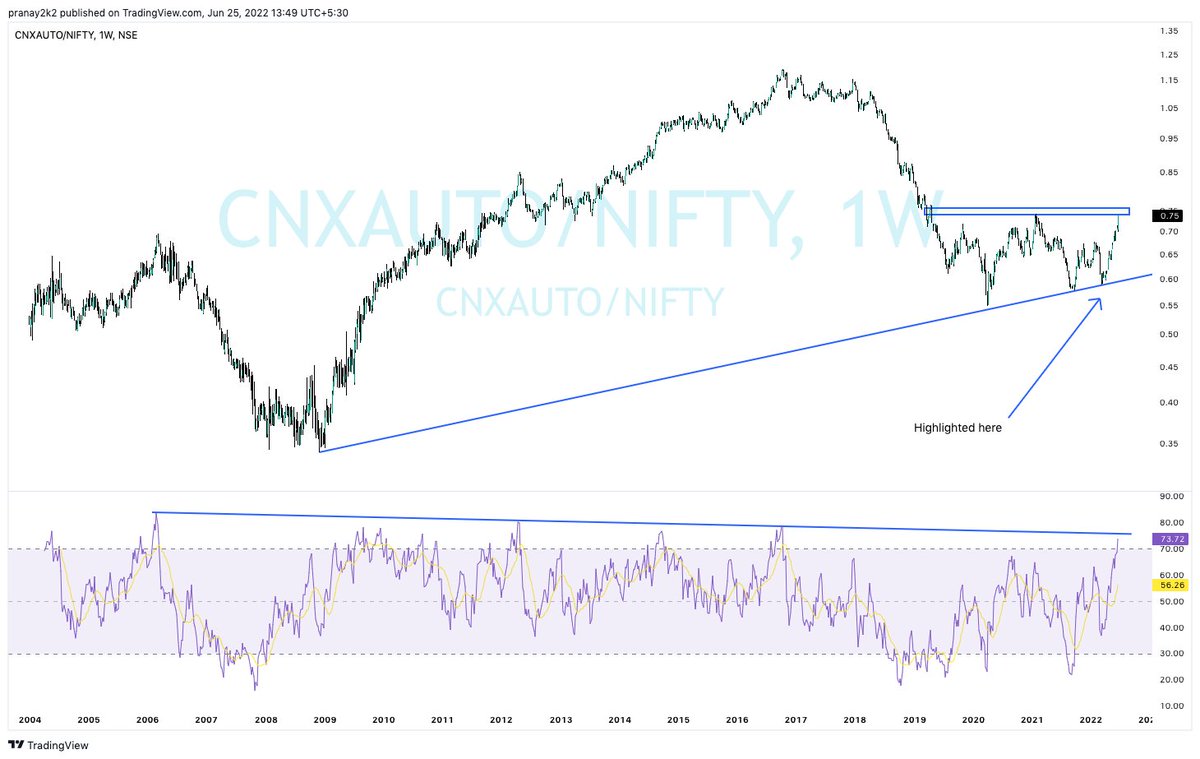
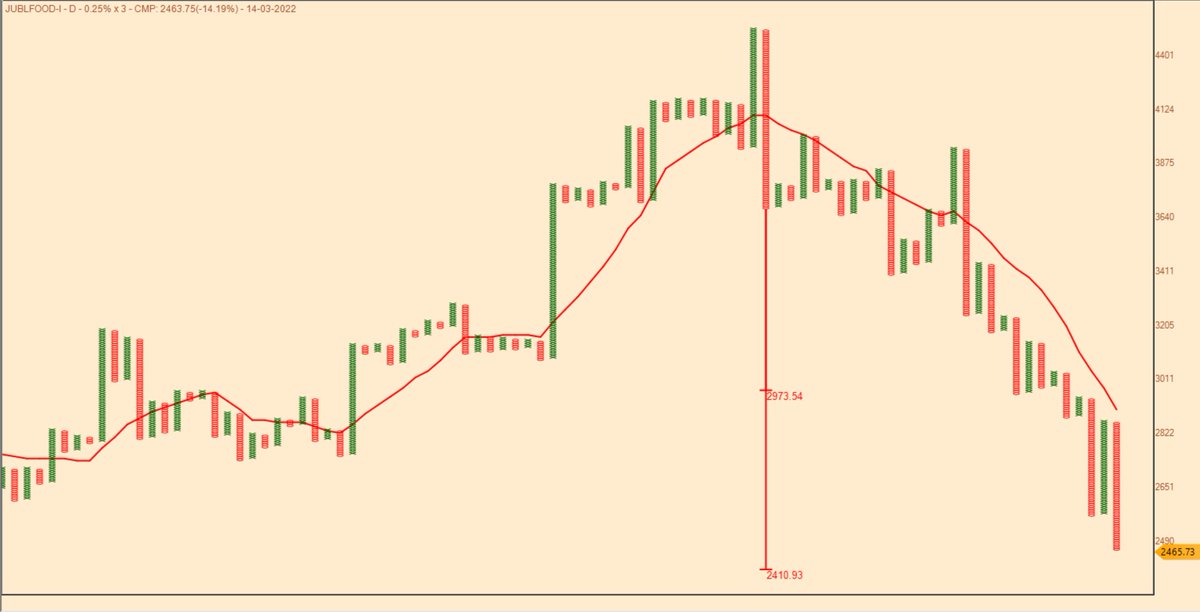
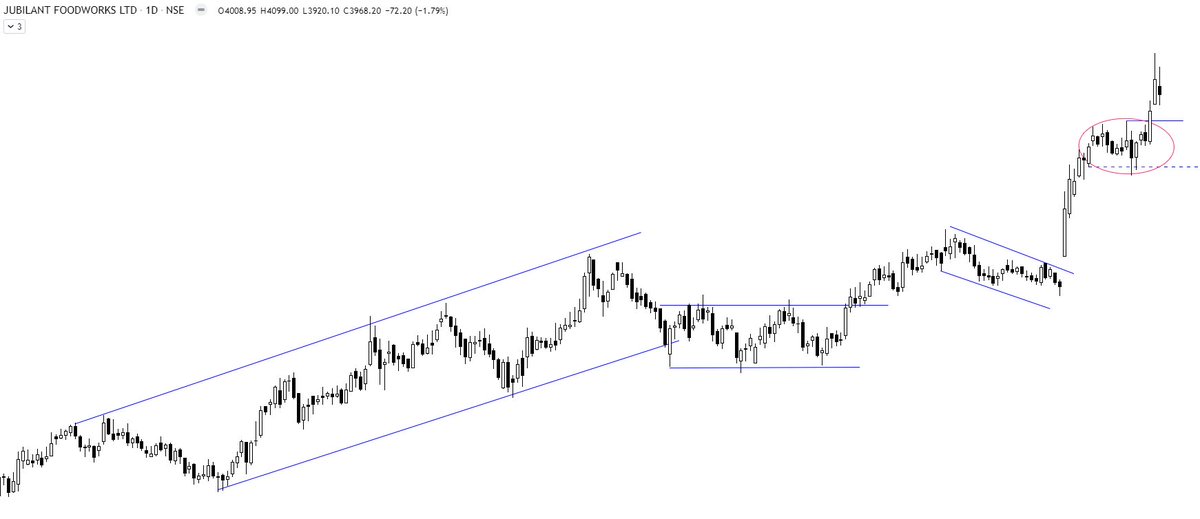
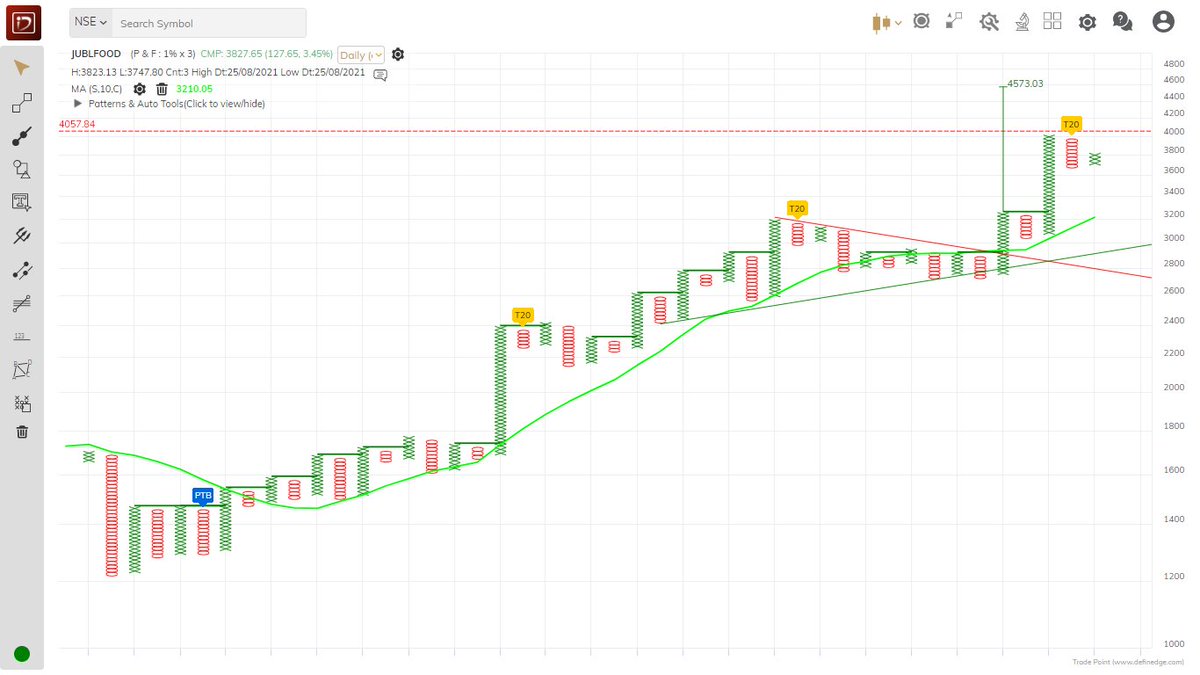
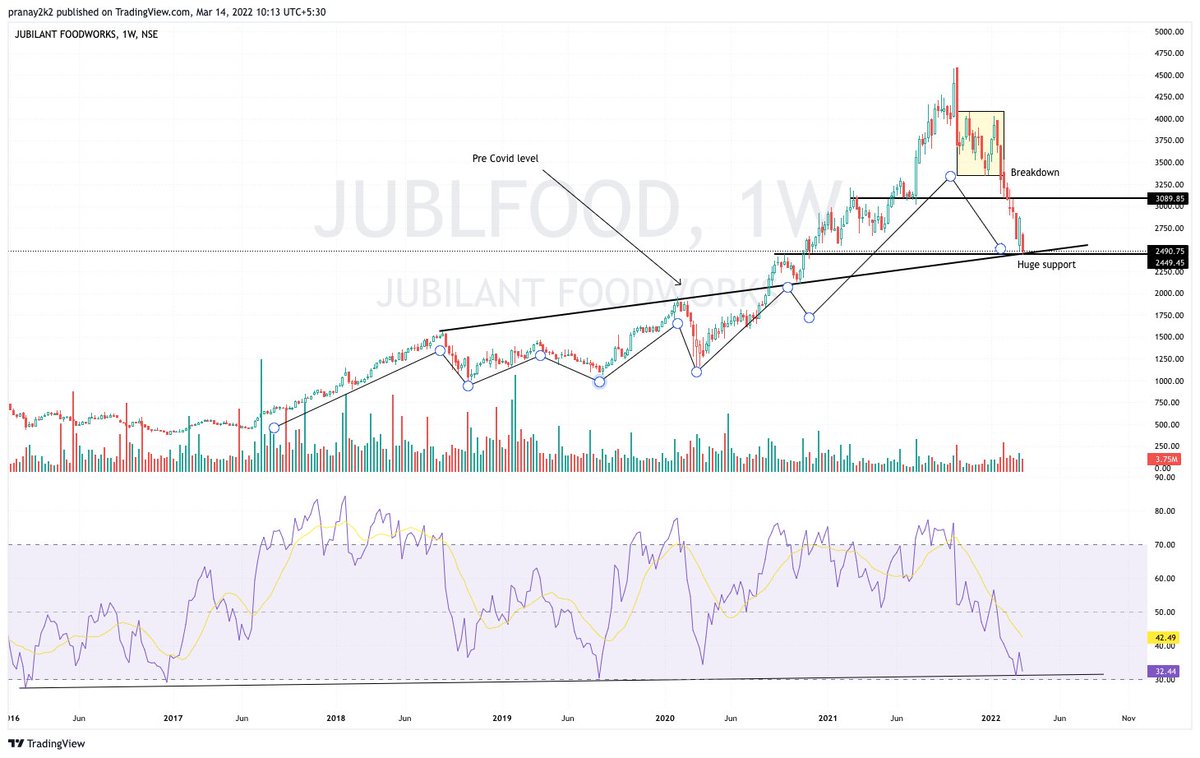
#JUBILANTFOODWORKS Near huge support else we may see precvoid level
ideally we see bounce from here👇
More from Pranay Prasun
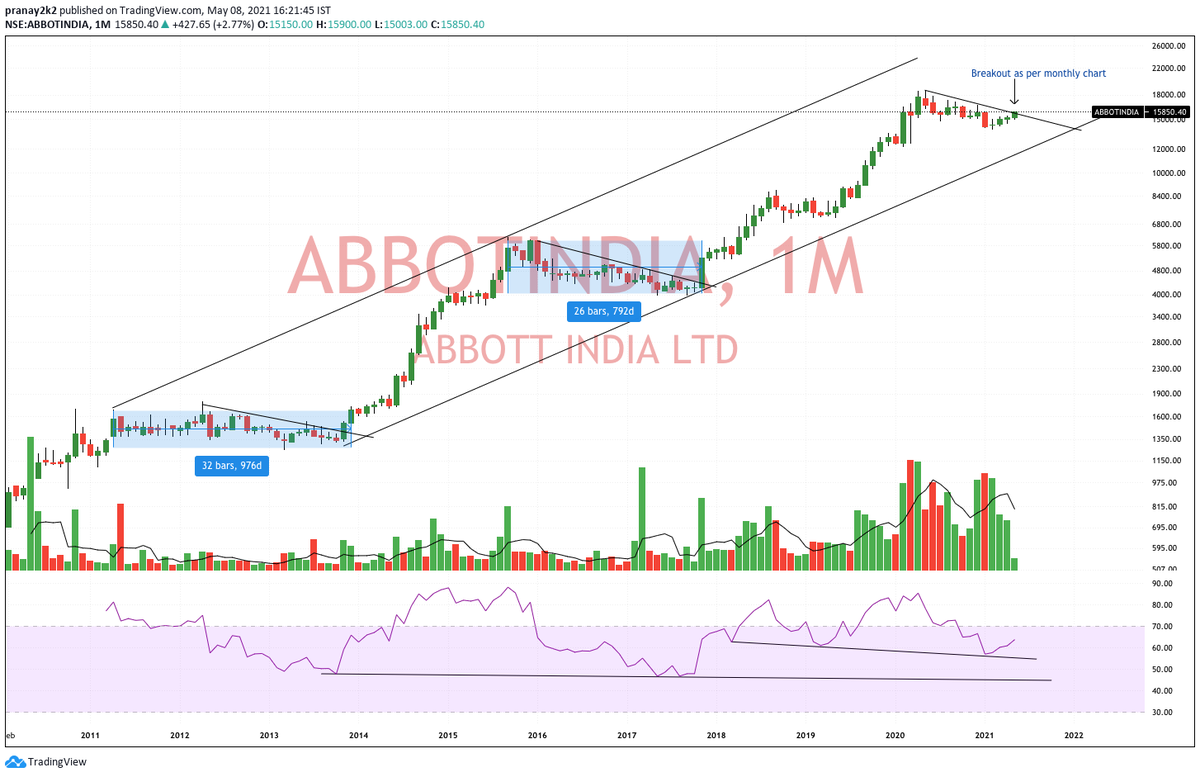
#ASIANPAINT Shared monthly chart for reference 👇
~ Gave sell call near 3300
~ Good to add at below levels
2580 /2200 https://t.co/lRdCEfw7WD
~ Gave sell call near 3300
~ Good to add at below levels
2580 /2200 https://t.co/lRdCEfw7WD
#ASIANPAINTS We all know about this stock but is it really worth to add at CMP?
— Pranay Prasun (@PranayPrasun) February 19, 2022
Reasons are \U0001f447
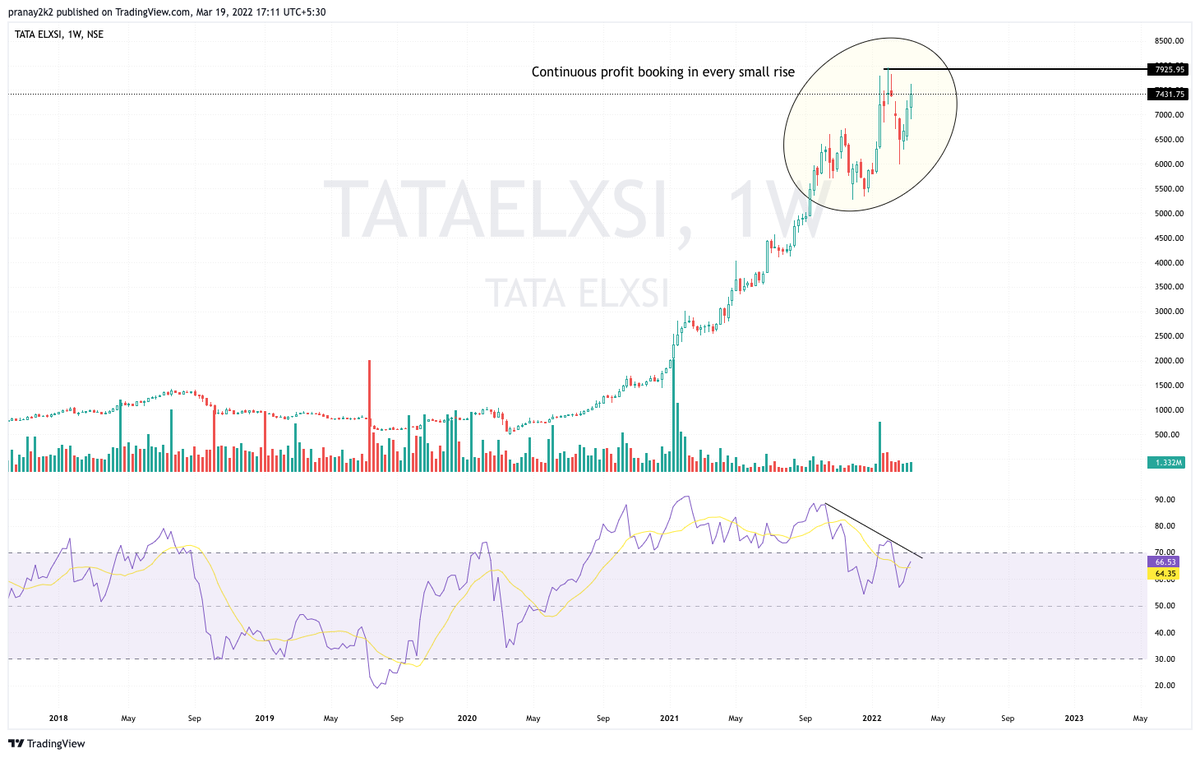
~Monthly RSI is too high .So we may see breakdown in next few months
~Continuous profit booking at top level.Hence we're near to top in long term chart
Hope it helps u to understand\U0001f60a pic.twitter.com/3ltwZMs3d8
More from Jublfood
#JUBLFOOD-4362
As the stock price trying to enter in to
new Orbit (#Fibonacci extension6.857%(4491)
Further Fibonacci extension projection ploted on chart.
Long term perspective.
#Probability https://t.co/fPSLKLDxln
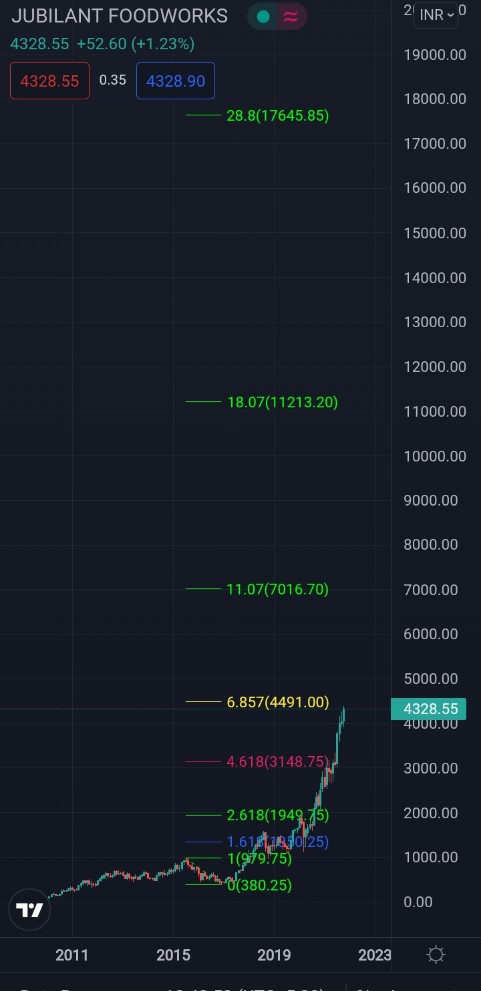
As the stock price trying to enter in to
new Orbit (#Fibonacci extension6.857%(4491)
Further Fibonacci extension projection ploted on chart.
Long term perspective.
#Probability https://t.co/fPSLKLDxln
#JUBLFOOD -3940
— Waves_Perception(Dinesh Patel) \u092e\u0948\u0902Schedule Tribes) (@idineshptl) August 17, 2021
Moving higher towards objective
6.857%(4491)#Probability https://t.co/oKppKL59mG
Also, you must be vigilant here because in these cases 50 MA and 200 MA act as a strong resistance. However, both the resistance zone and the 50 EMA are getting in closer. Confluence zone.
Jubilant Foodworks https://t.co/oarPRnT0Vk
The chart signals an upcoming violent move. I may be wrong but the risk is getting too low in here. Keep an eye out.
— The_Chartist \U0001f4c8 (@charts_zone) April 18, 2022
Holding this from lower levels - the reason being capitulation.
Jubilant Foodworks https://t.co/M1vLYEbkef pic.twitter.com/TVXZKo028g
You May Also Like
A brief analysis and comparison of the CSS for Twitter's PWA vs Twitter's legacy desktop website. The difference is dramatic and I'll touch on some reasons why.
Legacy site *downloads* ~630 KB CSS per theme and writing direction.
6,769 rules
9,252 selectors
16.7k declarations
3,370 unique declarations
44 media queries
36 unique colors
50 unique background colors
46 unique font sizes
39 unique z-indices
https://t.co/qyl4Bt1i5x
PWA *incrementally generates* ~30 KB CSS that handles all themes and writing directions.
735 rules
740 selectors
757 declarations
730 unique declarations
0 media queries
11 unique colors
32 unique background colors
15 unique font sizes
7 unique z-indices
https://t.co/w7oNG5KUkJ
The legacy site's CSS is what happens when hundreds of people directly write CSS over many years. Specificity wars, redundancy, a house of cards that can't be fixed. The result is extremely inefficient and error-prone styling that punishes users and developers.
The PWA's CSS is generated on-demand by a JS framework that manages styles and outputs "atomic CSS". The framework can enforce strict constraints and perform optimisations, which is why the CSS is so much smaller and safer. Style conflicts and unbounded CSS growth are avoided.
Legacy site *downloads* ~630 KB CSS per theme and writing direction.
6,769 rules
9,252 selectors
16.7k declarations
3,370 unique declarations
44 media queries
36 unique colors
50 unique background colors
46 unique font sizes
39 unique z-indices
https://t.co/qyl4Bt1i5x
PWA *incrementally generates* ~30 KB CSS that handles all themes and writing directions.
735 rules
740 selectors
757 declarations
730 unique declarations
0 media queries
11 unique colors
32 unique background colors
15 unique font sizes
7 unique z-indices
https://t.co/w7oNG5KUkJ
The legacy site's CSS is what happens when hundreds of people directly write CSS over many years. Specificity wars, redundancy, a house of cards that can't be fixed. The result is extremely inefficient and error-prone styling that punishes users and developers.
The PWA's CSS is generated on-demand by a JS framework that manages styles and outputs "atomic CSS". The framework can enforce strict constraints and perform optimisations, which is why the CSS is so much smaller and safer. Style conflicts and unbounded CSS growth are avoided.