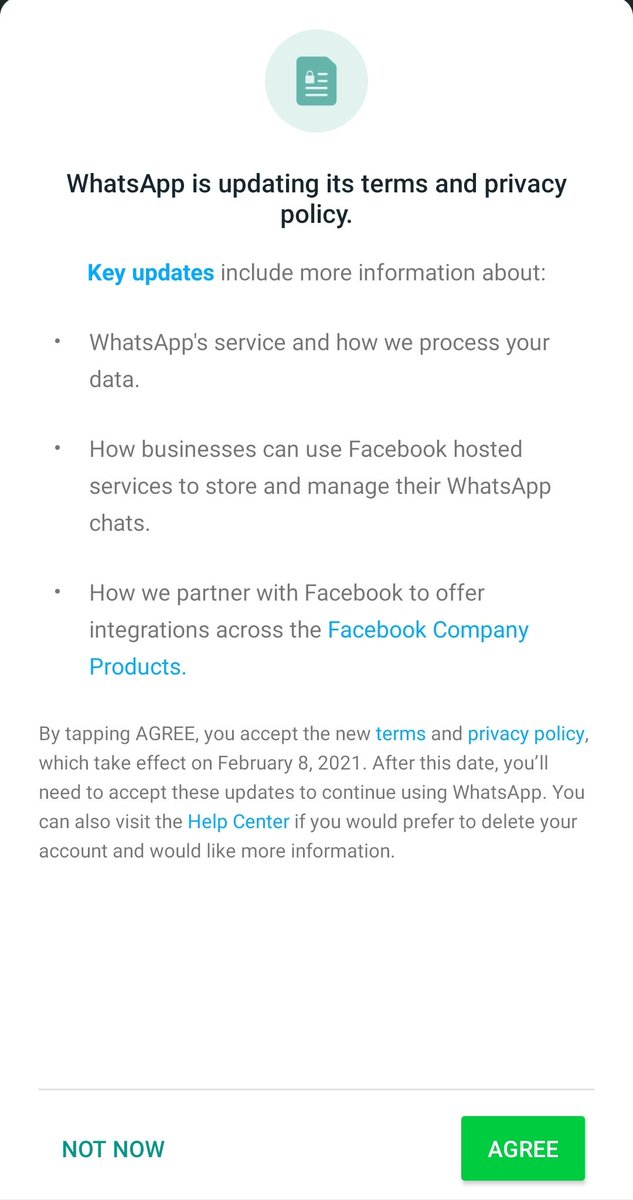
Today WhatsApp wished it's users good morning. Accept the updated terms and conditions or say goodbye. (Thread 1/n) It is effective from Feb 8, 2021.

There are seperate hyperlinks for terms and privacy policies. Both these hyperlinks lead to multiple pages of contracts written in a very jargonised language. A few things I noted : https://t.co/8KMfjnJuQJ
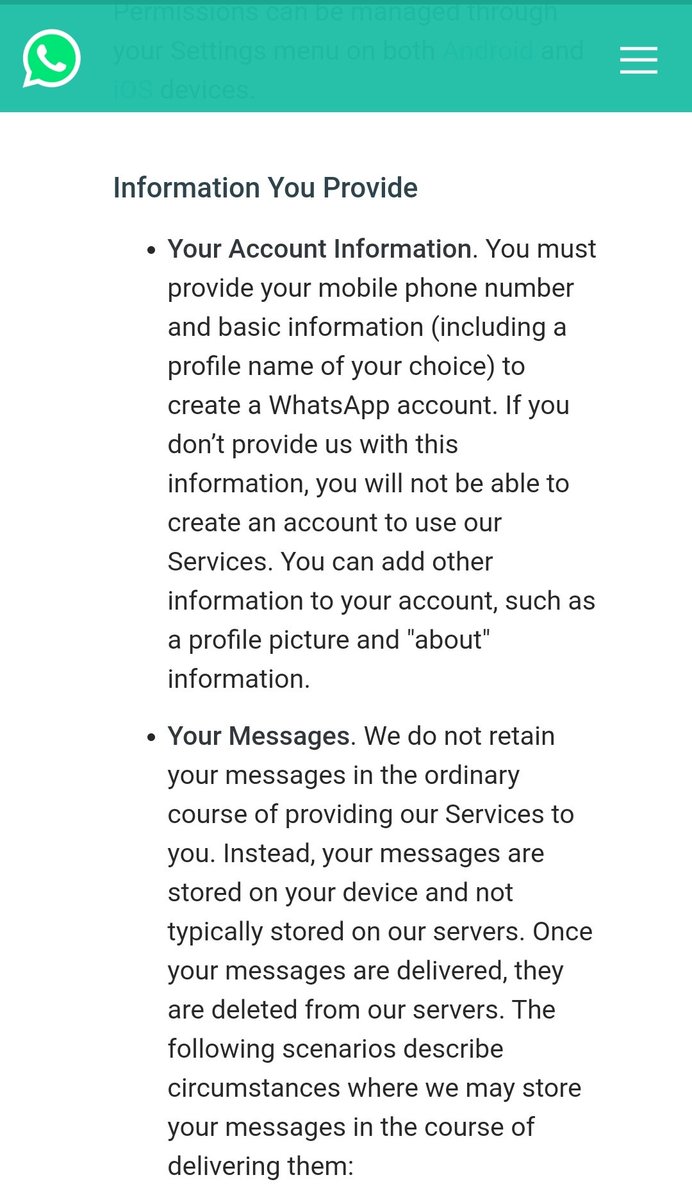
The information 'we' provide to #WhatsApp include our messages. Also WhatsApp claims that it is end to end encrypted BUT,
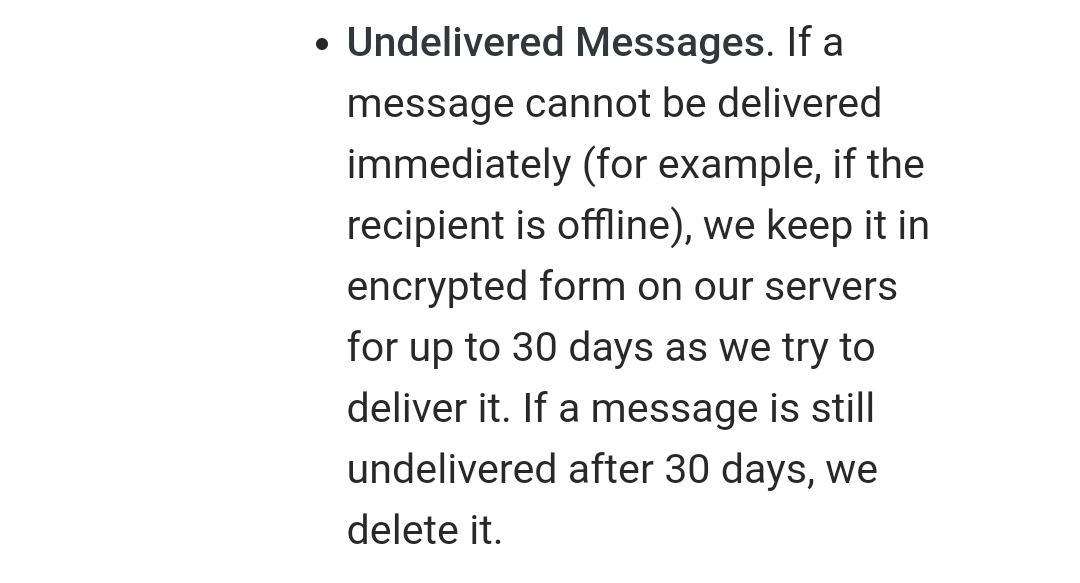
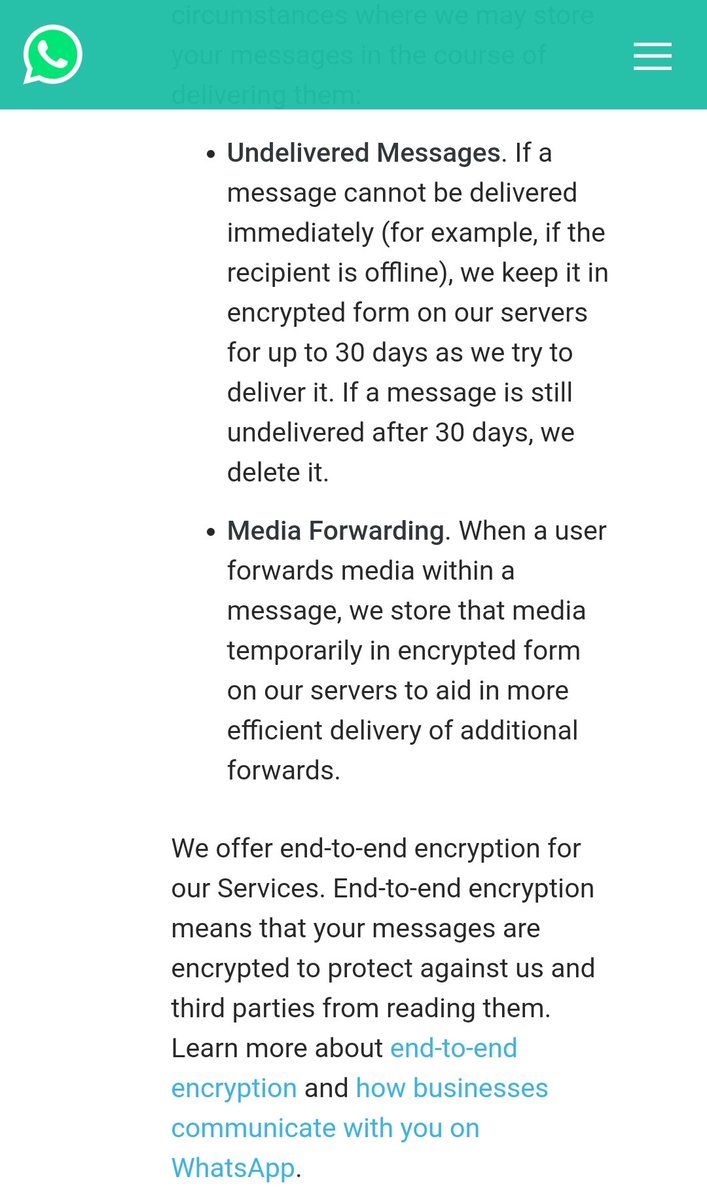
BUT if your friend / enemy / boyfriend / family or anyone is offline and your message sent to him cannot be delivered #immediately, it will be saved on #WhatsApp servers for 30 days.
Also: When you forward media msg in #WhatsApp that media is stored temporarily in encrypted form on it's servers to aid in more efficient delivery of additional forwards. Tada! (Consider a thousand times before sending any images; news anchors can officially read your chats.)
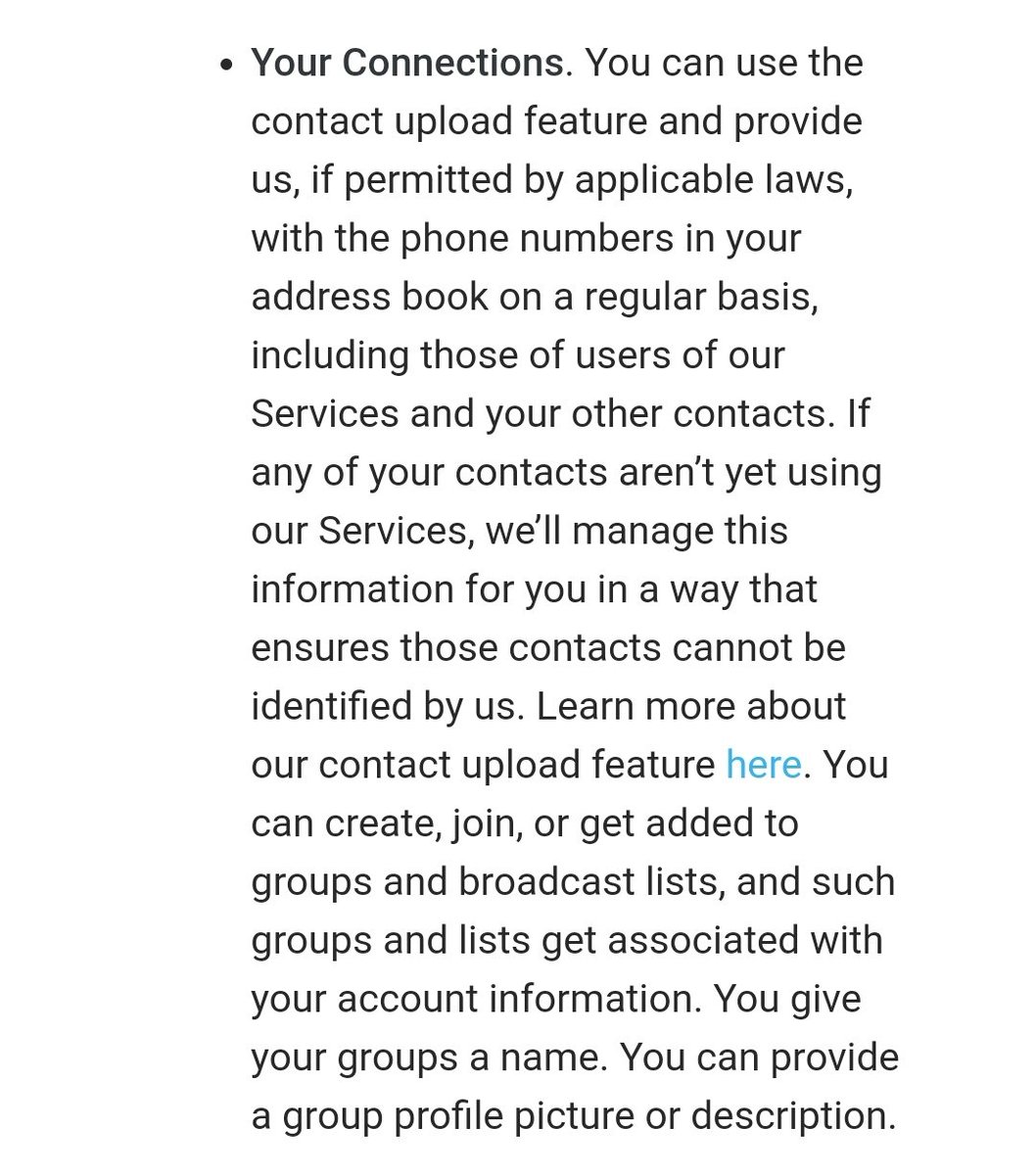
#WhatsApp can also read your contacts list. And incase someone who doesn't use WhatsApp is on that list, Whatsapp will manage the contact information "in a way that ensures those contacts cannot be identified by it."
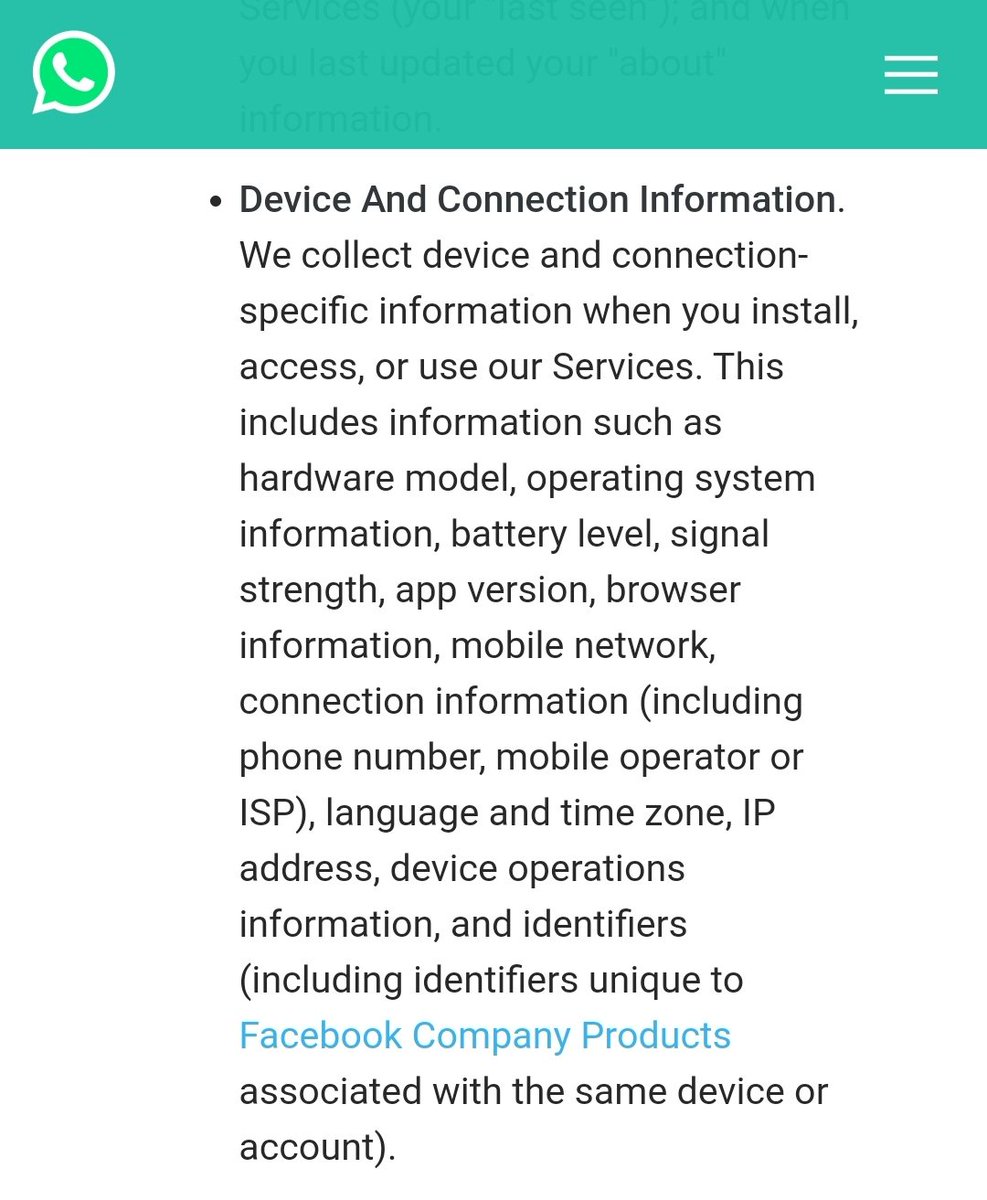
WhatsApp also collect your device's hardware model, operating system information, battery level, signal strength, app version, browser information, mobile network, connection information, including phone number, mobile operator details. Remember Jio and Facebook deal?
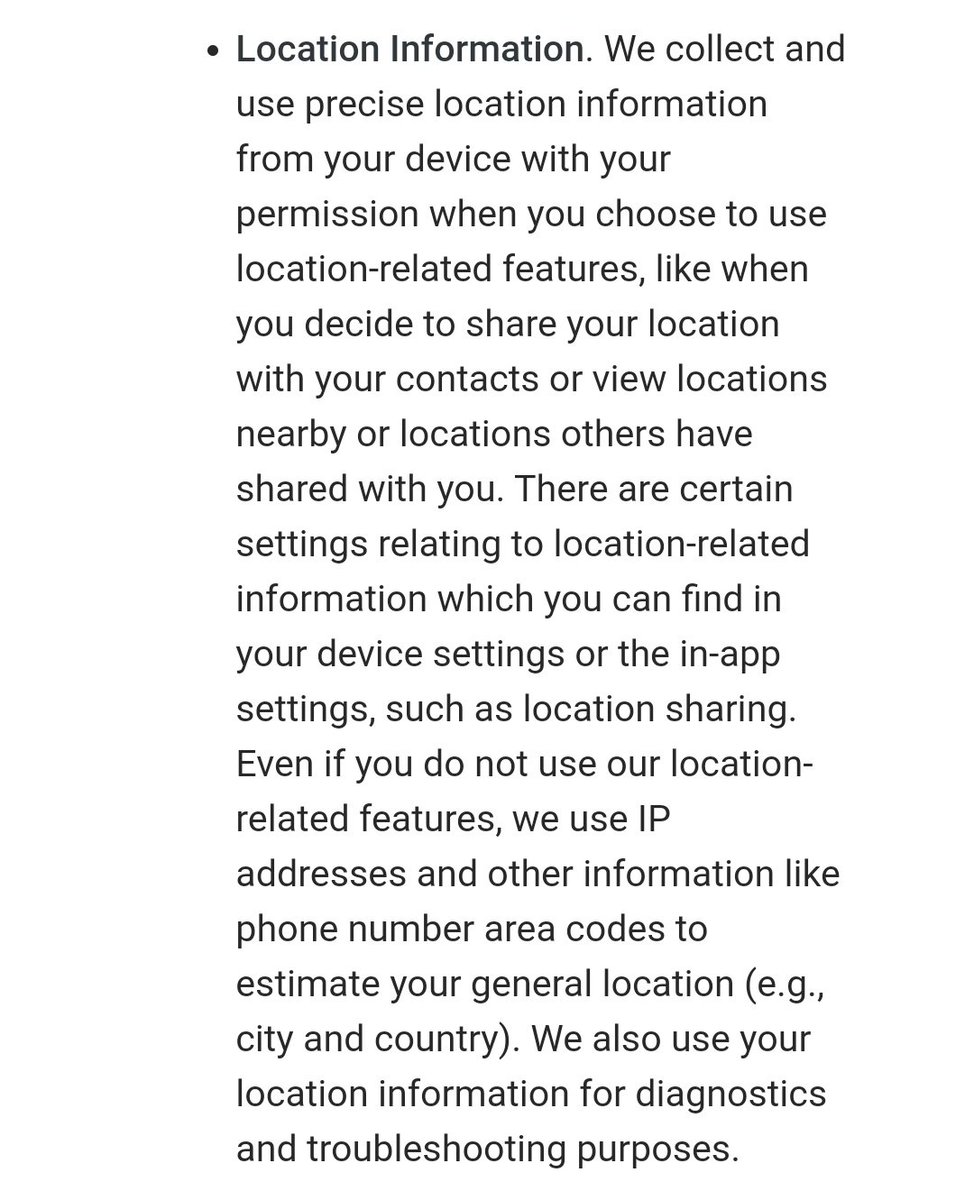
Even if you don't give #WhatsApp permission to use your location, they use IP addresses and other information like phone number area codes to estimate your general location. (Tip : People in love, planning to elope, do that once you delete your WhatsApp.)
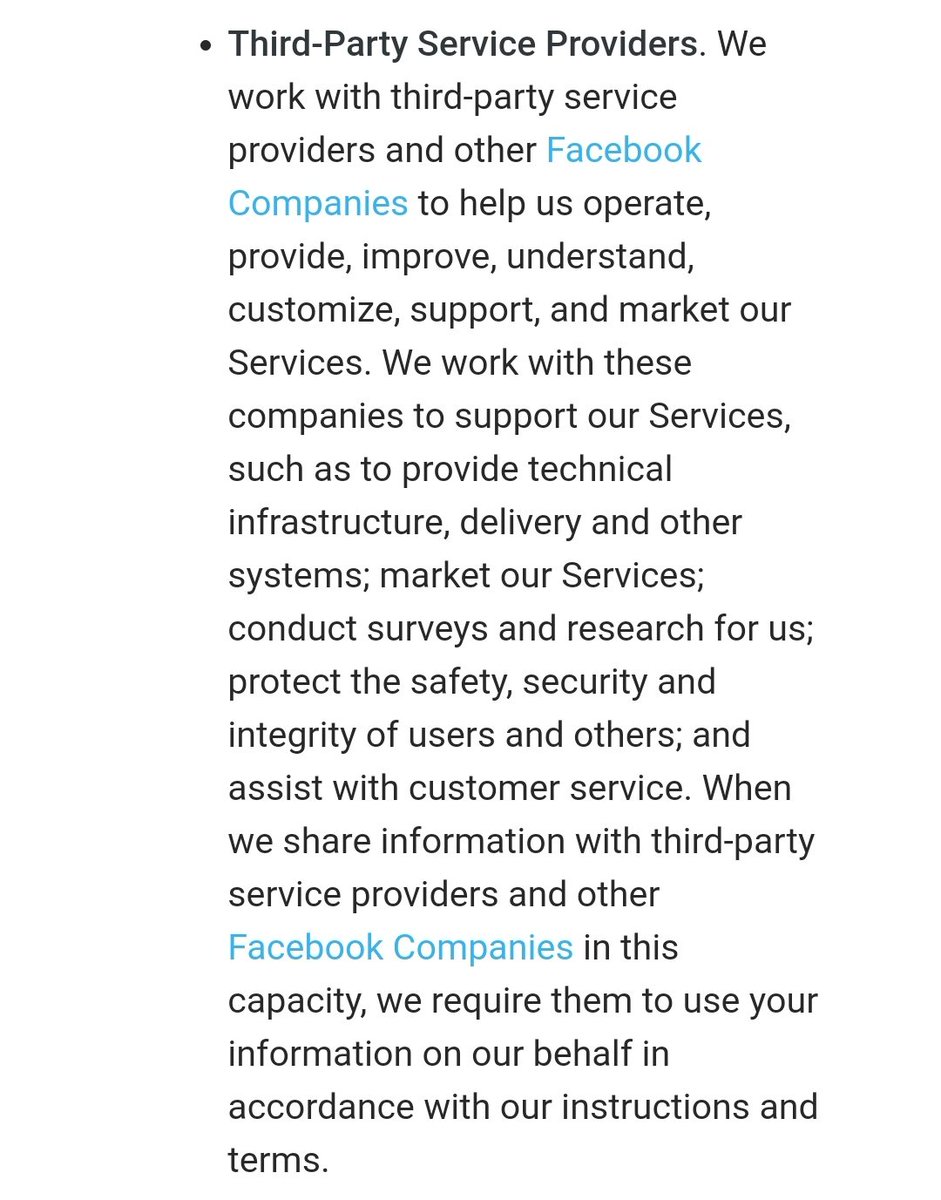
#WhatsApp can share your information with third party apps but on terms and conditions decided by it. I just wish users had a say?
#WhatsApp is not the only service you can use. There is signal, telegram and other channels which are less jargonised when it comes to terms and conditions.
Let us at least have a choice. No good ever came from monopoly.
https://t.co/4QHY5T1xdE

More from Internet

The Internet and mobile phones have taken over our lives. But it comes with increasing security concerns. Website data breaches, phishing attacks, and other online scams are commonplace. Here's a thread for regular people on how to increase your security online.
#StaySafeOnline

#1
Go to your Google account settings. Revoke permissions from all the apps you don't use:
https://t.co/cMGgSgtRTI

Also check if any app has access to your contacts or - gasp! - your entire email. Strongly reconsider both, especially access to your email.

Giving access to your contacts lets companies spam those people.

Giving access to your email - email organising apps, for instance - renders your online security meaningless. Password resets are often done with email, and if an external entity can access that, game over!

#2
Go to your Twitter account settings and revoke permissions from all the apps you don't use or trust:
https://t.co/lXxCgdnaXH

Online quizzes and such sites often ask for permission to post tweets for you, read your tweets, and even your DMs!.

People click "OK" without reading the fine print.

But imagine the security and privacy risk with having some unknown entity be able to post tweets and read your private DMs just to post the results of what Game of Thrones character you are.

You May Also Like

“We don’t negotiate salaries” is a negotiation tactic.

Always. No, your company is not an exception.

A tactic I don’t appreciate at all because of how unfairly it penalizes low-leverage, junior employees, and those loyal enough not to question it, but that’s negotiation for you after all. Weaponized information asymmetry.

Listen to Aditya


And by the way, you should never be worried that an offer would be withdrawn if you politely negotiate.

I have seen this happen *extremely* rarely, mostly to women, and anyway is a giant red flag. It suggests you probably didn’t want to work there.

You wish there was no negotiating so it would all be more fair? I feel you, but it’s not happening.

Instead, negotiate hard, use your privilege, and then go and share numbers with your underrepresented and underpaid colleagues. […]