#Bookmark this

Untold saga
|| Kalabhairava ||

I repeat “Untold Unsung now Unearthed”

Go through entire thread carefully. It contain mesmerizing story.
+
Next weekly thread would be on || The Major Vratas of Ancient India || according to scriptures

RT & spread the knowledge

Glimpse of the entire thread.

कपालं ब्रह्मणः सद्यो भैरवस्य करांबुजात् |
पपात भुवि तत्तिर्थमभूत्कापालमोचनम् ||

Brahma’s skull then fell to the ground from the lotus like hand of Bhairava. That tirtha (place of pilgrimage) became Kapalamochanam, in Varanasi.
Starting the thread

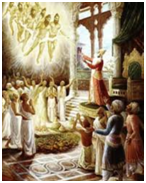
Many years ago, Brahma lost his head slightly. He began to imagine that he was superior to Shiva and Vishnu. He told all the sages, “I am the supreme godhead. There is no one else but me.”
While Brahma was thus instructing the sages, Vishnu arrived and was enraged at Brahma’s behaviour. “You are indeed ignorant,” he told Brahma. “I am the supreme godhead. You are only the creator. But I am, after all, the preserver.”

More from Prateechi 🛫✈️🛩️

More from India

Some readers have been asking what #India2030 is all about.
Here’s a chapter-by-chapter thread on the 20 forecasts by 20 thought leaders on 20 themes that will define India in the 2020s.
1/n


Chapter 20 of #India2030 by @davidfrawleyved talks about how the Civilizational Resurgence of India will reconnect its ancient past to ride into a dharmic future
2/n

Chapter 19 of #India2030 by @devdip tells us what the new idea of Nationalism in the 2020s will be — an integral union of the nation with the self
3/n

Chapter 18 of #India2030 by @sandipanthedeb examines how ideologies and technologies will intrude into and redefine Friendships
4/n

Chapter 17 of #India2030 by @authoramish studies the Soft Power of India and says its global influence will be through the confluence of materialism and spiritualism
5/n

You May Also Like

🌺कैसे बने गरुड़ भगवान विष्णु के वाहन और क्यों दो भागों में फटी होती है नागों की जिह्वा🌺

महर्षि कश्यप की तेरह पत्नियां थीं।लेकिन विनता व कद्रु नामक अपनी दो पत्नियों से उन्हे विशेष लगाव था।एक दिन महर्षि आनन्दभाव में बैठे थे कि तभी वे दोनों उनके समीप आकर उनके पैर दबाने लगी।


प्रसन्न होकर महर्षि कश्यप बोले,"मुझे तुम दोनों से विशेष लगाव है, इसलिए यदि तुम्हारी कोई विशेष इच्छा हो तो मुझे बताओ। मैं उसे अवश्य पूरा करूंगा ।"

कद्रू बोली,"स्वामी! मेरी इच्छा है कि मैं हज़ार पुत्रों की मां बनूंगी।"
विनता बोली,"स्वामी! मुझे केवल एक पुत्र की मां बनना है जो इतना बलवान हो की कद्रू के हज़ार पुत्रों पर भारी पड़े।"
महर्षि बोले,"शीघ्र ही मैं यज्ञ करूंगा और यज्ञ के उपरांत तुम दोनो की इच्छाएं अवश्य पूर्ण होंगी"।


महर्षि ने यज्ञ किया,विनता व कद्रू को आशीर्वाद देकर तपस्या करने चले गए। कुछ काल पश्चात कद्रू ने हज़ार अंडों से काले सर्पों को जन्म दिया व विनता ने एक अंडे से तेजस्वी बालक को जन्म दिया जिसका नाम गरूड़ रखा।जैसे जैसे समय बीता गरुड़ बलवान होता गया और कद्रू के पुत्रों पर भारी पड़ने लगा


परिणामस्वरूप दिन प्रतिदिन कद्रू व विनता के सम्बंधों में कटुता बढ़ती गयी।एकदिन जब दोनो भ्रमण कर रहीं थी तब कद्रू ने दूर खड़े सफेद घोड़े को देख कर कहा,"बता सकती हो विनता!दूर खड़ा वो घोड़ा किस रंग का है?"
विनता बोली,"सफेद रंग का"।
तो कद्रू बोली,"शर्त लगाती हो? इसकी पूँछ तो काली है"।
This is a pretty valiant attempt to defend the "Feminist Glaciology" article, which says conventional wisdom is wrong, and this is a solid piece of scholarship. I'll beg to differ, because I think Jeffery, here, is confusing scholarship with "saying things that seem right".


The article is, at heart, deeply weird, even essentialist. Here, for example, is the claim that proposing climate engineering is a "man" thing. Also a "man" thing: attempting to get distance from a topic, approaching it in a disinterested fashion.


Also a "man" thing—physical courage. (I guess, not quite: physical courage "co-constitutes" masculinist glaciology along with nationalism and colonialism.)


There's criticism of a New York Times article that talks about glaciology adventures, which makes a similar point.


At the heart of this chunk is the claim that glaciology excludes women because of a narrative of scientific objectivity and physical adventure. This is a strong claim! It's not enough to say, hey, sure, sounds good. Is it true?