

More from Anosh Mody


More from Iex


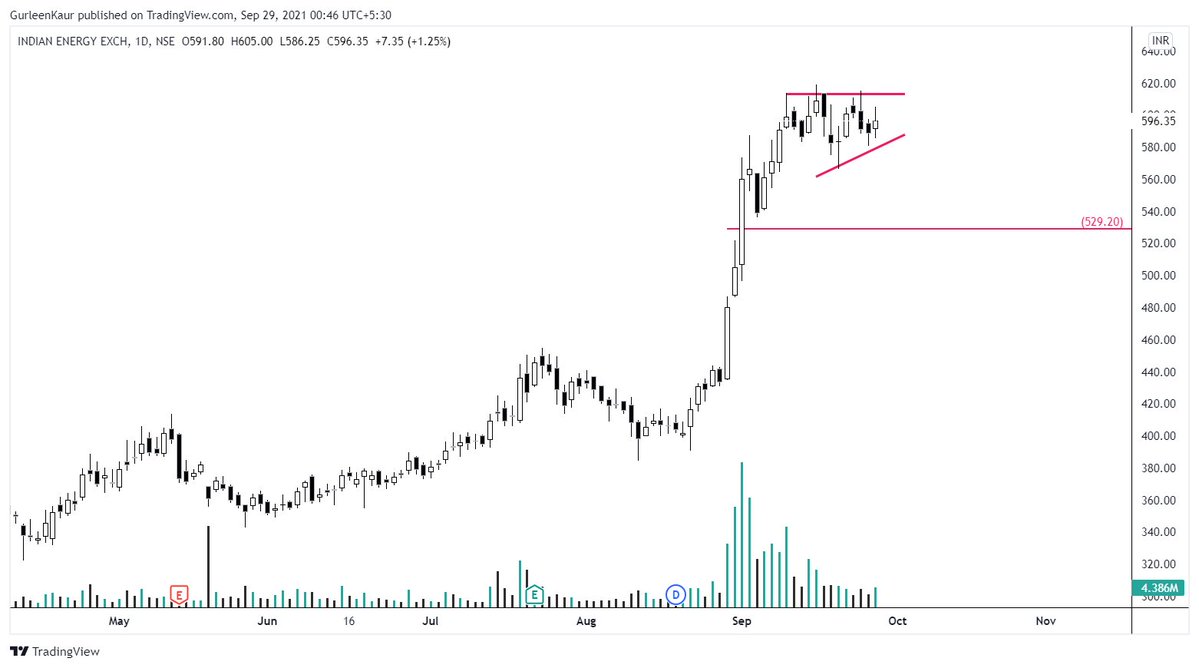
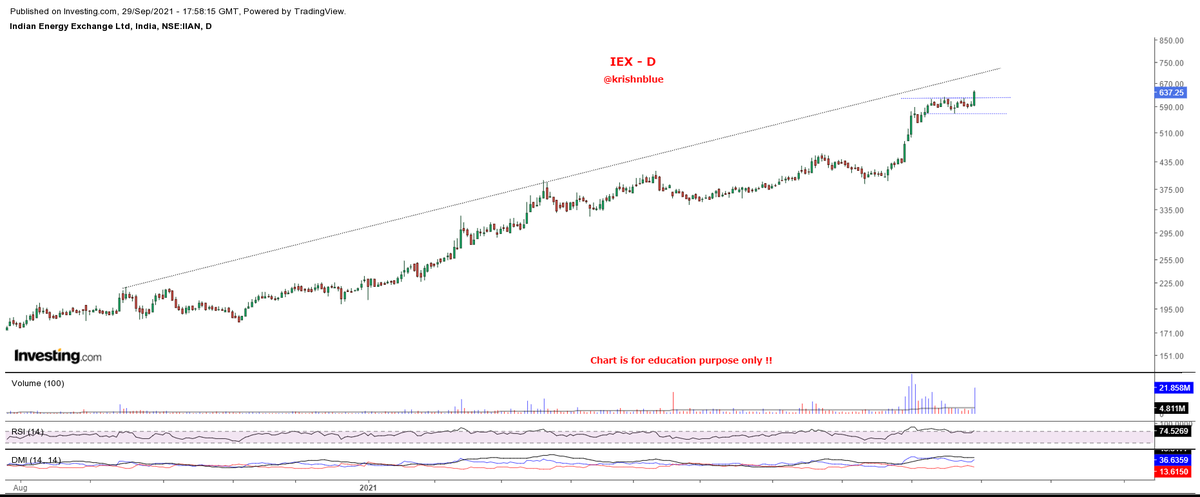
Price characterized by a clear direction of the price trend.
Followed by a consolidation in the form of converging action which is an indicative of resumption of the trend.
A breakout at 613.80 would mark the price towards 700. https://t.co/MvoUQ1Y5gA
#IEX
— Gurleen (@GurleenKaur_19) September 12, 2021
In daily; 0.382 Fib support level intact.
Till the time it holds above 565.60, Potential upside can be seen towards 630 followed by 700.#StockMarket #StocksInFocus pic.twitter.com/cYLaRsUOGZ


90% in 56 days https://t.co/KAsBVxzlxb
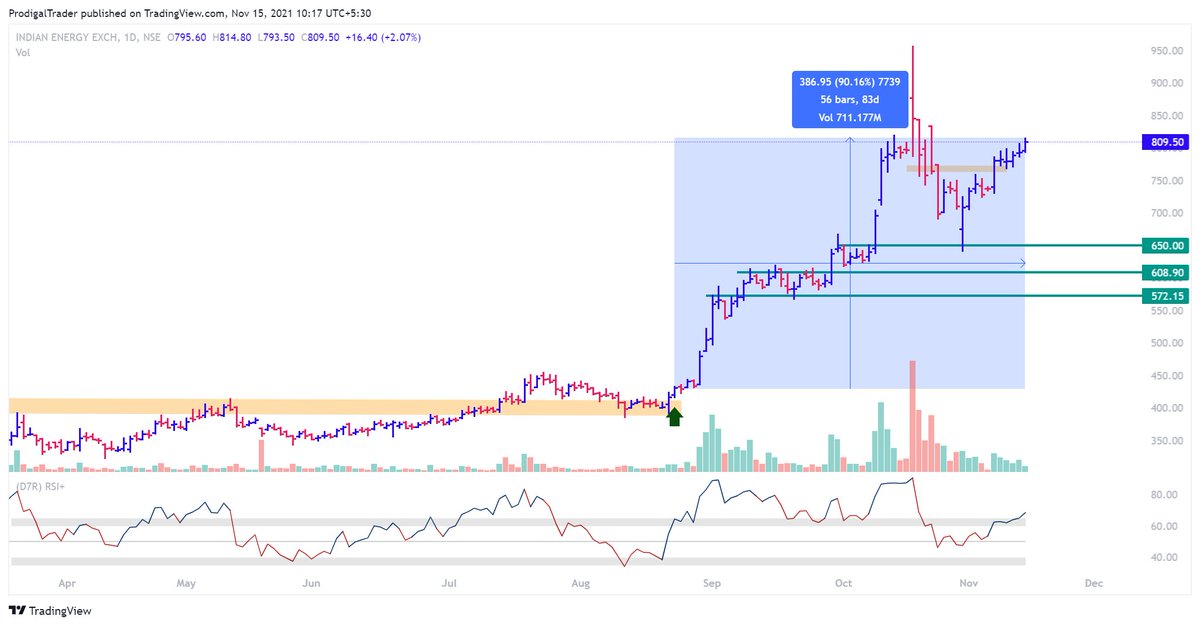
#IEX
— Aneesh Philomina Antony (ProdigalTrader) (@ProdigalTrader) August 24, 2021
reversal of polarity played out very well here. Strong momentum and demand here pushing price up. Might breakout to new highs soon#StockMarket #StocksInFocus #stocktrading #stockselection #StockToWatch pic.twitter.com/oOnpBOfaNa

You May Also Like


Please add your own.
2/ The Magic Question: "What would need to be true for you
1/\u201cWhat would need to be true for you to\u2026.X\u201d
— Erik Torenberg (@eriktorenberg) December 4, 2018
Why is this the most powerful question you can ask when attempting to reach an agreement with another human being or organization?
A thread, co-written by @deanmbrody: https://t.co/Yo6jHbSit9
3/ On evaluating where someone’s head is at regarding a topic they are being wishy-washy about or delaying.
“Gun to the head—what would you decide now?”
“Fast forward 6 months after your sabbatical--how would you decide: what criteria is most important to you?”
4/ Other Q’s re: decisions:
“Putting aside a list of pros/cons, what’s the *one* reason you’re doing this?” “Why is that the most important reason?”
“What’s end-game here?”
“What does success look like in a world where you pick that path?”
5/ When listening, after empathizing, and wanting to help them make their own decisions without imposing your world view:
“What would the best version of yourself do”?


Ironies of Luck https://t.co/5BPWGbAxFi
— Morgan Housel (@morganhousel) March 14, 2018
"Luck is the flip side of risk. They are mirrored cousins, driven by the same thing: You are one person in a 7 billion player game, and the accidental impact of other people\u2019s actions can be more consequential than your own."
I’ve always felt that the luckiest people I know had a talent for recognizing circumstances, not of their own making, that were conducive to a favorable outcome and their ability to quickly take advantage of them.
In other words, dumb luck was just that, it required no awareness on the person’s part, whereas “smart” luck involved awareness followed by action before the circumstances changed.
So, was I “lucky” to be born when I was—nothing I had any control over—and that I came of age just as huge databases and computers were advancing to the point where I could use those tools to write “What Works on Wall Street?” Absolutely.
Was I lucky to start my stock market investments near the peak of interest rates which allowed me to spend the majority of my adult life in a falling rate environment? Yup.
