

Welcome to the end of year Brendan thread. I am going to post every Brendan I have in my phone (253). They're literally just going to appear in the order I saved them. Unfortunately I've no idea who the vast majority of them were made by so I can't attribute credit. Let's begin.


More from Fun




So I got out some CF cards and noticed something odd about this one. Do you see the weirdness?

How the fuck is a CF card "USB Enabled"?

So CF cards are a weird beast that act as either a PCMCIA card or an ATA/IDE card depending on a mode pin.
They're definitely not USB.
And it's not like that weird SanDisk card I have which you can fold in half and plug it in as a USB device.
It turns out the reason for "USB Enabled" is because it's a Lexar drive from the jumpSHOT era.
This is a normal CF card in most cases, you can use it in normal CF card readers and such
How the fuck is a CF card "USB Enabled"?
So CF cards are a weird beast that act as either a PCMCIA card or an ATA/IDE card depending on a mode pin.
They're definitely not USB.
And it's not like that weird SanDisk card I have which you can fold in half and plug it in as a USB device.
Flip it over, bend it in half, and now you can plug your SD card right into a USB port pic.twitter.com/jeBefP2xU1
— foone (@Foone) May 2, 2020
It turns out the reason for "USB Enabled" is because it's a Lexar drive from the jumpSHOT era.
This is a normal CF card in most cases, you can use it in normal CF card readers and such








You May Also Like


BREAKING: @CommonsCMS @DamianCollins just released previously sealed #Six4Three @Facebook documents:
Some random interesting tidbits:
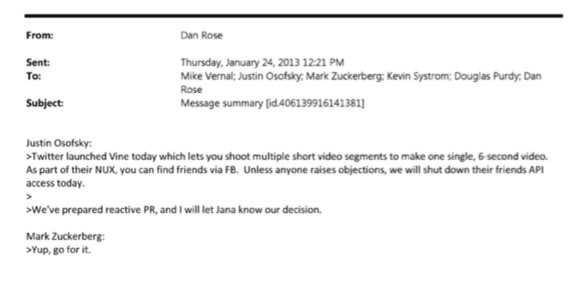
1) Zuck approves shutting down platform API access for Twitter's when Vine is released #competition
2) Facebook engineered ways to access user's call history w/o alerting users:
Team considered access to call history considered 'high PR risk' but 'growth team will charge ahead'. @Facebook created upgrade path to access data w/o subjecting users to Android permissions dialogue.
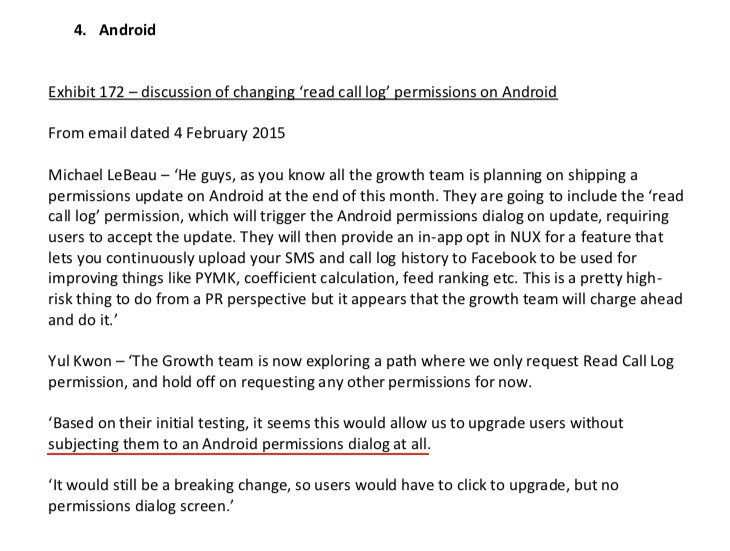
3) The above also confirms @kashhill and other's suspicion that call history was used to improve PYMK (People You May Know) suggestions and newsfeed rankings.
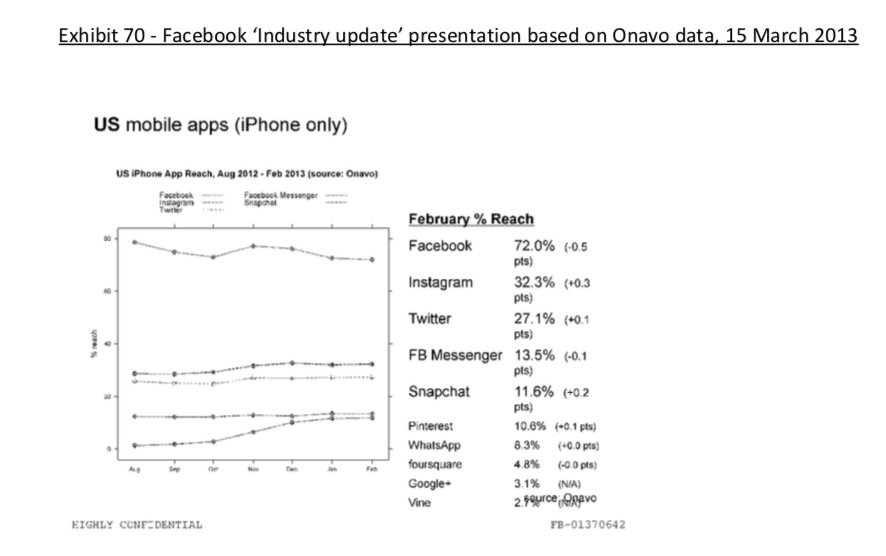
4) Docs also shed more light into @dseetharaman's story on @Facebook monitoring users' @Onavo VPN activity to determine what competitors to mimic or acquire in 2013.
https://t.co/PwiRIL3v9x
Some random interesting tidbits:
1) Zuck approves shutting down platform API access for Twitter's when Vine is released #competition
2) Facebook engineered ways to access user's call history w/o alerting users:
Team considered access to call history considered 'high PR risk' but 'growth team will charge ahead'. @Facebook created upgrade path to access data w/o subjecting users to Android permissions dialogue.
3) The above also confirms @kashhill and other's suspicion that call history was used to improve PYMK (People You May Know) suggestions and newsfeed rankings.
4) Docs also shed more light into @dseetharaman's story on @Facebook monitoring users' @Onavo VPN activity to determine what competitors to mimic or acquire in 2013.
https://t.co/PwiRIL3v9x




https://t.co/6cRR2B3jBE
Viruses and other pathogens are often studied as stand-alone entities, despite that, in nature, they mostly live in multispecies associations called biofilms—both externally and within the host.
https://t.co/FBfXhUrH5d

Microorganisms in biofilms are enclosed by an extracellular matrix that confers protection and improves survival. Previous studies have shown that viruses can secondarily colonize preexisting biofilms, and viral biofilms have also been described.

...we raise the perspective that CoVs can persistently infect bats due to their association with biofilm structures. This phenomenon potentially provides an optimal environment for nonpathogenic & well-adapted viruses to interact with the host, as well as for viral recombination.

Biofilms can also enhance virion viability in extracellular environments, such as on fomites and in aquatic sediments, allowing viral persistence and dissemination.

Viruses and other pathogens are often studied as stand-alone entities, despite that, in nature, they mostly live in multispecies associations called biofilms—both externally and within the host.
https://t.co/FBfXhUrH5d
Microorganisms in biofilms are enclosed by an extracellular matrix that confers protection and improves survival. Previous studies have shown that viruses can secondarily colonize preexisting biofilms, and viral biofilms have also been described.
...we raise the perspective that CoVs can persistently infect bats due to their association with biofilm structures. This phenomenon potentially provides an optimal environment for nonpathogenic & well-adapted viruses to interact with the host, as well as for viral recombination.
Biofilms can also enhance virion viability in extracellular environments, such as on fomites and in aquatic sediments, allowing viral persistence and dissemination.

