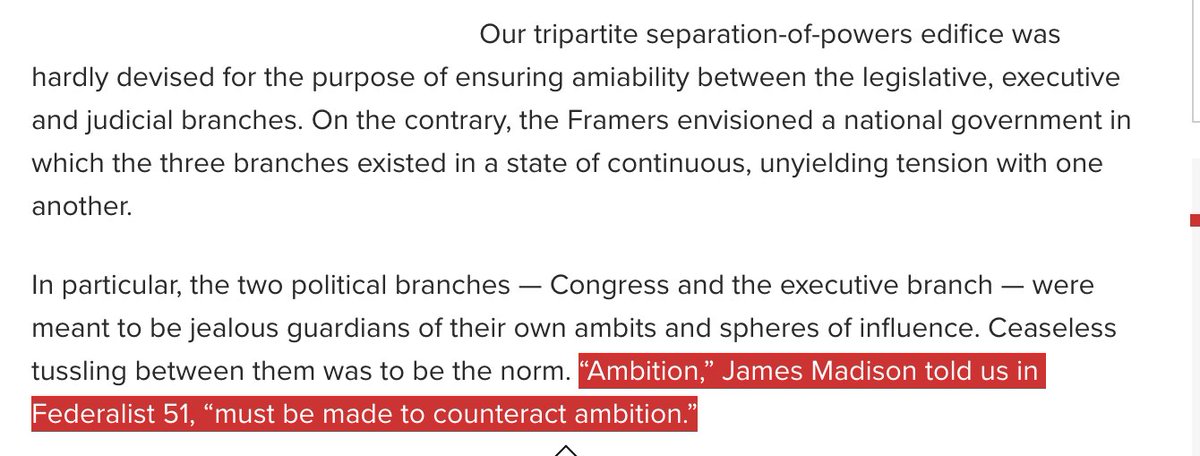
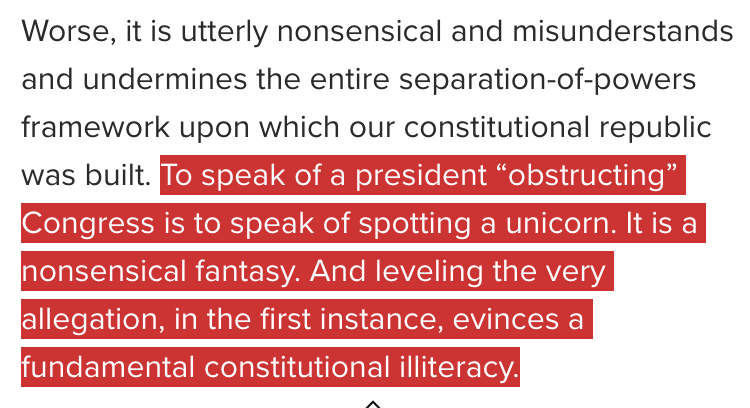
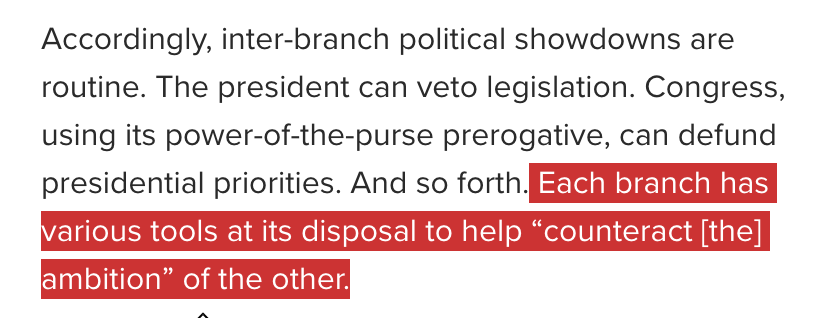
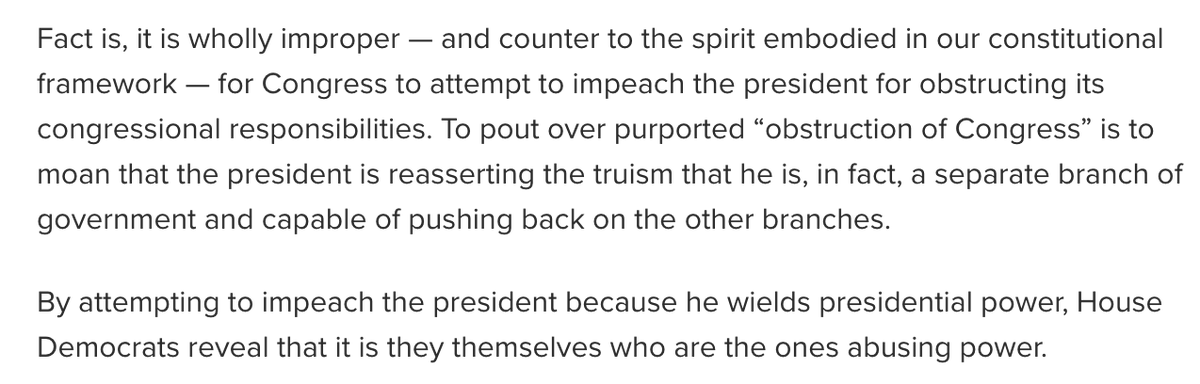
🧵 The conversation surrounding this is confused in ways that really backfire. For example, you often hear that the Founders more or less "wanted gridlock to be the norm," for it to be "hard to get anything done," to guard against radical change.
I cannot explain it, but it seems like the concept of "separation of powers" has become deeply alien and upsetting to most people. *Nothing* can be independent. And so we keep blurring the powers, and it causes systemic dysfunction. There's no long-term view.
— Kerry (@kerry62189) December 24, 2020

More from For later read





There is some valuable analysis in this report, but on the defense front this report is deeply flawed. There are other sections of value in report but, candidly, I don't think it helps us think through critical question of Taiwan defense issues in clear & well-grounded way. 1/
Normally as it might seem churlish to be so critical, but @cfr is so high-profile & the co-authors so distinguished I think it’s key to be clear. If not, people - including in Beijing - could get the wrong idea & this report could do real harm if influential on defense issues. 2/
BLUF: The defense discussion in this report does not engage at the depth needed to add to this critical debate. Accordingly conclusions in report are ill-founded - & in key parts harmful/misleading, esp that US shldnt be prepared defend Taiwan directly (alongside own efforts). 3/
The root of the problem is that report doesn't engage w the real debate on TWN defense issues or, frankly, the facts as knowable in public. Perhaps the most direct proof of this: The citations. There is nothing in the citations to @DeptofDefense China Military Power Report...4/
Nor to vast majority of leading informed sources on this like Ochmanek, the @RANDCorporation Scorecard, @CNAS, etc. This is esp salient b/c co-authors by their own admission have v little insight into contemporary military issues. & both last served in govt in Bush 43. 5/
This is an excellent report, and I'm glad to have joined the study group. The central focus on avoiding war is understandable--a US-China war would be catastrophic and should be avoided. But protecting Taiwan's security and prosperity requires doing more. 1/x https://t.co/P0Sg4LJcpV
— Bonnie Glaser / \u845b\u4f86\u5100 (@BonnieGlaser) February 12, 2021
Normally as it might seem churlish to be so critical, but @cfr is so high-profile & the co-authors so distinguished I think it’s key to be clear. If not, people - including in Beijing - could get the wrong idea & this report could do real harm if influential on defense issues. 2/
BLUF: The defense discussion in this report does not engage at the depth needed to add to this critical debate. Accordingly conclusions in report are ill-founded - & in key parts harmful/misleading, esp that US shldnt be prepared defend Taiwan directly (alongside own efforts). 3/
The root of the problem is that report doesn't engage w the real debate on TWN defense issues or, frankly, the facts as knowable in public. Perhaps the most direct proof of this: The citations. There is nothing in the citations to @DeptofDefense China Military Power Report...4/
Nor to vast majority of leading informed sources on this like Ochmanek, the @RANDCorporation Scorecard, @CNAS, etc. This is esp salient b/c co-authors by their own admission have v little insight into contemporary military issues. & both last served in govt in Bush 43. 5/