I was listening to parts of @PatrickByrne's interview about his meeting with @potus in which @SidneyPowell1 and @GenFlynn also attended.
First, I appreciate the fact that Patrick has spent $1.5 million of his own money to investigate voter fraud and fight the deep state machine
I understand Mr. Byrne's concern that @Potus is surrounded by a den of liars and deep state traitors who want nothing more than to be rid of the President, but this is classic Art of War tactics
@Potus will act as if he is considering the advice of rats like Cipollone to gain intel on the plans of the deep state, and to appear weak when he is actually in the driver's seat. Don't think for one second @Potus does not know Cipollone's true intentions
"If you know the enemy and know yourself, you need not fear the result of a hundred battles. If you know yourself but not the enemy, for every victory gained you
"Engage people with what they expect; it is what they are able to discern and confirms their projections. It settles them into predictable patterns of response, occupying
More from For later read



Hi @EdinburghUni @EHRC @EHRCChair @KishwerFalkner @RJHilsenrath @trussliz @GEOgovuk
The DIVERSITY INFORMATION section in yr job application mentions 'legal equality duties'. You then ask "What is your gender identity?" with options
Female
Male
Non-binary
Not-listed
Other
1/13
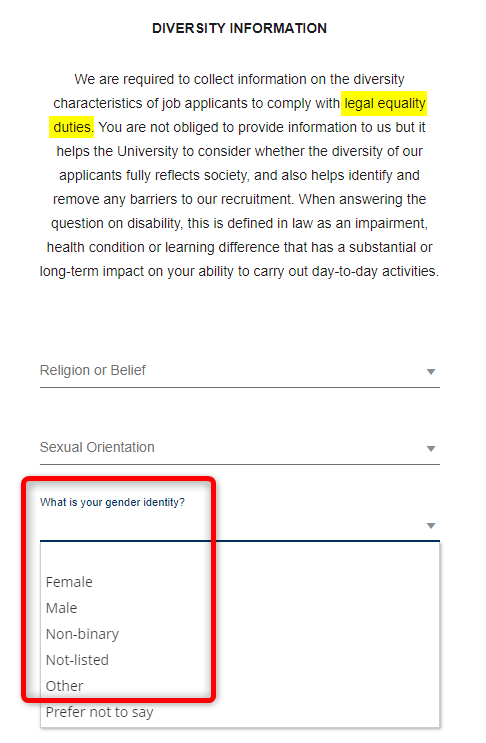
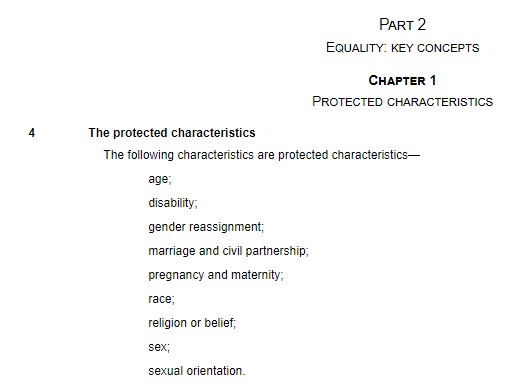
'Gender identity' is not a protected characteristic under the Equality Act 2010 and is not defined in the Act.
https://t.co/qisFhCiV1u
2/13
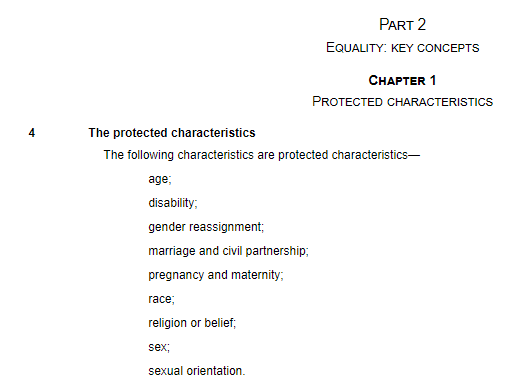
Sex is the protected characteristic and the only two possible options for sex are 'Female' and 'Male' as defined in the Act and consistent with biology - 'non-binary' and 'other' are not valid options.
https://t.co/CEJ0gkr6nF
'Gender identity' is not a synonym for sex.
3/13

You then ask "Does your gender identity match your sex registered at birth?"
4/13
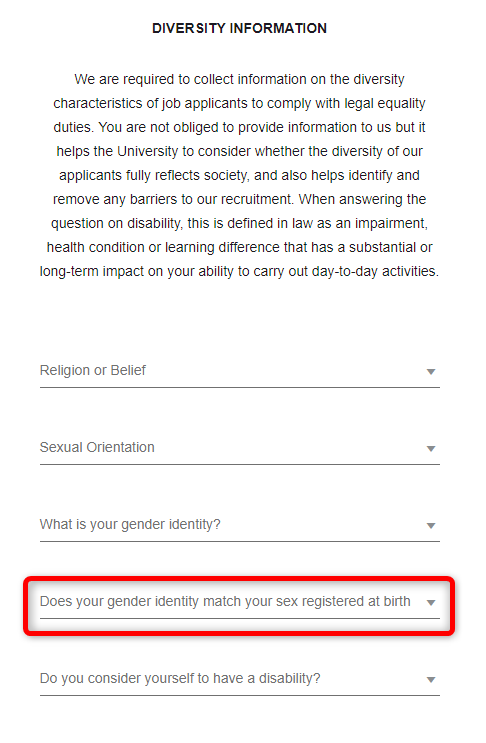
Again, 'gender identity' is not a protected characteristic under the Equality Act 2010 and is not defined in the Act.
https://t.co/qisFhCiV1u
5/13
The DIVERSITY INFORMATION section in yr job application mentions 'legal equality duties'. You then ask "What is your gender identity?" with options
Female
Male
Non-binary
Not-listed
Other
1/13
'Gender identity' is not a protected characteristic under the Equality Act 2010 and is not defined in the Act.
https://t.co/qisFhCiV1u
2/13
Sex is the protected characteristic and the only two possible options for sex are 'Female' and 'Male' as defined in the Act and consistent with biology - 'non-binary' and 'other' are not valid options.
https://t.co/CEJ0gkr6nF
'Gender identity' is not a synonym for sex.
3/13
You then ask "Does your gender identity match your sex registered at birth?"
4/13
Again, 'gender identity' is not a protected characteristic under the Equality Act 2010 and is not defined in the Act.
https://t.co/qisFhCiV1u
5/13