If the connotation of risk is an intertwined concept and is difficult to quantify, how does a Risk Officer look at it?
Is there any way other than using copula models to determine systemic risk with long tails or a black swan event?
@CQFInstitute @GARP_Risk @SOActuaries
•75- 80% of the loss given events are classified as Operational #LGE - (LOSS GIVEN EVENTS),
•Only 15%- 20% of the LGEs are driven by Market or Credit or both
#Risk managers can use #scenario #analysis based on an expert judgement, that can be more helpful, instead of applying #VaR models blindly.
The Financial Markets outcomes are not Normal or i.i.d in any sense.
Gaussian Copula model assumes that correlation (strength of association between x and y variables) is Linear and hence presents the symmetric perspective of market-driven loss events.
@BIS_org
But that didn't work out well using symmetric event modelling assumptions!
A #Poisson Probability Distribution Model to measure frequency, whereas stochastic simulation can be used to measure severity for each single event loss.
The most common assumption used is that loss severity is independent of loss frequency.
This Loss distribution model for e.g. in the context of a Hedge Fund?
Can we induce randomness into the experiment to better capture heavy loss incurring tailed events aka Black Swan Events (having high severity and low frequency)?
2. Sample nnn times from the loss severity distribution to determine the loss experienced for each loss event (L1, L2,…,Ln)
Kindly refer to the same BASEL II - ORM Taxonomy as laid down in Basel II literature to better understand the vertical dependencies between various risk types/ across various lines
The following lists the seven official Basel II event types with some examples for each category:
1.Internal Fraud – misappropriation of assets, tax evasion, intentional mismarking of positions, bribery
3.Employment Practices and Workplace Safety – discrimination, workers compensation, employee health and safety
5.Damage to Physical Assets – natural disasters, terrorism, vandalism
7.Execution, Delivery, and Process Management – data entry errors, accounting errors, failed mandatory reporting, negligent loss of client assets
To better comprehend hedge fund business complexity you need to have a proper FMEA (Failure Modes and Effect Analysis) ....
Management that is a classic problem observed in the #FRM Profession, just because it is difficult to do quantitative modelling.
More from Finance







You May Also Like



@franciscodeasis https://t.co/OuQaBRFPu7
Unfortunately the "This work includes the identification of viral sequences in bat samples, and has resulted in the isolation of three bat SARS-related coronaviruses that are now used as reagents to test therapeutics and vaccines." were BEFORE the

chimeric infectious clone grants were there.https://t.co/DAArwFkz6v is in 2017, Rs4231.
https://t.co/UgXygDjYbW is in 2016, RsSHC014 and RsWIV16.
https://t.co/krO69CsJ94 is in 2013, RsWIV1. notice that this is before the beginning of the project
starting in 2016. Also remember that they told about only 3 isolates/live viruses. RsSHC014 is a live infectious clone that is just as alive as those other "Isolates".
P.D. somehow is able to use funds that he have yet recieved yet, and send results and sequences from late 2019 back in time into 2015,2013 and 2016!
https://t.co/4wC7k1Lh54 Ref 3: Why ALL your pangolin samples were PCR negative? to avoid deep sequencing and accidentally reveal Paguma Larvata and Oryctolagus Cuniculus?
Unfortunately the "This work includes the identification of viral sequences in bat samples, and has resulted in the isolation of three bat SARS-related coronaviruses that are now used as reagents to test therapeutics and vaccines." were BEFORE the
chimeric infectious clone grants were there.https://t.co/DAArwFkz6v is in 2017, Rs4231.
https://t.co/UgXygDjYbW is in 2016, RsSHC014 and RsWIV16.
https://t.co/krO69CsJ94 is in 2013, RsWIV1. notice that this is before the beginning of the project
starting in 2016. Also remember that they told about only 3 isolates/live viruses. RsSHC014 is a live infectious clone that is just as alive as those other "Isolates".
P.D. somehow is able to use funds that he have yet recieved yet, and send results and sequences from late 2019 back in time into 2015,2013 and 2016!
https://t.co/4wC7k1Lh54 Ref 3: Why ALL your pangolin samples were PCR negative? to avoid deep sequencing and accidentally reveal Paguma Larvata and Oryctolagus Cuniculus?

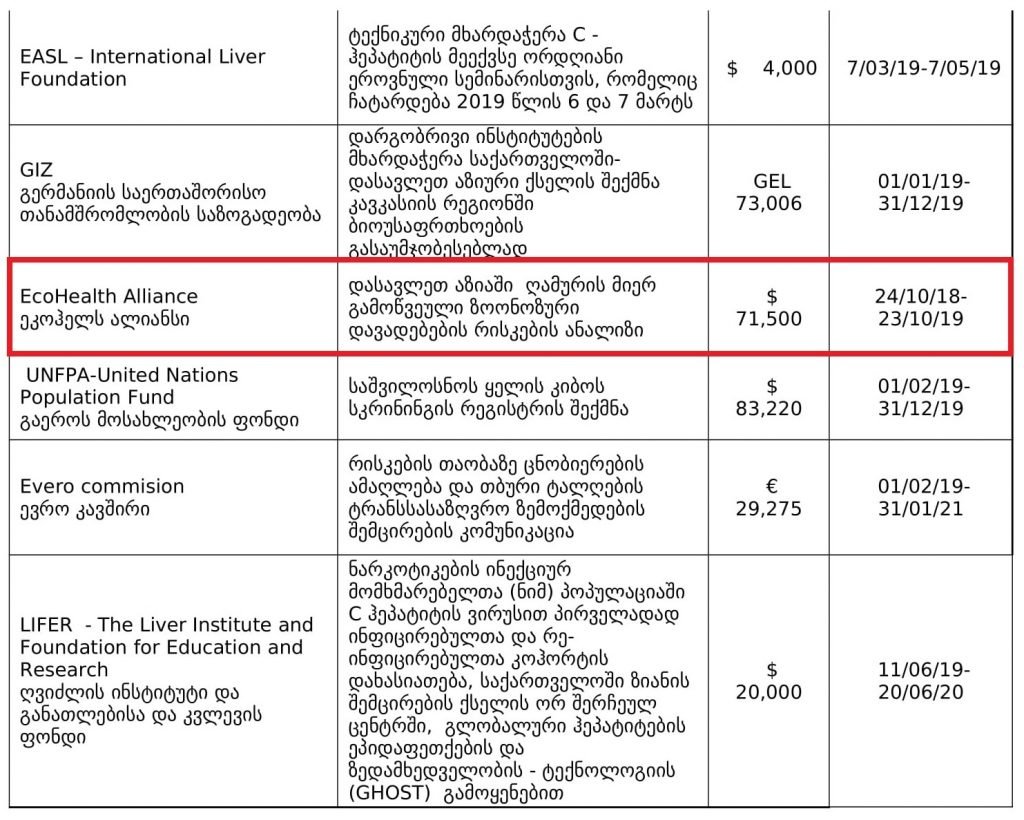
1. Project 1742 (EcoHealth/DTRA)
Risks of bat-borne zoonotic diseases in Western Asia
Duration: 24/10/2018-23 /10/2019
Funding: $71,500
@dgaytandzhieva
https://t.co/680CdD8uug
2. Bat Virus Database
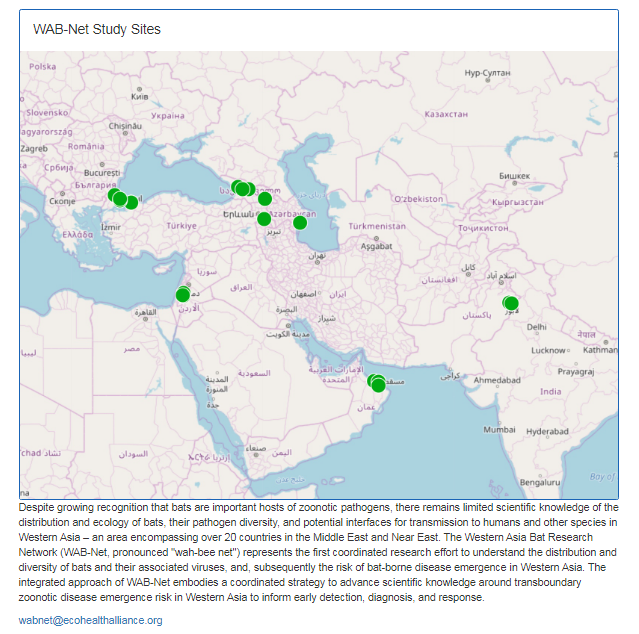
Access to the database is limited only to those scientists participating in our ‘Bats and Coronaviruses’ project
Our intention is to eventually open up this database to the larger scientific community
https://t.co/mPn7b9HM48
3. EcoHealth Alliance & DTRA Asking for Trouble
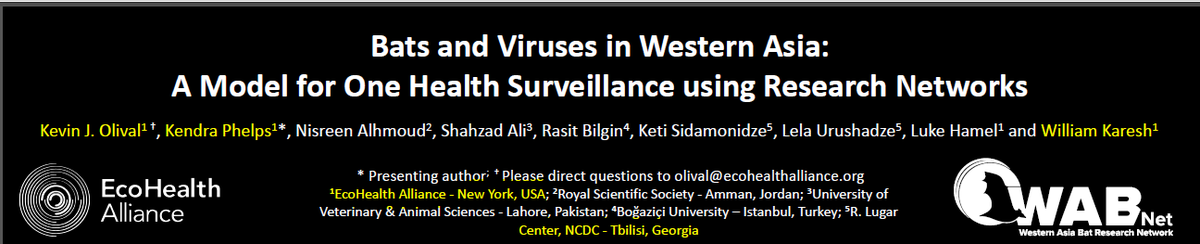
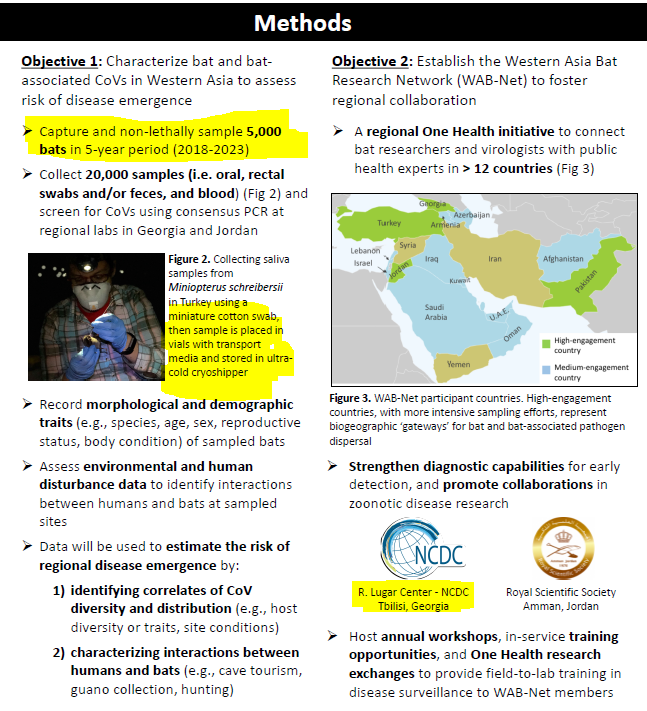
One Health research project focused on characterizing bat diversity, bat coronavirus diversity and the risk of bat-borne zoonotic disease emergence in the region.
https://t.co/u6aUeWBGEN
4. Phelps, Olival, Epstein, Karesh - EcoHealth/DTRA
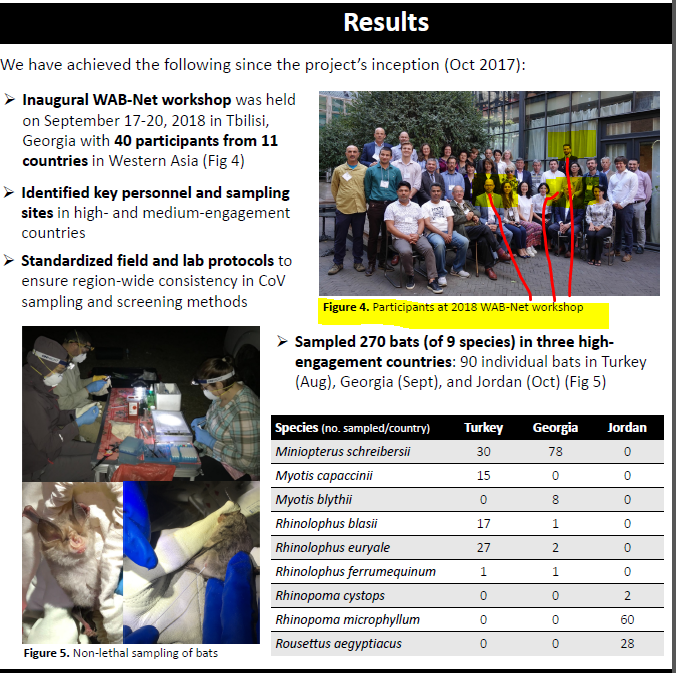
5, Methods and Expected Outcomes
(Unexpected Outcome = New Coronavirus Pandemic)
Risks of bat-borne zoonotic diseases in Western Asia
Duration: 24/10/2018-23 /10/2019
Funding: $71,500
@dgaytandzhieva
https://t.co/680CdD8uug
2. Bat Virus Database
Access to the database is limited only to those scientists participating in our ‘Bats and Coronaviruses’ project
Our intention is to eventually open up this database to the larger scientific community
https://t.co/mPn7b9HM48
3. EcoHealth Alliance & DTRA Asking for Trouble
One Health research project focused on characterizing bat diversity, bat coronavirus diversity and the risk of bat-borne zoonotic disease emergence in the region.
https://t.co/u6aUeWBGEN
4. Phelps, Olival, Epstein, Karesh - EcoHealth/DTRA
5, Methods and Expected Outcomes
(Unexpected Outcome = New Coronavirus Pandemic)