
+
So why is the government so focused on Love Jihad in UP when it faces a massive threat on the farm bills? Well, the two are somewhat connected.
Thread
+
+
https://t.co/M96Mybp9Mo
This fascinating article traces exactly how what was until then a South Indian story was spread in Muzzafarnagar by the BJP using pamphlets and party workers in the run up to the Muzaffarnagar riots to polarise.
+
https://t.co/FWB1UNH7YD
+
+
https://t.co/ZxCGjISDSv
More from Farmer protest

MyGov has released an excellent booklet "Putting Farmers First" which not only covers in detail the current #FarmLaws2020 but also lays out in structured summarized format the work done by the Modi government in the last 6 years.
Some snippets.
On the current #FarmLaws2020, there is much debate as to what may or may not happen.
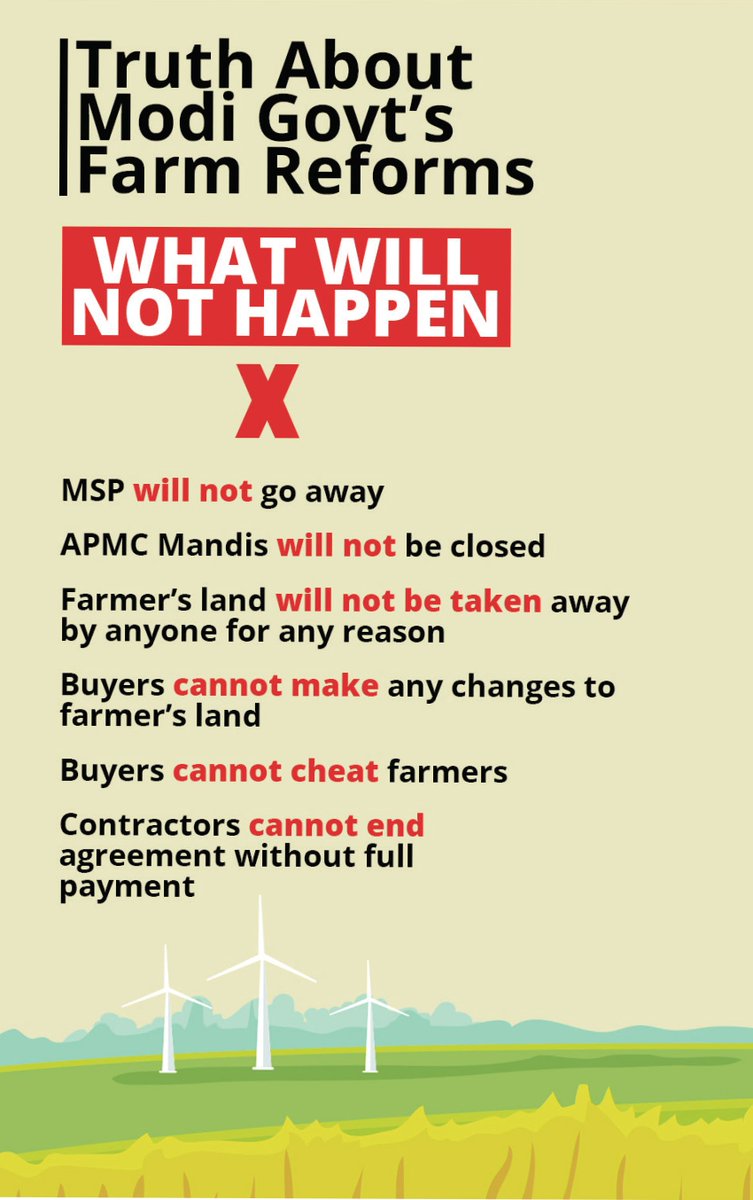
WHAT WILL NOT HAPPEN
MSP will not go away; APMC Mandis will not close; Farmers land cannot be taken way
WHAT WILL HAPPEN
Farmers can sell in Mandis & outside; More income; More jobs. 2/10
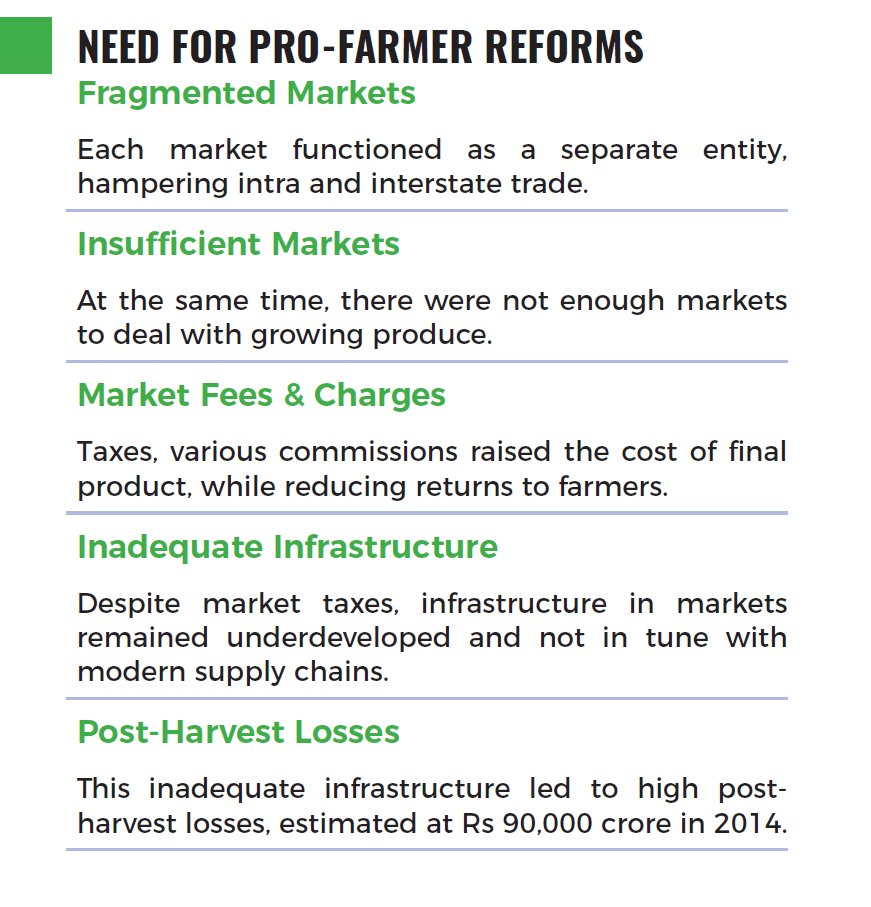
So what was the need for #FarmLaws2020 reforms when as per Left groups all was well?
1) Fragmented markets
2) Insufficient markets
3) Inadequate Infra
4) Inadequate credit
While rest of the economy was opening up, farmers were restricted. Result - Huge Income Disparity. 3/10
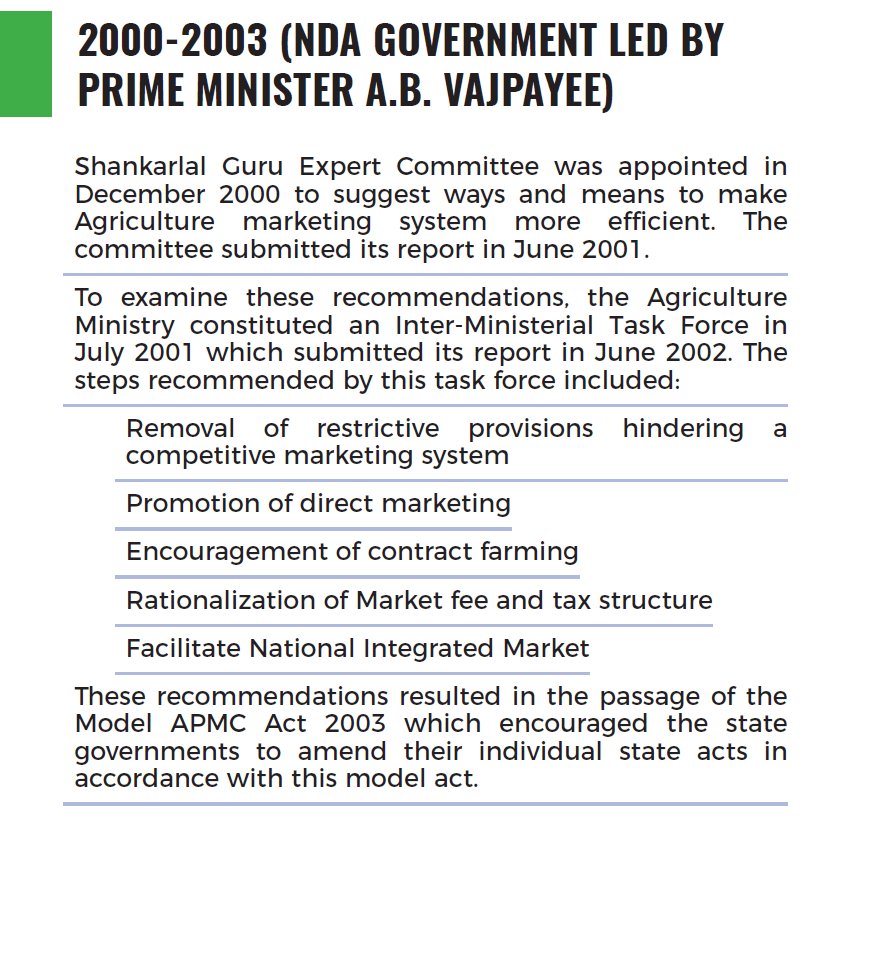
What about the charge that there has not been adequate consultation before #FarmLaws2020 were passed?
THE TRUTH: Two decades of consultation. Farm Reforms are perhaps the only policy reforms where there has been consensus movement in SAME DIRECTION by multiple governments. 4/10
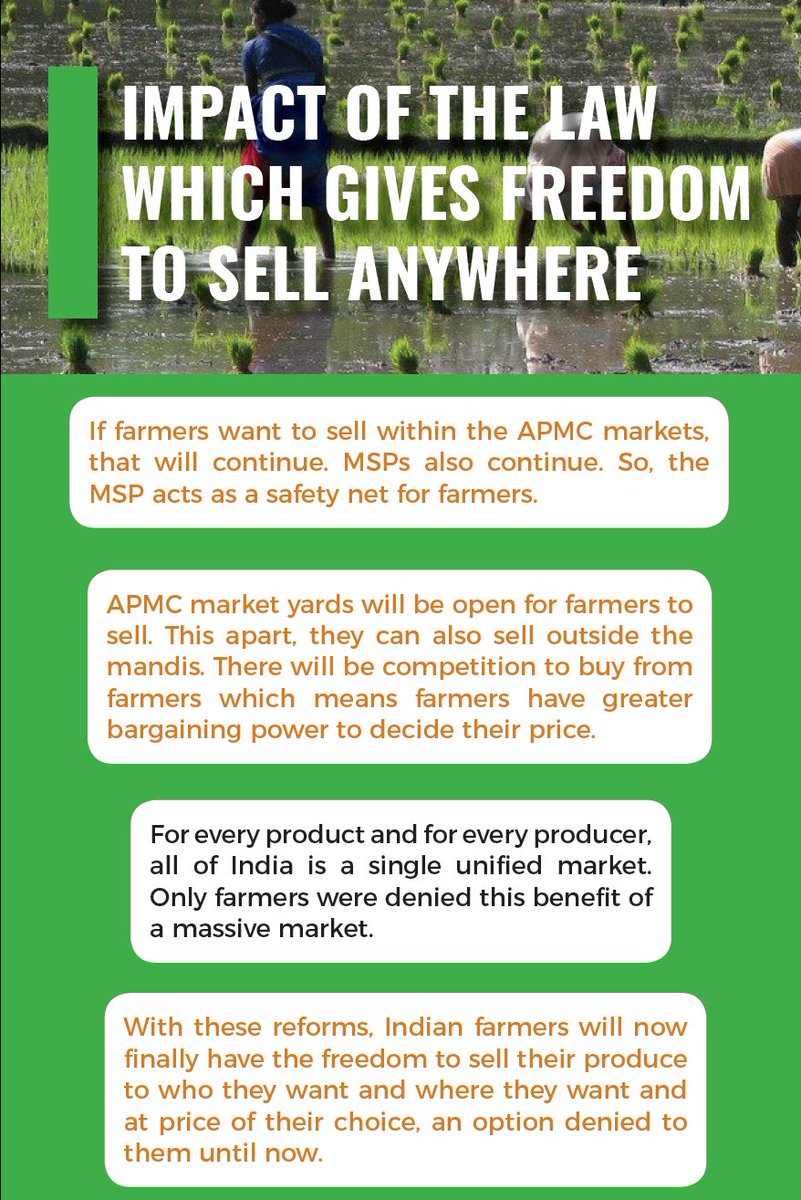
So what are the benefits of the law that allows the farmers to sell in APMC Mandis as at present but also, and importantly, anywhere outside?
1) Better price discovery for farmer
2) Converts present buyers market to sellers (farmer) market
3) Better logistics in rural areas
5/10
Some snippets.
Take a quick look into pro farmer measures of the government under the leadership of hon\u2019ble PM Shri @narendramodi since 2014 & the recent agricultural reforms that will help double farmers\u2019 income. https://t.co/6QgkerSfj8 #Aatmanirbharkrishi #FarmersFirst pic.twitter.com/FQN6L12Gdp
— MyGovIndia (@mygovindia) December 8, 2020
On the current #FarmLaws2020, there is much debate as to what may or may not happen.
WHAT WILL NOT HAPPEN
MSP will not go away; APMC Mandis will not close; Farmers land cannot be taken way
WHAT WILL HAPPEN
Farmers can sell in Mandis & outside; More income; More jobs. 2/10
So what was the need for #FarmLaws2020 reforms when as per Left groups all was well?
1) Fragmented markets
2) Insufficient markets
3) Inadequate Infra
4) Inadequate credit
While rest of the economy was opening up, farmers were restricted. Result - Huge Income Disparity. 3/10
What about the charge that there has not been adequate consultation before #FarmLaws2020 were passed?
THE TRUTH: Two decades of consultation. Farm Reforms are perhaps the only policy reforms where there has been consensus movement in SAME DIRECTION by multiple governments. 4/10
So what are the benefits of the law that allows the farmers to sell in APMC Mandis as at present but also, and importantly, anywhere outside?
1) Better price discovery for farmer
2) Converts present buyers market to sellers (farmer) market
3) Better logistics in rural areas
5/10


You May Also Like


Facebook originally a CIA program called "LifeLog".
LifeLog, via DARPA, terminated on Feb 4th, 2004.
Facebook was launched on Feb 4th, 2004.
Many of the LifeLog team became execs at FB.
Zuckerberg is a figurehead.
CIA allowed Cambridge to help Trump win
https://t.co/enzOXDCogV

Pentagon Kills LifeLog
LifeLog, via DARPA, terminated on Feb 4th, 2004.
Facebook was launched on Feb 4th, 2004.
Many of the LifeLog team became execs at FB.
Zuckerberg is a figurehead.
CIA allowed Cambridge to help Trump win
https://t.co/enzOXDCogV
Project: Lifelog
— Robert Horan (@Robby12692) December 13, 2018
Started by DARPA in 1999, the goal of Lifelog was to create a database on civilians without their knowledge, and track everything they do.
The project "ended" on Feb 4th, 2004.
Facebook began the exact same day.
The CIA funneled tens of millions into Facebook. pic.twitter.com/r7hwF0v9kh
Pentagon Kills LifeLog
