1) Whole group lessons should be kept to a minimum. Some community building, announcements, maybe a quick read aloud. That's it. Small groups & 1:1 instruction is far more effective.
Can we talk about remote learning for a minute?? So, we've been doing this since March. Which means that every teacher & school staff member is now an expert in what works/doesn't work far above every single district bureaucrat or politician anywhere. They have ZERO experience.
1) Whole group lessons should be kept to a minimum. Some community building, announcements, maybe a quick read aloud. That's it. Small groups & 1:1 instruction is far more effective.
More from Education

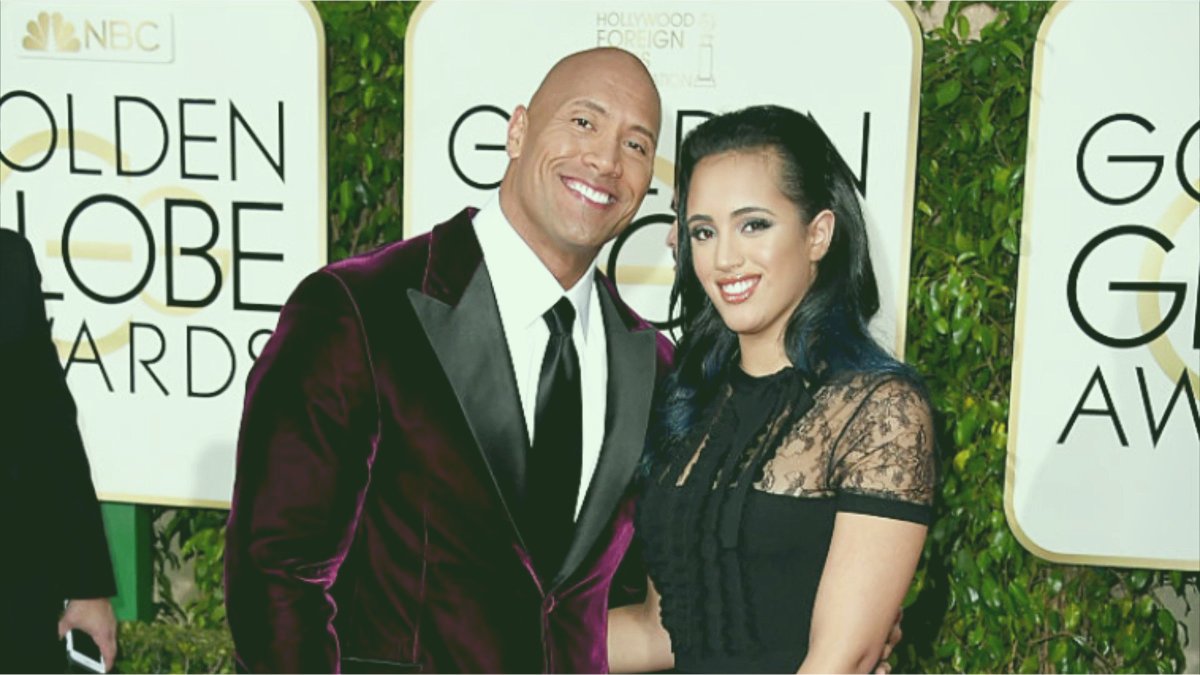
Trending news of The Rock's daughter Simone Johnson's announcing her new Stage Name is breaking our Versus tool because "Wrestling Name" isn't in our database!
Here's the most useful #Factualist comparison pages #Thread 🧵
What is the difference between “pseudonym” and “stage name?”
Pseudonym means “a fictitious name (more literally, a false name), as those used by writers and movie stars,” while stage name is “the pseudonym of an entertainer.”
https://t.co/hT5XPkTepy #english #wiki #wikidiff
People also found this comparison helpful:
Alias #versus Stage Name: What’s the difference?
Alias means “another name; an assumed name,” while stage name means “the pseudonym of an entertainer.”
https://t.co/Kf7uVKekMd #Etymology #words
Another common #question:
What is the difference between “alias” and “pseudonym?”
As nouns alias means “another name; an assumed name,” while pseudonym means “a fictitious name (more literally, a false name), as those used by writers and movie
Here is a very basic #comparison: "Name versus Stage Name"
As #nouns, the difference is that name means “any nounal word or phrase which indicates a particular person, place, class, or thing,” but stage name means “the pseudonym of an
Here's the most useful #Factualist comparison pages #Thread 🧵
What is the difference between “pseudonym” and “stage name?”
Pseudonym means “a fictitious name (more literally, a false name), as those used by writers and movie stars,” while stage name is “the pseudonym of an entertainer.”
https://t.co/hT5XPkTepy #english #wiki #wikidiff
People also found this comparison helpful:
Alias #versus Stage Name: What’s the difference?
Alias means “another name; an assumed name,” while stage name means “the pseudonym of an entertainer.”
https://t.co/Kf7uVKekMd #Etymology #words
Another common #question:
What is the difference between “alias” and “pseudonym?”
As nouns alias means “another name; an assumed name,” while pseudonym means “a fictitious name (more literally, a false name), as those used by writers and movie
Here is a very basic #comparison: "Name versus Stage Name"
As #nouns, the difference is that name means “any nounal word or phrase which indicates a particular person, place, class, or thing,” but stage name means “the pseudonym of an


Okay, #MAEdu, let's talk FY22 and the Student Opportunity Act: https://t.co/o1tgppGy4K

First up:
The FIRST year, Governor Baker?
This is the second year of SOA implementation: you're missing one.

So, are we going to do this in six years, or are we just going to kick the can ANOTHER year on kids?
Remember, school funding is builds on prior years.
We never get that missing funding back.

Also: what are the base numbers being used?
Is the Governor dropping enrollment, even though we all know that was an artificial drop?

There's a decent chance that a WHOLE bunch of those kindergartner and preschoolers are going to be back this fall if we manage to get kids into buildings, PLUS we'll have the USUAL enrollment of preK and K!
...and less funding than usual?

.@MassGovernor Baker says FY22 budget proposal will fully fund the 1st year of the Student Opportunity Act. #mapoli #MassMuni21
— Mass. Municipal Assn (@massmunicipal) January 22, 2021
First up:
The FIRST year, Governor Baker?
This is the second year of SOA implementation: you're missing one.
So, are we going to do this in six years, or are we just going to kick the can ANOTHER year on kids?
Remember, school funding is builds on prior years.
We never get that missing funding back.
Also: what are the base numbers being used?
Is the Governor dropping enrollment, even though we all know that was an artificial drop?
There's a decent chance that a WHOLE bunch of those kindergartner and preschoolers are going to be back this fall if we manage to get kids into buildings, PLUS we'll have the USUAL enrollment of preK and K!
...and less funding than usual?

Last month I presented seven sentences in seven different languages, all written in a form of the Chinese-character script. The challenge was to identify the languages and, if possible, provide a
Here again are those seven sentences:
1) 他的剑从船上掉到河里去
2) 於世𡗉番𧡊哭唭𢆥尼歲㐌外四𨑮
3) 入良沙寢矣見昆腳烏伊四是良羅
4) 佢而家喺邊喥呀
5) 夜久毛多都伊豆毛夜幣賀岐都麻碁微爾夜幣賀岐都久流曾能夜幣賀岐袁
6) 其劍自舟中墜於水
7) 今天愛晚特語兔吃二魚佛午飯
Six of those seven sentences are historically attested. One is not: I invented #7. I’m going to dive into an exploration of that seventh sentence in today’s thread.
Sentence #7 is an English-language sentence written sinographically — that is, using graphs that originate in the Chinese script. I didn’t do this for fun (even though it is fun), or as a proposal for a new way to write
I did it as a thought experiment. Why? Because thinking about how the modern Chinese script might be adapted to write modern English can give us valuable insights into historical instances of script borrowing, like those that took place centuries ago in Japan, Korea, and Vietnam.
\U0001f17b\U0001f130\U0001f17d\U0001f176\U0001f184\U0001f130\U0001f176\U0001f174 \U0001f180\U0001f184\U0001f178\U0001f189
— zev handel (@ZevHandel) December 17, 2020
The following sentences are in seven different languages, all written in Chinese-character script (or a modification of it). Can you identify the languages?
Sentences are in thread.
(1/3)
Here again are those seven sentences:
1) 他的剑从船上掉到河里去
2) 於世𡗉番𧡊哭唭𢆥尼歲㐌外四𨑮
3) 入良沙寢矣見昆腳烏伊四是良羅
4) 佢而家喺邊喥呀
5) 夜久毛多都伊豆毛夜幣賀岐都麻碁微爾夜幣賀岐都久流曾能夜幣賀岐袁
6) 其劍自舟中墜於水
7) 今天愛晚特語兔吃二魚佛午飯
Six of those seven sentences are historically attested. One is not: I invented #7. I’m going to dive into an exploration of that seventh sentence in today’s thread.
Sentence #7 is an English-language sentence written sinographically — that is, using graphs that originate in the Chinese script. I didn’t do this for fun (even though it is fun), or as a proposal for a new way to write
7) \u4eca\u5929\u611b\u665a\u7279\u8a9e\u5154\u5403\u4e8c\u9b5a\u4f5b\u5348\u98ef \u2013 Modern English
— zev handel (@ZevHandel) December 21, 2020
Today I want you to each two fish for lunch.
That this sentence is a written form of English is undeniable, as the sentence is made up entirely of English words following the rules of English grammar. 23/
I did it as a thought experiment. Why? Because thinking about how the modern Chinese script might be adapted to write modern English can give us valuable insights into historical instances of script borrowing, like those that took place centuries ago in Japan, Korea, and Vietnam.