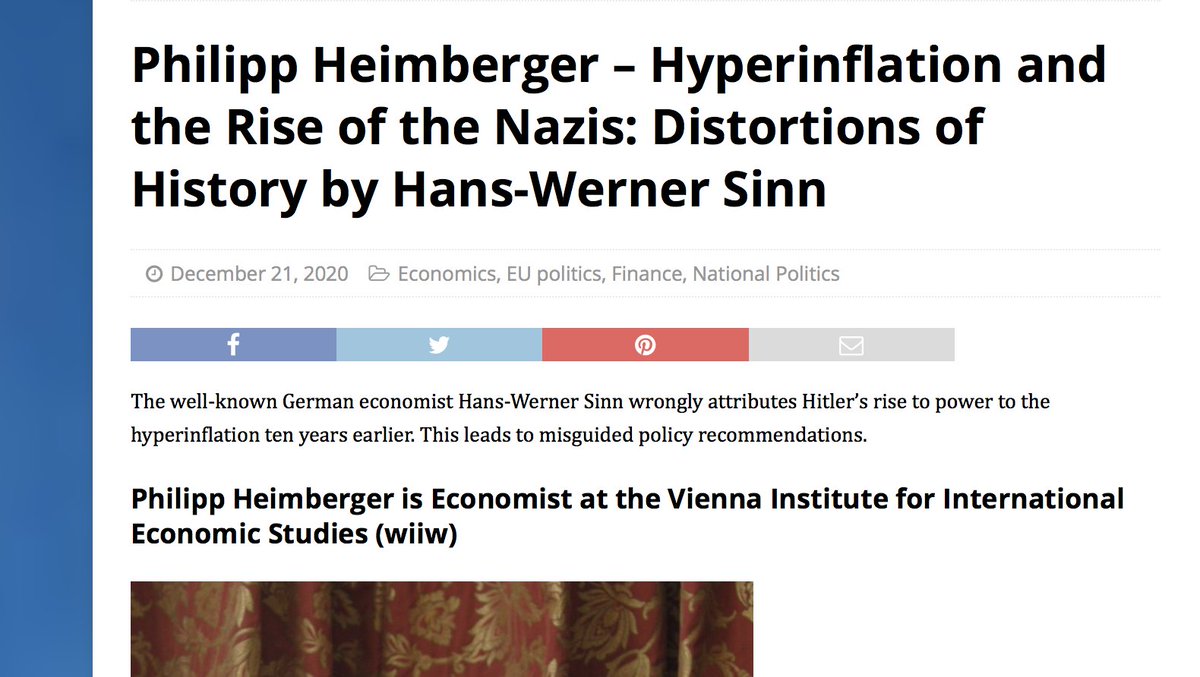
One of Germany’s most prominent economists, Hans-Werner Sinn, warns of hyperinflation; he links it directly to Hitler's rise to power. A distortion of history: the rise of the Nazis was preceded by deflation, exacerbated by fiscal austerity. Thread /1

https://t.co/hmAz0tsyuv

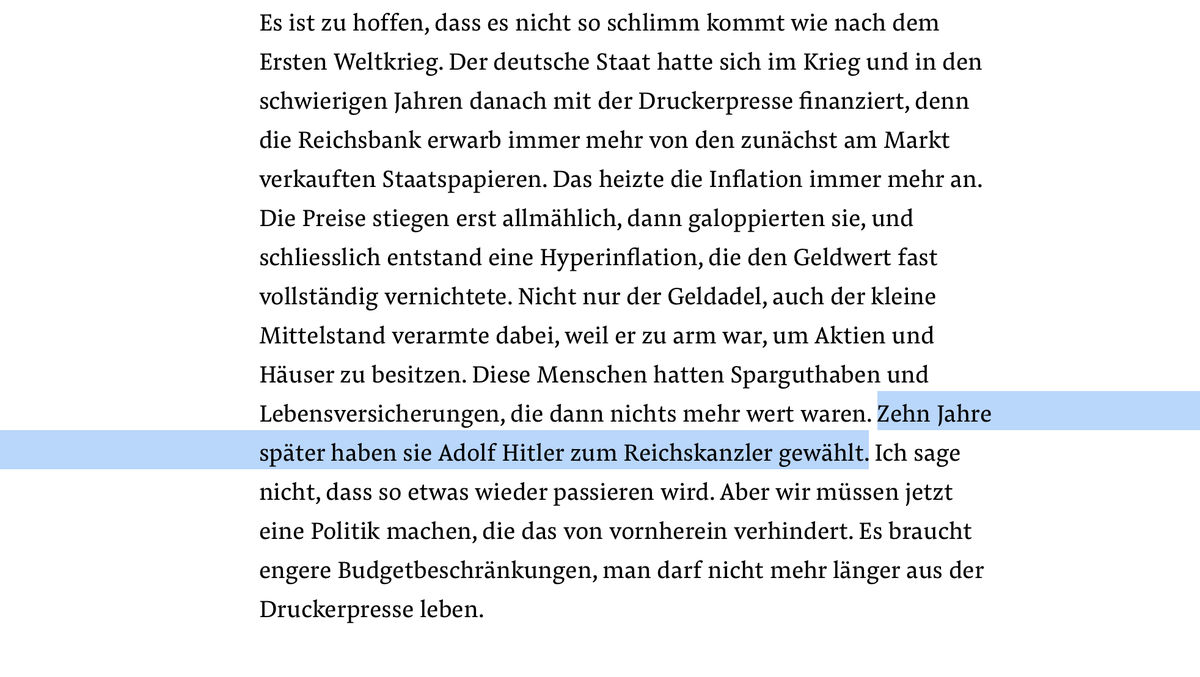
Sinn says hyperinflation after WW1 impoverished the German middle class in the Weimar Republic: "Ten years later they elected Adolf Hitler as Reich Chancellor." Policy recommendation today against hyperinflation: "tighter budget constraints" /2

https://t.co/ydfxgiCpkD
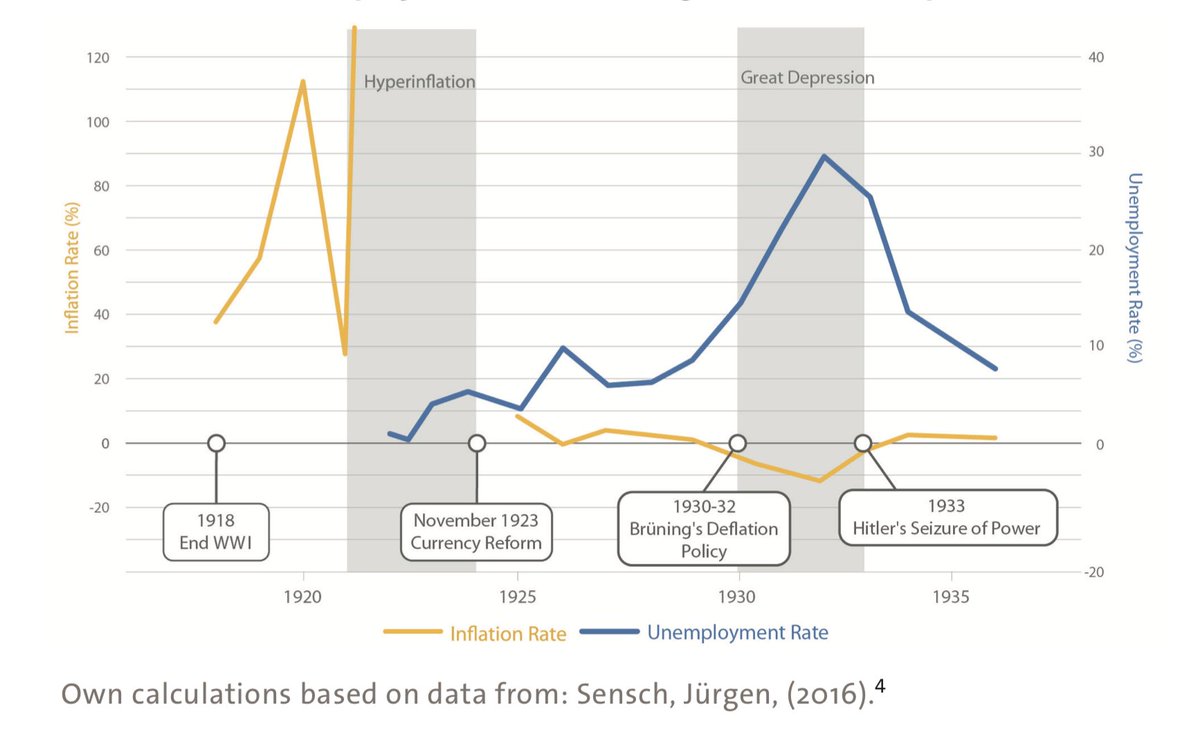
Sinn thus feeds a widespread misinterpretation. Mass poverty when the Nazis came to power in 1933 was not the result of hyperinflation, which at that time was ten years in the past; it was primarily a consequence of mass unemployment due to the recession in the early 1930s. /3
The Nazis had come to power after years of deflation - i.e. falling prices. From 1930 onwards, Reich Chancellor Brüning used emergency decrees to bring about tax increases and drastic state spending cuts that pierced the social safety net. /4
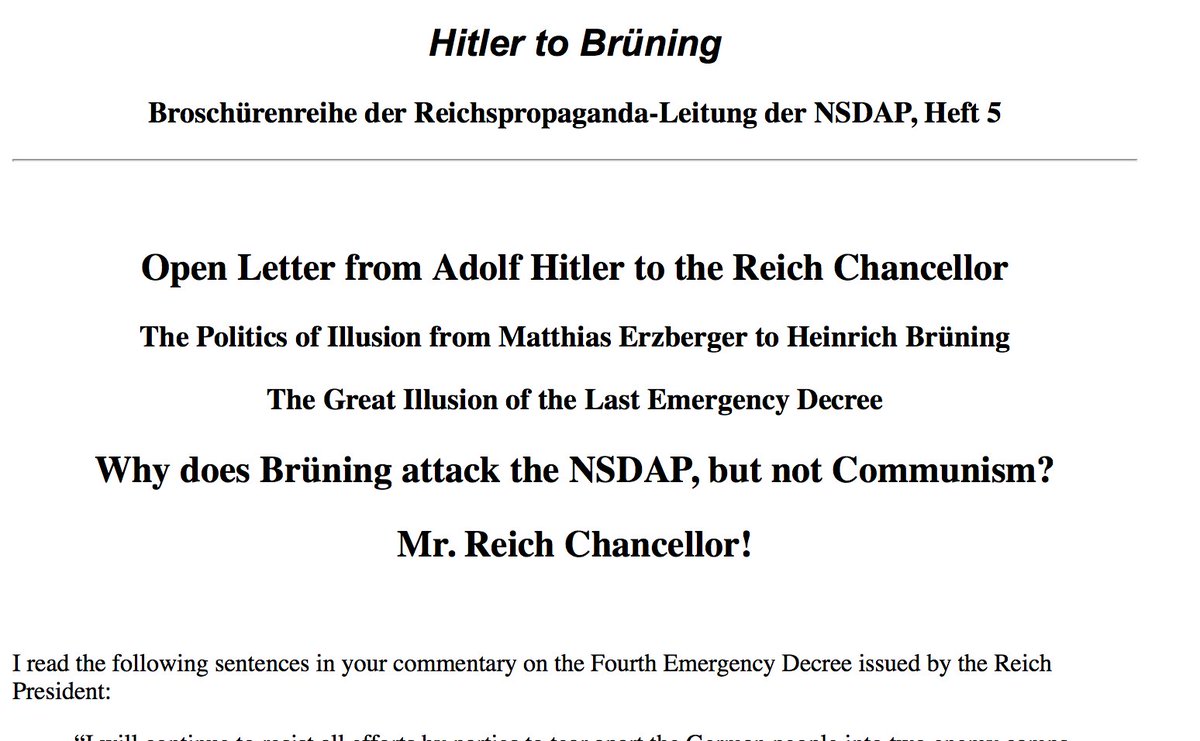
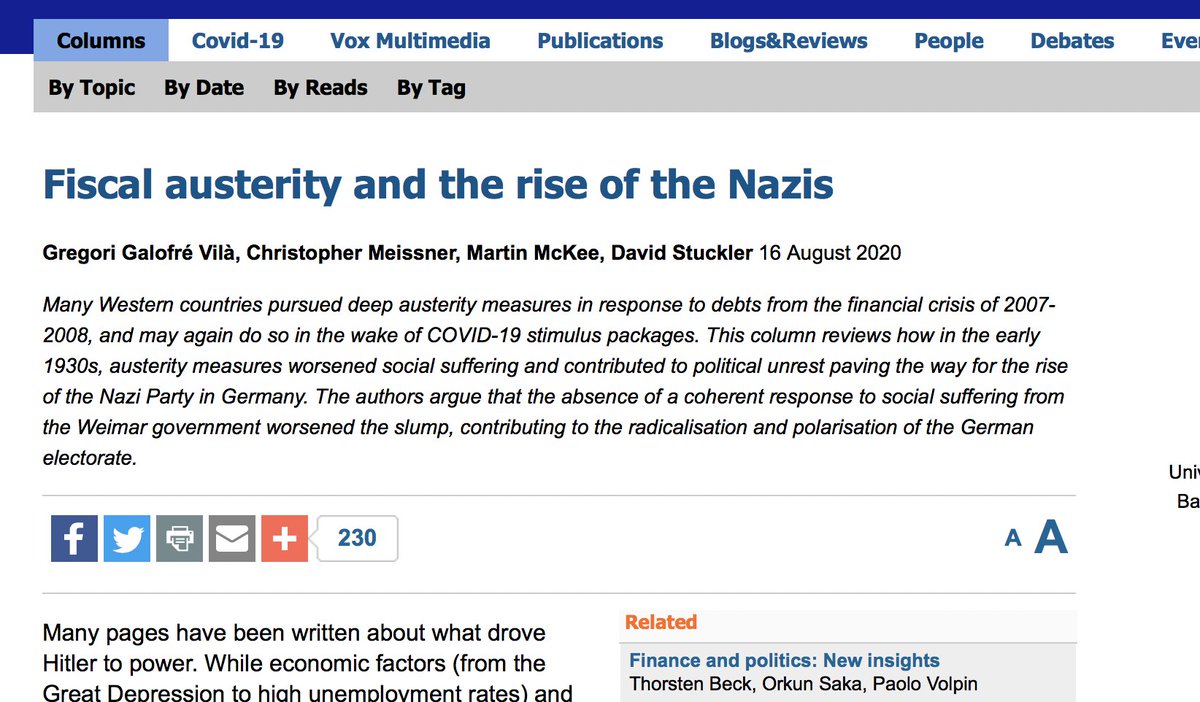
Austerity policies increased unemployment, led to social suffering and unrest. Hitler realised by the end of 1931 at the latest that Brüning's austerity policy would "help his party to victory and thus end the illusions of the present system." /5

https://t.co/yRN6hseciX
Analysis of data from four elections between 1930 and 1933 shows that voters in areas more affected by spending cuts and tax increases gave significantly more votes to the National Socialists, supporting Hitler’s rise./6

https://t.co/egyepHidIP
HW Sinn calls for "tighter budget constraints" against hyperinflation after Corona. Dangerous distortion: he does not say a word about the link between the negative effects of austerity policies in the early 1930s and Hitler's rise to power. /7
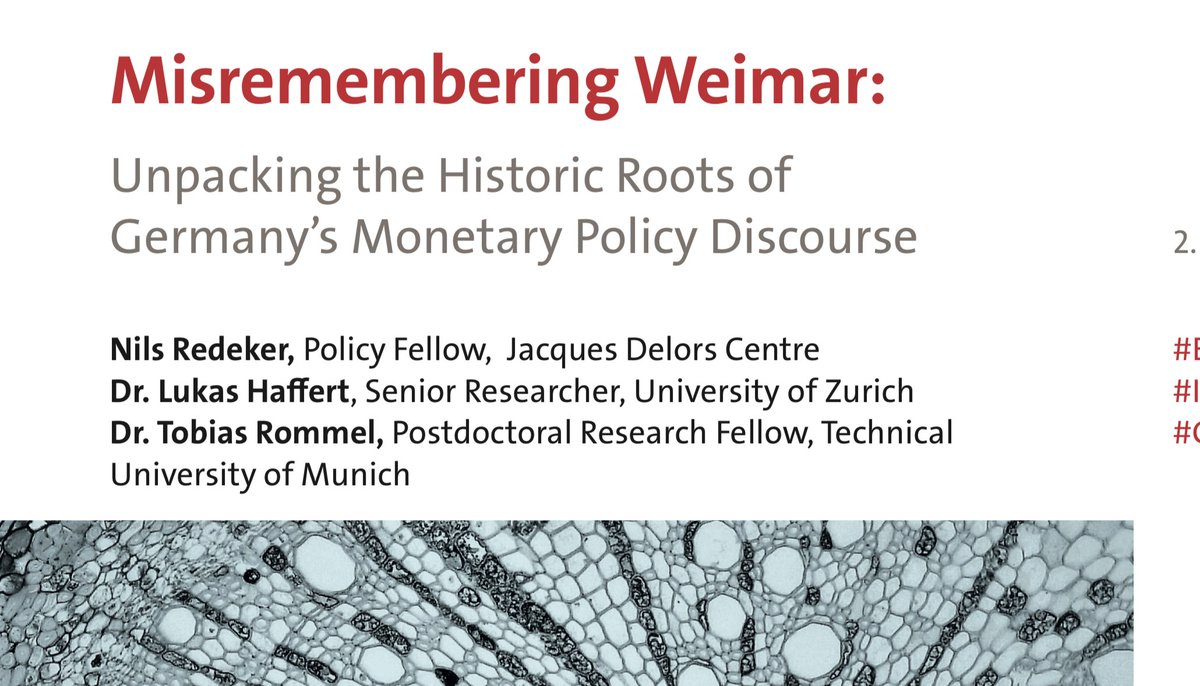
Representative survey: Only 1 in 25 Germans today still knows that the crisis at that time was characterised by deflation. Almost half of the respondents - like HW Sinn - mix mass unemployment and deflation with the hyperinflation ten years earlier./8

https://t.co/XyOaZ8FQVv
Incidentally, this misconception is much more common among well-educated and politically interested Germans. Those who are following the ECB’s monetary policy closely are more likely to draw the wrong lessons from history and to be misled by HW Sinn. /9
Even if one were to agree with Sinn that hyperinflation "prepared the breeding ground for the Nazis", his comparisons would remain problematic: why should the ECB’s monetary policy today lead to hyperinflation similar to the early 1920s? /10

https://t.co/bEhmTXKitX
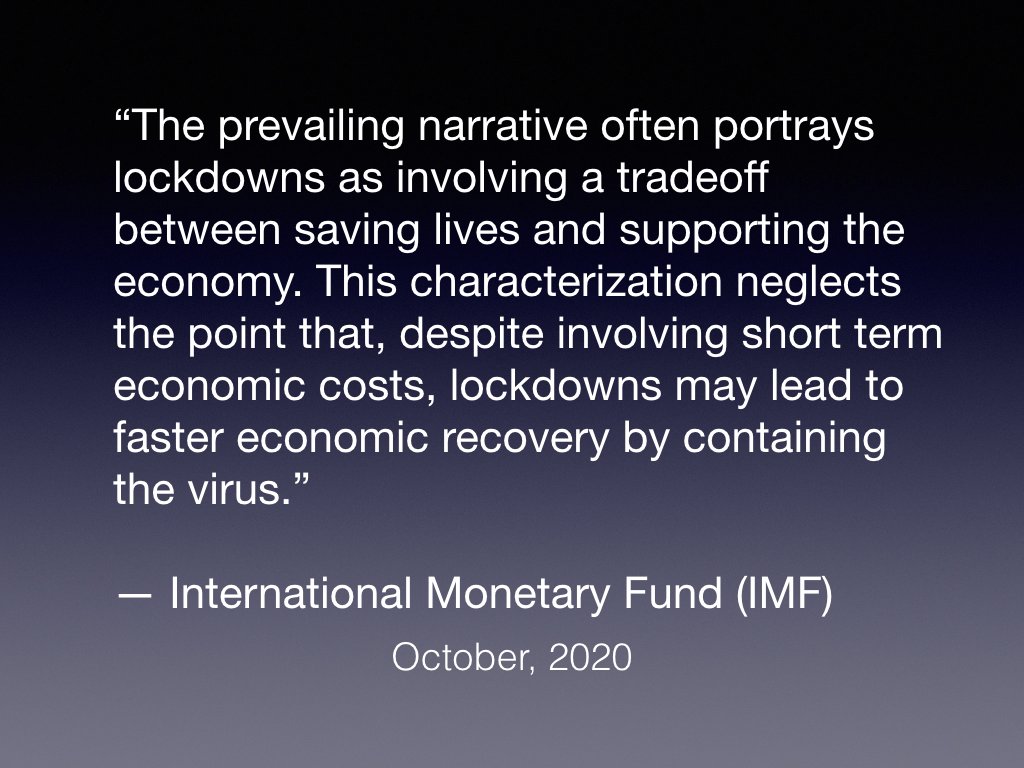
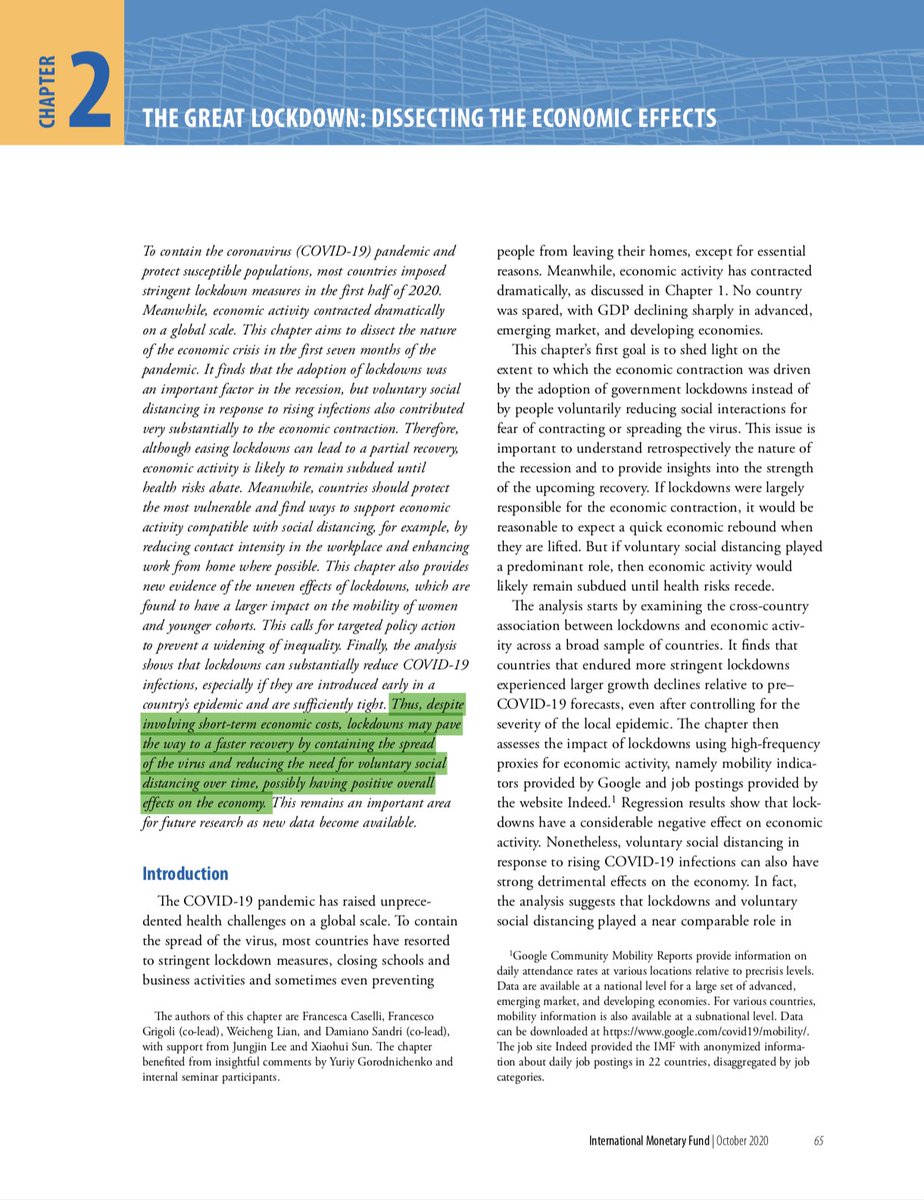
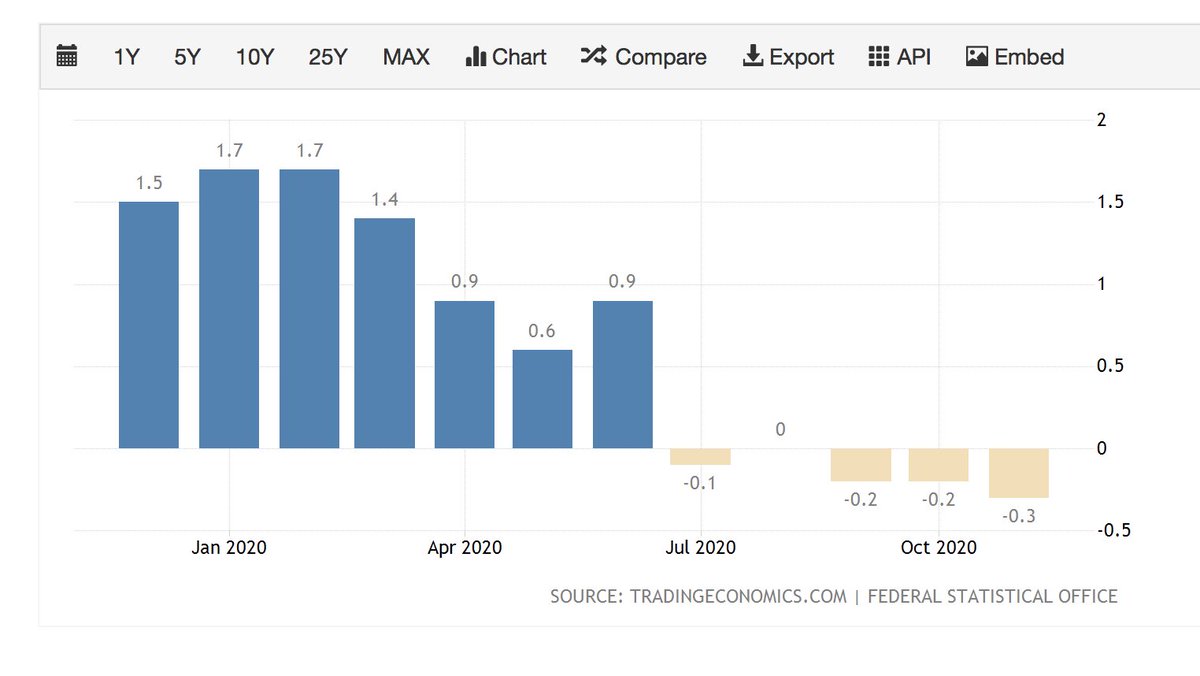
The ECB is not directly financing governments, as the Reichsbank did back then. Even in Germany, inflation rates have been negative recently. Sinn remains unconcerned about deflation, stressing risks of hyperinflation, although previous inflation warning have not materialised /11
Misinterpretations of history can be momentous if they lead economic policy down the wrong track. To prevent this, prominent economists must not go unchallenged when they fuel such dangerous misconceptions. /end

More from Economy

1/ To add a little texture to @NickHanauer's thread, it's important to recognize that there's a good reason why orthodox economists (& economic cosplayers) so vehemently oppose a $15 min wage:

The min wage is a wedge that threatens to undermine all of orthodox economic theory.


2/ Orthodox economics is grounded in two fundamental models: a systems model that describes the market as a closed equilibrium system, and a behavioral model that describes humans as rational, self-interested utility-maximizers. The modern min wage debate undermines both models.

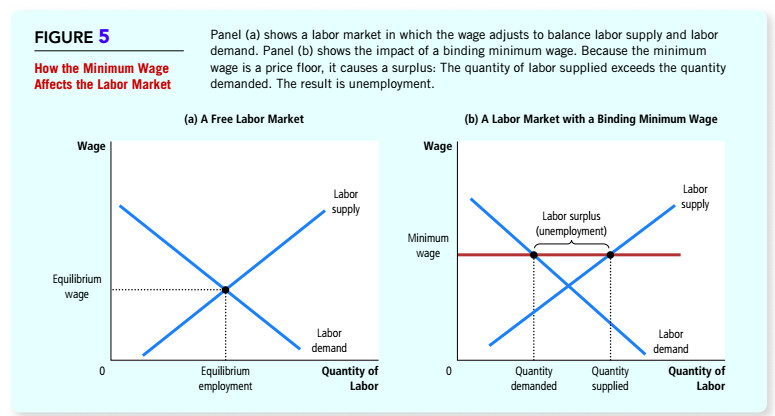
3/ The assertion that a min wage kills jobs is so central to orthodox economics that it is often used as the textbook example of the Supply/Demand curve. Raise the cost of labor and businesses will buy less of it. It's literally Econ 101!


4/ Econ 101 insists that markets automatically set an efficient "equilibrium price" for labor & everything else. Mess with this price and bad things happen. Yet decades of empirical research has persuaded a majority of economists that this just isn't

5/ How can this be? Well, either the market is not a closed equilibrium system in which if you raise the price of labor employers automatically purchase less of it... OR the market is not automatically setting an efficient and fair equilibrium wage. Or maybe both. #FAIL

You May Also Like