So in 2019 I joined @Leendertz_Lab on a research trip to Taï National Forest in Cote d’Ivoire, where he has been studying this for 20 years.
With all the breaking news on vaccines and variants I’ve barely had a chance to talk about this piece on microbes moving between humans and animals.
I think it’s important for the conversations we’re having around #sarscov2.
So, piece is here: https://t.co/P9EsrxZxGy
And a thread
So in 2019 I joined @Leendertz_Lab on a research trip to Taï National Forest in Cote d’Ivoire, where he has been studying this for 20 years.
And he decided to get a vet to permanently track the animals’ health and study their infections. Fabian Leendertz took that job 20 years ago.
(My story here: https://t.co/dC9wgd4JwW).
Here’s a photo of Leendertz listening for any noise that morning:
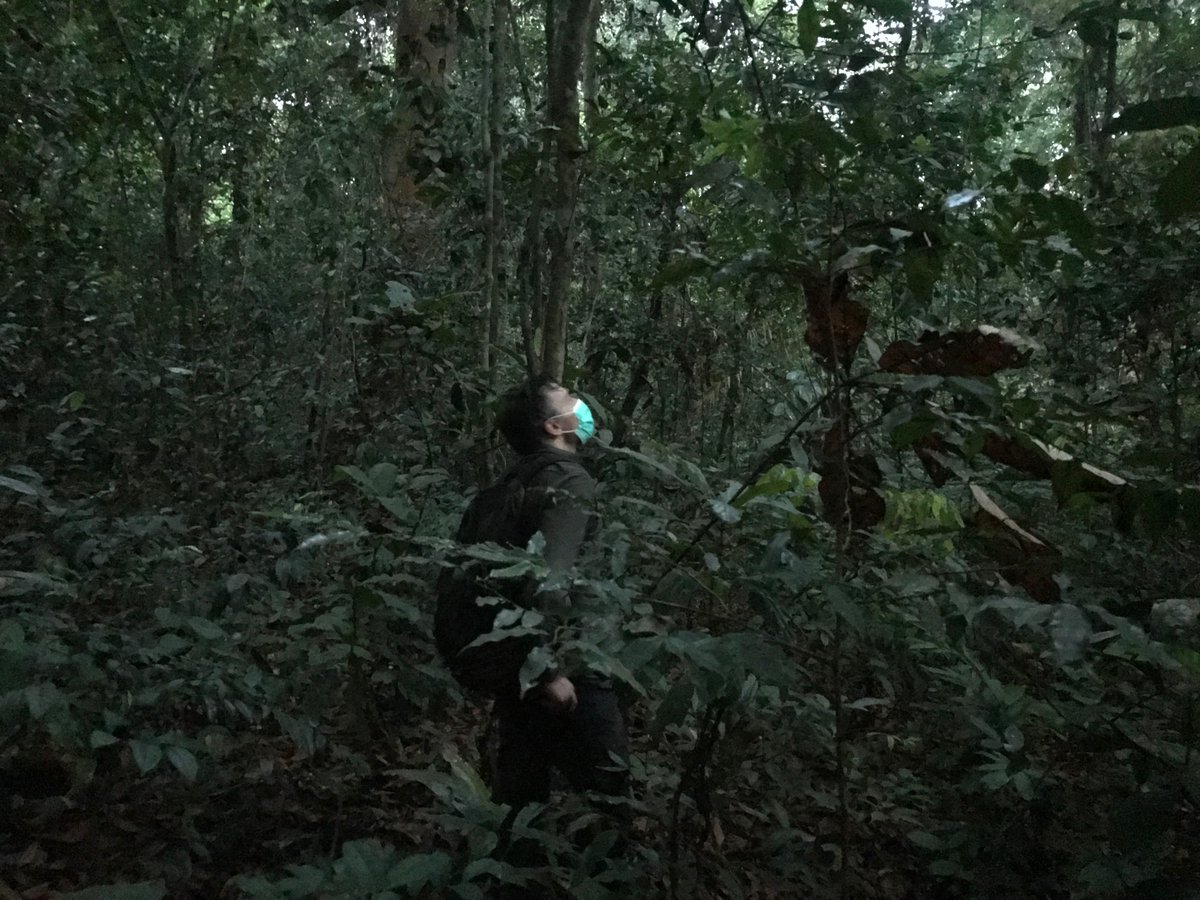
He told me: “It’s a world of viruses that are crossing species in every direction and whenever that happens, it can cause devastating losses.”
Indeed there is a lot of that happening as Goldberg, Leendertz and others show.
But we only sit up and notice on the rare occasions when lightning strikes a human. Actually, sadly, a human from a rich western country.
We need to talk about this aspect of the animal-human interface too!
So a threat like #sarscov2 has to be taken seriously as a potential threat to these animals too, not just to humans.
https://t.co/8RlkwDbb5G
You May Also Like


Following @BAUDEGS I have experienced hateful and propagandist tweets time after time. I have been shocked that an academic community would be so reckless with their publications. So I did some research.
The question is:
Is this an official account for Bahcesehir Uni (Bau)?

Bahcesehir Uni, BAU has an official website https://t.co/ztzX6uj34V which links to their social media, leading to their Twitter account @Bahcesehir
BAU’s official Twitter account

BAU has many departments, which all have separate accounts. Nowhere among them did I find @BAUDEGS
@BAUOrganization @ApplyBAU @adayBAU @BAUAlumniCenter @bahcesehirfbe @baufens @CyprusBau @bauiisbf @bauglobal @bahcesehirebe @BAUintBatumi @BAUiletisim @BAUSaglik @bauebf @TIPBAU
Nowhere among them was @BAUDEGS to find

The question is:
Is this an official account for Bahcesehir Uni (Bau)?
Bahcesehir Uni, BAU has an official website https://t.co/ztzX6uj34V which links to their social media, leading to their Twitter account @Bahcesehir
BAU’s official Twitter account
BAU has many departments, which all have separate accounts. Nowhere among them did I find @BAUDEGS
@BAUOrganization @ApplyBAU @adayBAU @BAUAlumniCenter @bahcesehirfbe @baufens @CyprusBau @bauiisbf @bauglobal @bahcesehirebe @BAUintBatumi @BAUiletisim @BAUSaglik @bauebf @TIPBAU
Nowhere among them was @BAUDEGS to find




To people who are under the impression that you can get rich quickly by working on an app, here are the stats for https://t.co/az8F12pf02
📈 ~12000 vistis
☑️ 109 transactions
💰 353€ profit (285 after tax)
I have spent 1.5 months on this app. You can make more $ in 2 days.
🤷♂️

I'm still happy that I launched a paid app bcs it involved extra work:
- backend for processing payments (+ permissions, webhooks, etc)
- integration with payment processor
- UI for license activation in Electron
- machine activation limit
- autoupdates
- mailgun emails
etc.
These things seemed super scary at first. I always thought it was way too much work and something would break. But I'm glad I persisted. So far the only problem I have is that mailgun is not delivering the license keys to certain domains like https://t.co/6Bqn0FUYXo etc. 👌
omg I just realized that me . com is an Apple domain, of course something wouldn't work with these dicks
📈 ~12000 vistis
☑️ 109 transactions
💰 353€ profit (285 after tax)
I have spent 1.5 months on this app. You can make more $ in 2 days.
🤷♂️
I'm still happy that I launched a paid app bcs it involved extra work:
- backend for processing payments (+ permissions, webhooks, etc)
- integration with payment processor
- UI for license activation in Electron
- machine activation limit
- autoupdates
- mailgun emails
etc.
These things seemed super scary at first. I always thought it was way too much work and something would break. But I'm glad I persisted. So far the only problem I have is that mailgun is not delivering the license keys to certain domains like https://t.co/6Bqn0FUYXo etc. 👌
omg I just realized that me . com is an Apple domain, of course something wouldn't work with these dicks