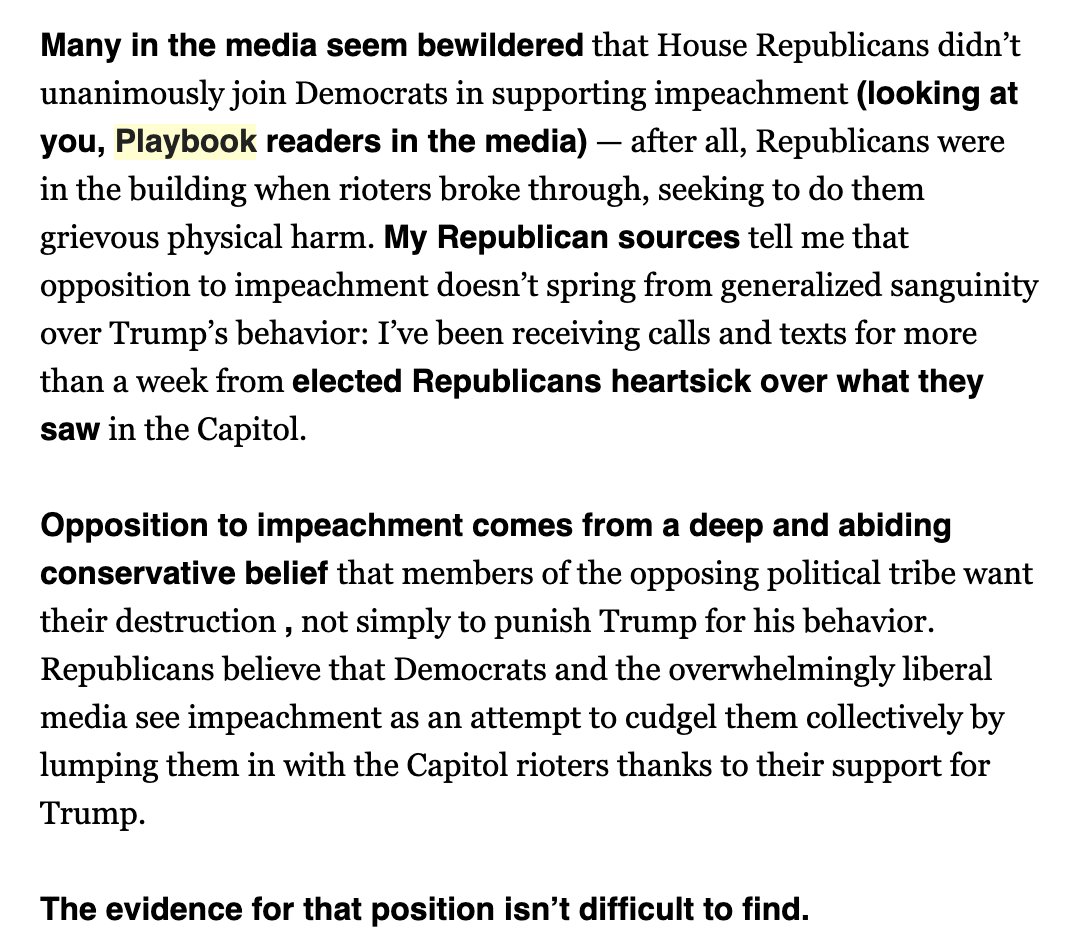
1. The problem with the Ben Shapiro Playbook isn't primarily the author. It's that the *content* of the piece is bad, in a way that was eminently predictable given the author.
I'm going to go through the entire piece and explain why.
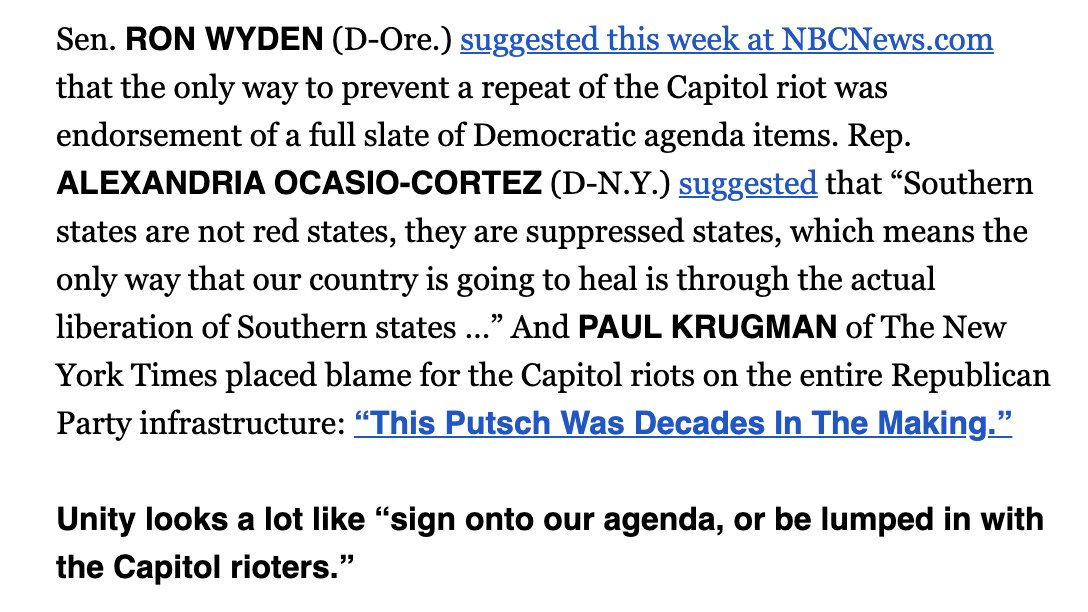
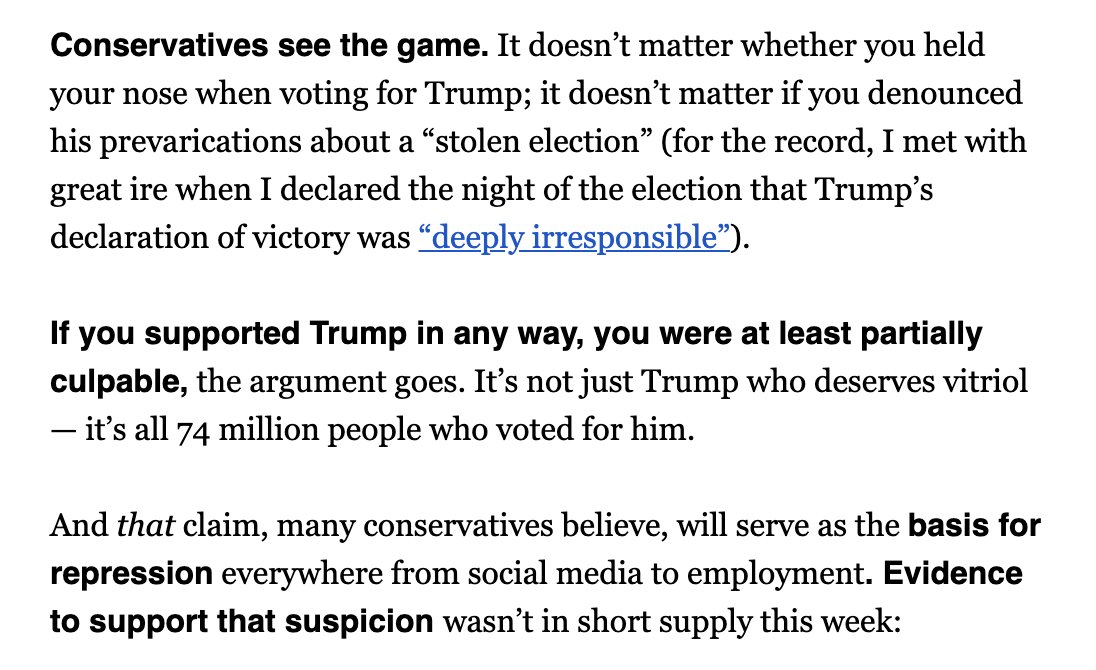
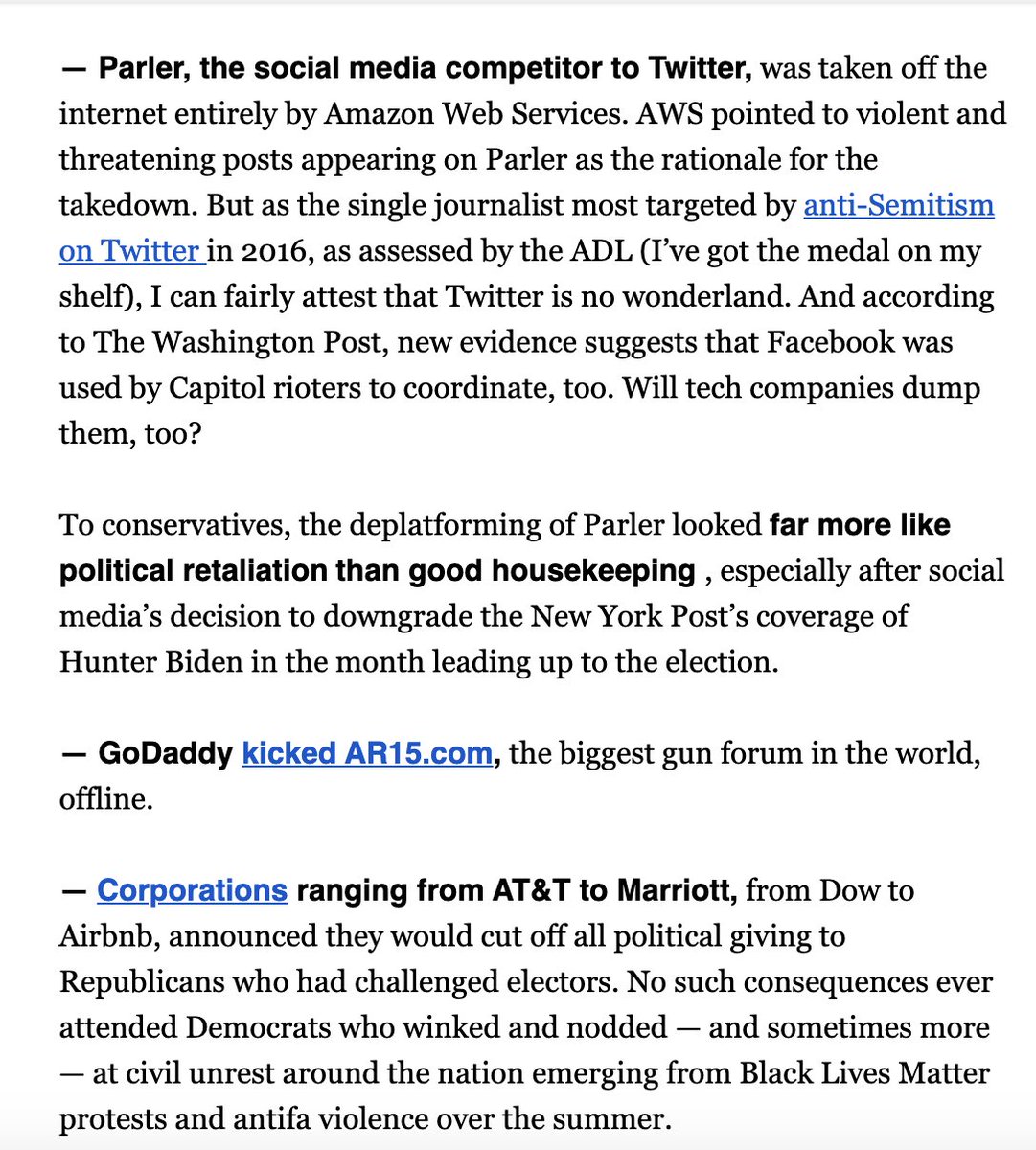
So you see the real argument here: it's not just impeachment, but any consequences, that are illegitimate.
In 2018, Abrams didn't try to overturn the election, telling supporters that "the law currently allows no further viable remedy" for an election she felt (justifiably!) was unfair.
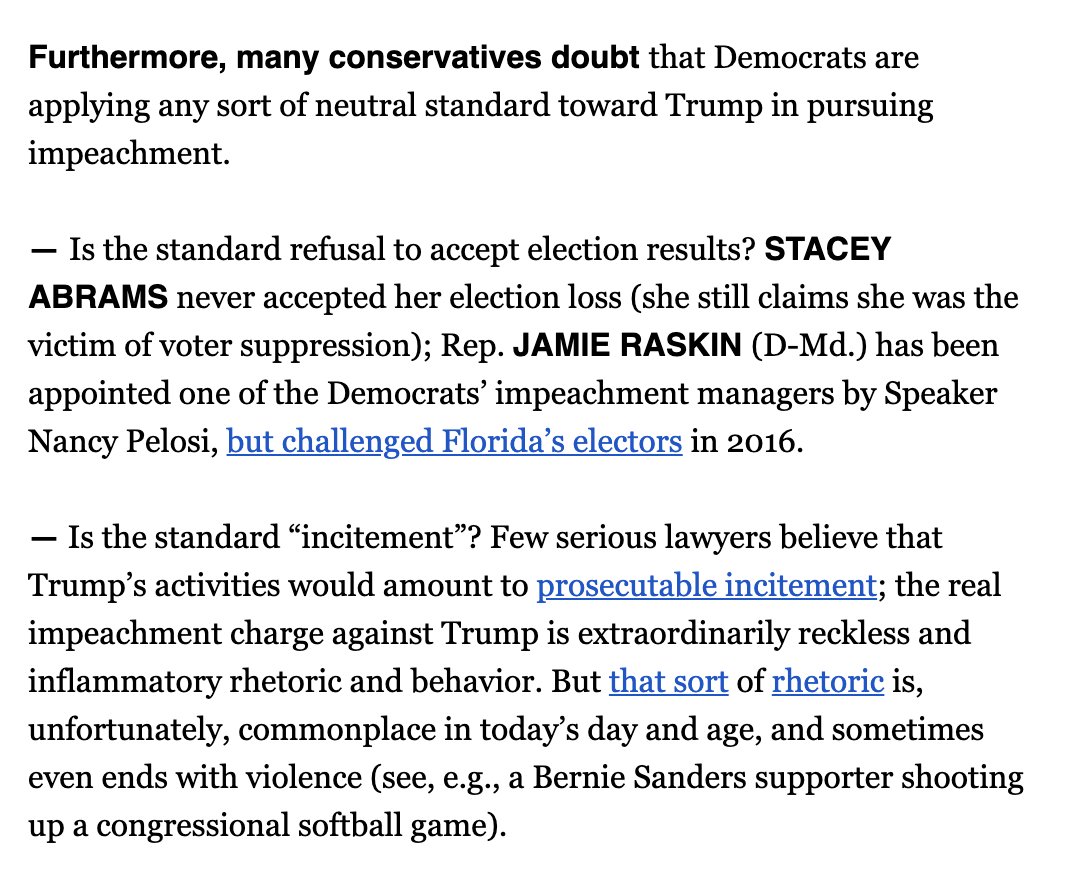
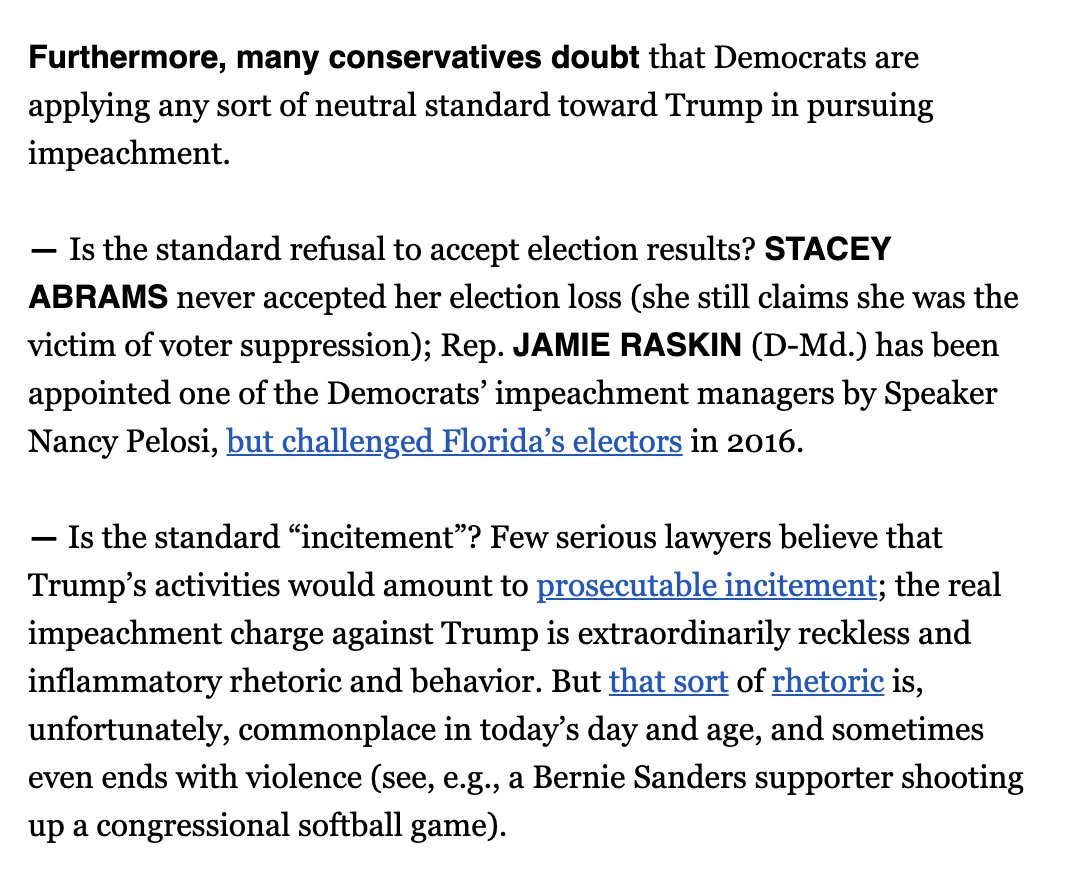
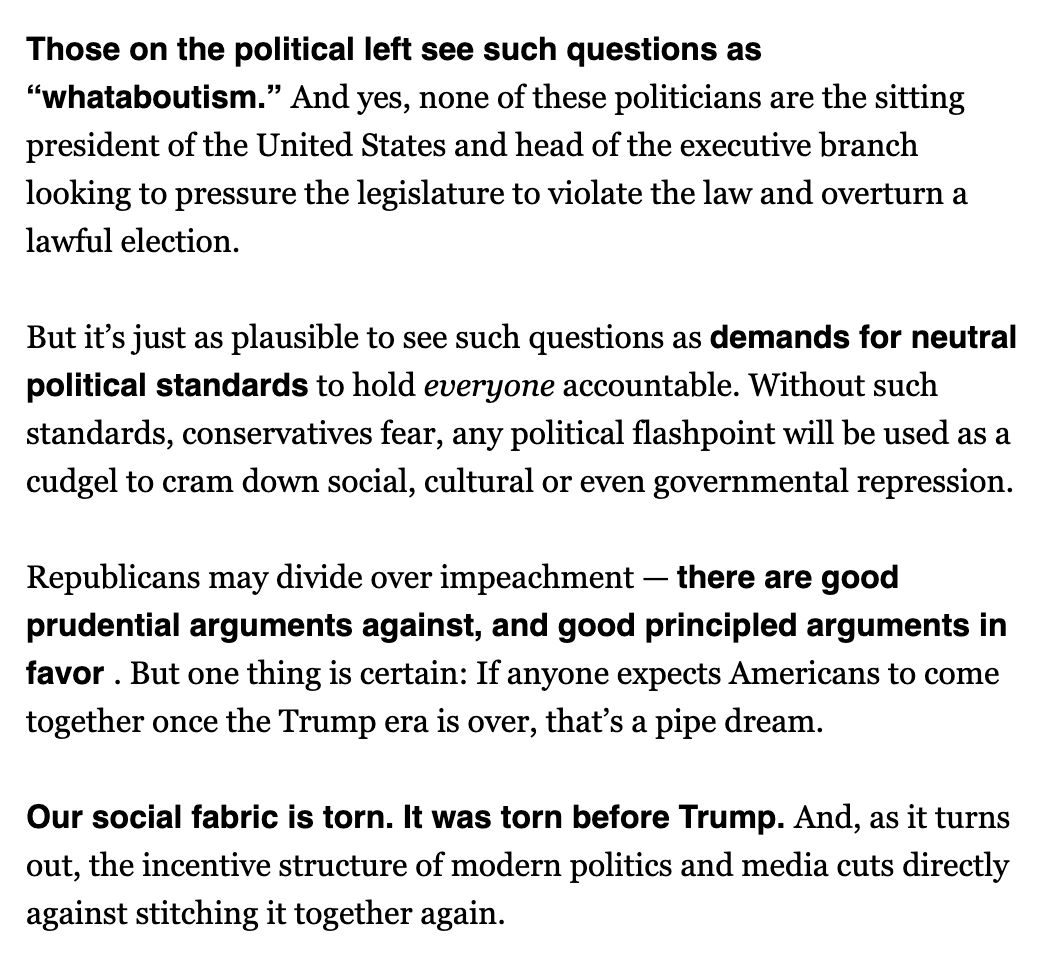
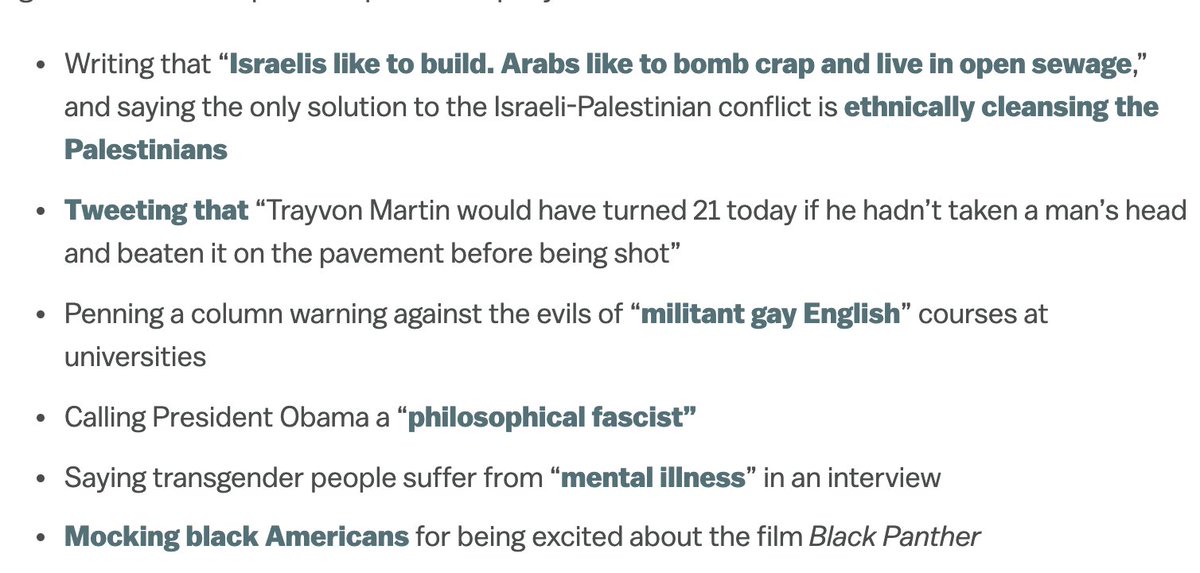
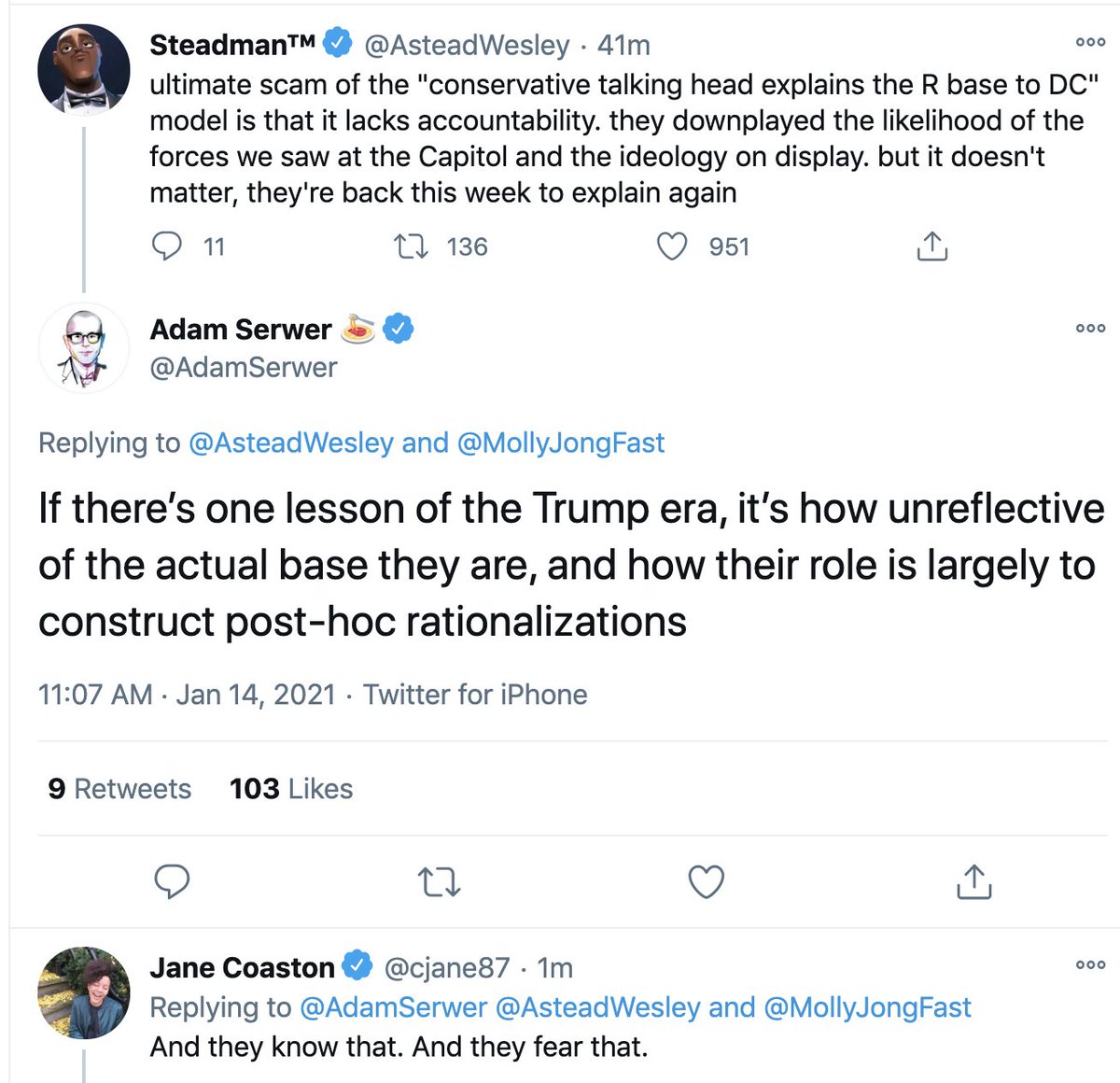
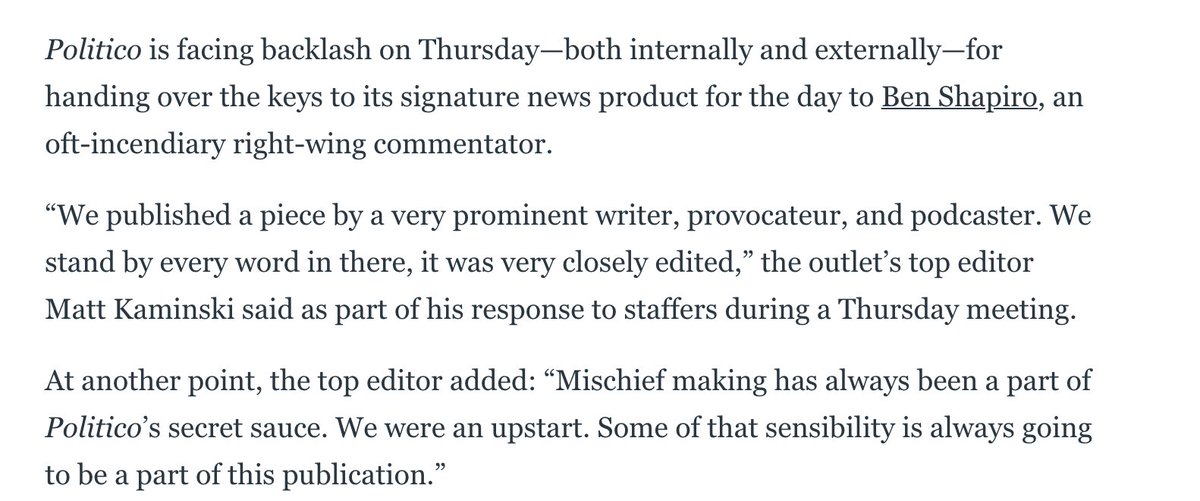
The logical and evidentiary flaws in the newsletter were glaring and obvious; if it was "very closely edited," then the editorial process failed. https://t.co/FNa8UlSO4S
More from Culture


The emerging picture of John Sullivan aka Jayden X, the Cap riot agitator, and the documentarian Jade Sacker who filmed the whole thing really is the perfect microcosm of how Globalist American Empire stages its narrative.
Here’s the summary overview:
First Sullivan: agent provocateur who is no more antifa/BLM than he is Proud Boy, with suspicious family ties to the security state (allegedly), who helps instigate and document the Jan 6 events leading to IC officials immediately demanding the removal of the incumbent regime...
The guy’s social media profile is all over the map. From Civil Liberties gun guy to Antifa activist. And who planned the Utah BLM event that ended in the bizarre car shooting. His feed since Jan has all led to the Cap Hill events, including the first of the Parlor call outs.

Okay so maybe the guy is just a confused burn-it-all-down nihilist. Possible, but then we might do a big think about how an unhinged political schizo gets hooked up with a filmmaker with a long-history of doing activist/journalism on behalf of Woke Imperialism...
If John Sullivan aka Jaydenx is the “Fake,” Jade Sacker, his accomplice, is the “Gay.” Here’s a few snapshots from her portfolio (https://t.co/YEO1CCsQn8)
The plight of Rohingya Muslims. The Kurds in Northern Syria. Trans Women in Cambodia. etc. Boiler plate globohomo

Here’s the summary overview:
First Sullivan: agent provocateur who is no more antifa/BLM than he is Proud Boy, with suspicious family ties to the security state (allegedly), who helps instigate and document the Jan 6 events leading to IC officials immediately demanding the removal of the incumbent regime...
The guy’s social media profile is all over the map. From Civil Liberties gun guy to Antifa activist. And who planned the Utah BLM event that ended in the bizarre car shooting. His feed since Jan has all led to the Cap Hill events, including the first of the Parlor call outs.
Okay so maybe the guy is just a confused burn-it-all-down nihilist. Possible, but then we might do a big think about how an unhinged political schizo gets hooked up with a filmmaker with a long-history of doing activist/journalism on behalf of Woke Imperialism...
If John Sullivan aka Jaydenx is the “Fake,” Jade Sacker, his accomplice, is the “Gay.” Here’s a few snapshots from her portfolio (https://t.co/YEO1CCsQn8)
The plight of Rohingya Muslims. The Kurds in Northern Syria. Trans Women in Cambodia. etc. Boiler plate globohomo






You May Also Like

MASTER THREAD on Short Strangles.
Curated the best tweets from the best traders who are exceptional at managing strangles.
• Positional Strangles
• Intraday Strangles
• Position Sizing
• How to do Adjustments
• Plenty of Examples
• When to avoid
• Exit Criteria
How to sell Strangles in weekly expiry as explained by boss himself. @Mitesh_Engr
• When to sell
• How to do Adjustments
• Exit
Beautiful explanation on positional option selling by @Mitesh_Engr
Sir on how to sell low premium strangles yourself without paying anyone. This is a free mini course in
1st Live example of managing a strangle by Mitesh Sir. @Mitesh_Engr
• Sold Strangles 20% cap used
• Added 20% cap more when in profit
• Booked profitable leg and rolled up
• Kept rolling up profitable leg
• Booked loss in calls
• Sold only
2nd example by @Mitesh_Engr Sir on converting a directional trade into strangles. Option Sellers can use this for consistent profit.
• Identified a reversal and sold puts
• Puts decayed a lot
• When achieved 2% profit through puts then sold
Curated the best tweets from the best traders who are exceptional at managing strangles.
• Positional Strangles
• Intraday Strangles
• Position Sizing
• How to do Adjustments
• Plenty of Examples
• When to avoid
• Exit Criteria
How to sell Strangles in weekly expiry as explained by boss himself. @Mitesh_Engr
• When to sell
• How to do Adjustments
• Exit
1. Let's start option selling learning.
— Mitesh Patel (@Mitesh_Engr) February 10, 2019
Strangle selling. ( I am doing mostly in weekly Bank Nifty)
When to sell? When VIX is below 15
Assume spot is at 27500
Sell 27100 PE & 27900 CE
say premium for both 50-50
If bank nifty will move in narrow range u will get profit from both.
Beautiful explanation on positional option selling by @Mitesh_Engr
Sir on how to sell low premium strangles yourself without paying anyone. This is a free mini course in
Few are selling 20-25 Rs positional option selling course.
— Mitesh Patel (@Mitesh_Engr) November 3, 2019
Nothing big deal in that.
For selling weekly option just identify last week low and high.
Now from that low and high keep 1-1.5% distance from strike.
And sell option on both side.
1/n
1st Live example of managing a strangle by Mitesh Sir. @Mitesh_Engr
• Sold Strangles 20% cap used
• Added 20% cap more when in profit
• Booked profitable leg and rolled up
• Kept rolling up profitable leg
• Booked loss in calls
• Sold only
Sold 29200 put and 30500 call
— Mitesh Patel (@Mitesh_Engr) April 12, 2019
Used 20% capital@44 each
2nd example by @Mitesh_Engr Sir on converting a directional trade into strangles. Option Sellers can use this for consistent profit.
• Identified a reversal and sold puts
• Puts decayed a lot
• When achieved 2% profit through puts then sold
Already giving more than 2% return in a week. Now I will prefer to sell 32500 call at 74 to make it strangle in equal ratio.
— Mitesh Patel (@Mitesh_Engr) February 7, 2020
To all. This is free learning for you. How to play option to make consistent return.
Stay tuned and learn it here free of cost. https://t.co/7J7LC86oW0