LIVE AMA THREAD 🧡 🧵
High level updates will be posted here 👍🏼
Pretty sure that name was created when @Crypto_Flippin and I were running together earlier in the year 🙌🏼
Previous weeks were around 9,000 new users of which 3,000 made deposits to become active wallets.
WOW 🔥🔥🔥🔥
They also started 2020 with 30 employees and ended it with 150
228k users ✅
$440k covered in fees ✅
Over 50k #btc under management ✅
$312m deposited in the last 30 days ✅
More from Culture


I woke up this morning to hundreds of notifications from this tweet, which is literally just a quote from a book I am giving away tonight.
The level of vitriol in the replies is a new experience for me on here. I love Twitter, but this is the dark side of it.
Thread...
First, this quote is from a book which examines castes and slavery throughout history. Obviously Wilkerson isn’t claiming slavery was invented by America.
She says, “Slavery IN THIS LAND...” wasn’t happenstance. American chattel slavery was purposefully crafted and carried out.
That’s not a “hot take” or a fringe opinion. It’s a fact with which any reputable historian or scholar agrees.
Second, this is a perfect example of how nefarious folks operate here on Twitter...
J*mes Linds*y, P*ter Bogh*ssian and others like them purposefully misrepresent something (or just outright ignore what it actually says as they do in this case) and then feed it to their large, angry following so they will attack.
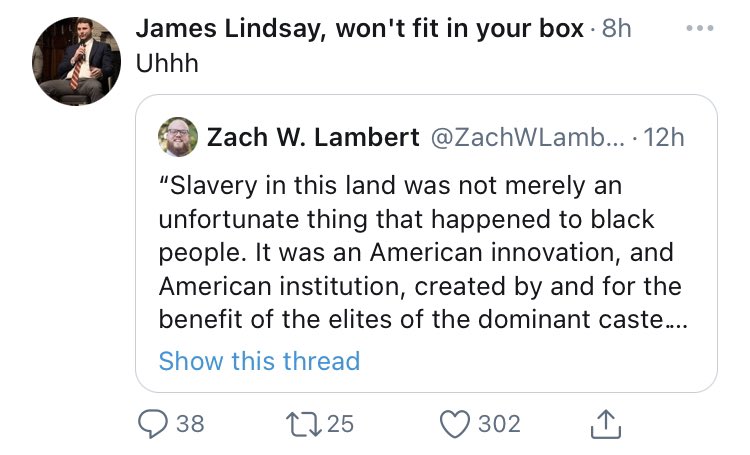
The attacks are rarely about ideas or beliefs, because purposefully misrepresenting someone’s argument prevents that from happening. Instead, the attacks are directed at the person.
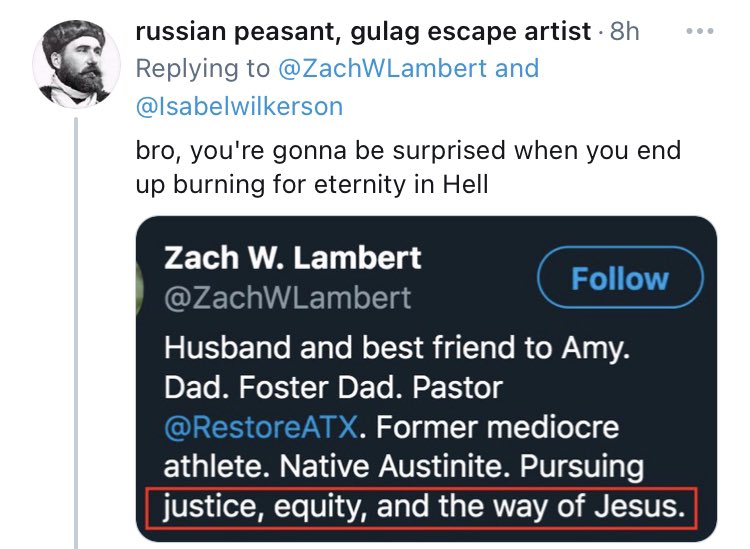
The level of vitriol in the replies is a new experience for me on here. I love Twitter, but this is the dark side of it.
Thread...
\u201cSlavery in this land was not merely an unfortunate thing that happened to black people. It was an American innovation, and American institution, created by and for the benefit of the elites of the dominant caste.\u201d @Isabelwilkerson
— Zach W. Lambert (@ZachWLambert) February 11, 2021
First, this quote is from a book which examines castes and slavery throughout history. Obviously Wilkerson isn’t claiming slavery was invented by America.
She says, “Slavery IN THIS LAND...” wasn’t happenstance. American chattel slavery was purposefully crafted and carried out.
That’s not a “hot take” or a fringe opinion. It’s a fact with which any reputable historian or scholar agrees.
Second, this is a perfect example of how nefarious folks operate here on Twitter...
J*mes Linds*y, P*ter Bogh*ssian and others like them purposefully misrepresent something (or just outright ignore what it actually says as they do in this case) and then feed it to their large, angry following so they will attack.
The attacks are rarely about ideas or beliefs, because purposefully misrepresenting someone’s argument prevents that from happening. Instead, the attacks are directed at the person.