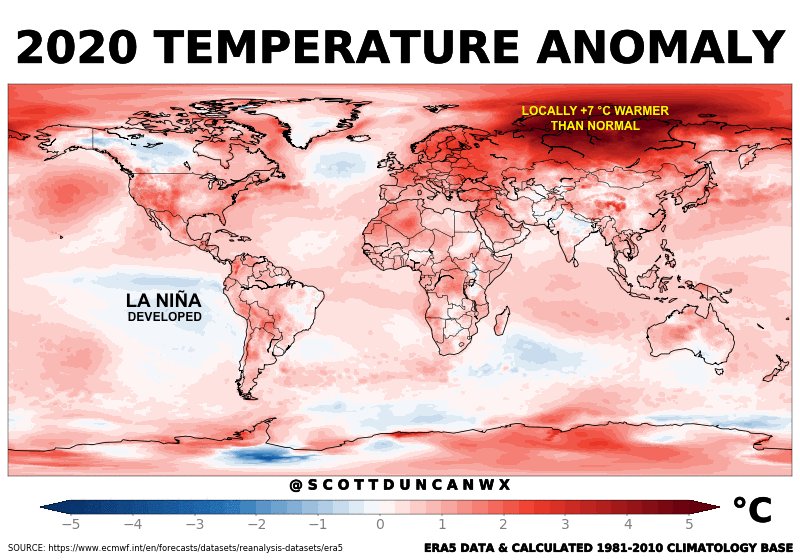
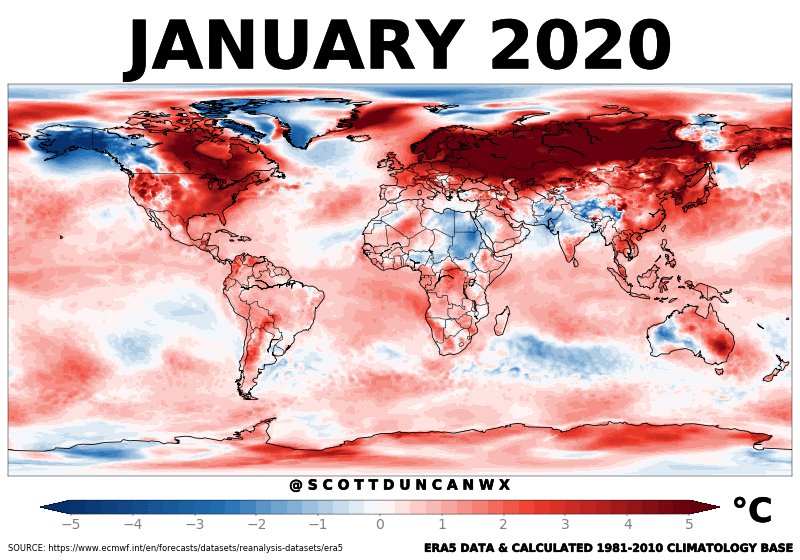
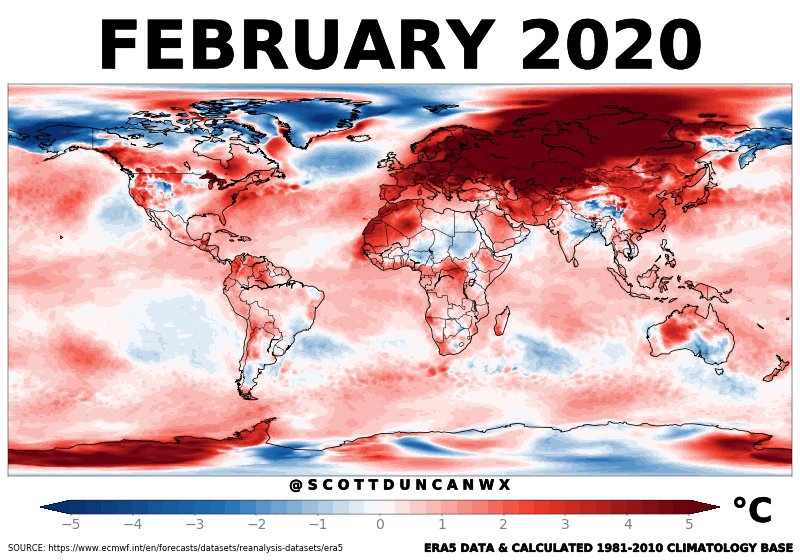
It's (nearly) five years since the Paris Agreement was gaveled through… but was it any good? Tricky question. Based on emissions, temperature data and impacts, no. *But...* (thread)
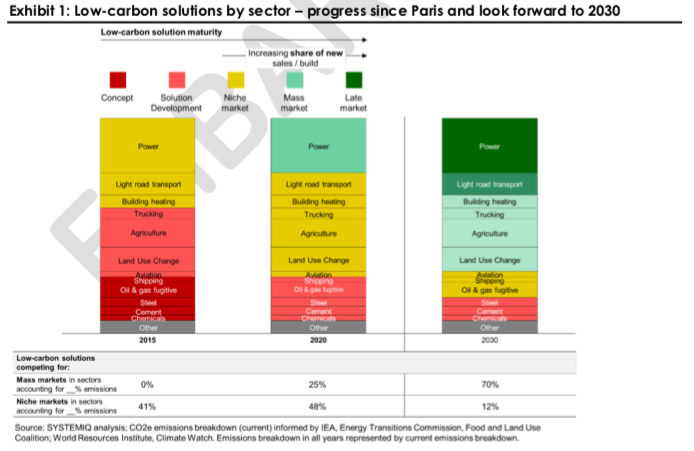
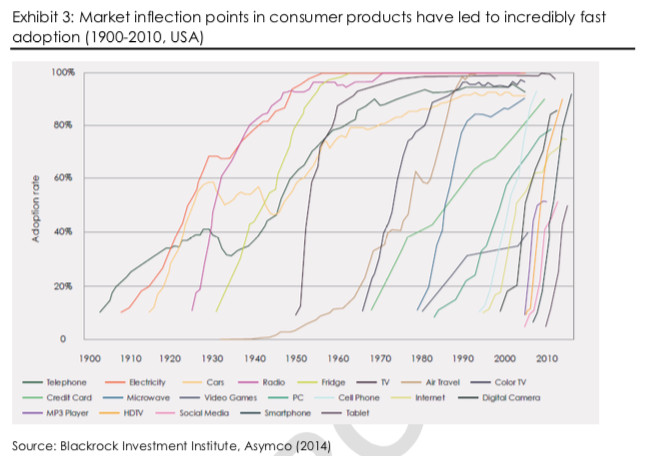
The team at @SystemIQ_LTD have crunched the numbers & reviewed how far + fast sectors have shifted since 2015. Their take is the global economy could be a decade away from seismic tipping points that see the world move fast towards low carbon.
In 2015, zero-carbon technologies and business models could rarely compete with incumbent carbon-solutions. In 2020, zero-carbon solutions are competitive in sectors representing around 25% of emissions. In 2030 the figure’s looking like 70%.
What does this mean for a COVID-smashed world, where 2021 is shaping up to be a hellish mix of recessions and mass unemployment? Well, the 2020s could see a net increase of 35 million low carbon jobs if governments roll out the right policies + invest wisely.
Can the low carbon acceleration be pinned to Paris? Not entirely, but partly. In 2014 no-one talked of net zero targets. Now 120+ countries either have these plans or are working on them. By mid 2021 the US, China, EU, UK, Japan, Korea, Canada will have these targets.
The Paris “ratchet” is nationally determined, not imposed by the UN. Leaders get to decide. They are increasingly deciding to be more ambitious. Cities and regions are joining the party: well over 50% of global GDP now has Paris-aligned targets.
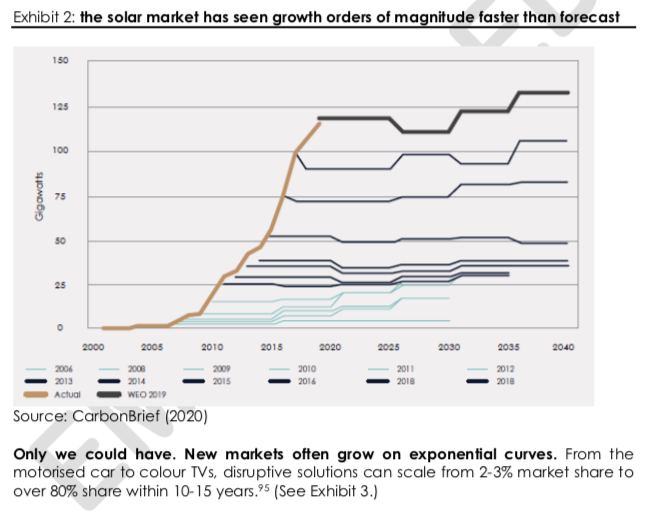
A climate-safe planet is not assured, but technology shifts fast. In 2014, @IEA forecast average #solar prices would reach $0.05/kWh by 2050. It took only 6 *not* 36 years to hit that price. Solar and wind will be the cheapest form of new generation everywhere later this decade.
Before 2024, electric vehicles (EVs) will beat internal combustion on sticker price parity, a fraction of the maintenance, unparalleled acceleration, and near equal range. Combustion engines could go the same way as DVDs. Once an innovation, now killed by @netflix.
It’s not just power and EVs. Today, there are 66 zero-emissions shipping pilots. 200 electric airplanes are in development. SystemIQ reckon electric aviation will be commercial by the mid 2020s — 2030s for larger planes. Low carbon steel, cement, aluminium pilots are a reality.
Big oil sees the writing on the wall, quitting long-life projects: since 2014, the average lifetime of major industry projects has declined from 50 to 30 years and the trend is accelerating. Money spent on dirty, old sectors could be a dollar that an investor might not get back.
Yeah, but. The 2020 @UNEP #EmissionsGap is bleak. A thread by @Peters_Glen this week highlighted governments have largely failed to use COVID stimulus packages to go green not dirty. Dollars have been poured into fossil fuel industry black holes instead of backing the future.
Temperatures continue to rise, impacts mount, climate finance flows go down, the whole concept of multilateralism looks shaky. And yet, to rip off the @SYSTEMIQ_Ltd report’s Executive Summary, ‘The case for enlightened self-interest has never been stronger’.
Tangible shifts are taking place in the face of wealthy and powerful incumbent forces. External elements are moving faster than many realise. The digitisation of the economy and connected world is accelerating learning. Low interest rates benefit investors in new capital.
And yes, public opinion is shifting. Consider elections for the EU Presidency, UK, New Zealand and US were all won in 2019–2020 on a strong #climate platform. Polling (I defer to @LeoBarasi on this) shows strong support for greener spaces, cleaner air, a safer environment.
It's not to say we’ll be fine on climate, that all investors in the City of London and Wall Street are piling into sustainable investments - @MCL1965 @JAmbachtsheer @stevewaygood @AssaadRazzouk @JG_climate @CampanaleMark are the ones to follow here
It’s not to say the changes aren’t scary for many who rely on incumbent high carbon sectors. Govts need solid transition plans (like @Teresaribera's in Spain). But change is happening, and we either accept that and swim with the flow, or ultimately we get swept along.
Final thought: Tackling the #climate crisis is often now referred to as a ‘sprint’. Sprinters typically take 40–50 metres to hit top speed. Post Paris, the low carbon athlete is - what - in the 10–20m transition zone phase? Heads coming up, bodies straightening, legs powering.
Key rivals — impacts, temperatures, emissions — are ahead. But the low carbon runner isn’t close to top speed. The 2020s are when they turn up the (green) gas. A decade of transition and truth awaits.
Full report here... @usainbolt will love it https://t.co/SEWhBo1rJP

More from Climate change

I previously 👇 documented 20 mechanisms through which climate change is 𝘢𝘭𝘳𝘦𝘢𝘥𝘺 disrupting food production.

Below I am adding to the list including several newly documented mechanisms. 

 *thread*


Several primary impacts relate to altered soil & plant chemistry & biology:

1. Disruption of the phosphorous cycle - the second most vital element for plants after nitrogen


2. Decreased content of key nutrients in major

3. Reduced chill hours required for many plants to bloom normally in the

Other additional primary impacts include:

4. Fossil fuel pollution impacts on crops - this is not a result of climate change per se, but is included since it is due to the same root cause (fossil fuel use):
@smarzeli @ianrowley677 @chimera414 @BrknMan @ancistroneura @sueytonius @swcrisis @eloarefab @BailFund_Brawl @IngersolRobert @OscarsWild1 @RuleByLogic @KCTaz @Kenneth72712993 @alshalloway @ClimatePatriot @joetheatheistp @insane_voice @TheDisproof @Ceist8 @BradPKeyes @Fauntleroy1934 @DawnTJ90 @Jamz129 @JsharkJill @Tangomitteckel @joedieseldodge @BadgersNo @fknsavages27 @SimonPearson961 @JoeTheAtheist @CMorrisonEsq @maya_phd @CymaticWave @Schtickery @ClimateDepot @stevenmosher @Willard1951 @Tokyo_Tom @jc_Craze @DanCady @PolAnimalAus @ZombiePiano @SimonMaxfield8 @CrangusShish @Gladfly1 @AtomsksSanakan @leonardjcohen @FrankWi74044551 [1/14] It is very sad that @NatGeo is now publishing such disinformation. The article is lies.

The Earth is greening, thanks to elevated CO2 -- especially in arid

@ianrowley677 @chimera414 @BrknMan @ancistroneura @sueytonius @swcrisis @eloarefab @BailFund_Brawl @IngersolRobert @OscarsWild1 @RuleByLogic @KCTaz @Kenneth72712993 @alshalloway @ClimatePatriot @joetheatheistp @insane_voice @TheDisproof @Ceist8 @BradPKeyes @Fauntleroy1934 @DawnTJ90 @Jamz129 @JsharkJill @Tangomitteckel @joedieseldodge @BadgersNo @fknsavages27 @SimonPearson961 @JoeTheAtheist @CMorrisonEsq @maya_phd @CymaticWave @Schtickery @ClimateDepot @stevenmosher @Willard1951 @Tokyo_Tom @jc_Craze @DanCady @PolAnimalAus @ZombiePiano @SimonMaxfield8 @CrangusShish @Gladfly1 @AtomsksSanakan @leonardjcohen @FrankWi74044551 @NatGeo [2/14] NASA measures it, from

@ianrowley677 @chimera414 @BrknMan @ancistroneura @sueytonius @swcrisis @eloarefab @BailFund_Brawl @IngersolRobert @OscarsWild1 @RuleByLogic @KCTaz @Kenneth72712993 @alshalloway @ClimatePatriot @joetheatheistp @insane_voice @TheDisproof @Ceist8 @BradPKeyes @Fauntleroy1934 @DawnTJ90 @Jamz129 @JsharkJill @Tangomitteckel @joedieseldodge @BadgersNo @fknsavages27 @SimonPearson961 @JoeTheAtheist @CMorrisonEsq @maya_phd @CymaticWave @Schtickery @ClimateDepot @stevenmosher @Willard1951 @Tokyo_Tom @jc_Craze @DanCady @PolAnimalAus @ZombiePiano @SimonMaxfield8 @CrangusShish @Gladfly1 @AtomsksSanakan @leonardjcohen @FrankWi74044551 [3/14] @NatGeo used to be better. In 2009 they reported, "Vast swaths of North Africa are getting noticeably lusher due to warming temperatures, new satellite images show, suggesting a possible boon for people living in the driest part of the

@ianrowley677 @chimera414 @BrknMan @ancistroneura @sueytonius @swcrisis @eloarefab @BailFund_Brawl @IngersolRobert @OscarsWild1 @RuleByLogic @KCTaz @Kenneth72712993 @alshalloway @ClimatePatriot @joetheatheistp @insane_voice @TheDisproof @Ceist8 @BradPKeyes @Fauntleroy1934 @DawnTJ90 @Jamz129 @JsharkJill @Tangomitteckel @joedieseldodge @BadgersNo @fknsavages27 @SimonPearson961 @JoeTheAtheist @CMorrisonEsq @maya_phd @CymaticWave @Schtickery @ClimateDepot @stevenmosher @Willard1951 @Tokyo_Tom @jc_Craze @DanCady @PolAnimalAus @ZombiePiano @SimonMaxfield8 @CrangusShish @Gladfly1 @AtomsksSanakan @leonardjcohen @FrankWi74044551 [4/14] @NewScientist reported the "remarkable environmental turnaround," including a “quite spectacular regeneration of vegetation,” and "a 70 per cent increase in yields of local cereals such as sorghum and millet in one province in recent

@ianrowley677 @chimera414 @BrknMan @ancistroneura @sueytonius @swcrisis @eloarefab @BailFund_Brawl @IngersolRobert @OscarsWild1 @RuleByLogic @KCTaz @Kenneth72712993 @alshalloway @ClimatePatriot @joetheatheistp @insane_voice @TheDisproof @Ceist8 @BradPKeyes @Fauntleroy1934 @DawnTJ90 @Jamz129 @JsharkJill @Tangomitteckel @joedieseldodge @BadgersNo @fknsavages27 @SimonPearson961 @JoeTheAtheist @CMorrisonEsq @maya_phd @CymaticWave @Schtickery @ClimateDepot @stevenmosher @Willard1951 @Tokyo_Tom @jc_Craze @DanCady @PolAnimalAus @ZombiePiano @SimonMaxfield8 @CrangusShish @Gladfly1 @AtomsksSanakan @leonardjcohen @FrankWi74044551 @newscientist [5/14] Note that sorghum & millet are C4 plants. It was once thought that, unlike C3 plants, C4 plants would benefit little from rising CO2 levels. But C4 crops are favored for their drought-hardiness, &eCO2 is especially beneficial under dry

You May Also Like

Still wondering about this 🤔


save as q