
Delta is a measure of the sensitivity of an option’s price changes relative to the changes in the underlying asset’s price. In other words, if the price of the underlying asset increases by 1 points, the price of the option will change by delta amount.
There are various Options Greeks like: Delta, Gamma, Vega, Rho, Theta.
A complete guide on how these #Option Greeks impact option price.
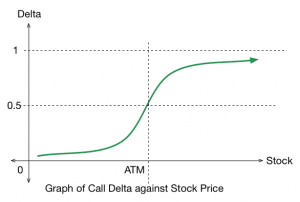
Delta is a measure of the sensitivity of an option’s price changes relative to the changes in the underlying asset’s price. In other words, if the price of the underlying asset increases by 1 points, the price of the option will change by delta amount.
As the options become ITM, the value of delta tends towards +1 for call and -1 for put.
Delta is important greeks to determine the hedge ratio for investors who want to hedge their portfolio.
Gamma (Γ) is a measure of the delta’s change relative to the changes in the price of the underlying asset.
If the price of the underlying asset increases by 1 points, the option’s delta will change by the gamma amount.
Long options (call/put) have positive Gamma.
Think like this, Delta is basically the velocity and gamma is acceleration as taught in the physics.
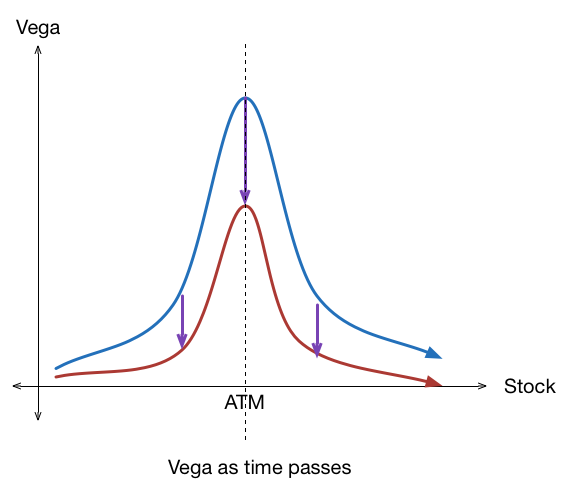
Vega (ν) is an option Greek that measures the sensitivity of an option price relative to the volatility of the underlying asset. If the volatility of the underlying asset increases by 1%, the option price will change by the vega amount.
Rising vega is a friend of option buyers and falling vega is a friend of option sellers.
Rho (ρ) measures the sensitivity of the option price relative to interest rates and it is least significant Option Greeks because option price are less sensitive to interest rate. If an interest rate increases by 1%, the option price will change by the rho amount.
Similarly, if the interest rate decrease, then the value of the call option will fall and the value of the put option will rise.
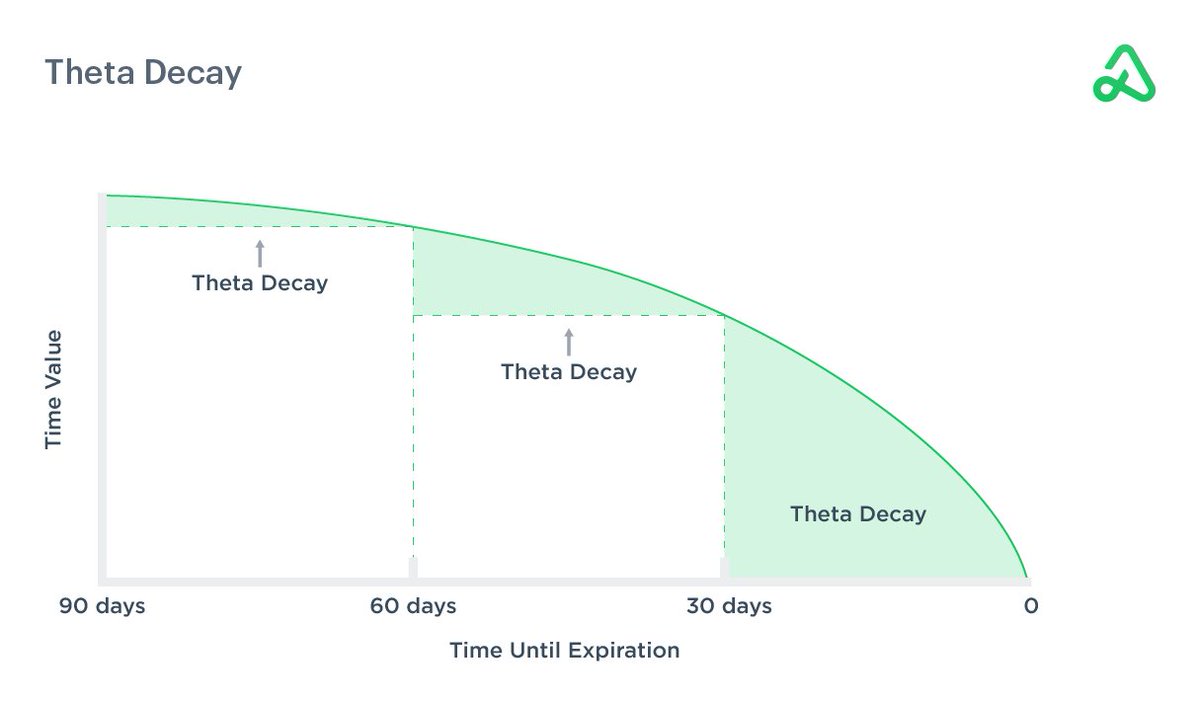
Theta (θ) is a measure of the sensitivity of the option price relative to the option’s time to maturity. If the option’s time to maturity decreases by one day, the option’s price will change by the theta amount.
Also, the value of the option for far expiry will be more than near expiry as it has more time left for expiry.
For me, the most important Greeks are Theta and Vega, as I am an option seller.
If you found this useful, please do RT the first tweet.
Follow @YMehta_ for more such learning related to trading.
https://t.co/K0Osq2Yx8l
There are various Options Greeks like: Delta, Gamma, Vega, Rho, Theta.
— Yash Mehta (@YMehta_) September 4, 2022
A complete guide on how these #Option Greeks impact option price.
More from Yash Mehta
Over 99% of the option traders lose money in option trading because of not following proper Risk Management and Position Sizing.
In this thread 🧵, shared three steps that can help you in Option Trading even with small capital.
A complete course worth ₹ 50K for free.
1/ Creating a view based on some analysis:
It can be Technical/Chart, Option Chain or some Data analysis.
We have written a thread last week on what all the basic strategies you can use based on your view.
Checkout the thread
Now, after forming a view on a stock or index, don't directly jump to take the position.
Analyze the position first.
Some free tools that you can use are:
- Opstra
- @BeSensibull : Integrated with your Broker
We will talk on how to analyze Nifty Option trades from option selling perspective and what all things to look at.
Same thing you can replicate for Stock or Banknifty Options as well.
2/ Analyzing the position:
Let's say I am having bullish view on Nifty, then I can simply short Put Options and Hedge it as well so that margin requirement will reduce.
Let's assume Nifty is at 17000.
So I am looking to short 17000 PE and Buying 17800 PE.
In this thread 🧵, shared three steps that can help you in Option Trading even with small capital.
A complete course worth ₹ 50K for free.
1/ Creating a view based on some analysis:
It can be Technical/Chart, Option Chain or some Data analysis.
We have written a thread last week on what all the basic strategies you can use based on your view.
Checkout the thread
Option trading is tough as there are many strategies based on different market view.
— Yash Mehta (@YMehta_) September 30, 2022
Sharing 6 basic Option Strategies for free that you can use based on different market view (sold as a \u20b9 25,000 course!).
A thread \U0001f9f5:
Now, after forming a view on a stock or index, don't directly jump to take the position.
Analyze the position first.
Some free tools that you can use are:
- Opstra
- @BeSensibull : Integrated with your Broker
We will talk on how to analyze Nifty Option trades from option selling perspective and what all things to look at.
Same thing you can replicate for Stock or Banknifty Options as well.
2/ Analyzing the position:
Let's say I am having bullish view on Nifty, then I can simply short Put Options and Hedge it as well so that margin requirement will reduce.
Let's assume Nifty is at 17000.
So I am looking to short 17000 PE and Buying 17800 PE.
#RS is an indicator which helps in finding strong stock or index in the market.
This learning thread would be on
"𝙐𝙨𝙚𝙨 𝙤𝙛 𝙍𝙚𝙡𝙖𝙩𝙞𝙫𝙚 𝙎𝙩𝙧𝙚𝙣𝙜𝙩𝙝"
Shared some strategy.
Like👍 & Retweet🔄for wider reach and for more such learning thread in the future.
1/22
Most of us would confuse it with Relative Strength Index (RSI) but Relative Strength is a different indicator.
We have already covered about "Uses of RSI" in below thread👇
https://t.co/oTOrW7joNI
One can go through this if you haven't.
2/22
Now coming to Relative Strength (RS).
It is basically a strategy used in momentum investing which shows strength or weakness between two asset classes (two stocks, index, commodity).
One can read about this in below
As of now, I am using this indicator on .@tradingview platform.
It's free and one can add it in their Tradingview account as well, using this link👇
https://t.co/FxCjJFsNOG
There are multiple variants in this as well. Some traders use multiple time frame RS.
4/22
RS basically compares returns of one stock/index with the returns of benchmark stock/index at a particular time horizon.
Let's say, I want to analyze TCS and Benchmark Index is Nifty.
5/22
This learning thread would be on
"𝙐𝙨𝙚𝙨 𝙤𝙛 𝙍𝙚𝙡𝙖𝙩𝙞𝙫𝙚 𝙎𝙩𝙧𝙚𝙣𝙜𝙩𝙝"
Shared some strategy.
Like👍 & Retweet🔄for wider reach and for more such learning thread in the future.
1/22
Most of us would confuse it with Relative Strength Index (RSI) but Relative Strength is a different indicator.
We have already covered about "Uses of RSI" in below thread👇
https://t.co/oTOrW7joNI
One can go through this if you haven't.
2/22
#RSI is a common indicator which most of us use in the stock market.
— Yash Mehta (@YMehta_) October 22, 2021
This learning thread would be on
"\U0001d650\U0001d668\U0001d65a\U0001d668 \U0001d664\U0001d65b \U0001d64d\U0001d64e\U0001d644"
Like\U0001f44d & Retweet\U0001f504 for wider reach and for more such learning thread in the future.
Also, an investment strategy is shared using RSI in the end.
1/16
Now coming to Relative Strength (RS).
It is basically a strategy used in momentum investing which shows strength or weakness between two asset classes (two stocks, index, commodity).
One can read about this in below
As of now, I am using this indicator on .@tradingview platform.
It's free and one can add it in their Tradingview account as well, using this link👇
https://t.co/FxCjJFsNOG
There are multiple variants in this as well. Some traders use multiple time frame RS.
4/22
RS basically compares returns of one stock/index with the returns of benchmark stock/index at a particular time horizon.
Let's say, I want to analyze TCS and Benchmark Index is Nifty.
5/22
In the early stage, most of the traders & investors use indicators in their analysis.
Here is a master thread of how most of the indicators can be used in trading/investing to increase accuracy for free🧵:
Also, the last indicator and strategy is my favourite of all in trading.
1/ Moving Average is a very common indicator.
This thread is on what are the different ways of using the moving average
2/ RSI is one of the momentum indicator for traders.
In this thread, I have shared different ways of using RSI. Also, an investing strategy is shared, which can help you to pick stocks that can give you good
3/ CCI is another amazing indicator that is used by momentum traders.
Shared few strategies with CCI which a trader and investor both can
4/ CPR is one of the most popular indicator in the trading community.
This thread covers everything about the CPR indicator and how to use this indicator in
Here is a master thread of how most of the indicators can be used in trading/investing to increase accuracy for free🧵:
Also, the last indicator and strategy is my favourite of all in trading.
1/ Moving Average is a very common indicator.
This thread is on what are the different ways of using the moving average
Moving Averages is a common indicator which most of us (novice/professional) use in the stock market for trading and investment.
— Yash Mehta (@YMehta_) October 11, 2021
This learning thread would be on
"\U0001d650\U0001d668\U0001d65a\U0001d668 \U0001d664\U0001d65b \U0001d648\U0001d664\U0001d66b\U0001d65e\U0001d663\U0001d65c \U0001d63c\U0001d66b\U0001d65a\U0001d667\U0001d656\U0001d65c\U0001d65a"
Like\U0001f44d & Retweet\U0001f504 for wider reach and more such learning thread.
1/10
2/ RSI is one of the momentum indicator for traders.
In this thread, I have shared different ways of using RSI. Also, an investing strategy is shared, which can help you to pick stocks that can give you good
#RSI is a common indicator which most of us use in the stock market.
— Yash Mehta (@YMehta_) October 22, 2021
This learning thread would be on
"\U0001d650\U0001d668\U0001d65a\U0001d668 \U0001d664\U0001d65b \U0001d64d\U0001d64e\U0001d644"
Like\U0001f44d & Retweet\U0001f504 for wider reach and for more such learning thread in the future.
Also, an investment strategy is shared using RSI in the end.
1/16
3/ CCI is another amazing indicator that is used by momentum traders.
Shared few strategies with CCI which a trader and investor both can
#CCI is an indicator which is used in the #stockmarket
— Yash Mehta (@YMehta_) February 26, 2022
This learning thread would be on
"\U0001d650\U0001d668\U0001d65a\U0001d668 \U0001d664\U0001d65b \U0001d63e\U0001d63e\U0001d644"
Also, an investment strategy and trading strategy is shared
If you appreciate this, a Like & Retweet will go a long way in maximizing the reach of this tweet\u2665\ufe0f
1/19
4/ CPR is one of the most popular indicator in the trading community.
This thread covers everything about the CPR indicator and how to use this indicator in
#CPR is an indicator which is used for #Intraday in Stock Market.
— Yash Mehta (@YMehta_) November 19, 2021
This learning thread would be on
"\U0001d650\U0001d668\U0001d65a\U0001d668 \U0001d664\U0001d65b \U0001d63e\U0001d64b\U0001d64d"
Like\u2764\ufe0f& Retweet\U0001f501for wider reach and for more such learning thread in the future.
Also, an investment strategy is shared using CPR in the end.
1/24
Stock Screeners is an integral part of doing homework post market hours.
Most of us use screeners to filter buzzing stocks out of 1000+ stock and it saves lot of times.
Here is the list of top screeners:
Also, last screener is one of my favourite to pick early momentum stocks.
1/ Volume Buzzer:
This can be used on daily time frame and it identifies all the stocks where volume action was very
2/ Bullish Divergence:
This screener will help you find all the stocks that has given bullish divergence. Traders who like to trade reversal stocks that are in downtrend can use this screener. This can be used at the end of the
3/ Bearish Divergence:
This screener will help you find all the stocks that has given bearish divergence. Traders who like to trade reversal stocks that are in uptrend can use this screener. This can be used at the end of the
4/ Nimblr F2F:
This screener was designed from @Deishma F2F video:
https://t.co/apaQYVbAlq
This screener helps in identifying momentum and indecisive candles on daily time
You May Also Like









This is a pretty valiant attempt to defend the "Feminist Glaciology" article, which says conventional wisdom is wrong, and this is a solid piece of scholarship. I'll beg to differ, because I think Jeffery, here, is confusing scholarship with "saying things that seem right".
The article is, at heart, deeply weird, even essentialist. Here, for example, is the claim that proposing climate engineering is a "man" thing. Also a "man" thing: attempting to get distance from a topic, approaching it in a disinterested fashion.

Also a "man" thing—physical courage. (I guess, not quite: physical courage "co-constitutes" masculinist glaciology along with nationalism and colonialism.)

There's criticism of a New York Times article that talks about glaciology adventures, which makes a similar point.

At the heart of this chunk is the claim that glaciology excludes women because of a narrative of scientific objectivity and physical adventure. This is a strong claim! It's not enough to say, hey, sure, sounds good. Is it true?
Imagine for a moment the most obscurantist, jargon-filled, po-mo article the politically correct academy might produce. Pure SJW nonsense. Got it? Chances are you're imagining something like the infamous "Feminist Glaciology" article from a few years back.https://t.co/NRaWNREBvR pic.twitter.com/qtSFBYY80S
— Jeffrey Sachs (@JeffreyASachs) October 13, 2018
The article is, at heart, deeply weird, even essentialist. Here, for example, is the claim that proposing climate engineering is a "man" thing. Also a "man" thing: attempting to get distance from a topic, approaching it in a disinterested fashion.
Also a "man" thing—physical courage. (I guess, not quite: physical courage "co-constitutes" masculinist glaciology along with nationalism and colonialism.)
There's criticism of a New York Times article that talks about glaciology adventures, which makes a similar point.
At the heart of this chunk is the claim that glaciology excludes women because of a narrative of scientific objectivity and physical adventure. This is a strong claim! It's not enough to say, hey, sure, sounds good. Is it true?