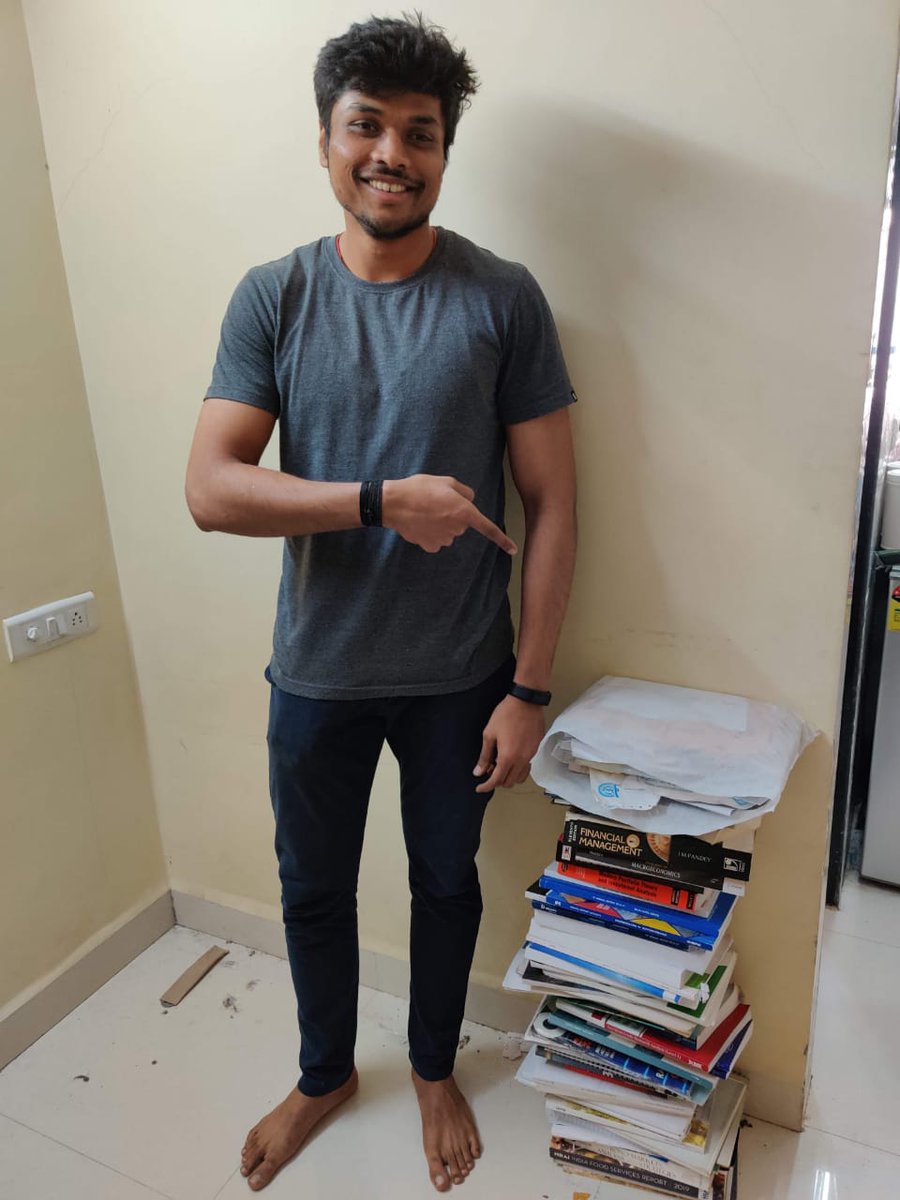
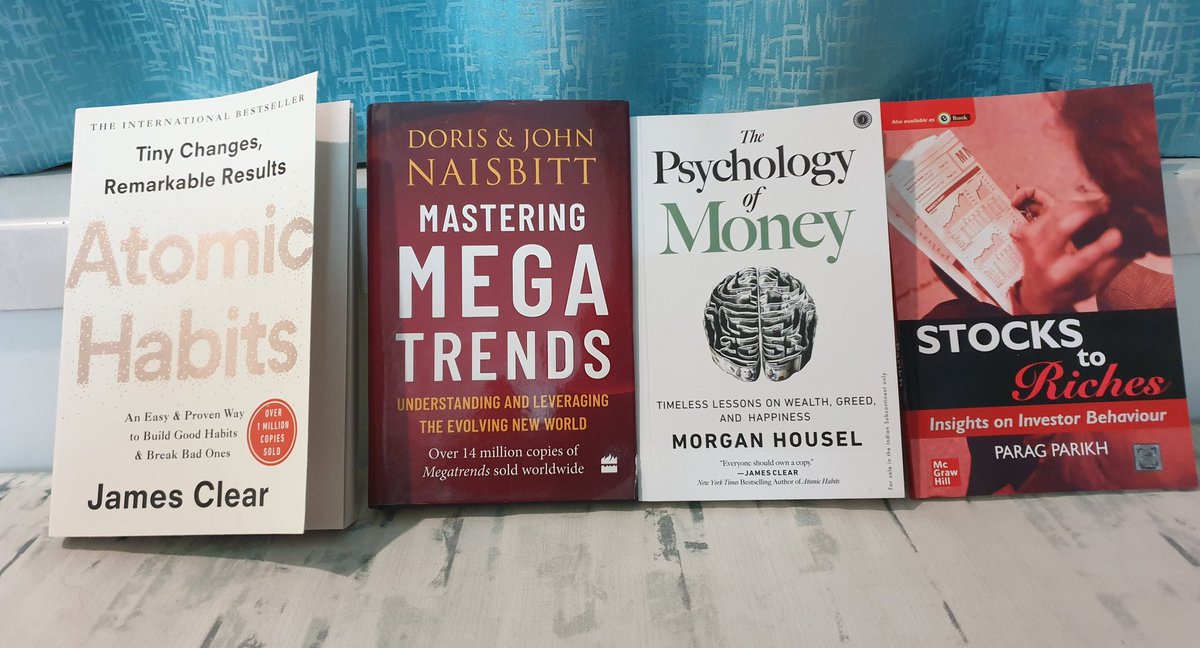
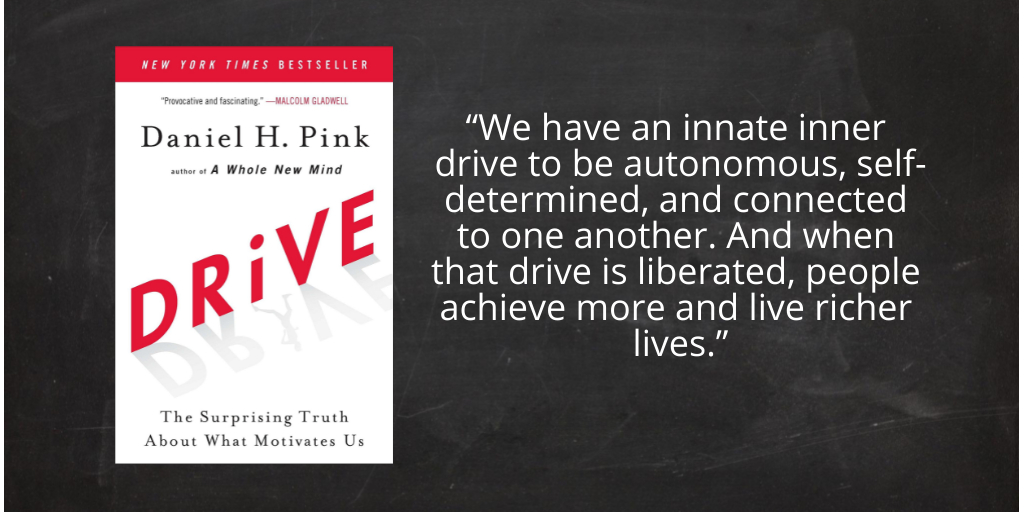
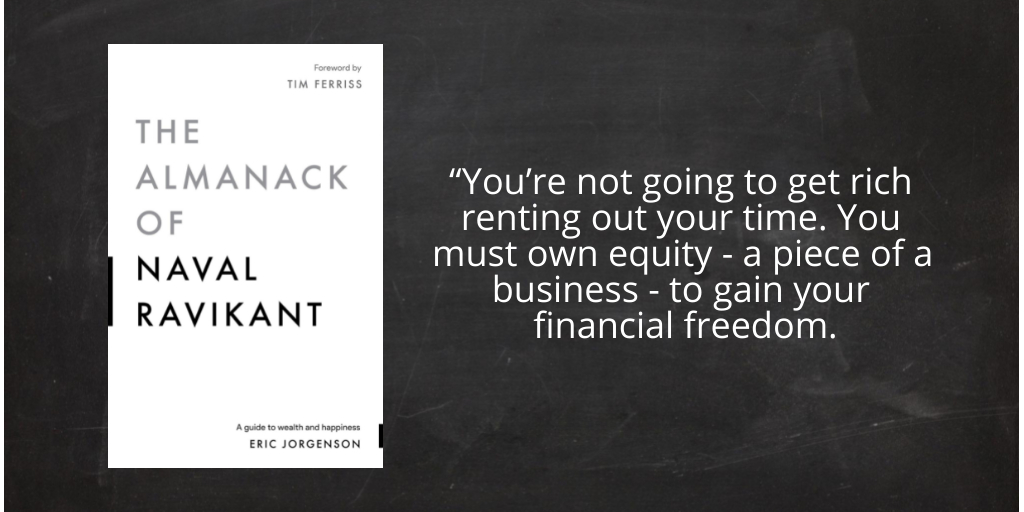
Below should be made compulsory for finance/management/investing courses -
Tv Show - Scam 1992
Movie - Guru, Rocket Singh
Books - CEO Factory, Dr. Vijay Malik books, Almanack of Naval Ravikant, Ankur Warikoo Sir’s ebooks, atomic habits, Parag Parikh Sir's books
More from Aditya Kondawar
A Mega thread!
My last thread for 2021 🧵
#Books #Reading
Let's get started 👇
A few years back, I used to read articles which used to say a CEO read 40 books this year and I always thought how?
It's all about consistently reading a few pages every day!
2020- I read 15-25 pages(not every day) - I read 34 books in 2020
2021- I read 25-35 pages every night before sleeping and 100-150 pages every weekend
Ok, now let’s go through those 50 books 👇
1/n
Shoe Dog by Phil Knight
Nike started off by importing high-quality, low-cost running shoes from Japan
What’s shocking is the number of times the business came to an end but came out stronger every time!
Never Giving up – The one key lesson from the book!{{ img:6c137d }}
2/n
Ankur Warikoo's 6 Ebooks
Failure Resume
Mistakes I made with my money
mistakes I made in my 30s
Leadership
Time Management
Mistakes I made in my 20s
Read here - https://t.co/utSzYtS3CV
PS - He is someone I follow very closely, I learn a lot from his content!
@warikoo
Not just the above but his threads, videos, newsletters and podcasts are also amazing!
His new book ‘Do Epic shit’ is out, I would strongly recommend you to order that. I have done that already on Day 1 and I am starting my 2022 with that book 😊
After the much-celebrated #IPO of Zomato, all eyes are now on #PayTM!
So let's not wait and let's understand everything about PayTM in the below thread 👇
1/
- The DRHP mentions a Rs 16,600 Cr Fundraise
- Split - 50% Fresh, 50% OFS
- Valuation of $25-30 billion targeted from this IPO
Let’s put all of these numbers into perspective here –
Paytm Pre IPO info -
— Aditya Kondawar (@aditya_kondawar) July 7, 2021
Unlisted price - \u20b92450-2500
Valuation - \u20b9151,250 Cr
Targeting 25-30bn$ as per various news sources
25 bn $ - \u20b9185,925 Cr
30 bn $ - \u20b9223,110 Cr
6.05 cr shares - FY21 (FV\u20b910)
Recent split to \u20b91 FV, 60.5 Cr shares
Exchange rate 74.37 taken
No reco!
2/
Some big numbers, right? Ok back to PayTM now –
What does it do?
Well, it does a lot of things but at the core of it let's term it a fintech company.
- It started as a digital wallet-based platform focused on mobile SIM top-ups and utility payments in 2010
3/
- They pivoted to marketing, mobile phone top-ups, payments, e-comm, then a full-scale fintech services company – The avatar that we see today
- The Paytm ecosystem has payments (wallet / UPI), merchant acquiring, credit, savings, broking, wealth management, and insurance.
4/
Total users - 333 mn
Monthly active users - 50 mn
Merchants - 21.1 mn
RedSeer - Paytm has a payments transaction volume market share of ~40% and wallet payments transaction mkt share of 65-70% in India for FY21
More from Bookstoread
You May Also Like
Five billionaires share their top lessons on startups, life and entrepreneurship (1/10)
I interviewed 5 billionaires this week
— GREG ISENBERG (@gregisenberg) January 23, 2021
I asked them to share their lessons learned on startups, life and entrepreneurship:
Here's what they told me:
10 competitive advantages that will trump talent (2/10)
To outperform, you need serious competitive advantages.
— Sahil Bloom (@SahilBloom) March 20, 2021
But contrary to what you have been told, most of them don't require talent.
10 competitive advantages that you can start developing today:
Some harsh truths you probably don’t want to hear (3/10)
I\u2019ve gotten a lot of bad advice in my career and I see even more of it here on Twitter.
— Nick Huber (@sweatystartup) January 3, 2021
Time for a stiff drink and some truth you probably dont want to hear.
\U0001f447\U0001f447
10 significant lies you’re told about the world (4/10)
THREAD: 10 significant lies you're told about the world.
— Julian Shapiro (@Julian) January 9, 2021
On startups, writing, and your career:
I believe that @ripple_crippler and @looP_rM311_7211 are the same person. I know, nobody believes that. 2/*
Today I want to prove that Mr Pool smile faces mean XRP and price increase. In Ripple_Crippler, previous to Mr Pool existence, smile faces were frequent. They were very similar to the ones Mr Pool posts. The eyes also were usually a couple of "x", in fact, XRP logo. 3/*
The smile XRP-eyed face also appears related to the Moon. XRP going to the Moon. 4/*
And smile XRP-eyed faces also appear related to Egypt. In particular, to the Eye of Horus. https://t.co/i4rRzuQ0gZ 5/*
Like company moats, your personal moat should be a competitive advantage that is not only durable—it should also compound over time.
Characteristics of a personal moat below:
I'm increasingly interested in the idea of "personal moats" in the context of careers.
— Erik Torenberg (@eriktorenberg) November 22, 2018
Moats should be:
- Hard to learn and hard to do (but perhaps easier for you)
- Skills that are rare and valuable
- Legible
- Compounding over time
- Unique to your own talents & interests https://t.co/bB3k1YcH5b
2/ Like a company moat, you want to build career capital while you sleep.
As Andrew Chen noted:
People talk about \u201cpassive income\u201d a lot but not about \u201cpassive social capital\u201d or \u201cpassive networking\u201d or \u201cpassive knowledge gaining\u201d but that\u2019s what you can architect if you have a thing and it grows over time without intensive constant effort to sustain it
— Andrew Chen (@andrewchen) November 22, 2018
3/ You don’t want to build a competitive advantage that is fleeting or that will get commoditized
Things that might get commoditized over time (some longer than
Things that look like moats but likely aren\u2019t or may fade:
— Erik Torenberg (@eriktorenberg) November 22, 2018
- Proprietary networks
- Being something other than one of the best at any tournament style-game
- Many "awards"
- Twitter followers or general reach without "respect"
- Anything that depends on information asymmetry https://t.co/abjxesVIh9
4/ Before the arrival of recorded music, what used to be scarce was the actual music itself — required an in-person artist.
After recorded music, the music itself became abundant and what became scarce was curation, distribution, and self space.
5/ Similarly, in careers, what used to be (more) scarce were things like ideas, money, and exclusive relationships.
In the internet economy, what has become scarce are things like specific knowledge, rare & valuable skills, and great reputations.