Uniswap-style automatic market making for everything. Every possession you have, constantly marked to market by ~2040.
The defi matrix
As each asset class goes on-chain, it can be stored in a digital wallet. And it can be traded against other such assets. Not just cryptocurrencies, but national digital currencies, personal tokens, etc.
We’re about to enter an age of global monetary competition.
Uniswap-style automatic market making for everything. Every possession you have, constantly marked to market by ~2040.
This is an interesting point. Cash doesn’t make you money. In fact, it can lose you money in an inflating environment.
Reliable, 24/7 mark-to-market on everything is hard — but if achieved, means less % of assets in cash. https://t.co/Hg7W32iCDY
Thus less use for currencies as people can more easily store their wealth into assets and easily trade them.
— Pierre-Yves Gendron (@pierreyvesg7) February 24, 2021
- All assets trade against all assets in the defi matrix
- Automated market makers give liquidity for rare pairs
- Everything is marked-to-market 24/7
- Value of cash drops, as you can liquidate instantly
- The new no-op is to keep your assets in BTC
Though in practice this may mean WBTC/RenBTC [or ETH!] rather than BTC itself.
Total global liquidity for everything via automated market makers will drive the world to minimize national currency holdings.
Because the scale-up of AMMs & yield farming will allow anyone to instantly get a better return than holding cash!
But no more than that. Every excess unit of fiat beyond the necessary minimum goes into crypto to seek higher returns in the defi matrix.
It all becomes arbitrage.
Maybe you can constantly find a better job too...
https://t.co/NhCP1AGNzu
And what follows is the end of the bullshit job. What you do has tokenized and appreciable value, since otherwise, by definition, that capital could be earning immediate yield. There\u2019s a mark-to-market cost to bullshit.
— manhattanbeachproject (@manbeachproject) February 25, 2021
From drudgery to flourishing.
More from Bitcoin


Afternoon all,
I wanted to take some time to cover some resources I use in my daily $BTC trading. This will be a longer thread, so bear with it you will hopefully find something that will help you also. I will try to keep it concise so if there are any questions please DM me.
11. Portfolio Management & Trade Diary- https://t.co/KAig84dOsk
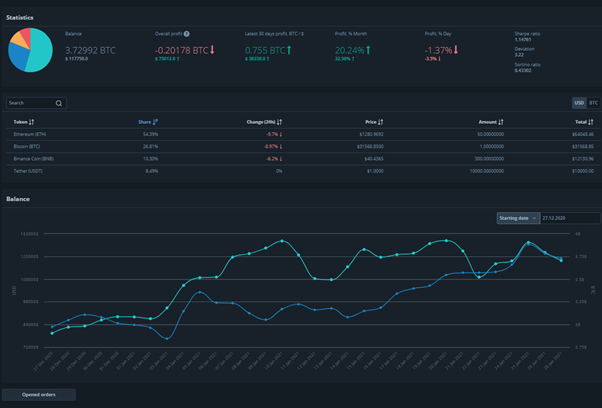
3Commas gives you the ability to see your full portfolio, mapping your balance and asset breakdown. You have access to all your trade history across all exchange in a single trade diary, saving time extracting taxes
I wanted to take some time to cover some resources I use in my daily $BTC trading. This will be a longer thread, so bear with it you will hopefully find something that will help you also. I will try to keep it concise so if there are any questions please DM me.
11. Portfolio Management & Trade Diary- https://t.co/KAig84dOsk
3Commas gives you the ability to see your full portfolio, mapping your balance and asset breakdown. You have access to all your trade history across all exchange in a single trade diary, saving time extracting taxes

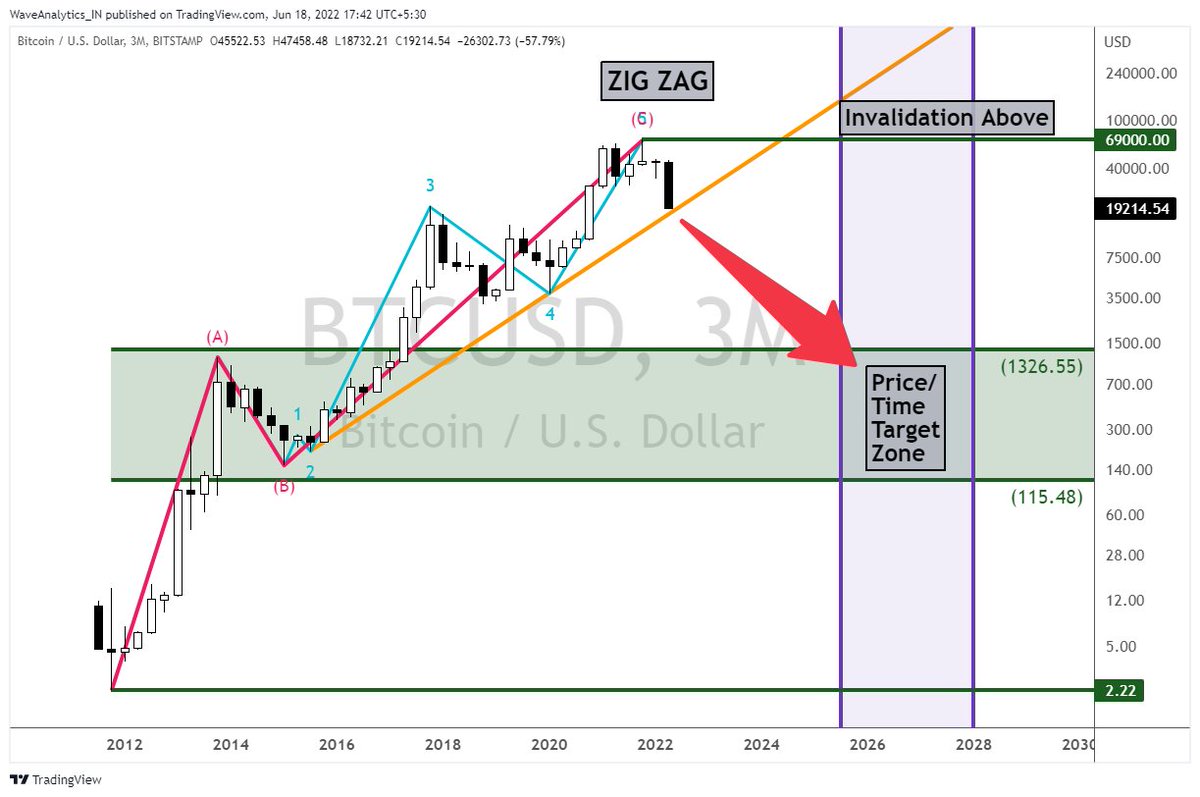
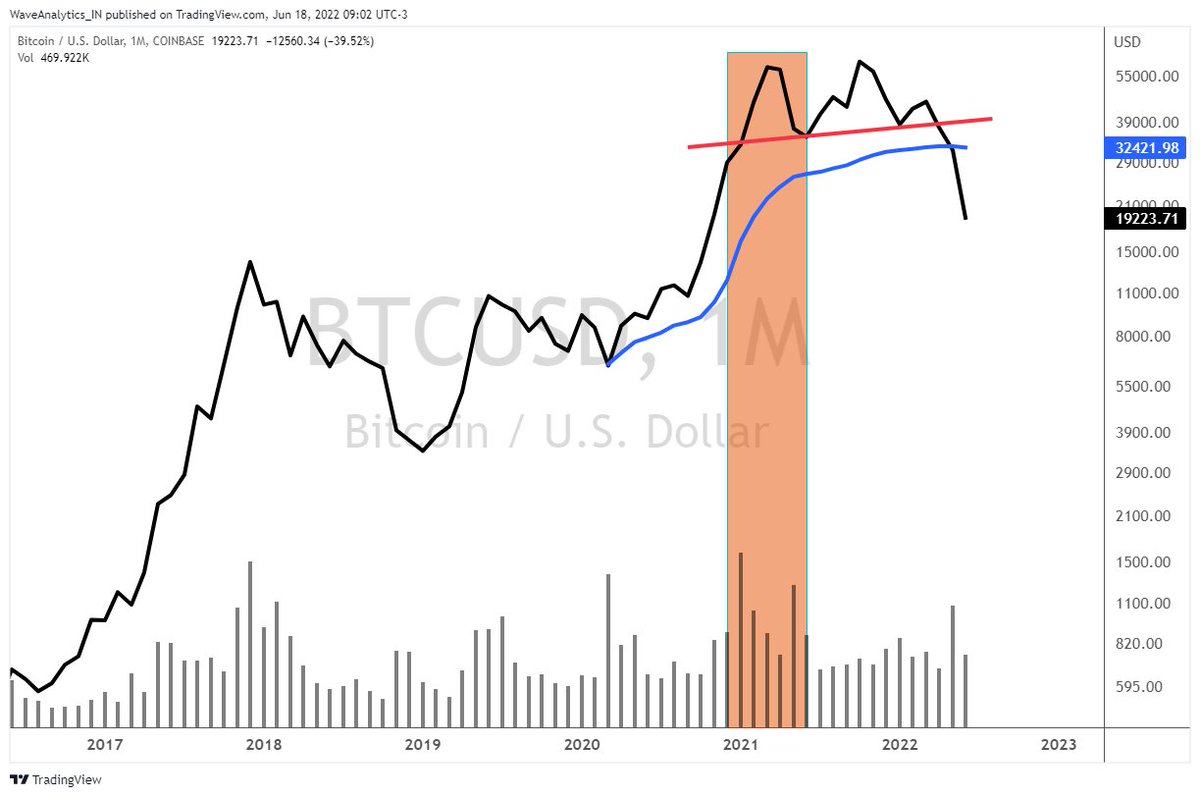

I will be a buyer under 13800 levels, but depending upon the reversal on smaller timeframe.
#BITCOIN
— Mayank Narula (@Mayank_Narula1) March 5, 2022
Pending RSI divergence on monthly chart which requires a dip under 13805 to get resolved.
But monthly RSI divergences can go on for years before the resolution.
Best case scenario will be panic dump over next few months. pic.twitter.com/hi67hMg9sZ

1/ If, like me, you've been looking at #Bitcoin over the last few years with interest, but you have never really decided which side of the fence you sit on, this thread might be good for you.
This isn't another opinion piece on #Bitcoin , in-fact, it's exactly the opposite. 👇🏼
This thread is a list of resources I have found to be useful and insightful when it comes to understanding the pros and cons of #Bitcoin .
Below, you'll find knowledgeable people 👩🏽💻, articles/essays 📝, podcasts 🎧 and videos 📹 about #Bitcoin . Enjoy!
/2 People 👩🏽💻
These individuals are valuable to listen to, whilst they are bullish, they justify their stance:
@RaoulGMI
@michael_saylor
@DTAPCAP
@APompliano
@VentureCoinist
@AlexSaundersAU
@danheld
@aantonop
@jchervinsky
@real_vijay
@lawmaster
@LynAldenContact
/3 Resources 🏢
A video library of interviews from various Bitcoin enthusiasts. 👇🏼
https://t.co/CJJvHavSOn
A great guide for new investors to Bitcoin. 👇🏼
https://t.co/fOoSfTlWr5
A portal for people to go from zero knowledge to intermediate level.
/4 Tweet threads 🐦
A great thread on rebuttals from common #Bitcoin queries/criticisms. 👇🏼
https://t.co/tPEpFMMPhH
Why companies are starting to put BTC on the balance sheet. 👇🏼
https://t.co/lL71M1A3NF
“A double-spend broke Bitcoin" debunked.
This isn't another opinion piece on #Bitcoin , in-fact, it's exactly the opposite. 👇🏼
This thread is a list of resources I have found to be useful and insightful when it comes to understanding the pros and cons of #Bitcoin .
Below, you'll find knowledgeable people 👩🏽💻, articles/essays 📝, podcasts 🎧 and videos 📹 about #Bitcoin . Enjoy!
/2 People 👩🏽💻
These individuals are valuable to listen to, whilst they are bullish, they justify their stance:
@RaoulGMI
@michael_saylor
@DTAPCAP
@APompliano
@VentureCoinist
@AlexSaundersAU
@danheld
@aantonop
@jchervinsky
@real_vijay
@lawmaster
@LynAldenContact
/3 Resources 🏢
A video library of interviews from various Bitcoin enthusiasts. 👇🏼
https://t.co/CJJvHavSOn
A great guide for new investors to Bitcoin. 👇🏼
https://t.co/fOoSfTlWr5
A portal for people to go from zero knowledge to intermediate level.
/4 Tweet threads 🐦
A great thread on rebuttals from common #Bitcoin queries/criticisms. 👇🏼
https://t.co/tPEpFMMPhH
Why companies are starting to put BTC on the balance sheet. 👇🏼
https://t.co/lL71M1A3NF
“A double-spend broke Bitcoin" debunked.
1/ Fear and Bitcoin.
— Dan Held (@danheld) January 10, 2021
Whenever Bitcoin has a bull run, naysayers try to cope with missing the boat by rationalizing why it will fail through \u201cFear, Uncertainty, and Doubt\u201d or what we Bitcoiners have nicknamed \u201cFUD.\u201d