
First, I'll talk about why someone would want to transition from employment to entrepreneurship.
My blueprint for transitioning from employment to entrepreneurship
👇 👇 👇
First, I'll talk about why someone would want to transition from employment to entrepreneurship.
Entrepreneurship isn't for everyone. If you don't desire it above most things, you won't stick with it long enough to succeed.
People assume it's risky to start a business, and that a traditional paycheck is a safer option for providing for your family.
You can start a business while still being employed. Then, if it fails you're not totally destroyed. You can try again.
Many see failing as a risk, but it's just part of the journey.
It's for this very reason that entrepreneurship is tough.
You're the one in control. No boss to tell you what to do. It's on your shoulders.
You may work longer, harder, and for zero pay in the beginning, but you're building infrastructure that will pay you while you sleep.
That's the goal. It only comes from building.
Now you can spend your time exactly how you want to spend it, and get paid for the value you provide.
$10 product @ 1000 sales/month = $10,000/month
$100 product @ 100 sales/month = $10,000/month
You don't need millions, you need hundreds, or a few thousand customers.
It takes time, dedication, providing value day-in day-out for months (or years) to build the attention and audience required to sell that much product.
But, it's not impossible, and can happen very quickly with the right skills.
Skills are the things you know how to do
that other people either don't know how to do, or don't want to do,
that you can do for them.
Some skills are more valuable than others.
Chances are, If it's hard to learn, it's probably more valuable.
-Sales
-Marketing (getting attention)
-Design
-Time Management
-Writing (copywriting, communication, content)
-Building/Manufacturing (e.g. writing code)
If you learn these, you can do just about anything you want.
1. Make time every day to help people.
2. Offer to solve other people's problems.
3. Learn the skills needed to solve them.
4. Encounter the next problem, so you know what other skills to learn.
Repeat steps 3 & 4.
The goal is to encounter new problems. If you only see the same problems, you're not learning new skills. You're just working.
Diversify who you help so you encounter different problems.
I recommend skill based courses (less theory and more action) that lead to a specific skill being learned.
You can take these online. Typically, you get what you pay for.
It depends on how much you can learn on your own, through sourcing your own information (from YouTube, books, etc.).
Courses do create a shortcut by providing all the info you need in a package. It's faster.
Not exactly. You can do that, but then your income is still tied to your time. You want to separate your time and your income.
The only way to do that as a service business is if you hire people to do the work. But if you want to work on your own, it's not really an option.
Only you can do what you do, the way you can do it. Make something only you can make.
You don't need new ideas. You can work with ideas that already work.
How? Make things that already exist, with your spin on it.
Serve that niche by adding value and finding out their pain points.
Continue working to solve their problems in exchange of payment.
Do this for a few years, and you'll have a business.
You eliminate distractions, and things that take up your free time, and replace it with learning new skills, building value, and helping people.
I recommend getting up early before your day-job and getting in 2 hours of work a day.
You're also working when there's less distractions (before other people are awake) so no one will bother you and interrupt your deep work.
This is crucial for people with kids.
Start with doing things that give you more time, by automating things customers are asking for regularly.
Automate using code, content, and communication systems.
This allows you to free up time to work on solving more problems and providing value for more customers.
This is how you create long-term value that will pay you in the future.
But if you commit to showing up every day for two years, you will start to see the fruits of your labor.
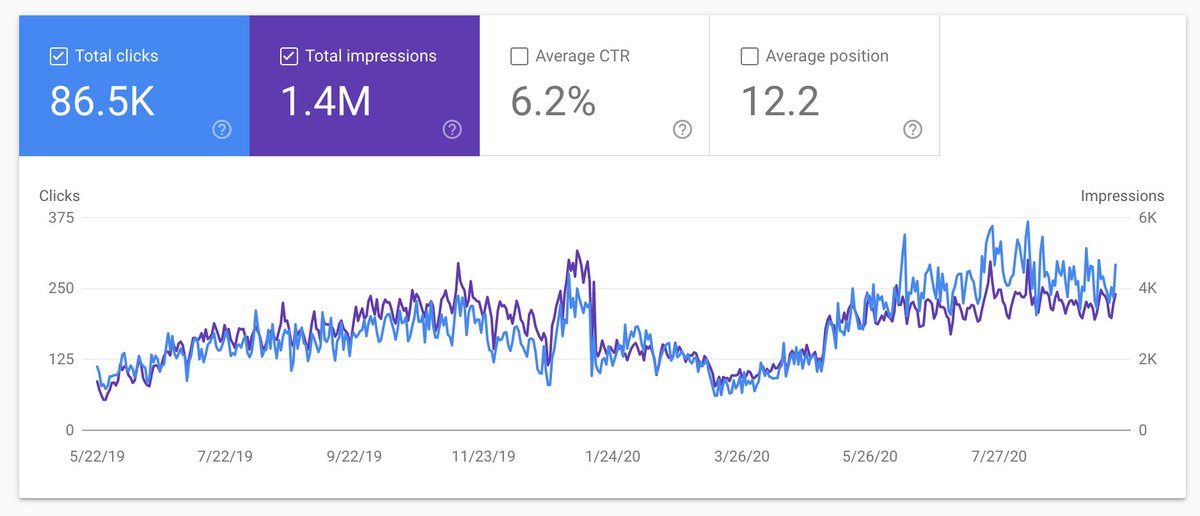
The business now generates more than $38,000/month, and only requires a few hours a week to maintain.
I quit my job two years in.
- Help other people you know, so you can learn new skills.
- Use those new skills to build products for other people.
- Continue adding value and building for a few years.
You now have these skills forever, and can continue to be an entrepreneur!
1. The 4-Hour Workweek
2. Deep Work
3. Atomic Habits
4. Zero to One
5. Think And Grow Rich
There's more, but I'll let you discover them.
Are there any other topics you want to have covered? Let me know 👇
https://t.co/O7gwa460Bx
https://t.co/GwyG6W0rFl
More from Jordan O'Connor

More from All











You May Also Like
![Peter McCormack [Jan/3\u279e\u20bf \U0001f511\u220e]](https://pbs.twimg.com/profile_images/1524287442307723265/_59ITDbJ_normal.jpg)

THREAD PART 1.
On Sunday 21st June, 14 year old Noah Donohoe left his home to meet his friends at Cave Hill Belfast to study for school. #RememberMyNoah💙

He was on his black Apollo mountain bike, fully dressed, wearing a helmet and carrying a backpack containing his laptop and 2 books with his name on them. He also had his mobile phone with him.
On the 27th of June. Noah's naked body was sadly discovered 950m inside a storm drain, between access points. This storm drain was accessible through an area completely unfamiliar to him, behind houses at Northwood Road. https://t.co/bpz3Rmc0wq
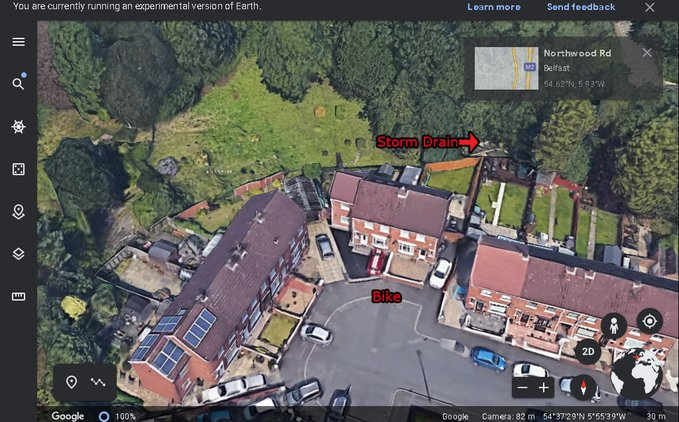
"Noah's body was found by specially trained police officers between two drain access points within a section of the tunnel running under the Translink access road," said Mr McCrisken."
Noah's bike was also found near a house, behind a car, in the same area. It had been there for more than 24 hours before a member of public who lived in the street said she read reports of a missing child and checked the bike and phoned the police.
On Sunday 21st June, 14 year old Noah Donohoe left his home to meet his friends at Cave Hill Belfast to study for school. #RememberMyNoah💙
He was on his black Apollo mountain bike, fully dressed, wearing a helmet and carrying a backpack containing his laptop and 2 books with his name on them. He also had his mobile phone with him.
On the 27th of June. Noah's naked body was sadly discovered 950m inside a storm drain, between access points. This storm drain was accessible through an area completely unfamiliar to him, behind houses at Northwood Road. https://t.co/bpz3Rmc0wq
"Noah's body was found by specially trained police officers between two drain access points within a section of the tunnel running under the Translink access road," said Mr McCrisken."
Noah's bike was also found near a house, behind a car, in the same area. It had been there for more than 24 hours before a member of public who lived in the street said she read reports of a missing child and checked the bike and phoned the police.

So the cryptocurrency industry has basically two products, one which is relatively benign and doesn't have product market fit, and one which is malignant and does. The industry has a weird superposition of understanding this fact and (strategically?) not understanding it.
The benign product is sovereign programmable money, which is historically a niche interest of folks with a relatively clustered set of beliefs about the state, the literary merit of Snow Crash, and the utility of gold to the modern economy.
This product has narrow appeal and, accordingly, is worth about as much as everything else on a 486 sitting in someone's basement is worth.
The other product is investment scams, which have approximately the best product market fit of anything produced by humans. In no age, in no country, in no city, at no level of sophistication do people consistently say "Actually I would prefer not to get money for nothing."
This product needs the exchanges like they need oxygen, because the value of it is directly tied to having payment rails to move real currency into the ecosystem and some jurisdictional and regulatory legerdemain to stay one step ahead of the banhammer.
If everyone was holding bitcoin on the old x86 in their parents basement, we would be finding a price bottom. The problem is the risk is all pooled at a few brokerages and a network of rotten exchanges with counter party risk that makes AIG circa 2008 look like a good credit.
— Greg Wester (@gwestr) November 25, 2018
The benign product is sovereign programmable money, which is historically a niche interest of folks with a relatively clustered set of beliefs about the state, the literary merit of Snow Crash, and the utility of gold to the modern economy.
This product has narrow appeal and, accordingly, is worth about as much as everything else on a 486 sitting in someone's basement is worth.
The other product is investment scams, which have approximately the best product market fit of anything produced by humans. In no age, in no country, in no city, at no level of sophistication do people consistently say "Actually I would prefer not to get money for nothing."
This product needs the exchanges like they need oxygen, because the value of it is directly tied to having payment rails to move real currency into the ecosystem and some jurisdictional and regulatory legerdemain to stay one step ahead of the banhammer.


