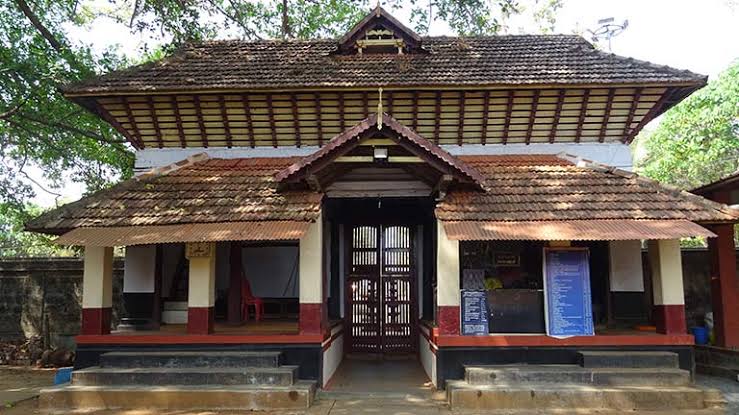
Imagine if you owned lavish office spaces.

You could earn lakhs as rent every month.

But it isn’t easy. Such properties cost crores.

You can, however, buy a part of them.

How? Through fractional real estate platforms (different from REITs).

A thread🧵

How does it work?

It starts with a company/platform identifying investable Grade A properties like commercial buildings or warehouses.

Such premium properties usually cost crores.

So, the company invites multiple investors to pool money.
After collecting money, the platform creates a Special Purpose Vehicle (SPV) to buy the property.

And the investors become shareholders in this SPV.

Examples of these companies/platforms include Strata, hBits, Property Share, etc.
How do these companies generate returns for investors? 🤔

There are two ways.

• One, they earn rent from the tenants, who are usually locked for a long-term lease.

• Two, capital appreciation from the property when they sell it.
What sort of returns can you expect?

Platforms like hBits and Strata promise 8-10% yearly rental returns on their listed assets.

Post capital appreciation, the overall average annual return they promise is 12-20% in the long term (typically 5 years).
Now, let’s discuss the cost.

They could be of two types:

One, you need to pay an asset management fee of around 1%.

Two, the platforms may take in a share of the profits if your returns exceed a particular number (hurdle rate).
A word of caution now.

This appealing investment option isn’t everybody’s cup of tea.

For most platforms, the minimum investment amount starts from Rs 25 lakh.

In addition, selling your investments won’t be easy.

Let’s understand why. ⬇️
To exit your investments, you need to find a buyer.

Now, these companies allow you to list your share of the property on their platform.

But there’s no guarantee that you will find one immediately.

So, liquidity can be a challenge.
There are several other risks that you need to know.

Like in the case of any property, fractional real estate ownership is exposed to risks like lease renewals, tenant defaulting on rent, occupancy challenges, etc.

Besides, there is no regulatory oversight.
How’s it different from REITs?

By now, you must have figured out several differences between the two.

You can check more details in the table below.
We have a detailed thread on REITs. You can read that as well. 🧵👇

https://t.co/nvuo43oOeQ
How to look at it?

Fractional real estate offers an alternative to diversify beyond mutual funds, stocks, bonds, gold, etc.

But do keep in mind the risks.

It makes sense to invest only when you already have a sizable portfolio of market-linked investments.
We put a lot of effort into creating such informative threads.

So, if you find this useful, show some love. ❤️

Please like, share, and retweet the first tweet.

For more threads, follow us.

Also, click on the bell icon in the profile section so you don't miss any threads.🔔

More from All

You May Also Like

I hate when I learn something new (to me) & stunning about the Jeff Epstein network (h/t MoodyKnowsNada.)

Where to begin?

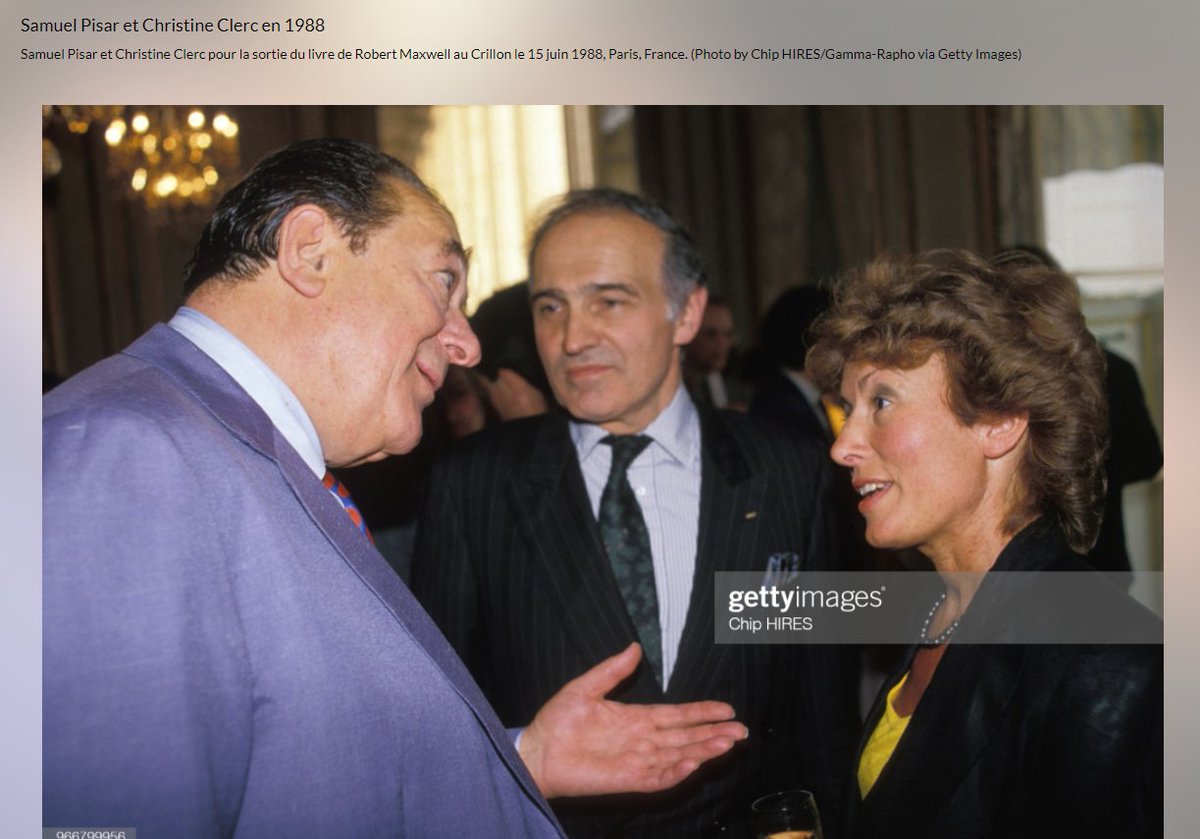
So our new Secretary of State Anthony Blinken's stepfather, Samuel Pisar, was "longtime lawyer and confidant of...Robert Maxwell," Ghislaine Maxwell's Dad.


"Pisar was one of the last people to speak to Maxwell, by phone, probably an hour before the chairman of Mirror Group Newspapers fell off his luxury yacht the Lady Ghislaine on 5 November, 1991."
https://t.co/DAEgchNyTP


OK, so that's just a coincidence. Moving on, Anthony Blinken "attended the prestigious Dalton School in New York City"...wait, what? https://t.co/DnE6AvHmJg

Dalton School...Dalton School...rings a

Oh that's right.

The dad of the U.S. Attorney General under both George W. Bush & Donald Trump, William Barr, was headmaster of the Dalton School.

Donald Barr was also quite a


I'm not going to even mention that Blinken's stepdad Sam Pisar's name was in Epstein's "black book."

Lots of names in that book. I mean, for example, Cuomo, Trump, Clinton, Prince Andrew, Bill Cosby, Woody Allen - all in that book, and their reputations are spotless.
The first ever world map was sketched thousands of years ago by Indian saint
“Ramanujacharya” who simply translated the following verse from Mahabharat and gave the world its real face

In Mahabharat,it is described how 'Maharishi Ved Vyasa' gave away his divine vision to Sanjay


Dhritarashtra's charioteer so that he could describe him the events of the upcoming war.

But, even before questions of war could begin, Dhritarashtra asked him to describe how the world looks like from space.

This is how he described the face of the world:

सुदर्शनं प्रवक्ष्यामि द्वीपं तु कुरुनन्दन। परिमण्डलो महाराज द्वीपोऽसौ चक्रसंस्थितः॥
यथा हि पुरुषः पश्येदादर्शे मुखमात्मनः। एवं सुदर्शनद्वीपो दृश्यते चन्द्रमण्डले॥ द्विरंशे पिप्पलस्तत्र द्विरंशे च शशो महान्।

—वेद व्यास, भीष्म पर्व, महाभारत


Meaning:-

हे कुरुनन्दन ! सुदर्शन नामक यह द्वीप चक्र की भाँति गोलाकार स्थित है, जैसे पुरुष दर्पण में अपना मुख देखता है, उसी प्रकार यह द्वीप चन्द्रमण्डल में दिखायी देता है। इसके दो अंशो मे पीपल और दो अंशो मे विशाल शश (खरगोश) दिखायी देता है।


Meaning: "Just like a man sees his face in the mirror, so does the Earth appears in the Universe. In the first part you see leaves of the Peepal Tree, and in the next part you see a Rabbit."

Based on this shloka, Saint Ramanujacharya sketched out the map, but the world laughed