1) Here is the thread about the Churches protested against:

- Vizhinjam Port
- Kudankulam Nuclear Plant
- Sterlite Copper Plant
- Bengaluru Metro Construction

Role of Churches in various protests across India should be investigated.

2) Vizhinjam Port:

Black flags hoisted in Churches of the Latin Archdiocese in Thiruvananthapuram.

Currently, Chruch is protesting against the Vizhinjam port in Kerala.
3) Vizhinjam Port:

Latin Catholic Church in Kerala is leading protest against Vizhinjam port.

Govt already agreed to five of the seven demands of protesters and also ready to discuss on other 2 demands.

But, Church is still using fishermen & people of villages for their agenda
4) Kudankulam Nuclear Power Plant in Tamil Nadu:

Most of the people who took part in the rally organised at Nagercoil were from the various Catholic parishes.

St. Lourdes Church premises at Idinthakarai was converted into protest venue.
5) Many churches urged the people to join protest against Kudankulam plant in Tamil Nadu

Kudankulam is highest-capacity nuclear plant in India, with 2,000 MW currently installed. Once completed, plant will have a capacity of 6,000 MW

Plant faced numerous delays due to protests
6) Sterlite Copper Plant:

Various churches protested. They used sunday as protest day.

Members of Catholic Fernandez community that lives in a settlement along Thoothukudi’s coast, marched to collector’s office from ‘Our Lady of Snows’ church.

Pastor Lazarus played major role.
7) Bengaluru Metro:

This is interesting.

Defence land was given to Church of South India (CSI) on lease.

CSI sold land to Bangalore Metro for ₹60 Cr.

'All Saints Church' protested against Metro construction asking to Save Trees.

And, CSI is parent body of All Saints Church.

More from All

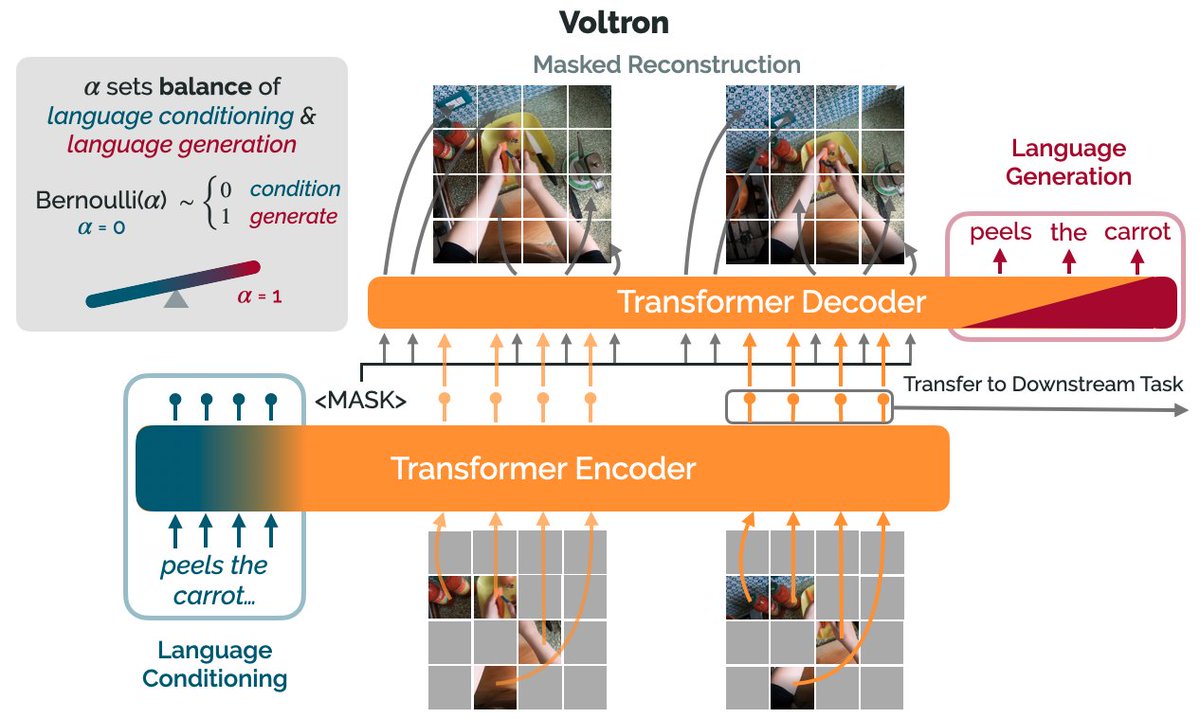
How can we use language supervision to learn better visual representations for robotics?

Introducing Voltron: Language-Driven Representation Learning for Robotics!

Paper: https://t.co/gIsRPtSjKz
Models: https://t.co/NOB3cpATYG
Evaluation: https://t.co/aOzQu95J8z

🧵👇(1 / 12)


Videos of humans performing everyday tasks (Something-Something-v2, Ego4D) offer a rich and diverse resource for learning representations for robotic manipulation.

Yet, an underused part of these datasets are the rich, natural language annotations accompanying each video. (2/12)

The Voltron framework offers a simple way to use language supervision to shape representation learning, building off of prior work in representations for robotics like MVP (
https://t.co/Pb0mk9hb4i) and R3M (https://t.co/o2Fkc3fP0e).

The secret is *balance* (3/12)

Starting with a masked autoencoder over frames from these video clips, make a choice:

1) Condition on language and improve our ability to reconstruct the scene.

2) Generate language given the visual representation and improve our ability to describe what's happening. (4/12)

By trading off *conditioning* and *generation* we show that we can learn 1) better representations than prior methods, and 2) explicitly shape the balance of low and high-level features captured.

Why is the ability to shape this balance important? (5/12)

You May Also Like

Master Thread of all my threads!

Hello!! 👋

• I have curated some of the best tweets from the best traders we know of.

• Making one master thread and will keep posting all my threads under this.

• Go through this for super learning/value totally free of cost! 😃

1. 7 FREE OPTION TRADING COURSES FOR


2. THE ABSOLUTE BEST 15 SCANNERS EXPERTS ARE USING

Got these scanners from the following accounts:

1. @Pathik_Trader
2. @sanjufunda
3. @sanstocktrader
4. @SouravSenguptaI
5. @Rishikesh_ADX


3. 12 TRADING SETUPS which experts are using.

These setups I found from the following 4 accounts:

1. @Pathik_Trader
2. @sourabhsiso19
3. @ITRADE191
4.


4. Curated tweets on HOW TO SELL STRADDLES.

Everything covered in this thread.
1. Management
2. How to initiate
3. When to exit straddles
4. Examples
5. Videos on
A brief analysis and comparison of the CSS for Twitter's PWA vs Twitter's legacy desktop website. The difference is dramatic and I'll touch on some reasons why.

Legacy site *downloads* ~630 KB CSS per theme and writing direction.

6,769 rules
9,252 selectors
16.7k declarations
3,370 unique declarations
44 media queries
36 unique colors
50 unique background colors
46 unique font sizes
39 unique z-indices

https://t.co/qyl4Bt1i5x


PWA *incrementally generates* ~30 KB CSS that handles all themes and writing directions.

735 rules
740 selectors
757 declarations
730 unique declarations
0 media queries
11 unique colors
32 unique background colors
15 unique font sizes
7 unique z-indices

https://t.co/w7oNG5KUkJ


The legacy site's CSS is what happens when hundreds of people directly write CSS over many years. Specificity wars, redundancy, a house of cards that can't be fixed. The result is extremely inefficient and error-prone styling that punishes users and developers.

The PWA's CSS is generated on-demand by a JS framework that manages styles and outputs "atomic CSS". The framework can enforce strict constraints and perform optimisations, which is why the CSS is so much smaller and safer. Style conflicts and unbounded CSS growth are avoided.