This is Robert. He started a business in NYC with zero money. 10 years ago he began waiting in long lines for rich people. But then Robert did something very special...

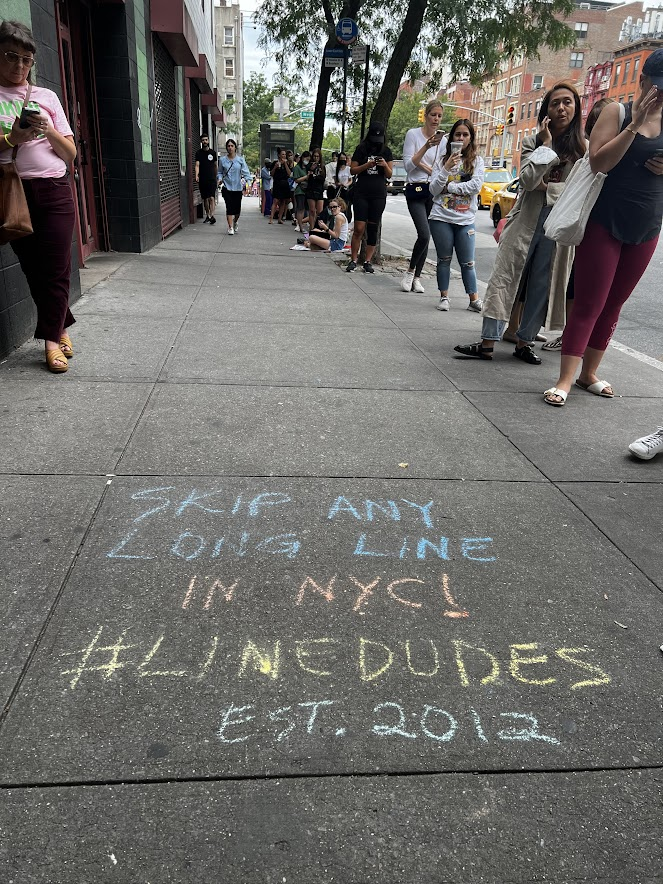
I just learned about Robert and his business today. I saw this HUGE line of attractive women all along Houston Street in Manhattan. What is going on??
They are all waiting to access the @UllaJohnsonInc sample sale. Their floral and pattern dresses are usually expensive. But-
back to Robert. He was waiting in lines for people to buy Cronuts at first. Cronuts were a craze 10 years ago: part croissant and part doughnut. Robert waited in the line himself and would charge $25 per hour for a minimum of 2 hours
Rich people loved it: Robert would wait in line for 2 hours. Then he would text them when he was near the front of the line. His customers would walk right up to the front of the line. It was a nice little job he made for himself. But how to grow it?
Robert expanded his services. He helped people to buy iPhones, theater tickets, or sneakers. Waiting in lines and charging for the spot is not a new idea. But then Robert did something different...
here's what he did to explode his business: he added some simple branding. He called his company "LINE DUDES" and hired his friends to wear his swag. Then he would write in chalk outside the long lines advertising his services. He made small posters, too, like these
Today Robert has one of the largest line-holding svcs in NYC. I met him and his team this morning. I think his company is pretty cool! Much respect to Robert and the business he is building 💪
You can hire Robert at +1-347-744-WAIT or see his website at https://t.co/cNjYlacd0o
Find Robert and his company on Twitter at @sold_inc and see more photos of the huge line they worked today for several customers on my Instagram Story here https://t.co/3Nf3QD2dNF

More from All

🌺श्री गरुड़ पुराण - संक्षिप्त वर्णन🌺

हिन्दु धर्म के 18 पुराणों में से एक गरुड़ पुराण का हिन्दु धर्म में बड़ा महत्व है। गरुड़ पुराण में मृत्यु के बाद सद्गती की व्याख्या मिलती है। इस पुराण के अधिष्ठातृ देव भगवान विष्णु हैं, इसलिए ये वैष्णव पुराण है।


गरुड़ पुराण के अनुसार हमारे कर्मों का फल हमें हमारे जीवन-काल में तो मिलता ही है परंतु मृत्यु के बाद भी अच्छे बुरे कार्यों का उनके अनुसार फल मिलता है। इस कारण इस पुराण में निहित ज्ञान को प्राप्त करने के लिए घर के किसी सदस्य की मृत्यु के बाद का समय निर्धारित किया गया है...

..ताकि उस समय हम जीवन-मरण से जुड़े सभी सत्य जान सकें और मृत्यु के कारण बिछडने वाले सदस्य का दुख कम हो सके।
गरुड़ पुराण में विष्णु की भक्ति व अवतारों का विस्तार से उसी प्रकार वर्णन मिलता है जिस प्रकार भगवत पुराण में।आरम्भ में मनु से सृष्टि की उत्पत्ति,ध्रुव चरित्र की कथा मिलती है।


तदुपरांत सुर्य व चंद्र ग्रहों के मंत्र, शिव-पार्वती मंत्र,इन्द्र सम्बंधित मंत्र,सरस्वती मंत्र और नौ शक्तियों के बारे में विस्तार से बताया गया है।
इस पुराण में उन्नीस हज़ार श्लोक बताए जाते हैं और इसे दो भागों में कहा जाता है।
प्रथम भाग में विष्णुभक्ति और पूजा विधियों का उल्लेख है।

मृत्यु के उपरांत गरुड़ पुराण के श्रवण का प्रावधान है ।
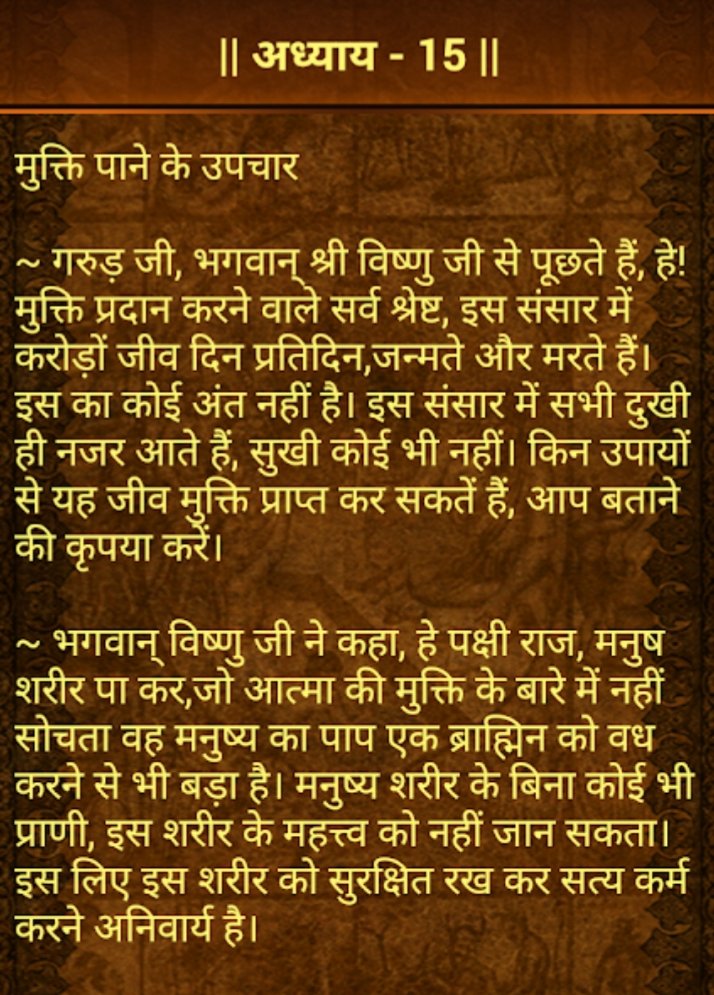
पुराण के द्वितीय भाग में 'प्रेतकल्प' का विस्तार से वर्णन और नरकों में जीव के पड़ने का वृत्तांत मिलता है। मरने के बाद मनुष्य की क्या गति होती है, उसका किस प्रकार की योनियों में जन्म होता है, प्रेत योनि से मुक्ति के उपाय...

You May Also Like

I just finished Eric Adler's The Battle of the Classics, and wanted to say something about Joel Christiansen's review linked below. I am not sure what motivates the review (I speculate a bit below), but it gives a very misleading impression of the book. 1/x


The meat of the criticism is that the history Adler gives is insufficiently critical. Adler describes a few figures who had a great influence on how the modern US university was formed. It's certainly critical: it focuses on the social Darwinism of these figures. 2/x

Other insinuations and suggestions in the review seem wildly off the mark, distorted, or inappropriate-- for example, that the book is clickbaity (it is scholarly) or conservative (hardly) or connected to the events at the Capitol (give me a break). 3/x

The core question: in what sense is classics inherently racist? Classics is old. On Adler's account, it begins in ancient Rome and is revived in the Renaissance. Slavery (Christiansen's primary concern) is also very old. Let's say classics is an education for slaveowners. 4/x

It's worth remembering that literacy itself is elite throughout most of this history. Literacy is, then, also the education of slaveowners. We can honor oral and musical traditions without denying that literacy is, generally, good. 5/x