The Chanting of following names of Bhagwan Vishnu, immensely helps us in overcoming the obstacles in our daily life.
These names are from Sri Vishnu Sahasranama!
|. "Om Vashatkaaraaya Namaha" : For Success in Business.
||. "Om Aksharaaya Namaha" : For Success in Studies.
|||. "Om Bhuthabhavanaya Namaha" : For Good Health.
|V. "Om Paramaathmane Namaha" : For Self Confidence.
Src: VAK magazine from Chilkur Balaji Temple, Hyderabad - Sri @csranga
#SanatanaDharma #SanatanaSanskriti #Sattology
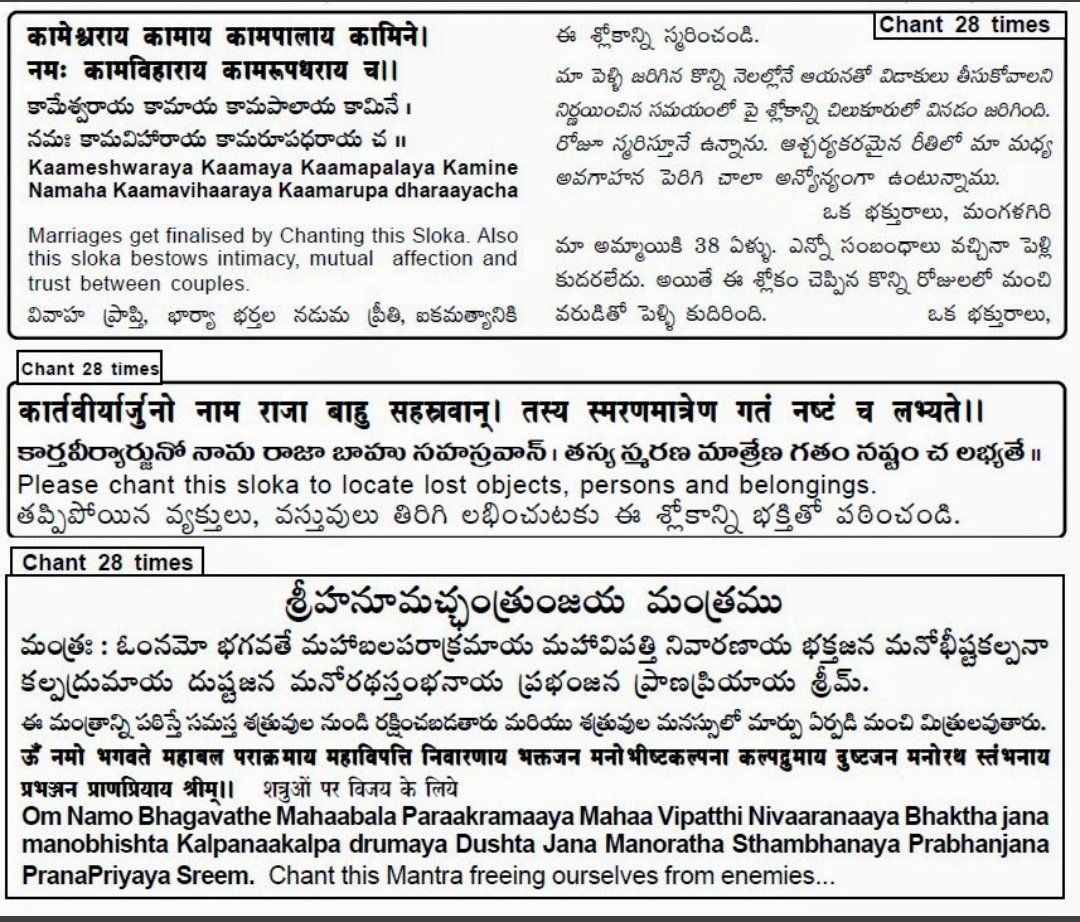
One needs to chant the following slokas 28 times to get rid of certain problems in life.
Om Hrushikesaya Namah - For Overcoming Bad habits
Om Vashatkaaraya Namah - For Success in Business, Interviews, visa interviews, building relationships
Om Srimate Namah - For Handsome appearance & wealth
Om Aksharaya Namah - For Education & better financial strength
Om Paramatmane Namah - For self employed people, for promotions and success in games.
Om Putatmane Namah - To remove mental stress & for mental peace
Om Sarmane Namah - For Job Satisfaction
Om Bhutadaye Namah -To amend soured friendship or any personal relationship
Om Dhatre Namah - For issueless couple
Om vidhatre Namah - Pregnant Ladies to Chant for healthy babies.
Chant the following 108 times :