Of Men, Mice & Languages!

Inspired by the thread below, I am pleased to share the fruits of my labour!😀

Presenting my AMT - Aryan Mouse Theory*!

आर्यमिश्रान् विज्ञापयामि अस्मिन् विषये।

While this may seem in jest, the data👇🏼shown is all valid

[*channeling my inner Witzel}

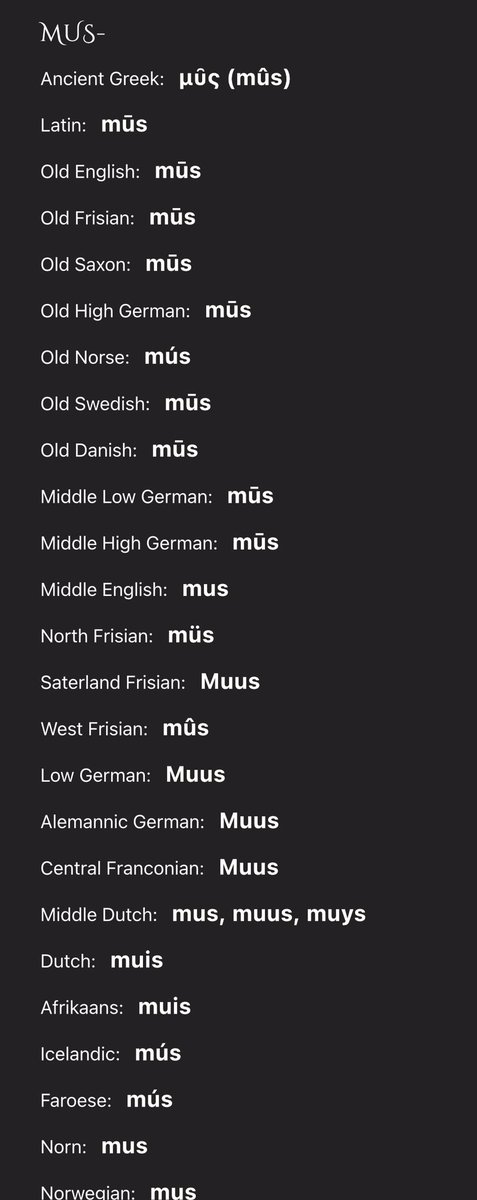
As the screenshot shows, the word for Mouse is remarkably conserved across multiple languages

German - Maus
Dutch - Muis
Swedish - Musen
Russian - myš’
Czech - Myš
Polish - Mysz
Bulgarian - miškata
Slovenian - Miška

Samskritam मूषिकः । Mushika | Mushaka
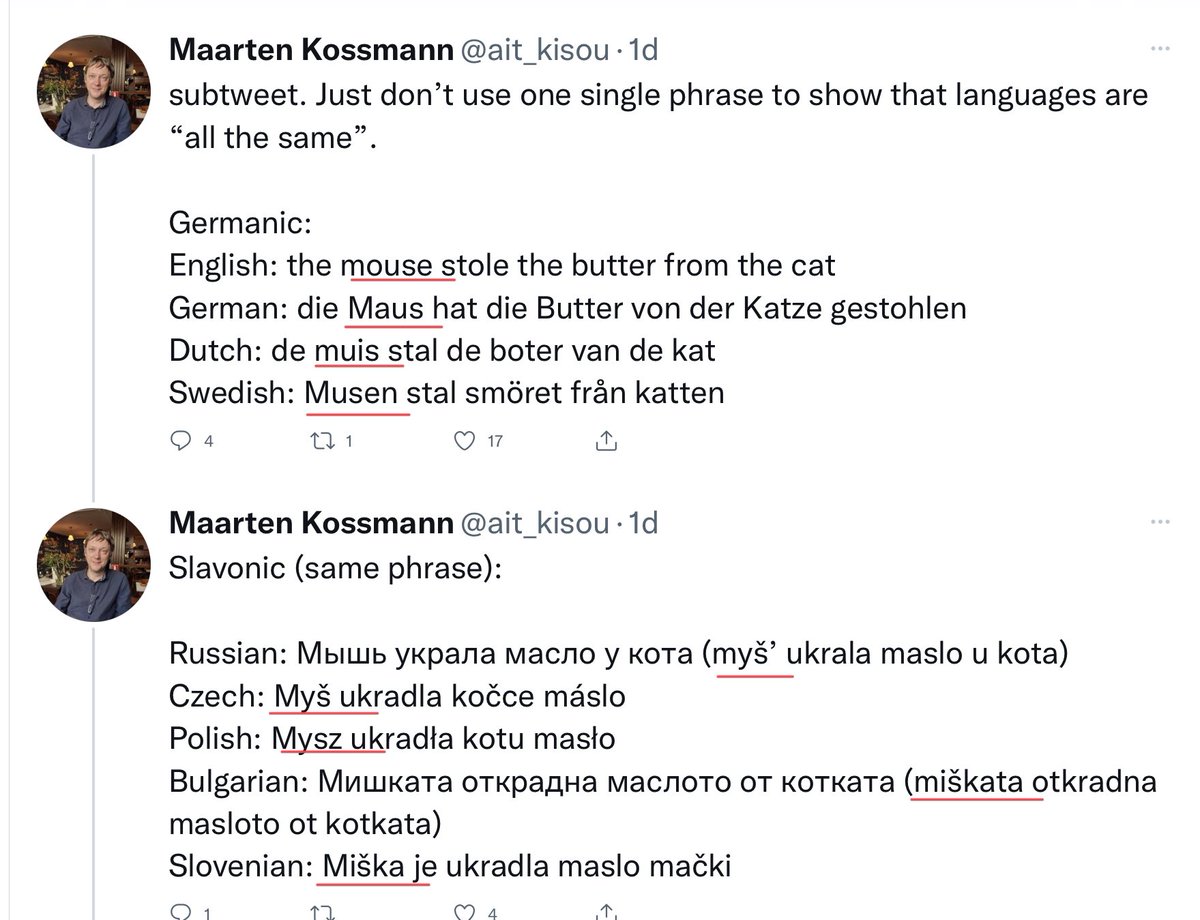
Here is a list of 70+ languages with the word for ‘Mouse’

In fact, total list may be 100+ languages!

Quite remarkable!

But why?

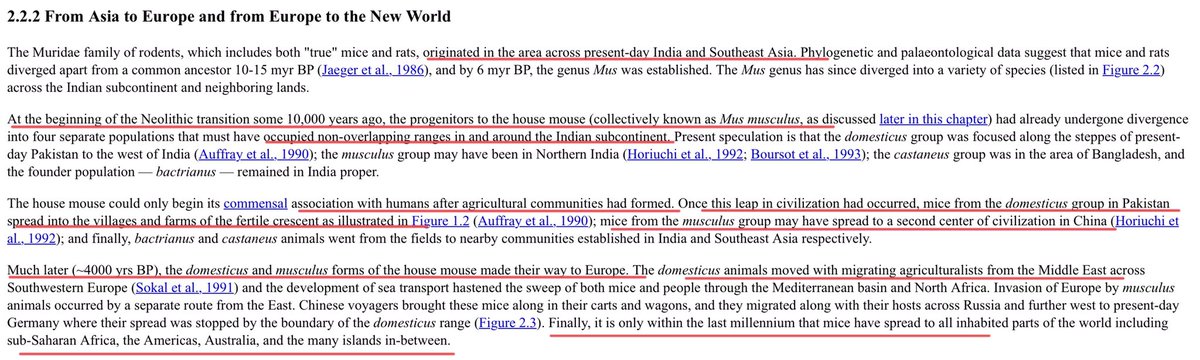
Mice & humans in fact, go a long way back

The history of origin & spread of Mouse is an important clue to the spread of human beings & languages
१ Mice originated in India & SEA

२ 10,000 years ago had split to 4 populations with non-overlapping range in India

३ Mouse started commensalism only after agricultural communities started

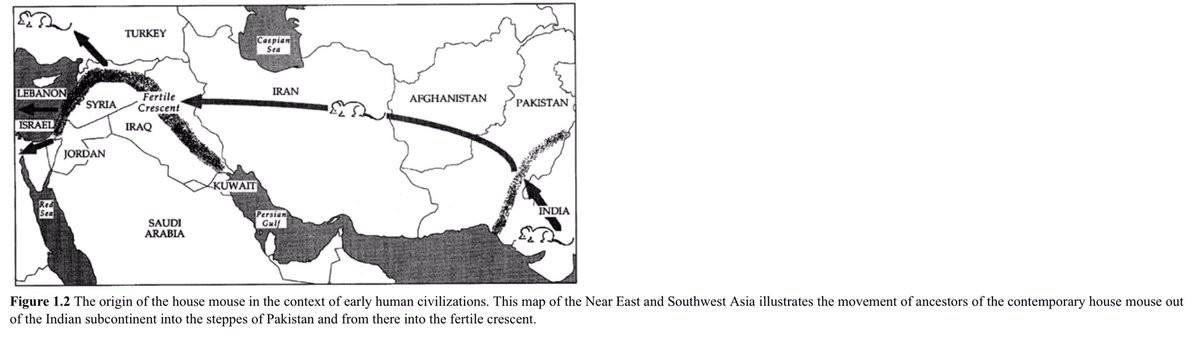
४ domesticus spread to fertile crescent

५ musculus spread to China

६ 4000 BP ->Europe
This is the map highlighting the spread of mice
Now if Mouse originated in India, what is the Samskritam etymology for मूषिक or मूषक?

It originates from मुष - a “thief”, someone who steals grains & food!

मूष्णाति द्रव्याणि इति। Steals things😀

मूष् in Paninian धातुः (word root) system comes from मुषँ स्तेये।

स्तेन->steal
Let us ask ourselves, how old is the Samskrita word मूषक for Mouse?

Very ancient!

In fact, it is mentioned in the Rg Veda

“As mice eat threads”!
Mice मूषिकः are also mentioned in abundance across ancient Indian texts

Texts that are clearly prior to 500 BCE

Ramayanam, Mahabharatam, SusrutaSamhita etc
Mice is a commensal {2 species living together where 1 benefits (mice) & other may/may not benefit}

Mice & agricultural communities go together

Since mice originated in India, its important to understand origins of Indian agriculture

India shows agriculture from 9000BCE!
So beginnings of Indian agriculture is intimately connected with commensalism of mice

It is likely that original Indian farming communities were the first to give the name मूषक to “mouse” given the stealing skills they experienced first hand!

Where Indians went, mice also went
And how does ARYA come in all of this?

The संस्कृतम् word Arya originates from ऋ गतौ (to go, flow etc)

It means cultured/noble

It is also connected to ‘Cultivate/Agriculture/Irrigation’ etc.

In fact one of the meanings for Arya is Trader/Farmer!

अर्यः = वैश्यः।कृषकः।
@sudarshanhs & @BhattaPN have discussed words originating from ऋ गतौ incl. आर्य।अर्य।ऋतम्।इरिणम्।

Many pundits have written about Arya & Agriculture/Trading

Sediyapu Krishna Bhat’s theory on the connection between Arya & Agriculture {‘Arable’} 👇🏼

https://t.co/6AzIWoT0SP
@vakibs has written about his theory of how agriculture & irrigation is connected to the notion of Arya / civilization / nobility which is broadly similar to Shri Bhatt’s ideas https://t.co/187lmwRPK9
So agriculture & civilization gave rise to “Aryas” & also led to mice being fellow-travellers with humans

Direction of movement of mice is OUT OF INDIA & follows human migration patterns

मूषिकः is a conserved word across many languages

मूषिक is attested in Rg Veda
Farmers evolved to trading

Shreshta/Traders are also Arya

India had a trading culture right from Sarswati Sindhu Civilization days

So it is highly likely that मूषिक, the global template word for mouse, originated in India

As Indians expanded, both mice & language went along
The origin & spread of मूषिक, the ‘species’ as well as the ‘word’ is thus an important clue to direction of human migration & language spread

Hence, its time to consider alternate models also to understand how we came to be..

The REAL Aryan Migration Theory 😀

शुभमस्तु।🙏🏼

More from All

Master Thread of all my threads!

Hello!! 👋

• I have curated some of the best tweets from the best traders we know of.

• Making one master thread and will keep posting all my threads under this.

• Go through this for super learning/value totally free of cost! 😃

1. 7 FREE OPTION TRADING COURSES FOR


2. THE ABSOLUTE BEST 15 SCANNERS EXPERTS ARE USING

Got these scanners from the following accounts:

1. @Pathik_Trader
2. @sanjufunda
3. @sanstocktrader
4. @SouravSenguptaI
5. @Rishikesh_ADX


3. 12 TRADING SETUPS which experts are using.

These setups I found from the following 4 accounts:

1. @Pathik_Trader
2. @sourabhsiso19
3. @ITRADE191
4.


4. Curated tweets on HOW TO SELL STRADDLES.

Everything covered in this thread.
1. Management
2. How to initiate
3. When to exit straddles
4. Examples
5. Videos on

You May Also Like

A brief analysis and comparison of the CSS for Twitter's PWA vs Twitter's legacy desktop website. The difference is dramatic and I'll touch on some reasons why.

Legacy site *downloads* ~630 KB CSS per theme and writing direction.

6,769 rules
9,252 selectors
16.7k declarations
3,370 unique declarations
44 media queries
36 unique colors
50 unique background colors
46 unique font sizes
39 unique z-indices

https://t.co/qyl4Bt1i5x


PWA *incrementally generates* ~30 KB CSS that handles all themes and writing directions.

735 rules
740 selectors
757 declarations
730 unique declarations
0 media queries
11 unique colors
32 unique background colors
15 unique font sizes
7 unique z-indices

https://t.co/w7oNG5KUkJ


The legacy site's CSS is what happens when hundreds of people directly write CSS over many years. Specificity wars, redundancy, a house of cards that can't be fixed. The result is extremely inefficient and error-prone styling that punishes users and developers.

The PWA's CSS is generated on-demand by a JS framework that manages styles and outputs "atomic CSS". The framework can enforce strict constraints and perform optimisations, which is why the CSS is so much smaller and safer. Style conflicts and unbounded CSS growth are avoided.