For a very long time we had heard that Mahmud Ghazni attacked India from 1001 AD- 1027 AD but DO YOU KNOW ?

It was Maharaja Jayapala of Hindu Shahi Dynasty who decided to invade Ghazni twice.

During the period of 870 CE the Hindu Shahi lost Kabul and were forced to retreat. This temporary loss of the great Hindu Shahi kingdom was the beginning of another chapter in the medieval history of the Indian Sub-continent.
The introduction of the Turk warlords completely changed the mentality and the conduct of war. The establishment of this new Muslim Turk authority in Ghazni completely changed the policy of the Muslims.
Under the Turks,the raids on the Hindu Shahi’s and later on northern India became even more aggressive and lethal. The first Hindu king who faced this wave of the Turks was Jayapala, who fought till his last breath in order to protect his kingdom of people.
The Hindu Shahi after 870 CE transferred their capital to Udabhandapura as they had suffered heavy losses from the war against the Arabs and also from the defeat they suffered from a Turkish leader Yaqub ibn Layth.
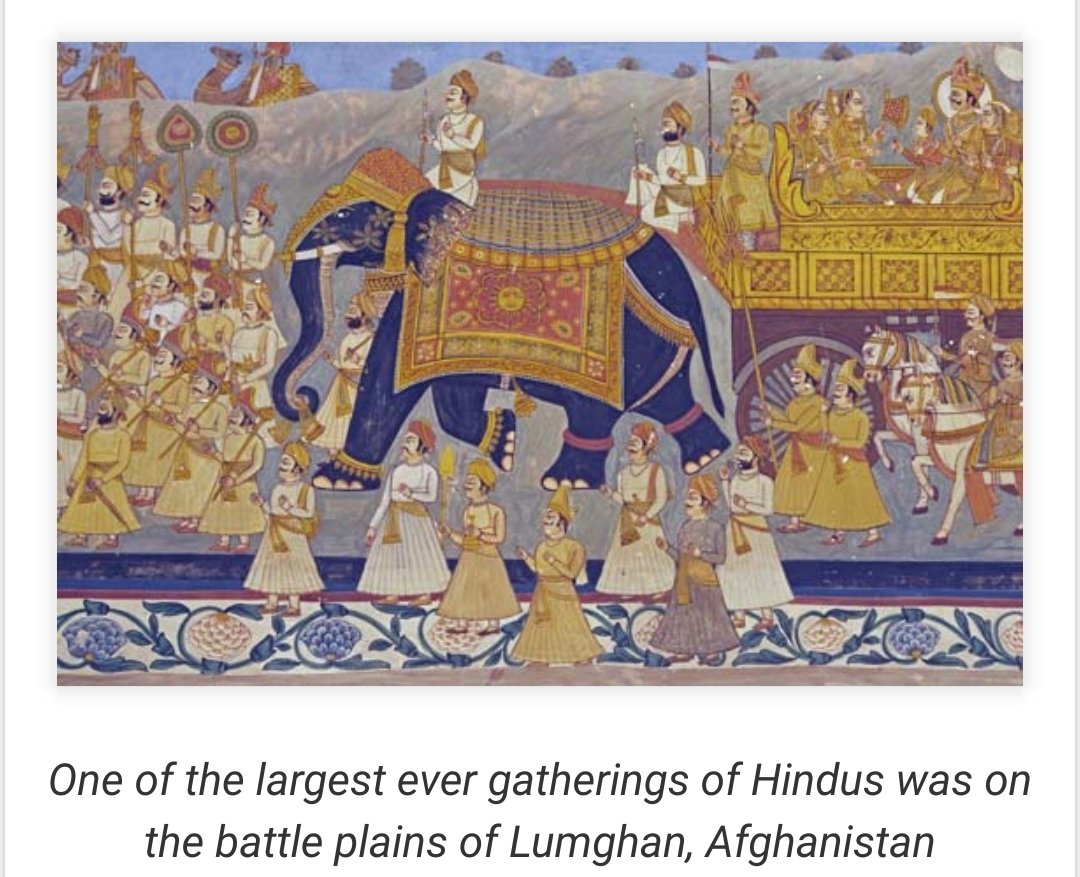
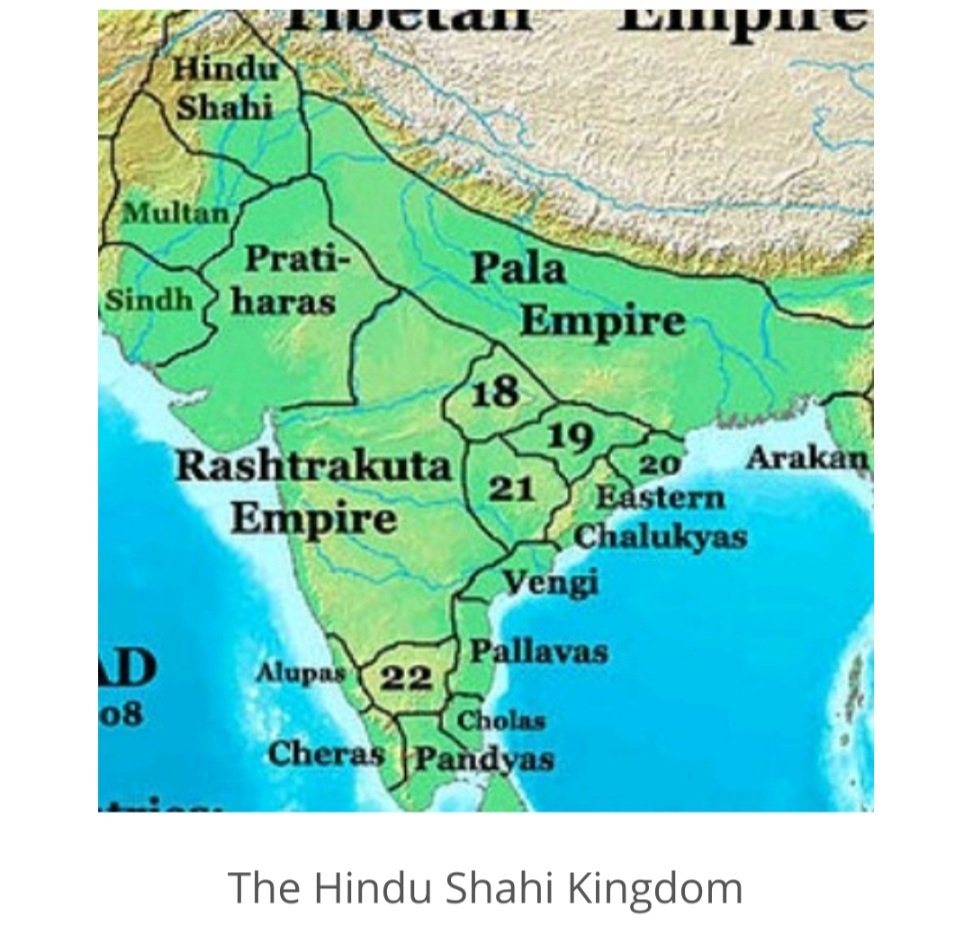
HinduShahi kingdom under Maharaj Jayapal was stretched from Sirhind to Lumghan &Kashmir to Multan.
A historian named Minhaj-i-Siraj calls Jayapal the greatest kings of Hindustan.He also adds that he is in a very powerful state whose army was more numerous than the stars of heaven
Initially there was a temporary alliance between King Jayapala and Alpatgin’s general Subuktigin. But when the latter became the ruler of Ghazni, he broke the alliance and decided to invade the territories of Jayapala through frequent raids.
But king Jayapala was aware of this rising threat and before Subuktigin could raid his territory, the former assembled an army of almost all of his fellow allies and prepared to invade the strong hold of Subuktigin Ghazni.
This plan of raiding the territory of the powerful Turks, who were not only superior in arms, cavalry logistics but, were ruthless warriors too was the bravest decision ever taken by a Hindu king.
The invasion or raid on Ghazni took place somewhere in 986-87 CE.
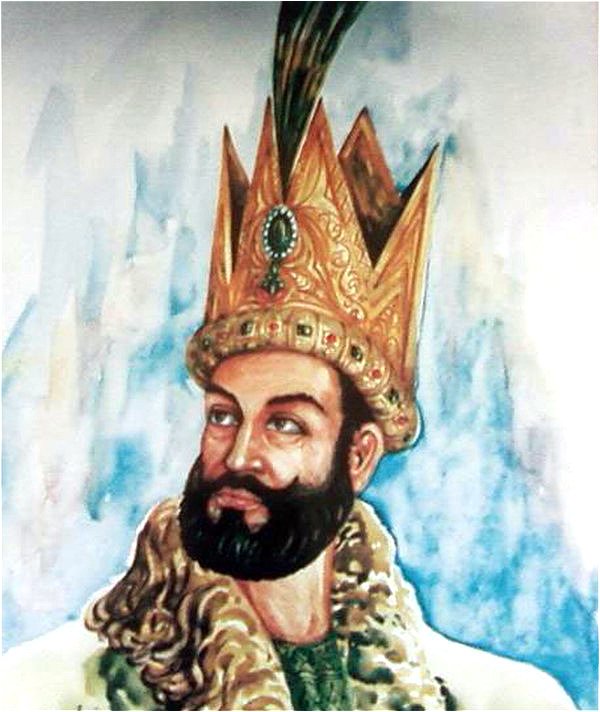
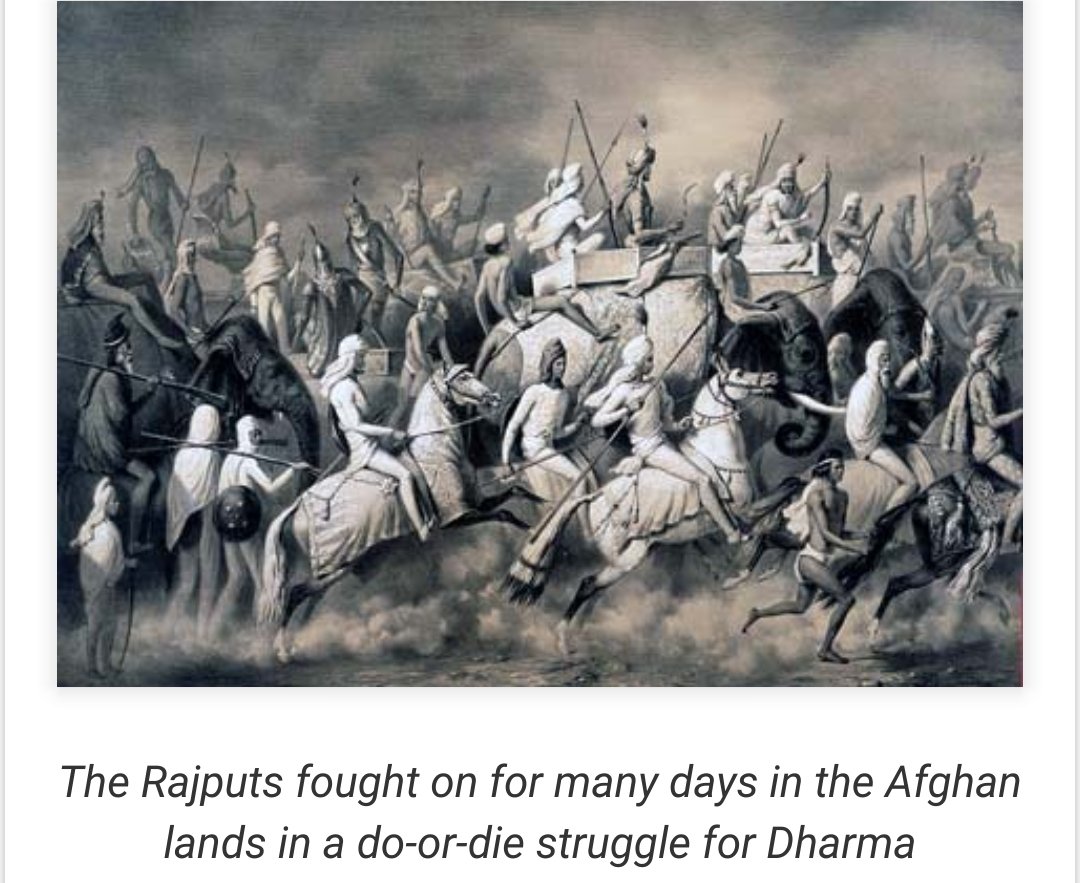
The battle lasted for several days and the Hindu army of Jayapala were able to secure the upper hand in the battle. According to al-Utbi the Turkish army of Subuktigin, including the young prince Mahmud (Mahmud Ghazni) were reduced to despair.
But a snowstorm & inhospitable weather completely changed the course & the outcome of the battle.Due to the storm the army of Jayapala which was fighting far from their homeland decided to settle for peace.Temporary peace was established between the Hindu Shahi & the Ghaznavids.
But after witnessing this invasion Subuktigin was well aware of the threat. To suppress his enemy , he started raiding the territories of Lamghan of Shahi kingdom.

In return, Jayapala decided to organize a united hindu front against Subuktigin.
The neighboring kings of Chahvans, Chandelas, and Tomars organized their armies to help Jayapala. This was the last hope of the Indians to crush the Turks once and for all. The two armies then met on the fields of Lamghan.
Shahi army had a united front but against the superior Turkish Cavalry, it was helpless.With the military capability of Subuktigin and their fierce cavalry,the battle resulted in the defeat of the Shahis after a fierce battle and the territory of Lamghan was annexed by the Turks.
After this battle the conflict between Shahis & Ghznavids continued for almost two decades.Mahmud rose to throne of Ghazni in 998CE &in 1001CE he invaded Peshawar.

Although alone&helpless but full of indomitable courage king Jayapala decided to stop the advance of Mahmud Ghazni
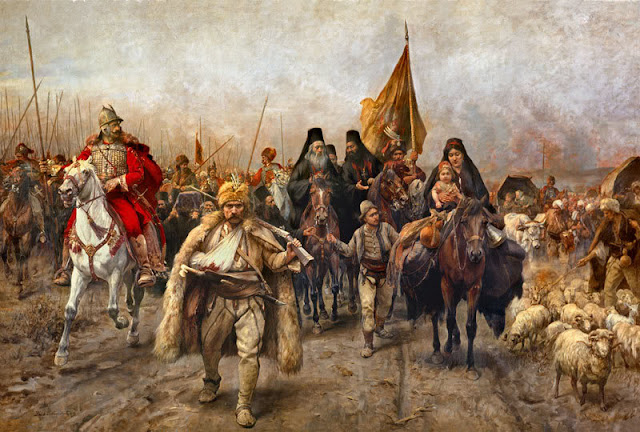
Although prior to this battle Jayapala didn’t get enough time to mobilize his army in front of Mahmud, whose army was more than him.  Jayapala’s army consisted of 12,000 cavalry, 30,000 infantry and about 200-300 war elephants.
The battle resulted in the defeat of the Shahi king and he along with his family members was taken captive. But after some time Jayapala was released by Mahmud in exchange of 50 war elephants.
But Jayapala, after his captivity at the hands of the idol breaker, who didn’t have any respect for Hindus and was only focusing on plundering cities & temples considered himself unworthy of the throne and declared that he had failed in protecting his kingdom from the Mlecchas.
He ordered a funeral pile and set fire to it and attained martyrdom.

However, the struggle against the Ghaznavids was continued by his successor Anandpala and Trilochanapala for almost two more decades.
Such is the glory of our great, fierce and valiant Hindu Kings and Queens, for whom surrender was never an option and who preferred to die rather than surrendering.

More from Vibhu Vashisth 🇮🇳
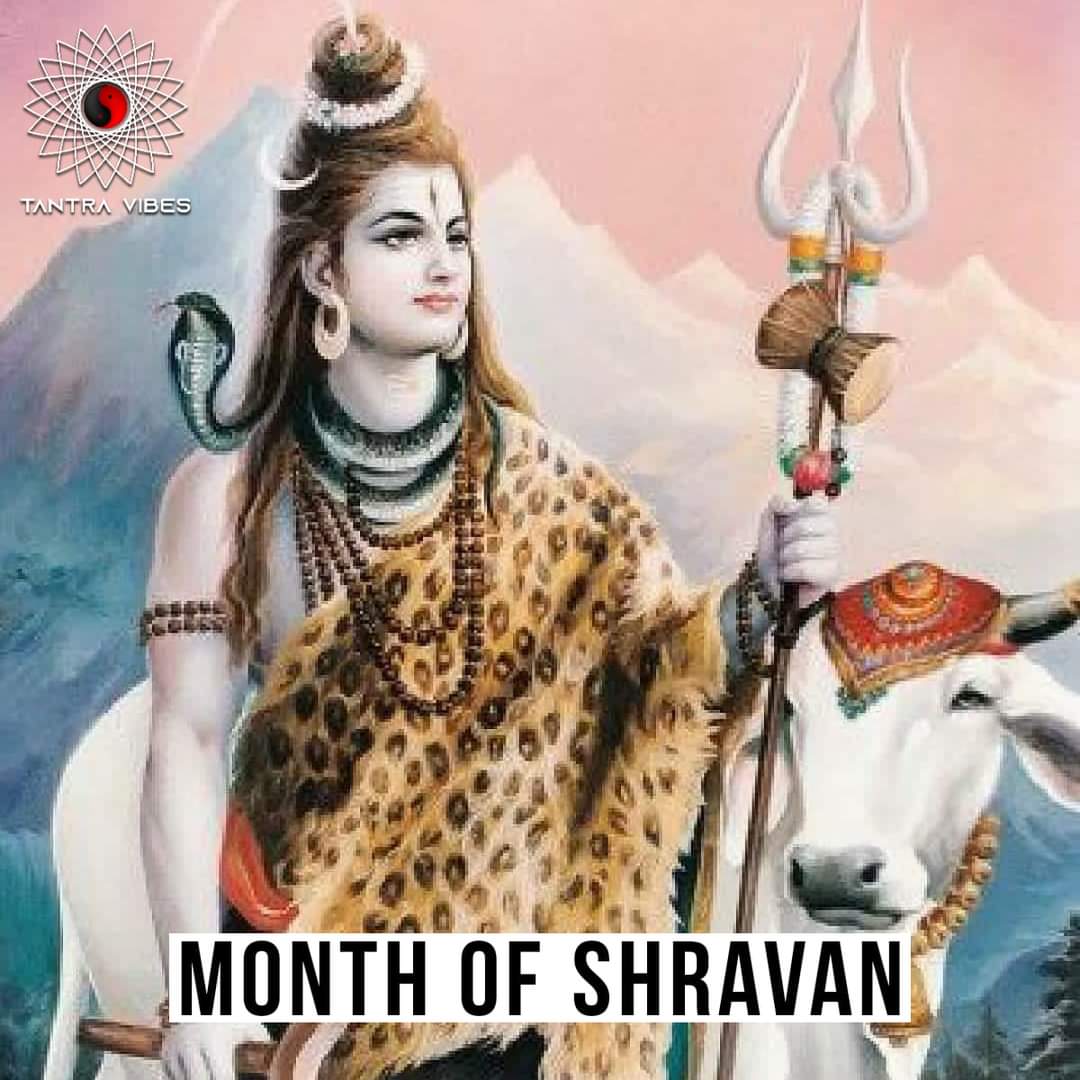
🌺श्री गरुड़ पुराण - संक्षिप्त वर्णन🌺

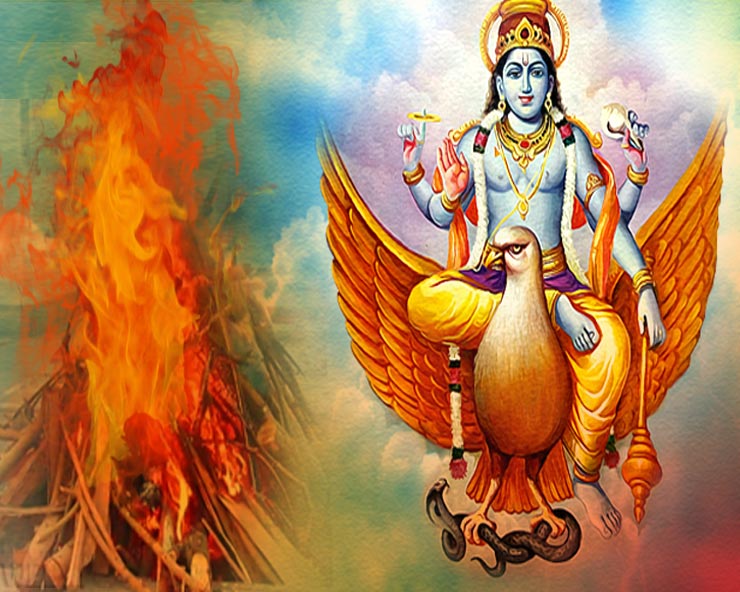
हिन्दु धर्म के 18 पुराणों में से एक गरुड़ पुराण का हिन्दु धर्म में बड़ा महत्व है। गरुड़ पुराण में मृत्यु के बाद सद्गती की व्याख्या मिलती है। इस पुराण के अधिष्ठातृ देव भगवान विष्णु हैं, इसलिए ये वैष्णव पुराण है।


गरुड़ पुराण के अनुसार हमारे कर्मों का फल हमें हमारे जीवन-काल में तो मिलता ही है परंतु मृत्यु के बाद भी अच्छे बुरे कार्यों का उनके अनुसार फल मिलता है। इस कारण इस पुराण में निहित ज्ञान को प्राप्त करने के लिए घर के किसी सदस्य की मृत्यु के बाद का समय निर्धारित किया गया है...

..ताकि उस समय हम जीवन-मरण से जुड़े सभी सत्य जान सकें और मृत्यु के कारण बिछडने वाले सदस्य का दुख कम हो सके।
गरुड़ पुराण में विष्णु की भक्ति व अवतारों का विस्तार से उसी प्रकार वर्णन मिलता है जिस प्रकार भगवत पुराण में।आरम्भ में मनु से सृष्टि की उत्पत्ति,ध्रुव चरित्र की कथा मिलती है।


तदुपरांत सुर्य व चंद्र ग्रहों के मंत्र, शिव-पार्वती मंत्र,इन्द्र सम्बंधित मंत्र,सरस्वती मंत्र और नौ शक्तियों के बारे में विस्तार से बताया गया है।
इस पुराण में उन्नीस हज़ार श्लोक बताए जाते हैं और इसे दो भागों में कहा जाता है।
प्रथम भाग में विष्णुभक्ति और पूजा विधियों का उल्लेख है।

मृत्यु के उपरांत गरुड़ पुराण के श्रवण का प्रावधान है ।
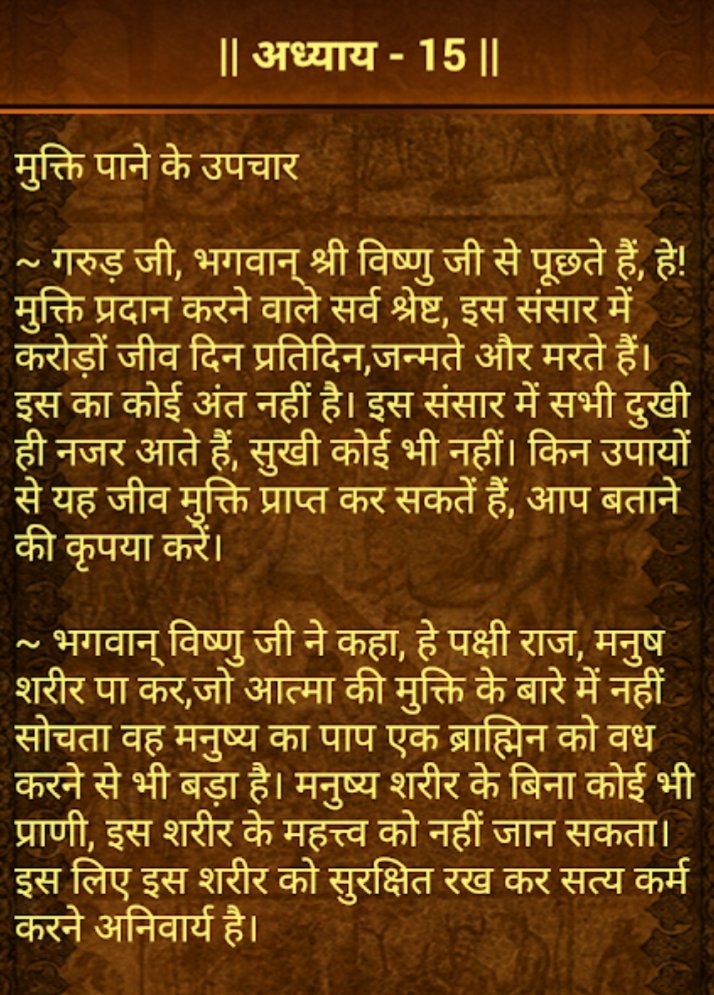
पुराण के द्वितीय भाग में 'प्रेतकल्प' का विस्तार से वर्णन और नरकों में जीव के पड़ने का वृत्तांत मिलता है। मरने के बाद मनुष्य की क्या गति होती है, उसका किस प्रकार की योनियों में जन्म होता है, प्रेत योनि से मुक्ति के उपाय...

More from All

॥ॐ॥
अस्य श्री गायत्री ध्यान श्लोक:
(gAyatri dhyAna shlOka)
• This shloka to meditate personified form of वेदमाता गायत्री was given by Bhagwaan Brahma to Sage yAgnavalkya (याज्ञवल्क्य).

• 14th shloka of गायत्री कवचम् which is taken from वशिष्ठ संहिता, goes as follows..


• मुक्ता-विद्रुम-हेम-नील धवलच्छायैर्मुखस्त्रीक्षणै:।
muktA vidruma hEma nIla dhavalachhAyaiH mukhaistrlkShaNaiH.

• युक्तामिन्दुकला-निबद्धमुकुटां तत्वार्थवर्णात्मिकाम्॥
yuktAmindukalA nibaddha makutAm tatvArtha varNAtmikam.

• गायत्रीं वरदाभयाङ्कुश कशां शुभ्रं कपालं गदाम्।
gAyatrIm vardAbhayANkusha kashAm shubhram kapAlam gadAm.

• शंखं चक्रमथारविन्दयुगलं हस्तैर्वहन्ती भजै॥
shankham chakramathArvinda yugalam hastairvahantIm bhajE.

This shloka describes the form of वेदमाता गायत्री.

• It says, "She has five faces which shine with the colours of a Pearl 'मुक्ता', Coral 'विद्रुम', Gold 'हेम्', Sapphire 'नील्', & a Diamond 'धवलम्'.

• These five faces are symbolic of the five primordial elements called पञ्चमहाभूत:' which makes up the entire existence.

• These are the elements of SPACE, FIRE, WIND, EARTH & WATER.

• All these five faces shine with three eyes 'त्रिक्षणै:'.
How can we use language supervision to learn better visual representations for robotics?

Introducing Voltron: Language-Driven Representation Learning for Robotics!

Paper: https://t.co/gIsRPtSjKz
Models: https://t.co/NOB3cpATYG
Evaluation: https://t.co/aOzQu95J8z

🧵👇(1 / 12)
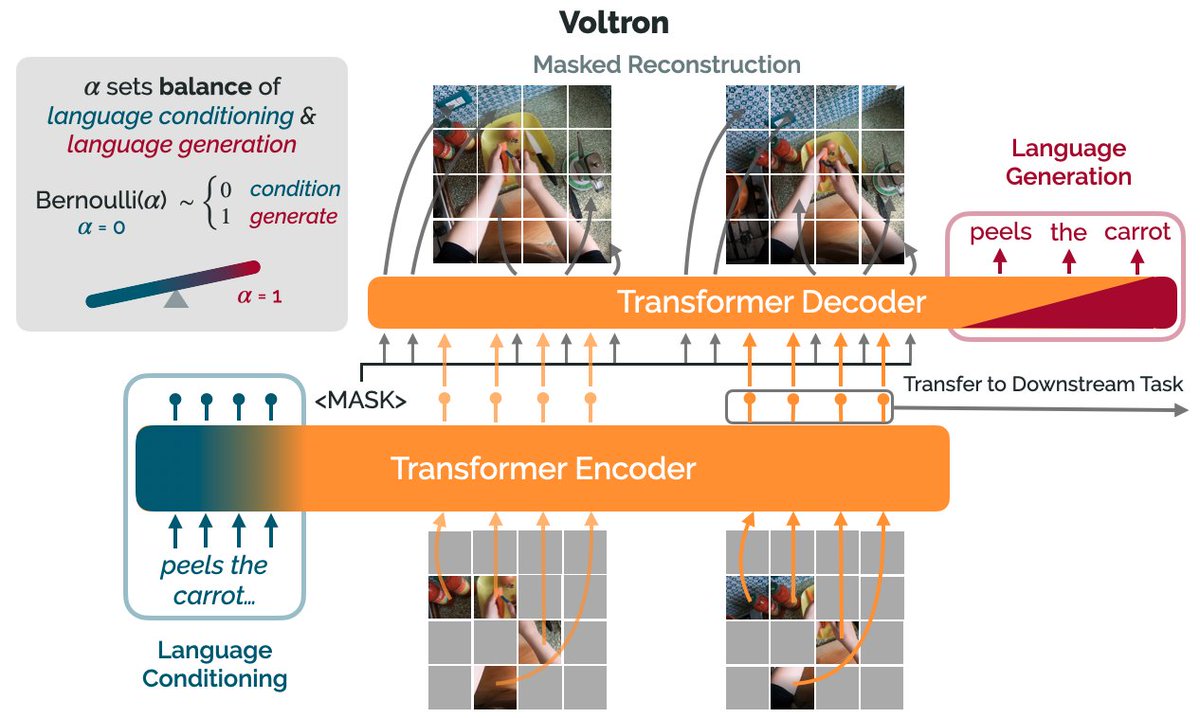

Videos of humans performing everyday tasks (Something-Something-v2, Ego4D) offer a rich and diverse resource for learning representations for robotic manipulation.

Yet, an underused part of these datasets are the rich, natural language annotations accompanying each video. (2/12)

The Voltron framework offers a simple way to use language supervision to shape representation learning, building off of prior work in representations for robotics like MVP (
https://t.co/Pb0mk9hb4i) and R3M (https://t.co/o2Fkc3fP0e).

The secret is *balance* (3/12)

Starting with a masked autoencoder over frames from these video clips, make a choice:

1) Condition on language and improve our ability to reconstruct the scene.

2) Generate language given the visual representation and improve our ability to describe what's happening. (4/12)

By trading off *conditioning* and *generation* we show that we can learn 1) better representations than prior methods, and 2) explicitly shape the balance of low and high-level features captured.

Why is the ability to shape this balance important? (5/12)

You May Also Like