
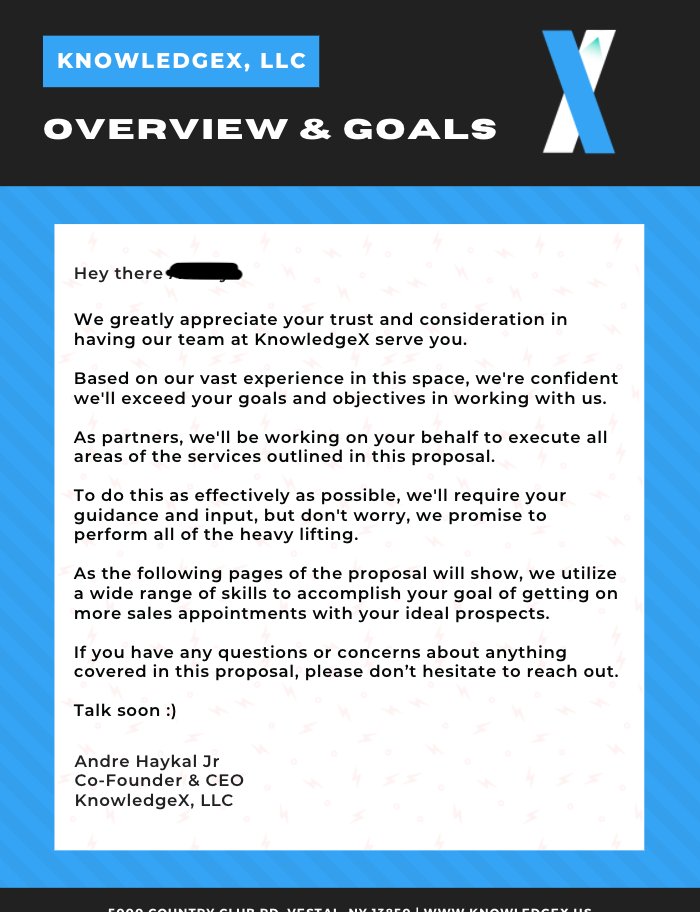
As an agency owner, it's important to set clear expectations and guidelines from day one of a client relationship
Here's the contract we use to do that
*thread*
This is an important precedent to set, because the client-agency relationship requires input from both sides in order to be successful.
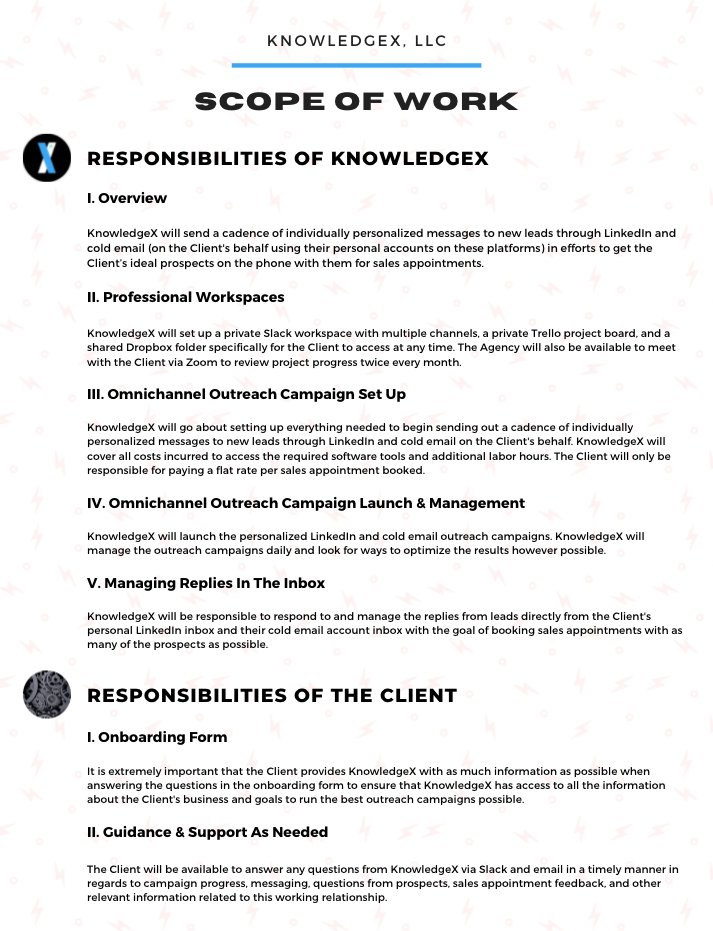
We keep this brief and save the details for our onboarding call.
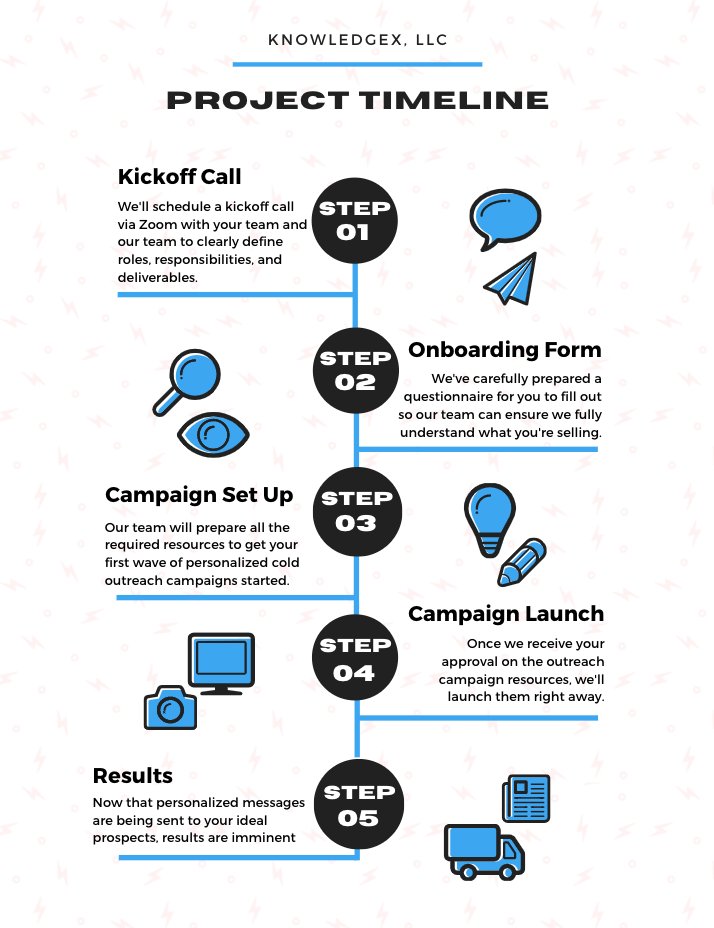
Of course, we get paid for each call we book for the client and charge a setup fee to take care of the initial expenses needed to get campaigns started.
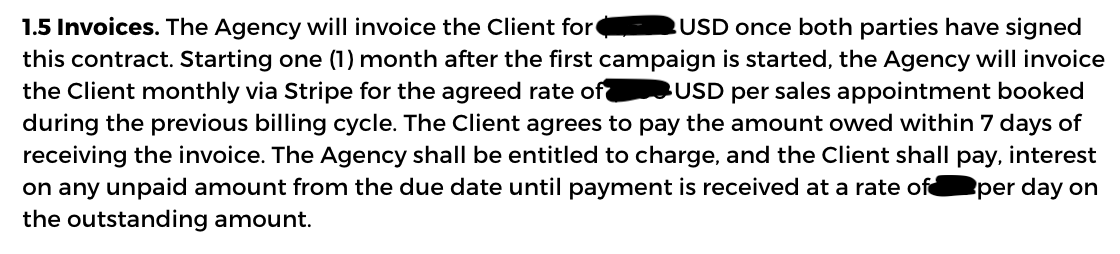
Unless you're dealing with a bad client, you should never run into an issue with interest... 7 days is more than enough time to pay an invoice.
This amendment sets clear expectations on the quality of booked calls.
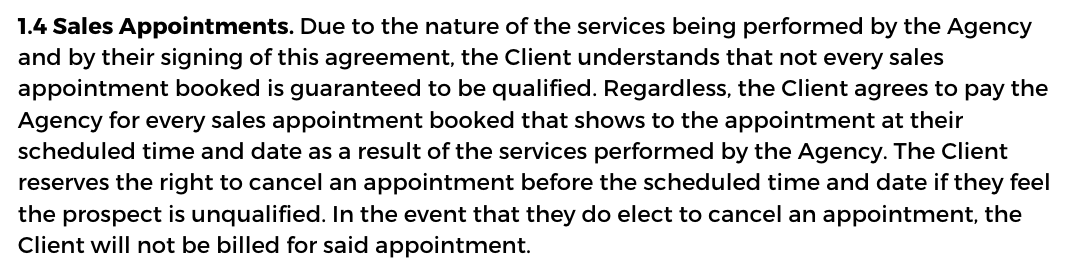
We still need to be paid for every call booked, or else we'd have to charge a lot more than $300 per call.
Here's a thread on how to setup a client feedback loop for the quality of calls booked 👇
https://t.co/H9514Wcbxa
how to create & automate a client feedback loop to get real-time insights from clients on the quality of booked calls
— andre \u26a1\ufe0f (@andrehaykaljr) June 30, 2021
**thread** pic.twitter.com/K8rv3KOyjc
Something to note here is the 90 day commitment, which gives us plenty of time to optimize campaigns without the risk of the agreement being ended.
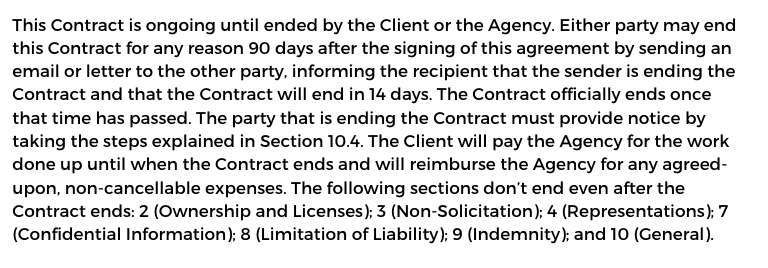
This 14 day window lets us wind down campaigns and take advantage of any conversations that may still lead to booked calls.
Needs to be clear that you as the agency are in charge of the work, not the client.
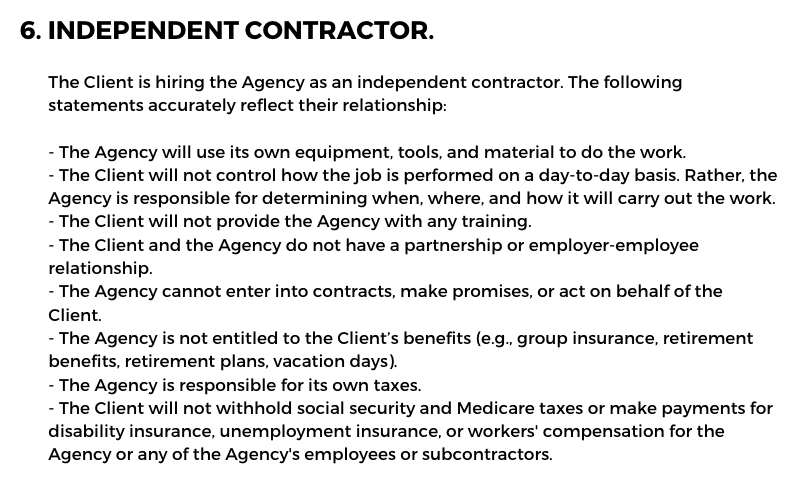
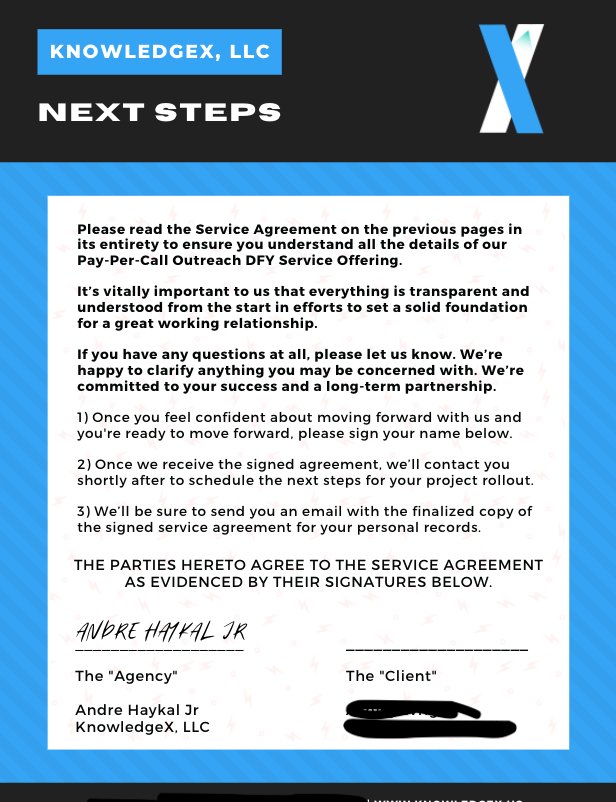
They protect your time and effort, give the client more clarity on the relationship, and establish clear responsibilities for both sides to get started working together.
And as always be sure to follow me for more actionable threads just like this one @andrehaykaljr :)
More from All









You May Also Like





![Peter McCormack [Jan/3\u279e\u20bf \U0001f511\u220e]](https://pbs.twimg.com/profile_images/1524287442307723265/_59ITDbJ_normal.jpg)

1/ Some initial thoughts on personal moats:
Like company moats, your personal moat should be a competitive advantage that is not only durable—it should also compound over time.
Characteristics of a personal moat below:
2/ Like a company moat, you want to build career capital while you sleep.
As Andrew Chen noted:
3/ You don’t want to build a competitive advantage that is fleeting or that will get commoditized
Things that might get commoditized over time (some longer than
4/ Before the arrival of recorded music, what used to be scarce was the actual music itself — required an in-person artist.
After recorded music, the music itself became abundant and what became scarce was curation, distribution, and self space.
5/ Similarly, in careers, what used to be (more) scarce were things like ideas, money, and exclusive relationships.
In the internet economy, what has become scarce are things like specific knowledge, rare & valuable skills, and great reputations.
Like company moats, your personal moat should be a competitive advantage that is not only durable—it should also compound over time.
Characteristics of a personal moat below:
I'm increasingly interested in the idea of "personal moats" in the context of careers.
— Erik Torenberg (@eriktorenberg) November 22, 2018
Moats should be:
- Hard to learn and hard to do (but perhaps easier for you)
- Skills that are rare and valuable
- Legible
- Compounding over time
- Unique to your own talents & interests https://t.co/bB3k1YcH5b
2/ Like a company moat, you want to build career capital while you sleep.
As Andrew Chen noted:
People talk about \u201cpassive income\u201d a lot but not about \u201cpassive social capital\u201d or \u201cpassive networking\u201d or \u201cpassive knowledge gaining\u201d but that\u2019s what you can architect if you have a thing and it grows over time without intensive constant effort to sustain it
— Andrew Chen (@andrewchen) November 22, 2018
3/ You don’t want to build a competitive advantage that is fleeting or that will get commoditized
Things that might get commoditized over time (some longer than
Things that look like moats but likely aren\u2019t or may fade:
— Erik Torenberg (@eriktorenberg) November 22, 2018
- Proprietary networks
- Being something other than one of the best at any tournament style-game
- Many "awards"
- Twitter followers or general reach without "respect"
- Anything that depends on information asymmetry https://t.co/abjxesVIh9
4/ Before the arrival of recorded music, what used to be scarce was the actual music itself — required an in-person artist.
After recorded music, the music itself became abundant and what became scarce was curation, distribution, and self space.
5/ Similarly, in careers, what used to be (more) scarce were things like ideas, money, and exclusive relationships.
In the internet economy, what has become scarce are things like specific knowledge, rare & valuable skills, and great reputations.