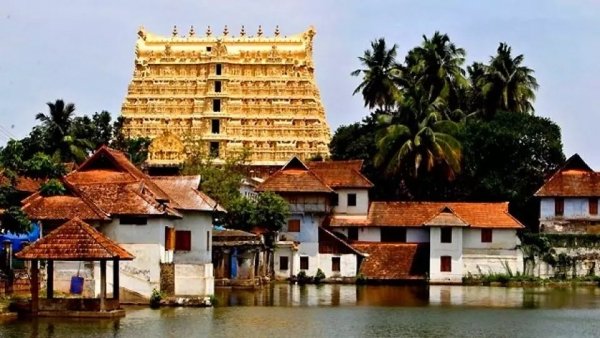
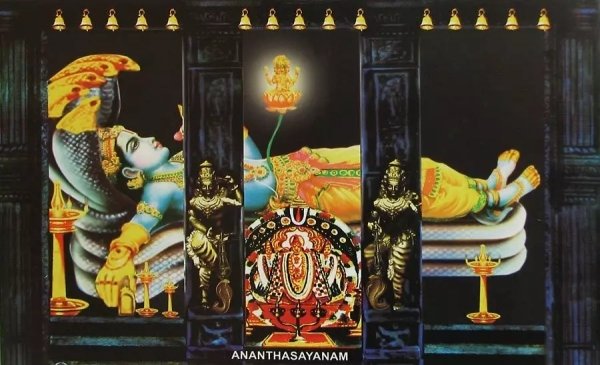
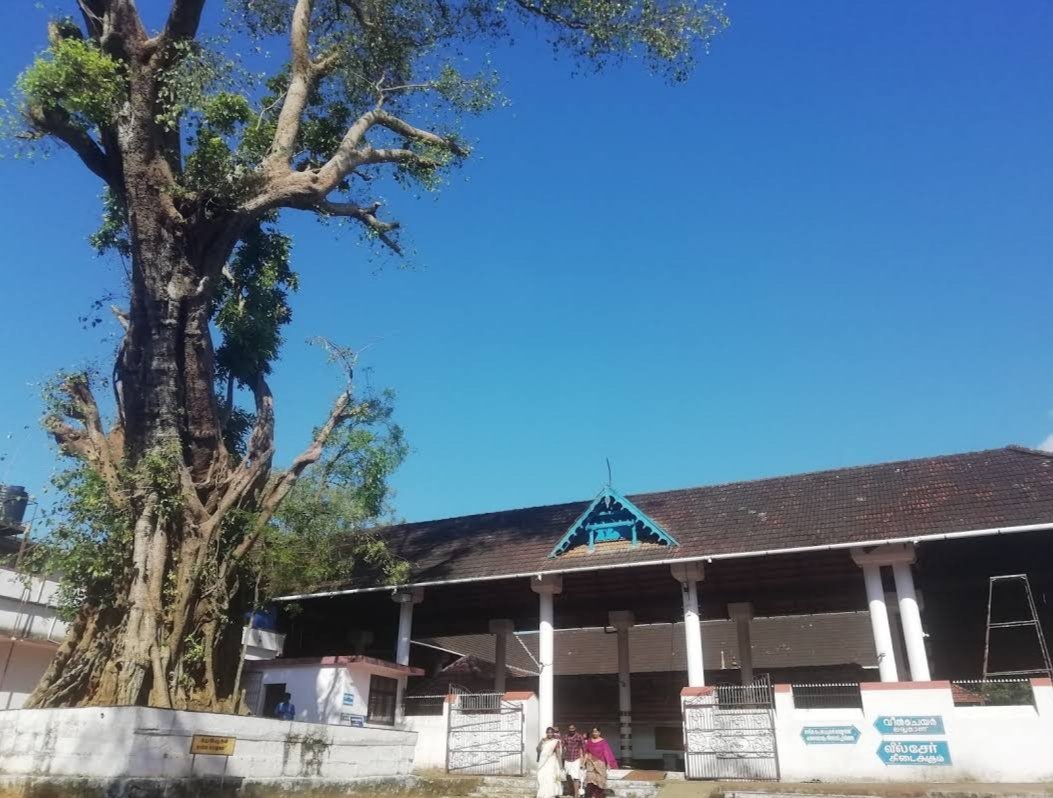
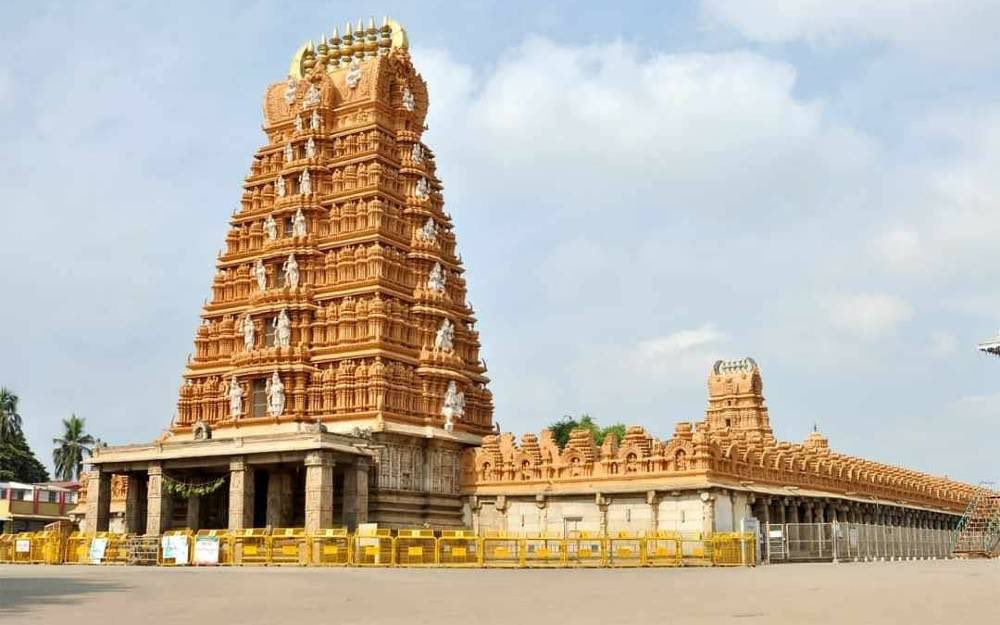
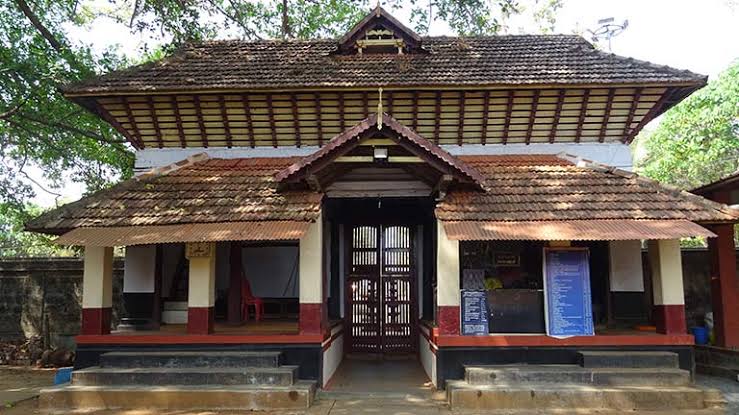
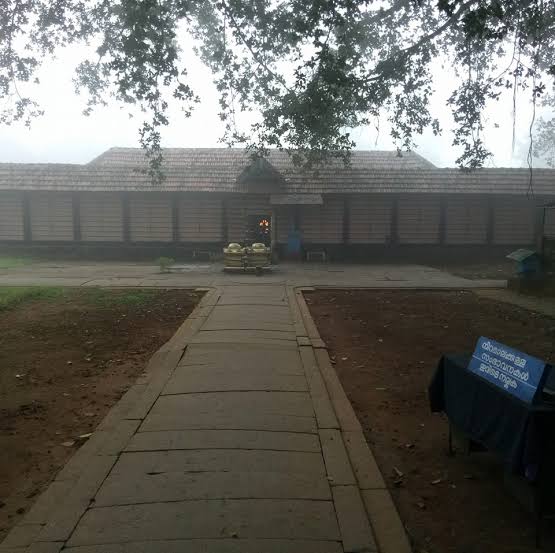
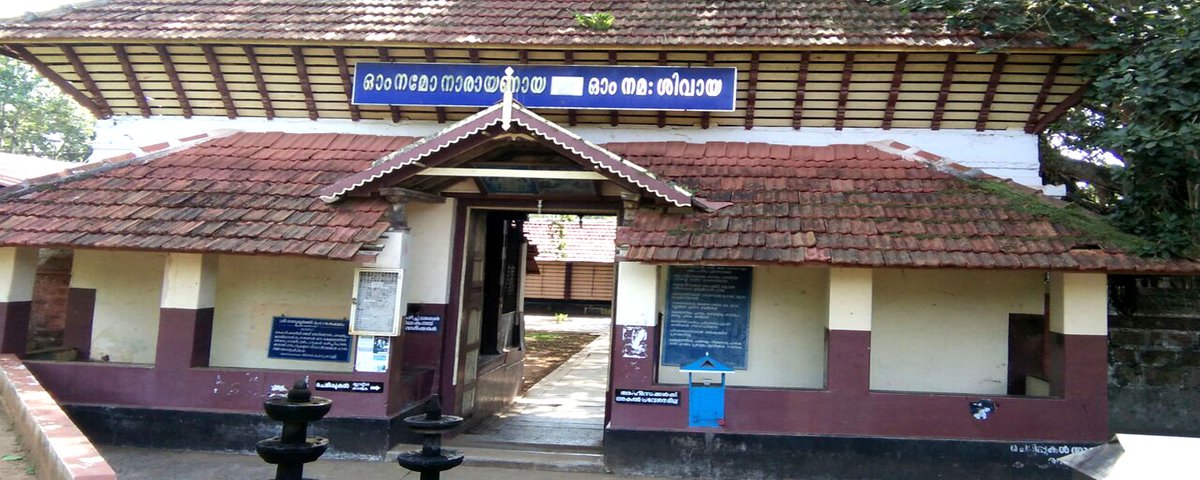
The mesmerizing Shri Anantha Padmanabhaswamy temple is located in the East fort at Pazhavangadi of Thiruvananthapuram, Kerala. This is the temple of Bhagwan Shri Vishnu which is an ancient structure that was even visited by Balarama, according to Srimad Bhagavatam. 1/n

This temple has recently got very famous for its hidden treasures with which it is claimed to be the richest temple in the world. (3/14)
There used to be a great Vishnu devotee called as Divakar Muni at Aanarthadesa who performed his daily rituals and pujas in a perfect manner without fail. One day, (4/14)
After a while, the Muni realized the boy to be Shree Hari Vishnu himself who responded to his prayers of blessing him with 'Divya Darshanam'. Then the Muni who left in search of that boy, (7/14)
Then the Muni prayed Shree Hari to shrink to the size that he can behold him for which the idol was shrunk to 18ft size. (9/14)
The main Idol of Shri Anantha Padmanabhaswamy is located in the sanctum sanctorum of the temple where the presiding deity is Shree Vishnu reclining on Anantha (also called as Seshnag or the hooded serpent) with his right hand on Sivalinga (11/14)
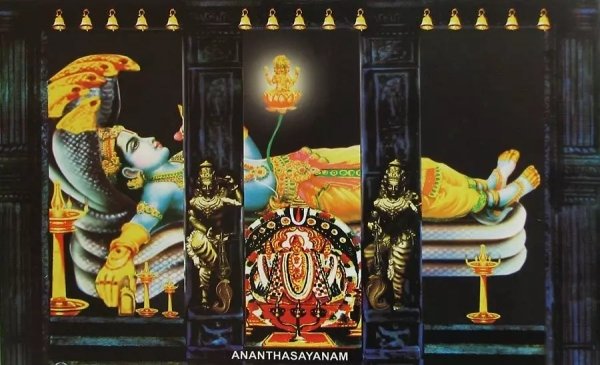
The idol is 18ft long and can be seen through three doors, which means head and chest through the first door, (12/14)

More from 𝕍𝕠𝕪𝕒𝕘𝕖𝕣


More from All







1. Mini Thread on Conflicts of Interest involving the authors of the Nature Toilet Paper:
https://t.co/VUYbsKGncx
Kristian G. Andersen
Andrew Rambaut
Ian Lipkin
Edward C. Holmes
Robert F. Garry
2. Thanks to @newboxer007 for forwarding the link to the research by an Australian in Taiwan (not on
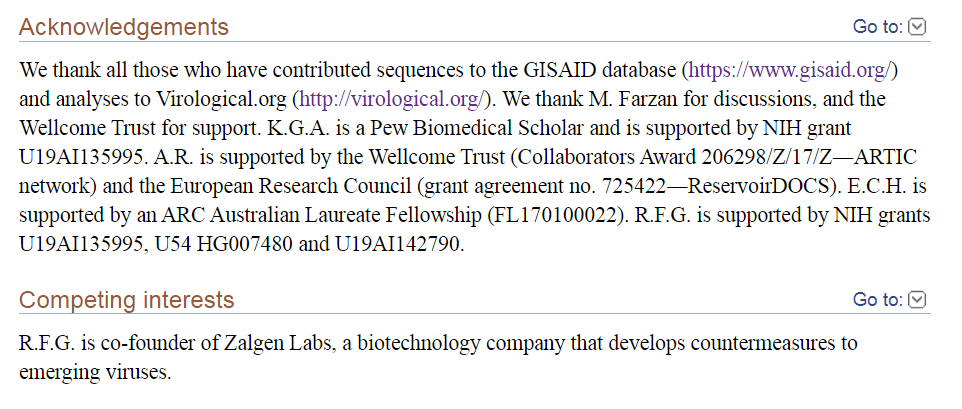
3. K.Andersen didn't mention "competing interests"
Only Garry listed Zalgen Labs, which we will look at later.
In acknowledgements, Michael Farzan, Wellcome Trust, NIH, ERC & ARC are mentioned.
Author affiliations listed as usual.
Note the 328 Citations!
https://t.co/nmOeohM89Q
4. Kristian Andersen (1)
Andersen worked with USAMRIID & Fort Detrick scientists on research, with Robert Garry, Jens Kuhn & Sina Bavari among
5. Kristian Andersen (2)
Works at Scripps Research Institute, which WAS in serious financial trouble, haemorrhaging 20 million $ a year.
But just when the first virus cases were emerging, they received great news.
They issued a press release dated November 27, 2019:
https://t.co/VUYbsKGncx
Kristian G. Andersen
Andrew Rambaut
Ian Lipkin
Edward C. Holmes
Robert F. Garry
2. Thanks to @newboxer007 for forwarding the link to the research by an Australian in Taiwan (not on
3. K.Andersen didn't mention "competing interests"
Only Garry listed Zalgen Labs, which we will look at later.
In acknowledgements, Michael Farzan, Wellcome Trust, NIH, ERC & ARC are mentioned.
Author affiliations listed as usual.
Note the 328 Citations!
https://t.co/nmOeohM89Q
4. Kristian Andersen (1)
Andersen worked with USAMRIID & Fort Detrick scientists on research, with Robert Garry, Jens Kuhn & Sina Bavari among
Our Hans Kristian Andersen working with Jens H. Kuhn, Sina Bavari, Robert F. Garry, Stuart T. Nichol,Gustavo Palacios, Sheli R. Radoshitzky from USAMRIID and Fort Detrick to tell more fairy tales? Full emails listed for queries...https://t.co/kLRoQTxiGD pic.twitter.com/uHNuGraPP2
— Billy Bostickson \U0001f3f4\U0001f441&\U0001f441 \U0001f193 (@BillyBostickson) August 26, 2020
5. Kristian Andersen (2)
Works at Scripps Research Institute, which WAS in serious financial trouble, haemorrhaging 20 million $ a year.
But just when the first virus cases were emerging, they received great news.
They issued a press release dated November 27, 2019:
You May Also Like

First thread of the year because I have time during MCO. As requested, a thread on the gods and spirits of Malay folk religion. Some are indigenous, some are of Indian origin, some have Islamic
Before I begin, it might be worth explaining the Malay conception of the spirit world. At its deepest level, Malay religious belief is animist. All living beings and even certain objects are said to have a soul. Natural phenomena are either controlled by or personified as spirits
Although these beings had to be respected, not all of them were powerful enough to be considered gods. Offerings would be made to the spirits that had greater influence on human life. Spells and incantations would invoke their
Two known examples of such elemental spirits that had god-like status are Raja Angin (king of the wind) and Mambang Tali Arus (spirit of river currents). There were undoubtedly many more which have been lost to time
Contact with ancient India brought the influence of Hinduism and Buddhism to SEA. What we now call Hinduism similarly developed in India out of native animism and the more formal Vedic tradition. This can be seen in the multitude of sacred animals and location-specific Hindu gods
i wonder if you can make a thread bout witchcraft in malaysia.. or list of our own local gods/deites..
— r a y a \U0001f319 (@lcvelylilith) February 20, 2020
Before I begin, it might be worth explaining the Malay conception of the spirit world. At its deepest level, Malay religious belief is animist. All living beings and even certain objects are said to have a soul. Natural phenomena are either controlled by or personified as spirits
Although these beings had to be respected, not all of them were powerful enough to be considered gods. Offerings would be made to the spirits that had greater influence on human life. Spells and incantations would invoke their
Animist ceremonies of a religious or magical nature were normally held for the purpose of divination or making a request. This would either be done at a keramat or at a shrine similar to the Thai spirit houses or Chinese roadside shrines pic.twitter.com/I1hliyi0x3
— \u2745\u1710\u170b\u1713\u170e (@uglyluhan) June 16, 2019
Two known examples of such elemental spirits that had god-like status are Raja Angin (king of the wind) and Mambang Tali Arus (spirit of river currents). There were undoubtedly many more which have been lost to time
Contact with ancient India brought the influence of Hinduism and Buddhism to SEA. What we now call Hinduism similarly developed in India out of native animism and the more formal Vedic tradition. This can be seen in the multitude of sacred animals and location-specific Hindu gods