1/ On Friday the Florida legislature passed the @GovRonDeSantis-backed Transparency in Technology Act, attempting to regulate how social media sites moderate content. DeSantis has 15 days to sign the bill, and is expected to. Here's why he shouldn't.

2/ The bill would, in part, force platforms to carry the speech of candidates for office, publish detailed content moderation policies, and moderate content "consistently."

That's going to violate the First Amendment. Ironic, for a bill that's supposedly about free speech.
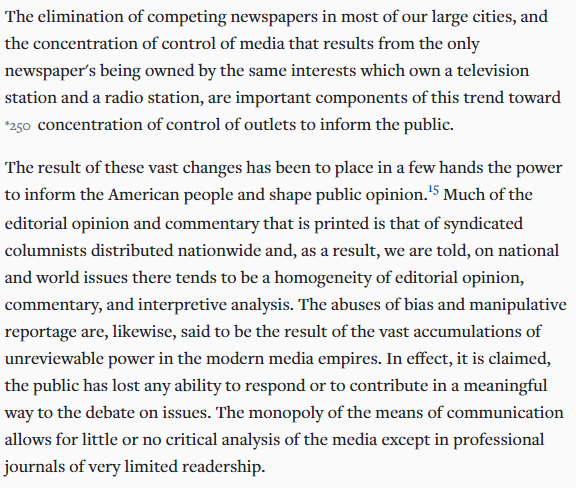
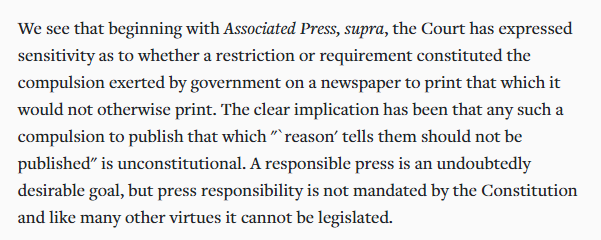
3/ Florida has tried this once before, with newspapers. In 1974, the Supreme Court struck down a Florida law requiring newspapers to publish responses from candidates who had been criticized in their publication. https://t.co/mhI7SyfGnf
4/ Florida claimed that because newspapers were owned largely by a small and powerful group, the law was necessary to protect the public's ability to meaningfully participate in debate without abusive bias by powerful interests with control over the means of communication.
5/ If that sounds familiar, it should: it's exactly the argument being advanced to support legislation regulating social media content moderation.
6/ But the argument was unavailing for Florida then, and it is unavailing now. The Supreme Court held that whatever the *normative* merits of that justification, the government cannot compel private parties to publish speech that they don't wish to.
7/ That principle applies equally to social media. Platforms, like newspapers, have a First Amendment right to make editorial decisions about what may be published—or who may publish—using their platform, whether or not they do it "consistently." The decision is theirs to make.
8/ Related: in 2019, a unanimous 4th Circuit panel upheld an injunction prohibiting Maryland from enforcing a law regulating political adverts in media.

Like this bill, that law singled out campaign-based speech for special treatment, and required media to publish disclosures.
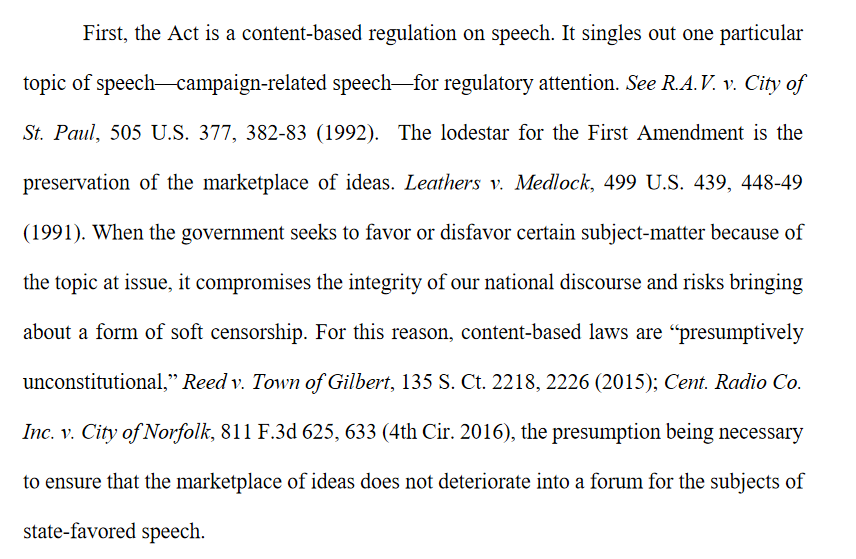
9/ The 4th Circuit opinion called the Maryland bill a "compendium of traditional First Amendment infirmities," eviscerating it for being a content-based regulation and compelling speech: https://t.co/aZhbqmP8Vd
10/ The panel's opinion also keenly noted that this type of regulation likely ends with less speech, not more. Beyond not carrying political ads (as Twitter has decided), platforms could just give politicians the boot in general.
11/ This bill will certainly meet the same end. The First Amendment does not permit the government to tell media what they must say, or allow others to say on their platform. Those decisions are left to society to debate, and market forces to decide—not for the law to impose.
12/ The constitutional smackdown this bill faces is not going to be helped by the last-minute amendment from Ray Rodrigues exempting services run by owners of a theme park (read: Disney). You really didn't need to flush twice to get your strict scrutiny argument down the toilet.
13/ Even if the bill wasn't unconstitutional, it would still be preempted by #Section230, which expressly prohibits any state-level liability that is inconsistent with 230's protection:
14/ Section 230 prohibits imposing liability on websites for content moderation decisions, including the exercise of traditional editorial functions, which is exactly what this bill tries to do.

https://t.co/LazNzy5DYs
15/ The Florida legislature acknowledges as much in the bill's text, which is either an explicit admission that the bill is purely performative, or a weak-as-hell attempt at a savings clause. Might as well have written "this bill may not be enforced."
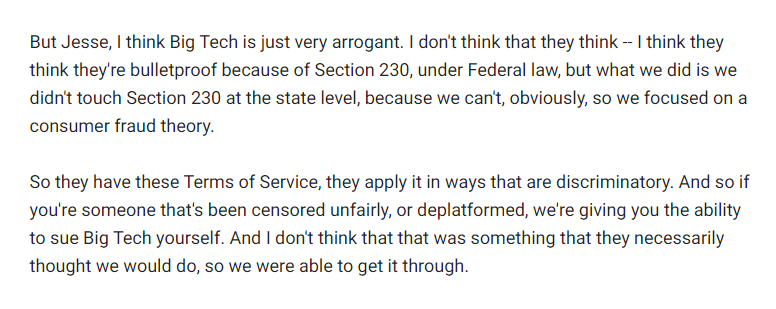
16/ DeSantis and his allies seem to think that by shrouding the bill in the language of "consumer protection," they can get around the problem. Here's what he told Jesse Watters:
17/ But no matter how much lipstick you put on this pig, it still purports to impose liability for platforms' decisions to take down content or ban users. It doesn't matter what you call it; that's what it is and it's unquestionably preempted.
18/ And there's no question that this is the point of the bill. DeSantis himself gave up the game when he called it "the most ambitious reforms yet proposed for combating political censorship and deplatforming.”

This is precisely the type of state law that #Section230 forbids.
19/ And If they didn't think you were going to do this, it's only because the "consumer protection" diversion is so incoherent that no court could ever be reasonably expected to fall for. It's the legislative equivalent of "I'm not touching you," but somehow even less successful.
20/ In short, what we have here is a bill that is unenforceable, unconstitutional, and a waste of taxpayers' time and money. It shouldn't have been passed, and it certainly should not be signed into law.

More from All

#ஆதித்தியஹ்ருதயம் ஸ்தோத்திரம்
இது சூரிய குலத்தில் உதித்த இராமபிரானுக்கு தமிழ் முனிவர் அகத்தியர் உபதேசித்ததாக வால்மீகி இராமாயணத்தில் வருகிறது. ஆதித்ய ஹ்ருதயத்தைத் தினமும் ஓதினால் பெரும் பயன் பெறலாம் என மகான்களும் ஞானிகளும் காலம் காலமாகக் கூறி வருகின்றனர். ராம-ராவண யுத்தத்தை


தேவர்களுடன் சேர்ந்து பார்க்க வந்திருந்த அகத்தியர், அப்போது போரினால் களைத்து, கவலையுடன் காணப்பட்ட ராமபிரானை அணுகி, மனிதர்களிலேயே சிறந்தவனான ராமா போரில் எந்த மந்திரத்தைப் பாராயணம் செய்தால் எல்லா பகைவர்களையும் வெல்ல முடியுமோ அந்த ரகசிய மந்திரத்தை, வேதத்தில் சொல்லப்பட்டுள்ளதை உனக்கு

நான் உபதேசிக்கிறேன், கேள் என்று கூறி உபதேசித்தார். முதல் இரு சுலோகங்கள் சூழ்நிலையை விவரிக்கின்றன. மூன்றாவது சுலோகம் அகத்தியர் இராமபிரானை விளித்துக் கூறுவதாக அமைந்திருக்கிறது. நான்காவது சுலோகம் முதல் முப்பதாம் சுலோகம் வரை ஆதித்ய ஹ்ருதயம் என்னும் நூல். முப்பத்தி ஒன்றாம் சுலோகம்

இந்தத் துதியால் மகிழ்ந்த சூரியன் இராமனை வாழ்த்துவதைக் கூறுவதாக அமைந்திருக்கிறது.
ஐந்தாவது ஸ்லோகம்:
ஸர்வ மங்கள் மாங்கல்யம் ஸர்வ பாப ப்ரநாசனம்
சிந்தா சோக ப்ரசமனம் ஆயுர் வர்த்தனம் உத்தமம்
பொருள்: இந்த அதித்ய ஹ்ருதயம் என்ற துதி மங்களங்களில் சிறந்தது, பாவங்களையும் கவலைகளையும்


குழப்பங்களையும் நீக்குவது, வாழ்நாளை நீட்டிப்பது, மிகவும் சிறந்தது. இதயத்தில் வசிக்கும் பகவானுடைய அனுக்ரகத்தை அளிப்பதாகும்.
முழு ஸ்லோக லிங்க் பொருளுடன் இங்கே உள்ளது
https://t.co/Q3qm1TfPmk
சூரியன் உலக இயக்கத்திற்கு மிக முக்கியமானவர். சூரிய சக்தியால்தான் ஜீவராசிகள், பயிர்கள்

You May Also Like

https://t.co/6cRR2B3jBE
Viruses and other pathogens are often studied as stand-alone entities, despite that, in nature, they mostly live in multispecies associations called biofilms—both externally and within the host.

https://t.co/FBfXhUrH5d


Microorganisms in biofilms are enclosed by an extracellular matrix that confers protection and improves survival. Previous studies have shown that viruses can secondarily colonize preexisting biofilms, and viral biofilms have also been described.


...we raise the perspective that CoVs can persistently infect bats due to their association with biofilm structures. This phenomenon potentially provides an optimal environment for nonpathogenic & well-adapted viruses to interact with the host, as well as for viral recombination.


Biofilms can also enhance virion viability in extracellular environments, such as on fomites and in aquatic sediments, allowing viral persistence and dissemination.
1/“What would need to be true for you to….X”

Why is this the most powerful question you can ask when attempting to reach an agreement with another human being or organization?

A thread, co-written by @deanmbrody:


2/ First, “X” could be lots of things. Examples: What would need to be true for you to

- “Feel it's in our best interest for me to be CMO"
- “Feel that we’re in a good place as a company”
- “Feel that we’re on the same page”
- “Feel that we both got what we wanted from this deal

3/ Normally, we aren’t that direct. Example from startup/VC land:

Founders leave VC meetings thinking that every VC will invest, but they rarely do.

Worse over, the founders don’t know what they need to do in order to be fundable.

4/ So why should you ask the magic Q?

To get clarity.

You want to know where you stand, and what it takes to get what you want in a way that also gets them what they want.

It also holds them (mentally) accountable once the thing they need becomes true.

5/ Staying in the context of soliciting investors, the question is “what would need to be true for you to want to invest (or partner with us on this journey, etc)?”

Multiple responses to this question are likely to deliver a positive result.